
Mercury AC compressor change is an important service when your vehicle’s air conditioning stops cooling effectively, produces unusual noises, or fails to maintain a comfortable cabin temperature. In Dubai, where high outdoor temperatures and heavy traffic can place considerable demands on a vehicle’s cooling system, a faulty AC compressor can quickly turn an ordinary journey into an uncomfortable experience.
The air conditioning compressor plays a central role in the refrigerant cycle. It circulates refrigerant through the system, allowing heat to be transferred away from the cabin. When the compressor becomes worn, develops an internal fault, or experiences problems with its clutch or control mechanism, the entire AC system may be affected.
However, weak cooling does not always mean that the compressor needs replacement. Low refrigerant, a leaking condenser, an electrical fault, a restricted expansion valve, or a malfunctioning cooling fan can create similar symptoms. Therefore, accurate diagnosis is essential before investing in a new compressor.
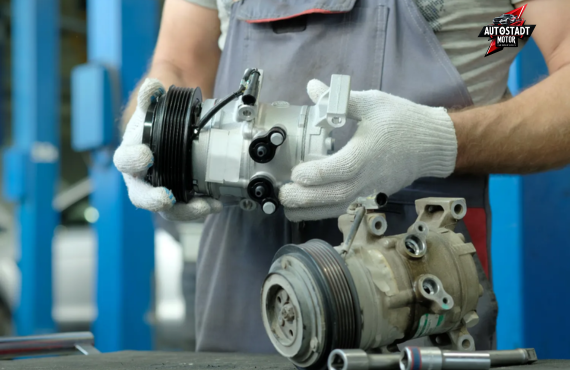
At AutoStadt Motor Services, Mercury owners can seek professional AC system inspection and repair to identify the source of cooling problems. Whether your vehicle has stopped producing cold air or the compressor is making unusual sounds, the right diagnostic approach helps determine whether replacement is necessary and which repair solution suits the vehicle.
Signs Your Car Needs Mercury AC Compressor Change
A failing AC compressor may show several warning signs before it stops working completely. Recognizing these symptoms early can help you arrange an inspection before the problem affects other components.
1. The AC Blows Warm Air
One of the most noticeable symptoms is warm air coming from the dashboard vents, even when the temperature setting is at its lowest.
If the compressor cannot circulate refrigerant correctly, the system may struggle to remove heat from the cabin. You might notice that the AC produces slightly cool air initially but becomes less effective during longer journeys.
Nevertheless, warm air alone does not confirm compressor failure. A technician should also check refrigerant pressure, possible leaks, electrical connections, and other components before recommending a replacement.
2. Unusual Noise When the AC Starts
Listen for grinding, rattling, squealing, or knocking sounds when switching on the air conditioning.
These noises may indicate a worn compressor bearing, an internal mechanical fault, a damaged clutch on compressor designs that use one, or a problem involving the drive belt. The source could also be another component operating nearby.
If the noise becomes louder when the AC is activated, arrange an inspection promptly. Continuing to operate a severely damaged compressor can sometimes lead to further mechanical problems.
3. The Compressor Does Not Engage
On vehicles equipped with a compressor clutch, the clutch may fail to engage when the AC is switched on. This can prevent the system from providing proper cooling.
However, the absence of clutch engagement does not automatically mean the compressor itself is defective. Low refrigerant pressure, a faulty relay, damaged wiring, a pressure sensor, or the vehicle’s control system may prevent operation.
Some compressor designs use variable displacement or electronically controlled mechanisms, so the correct diagnostic procedure depends on the specific vehicle.
4. AC Cooling Becomes Intermittent
If your Mercury’s AC alternates between cold and warm air, the system may have a developing fault.
Possible causes include compressor control problems, refrigerant pressure abnormalities, electrical interruptions, or overheating-related performance issues. In some cases, the compressor may work initially but struggle as operating conditions change.
Because intermittent faults can be difficult to reproduce, explaining when the cooling stops and returns can help the technician narrow down the cause.
5. Reduced Cooling During Dubai Traffic
An AC system that performs reasonably well on the highway but struggles in slow-moving traffic needs attention.
Condenser airflow, cooling fan operation, refrigerant pressure, and compressor performance can all influence cooling under different driving conditions.
Dubai’s stop-and-go traffic can make an existing AC weakness more noticeable, particularly during hot weather. A proper inspection can determine whether the compressor is responsible or another part of the cooling system requires attention.
6. A Damaged Compressor or Refrigerant Leak
Visible oil residue around compressor connections or the compressor body may indicate a leak, although the exact source needs confirmation.
Automotive refrigerant systems circulate oil alongside refrigerant, and leakage can affect both the refrigerant charge and lubrication. If a compressor has developed a significant internal fault, replacement may be necessary.
The technician should also determine whether the leak originates from a seal, hose, connection, or another nearby component before deciding what to replace.
Why Choose AutoStadt Motor Services for Mercury AC Compressor Change
Choosing a workshop for compressor replacement involves more than finding a new part. Proper diagnosis, compatible components, correct installation, and post-repair testing all contribute to a dependable result.
Accurate Compressor Diagnosis
At AutoStadt Motor Services, the first priority is identifying why the AC system is not working correctly.
A technician can assess cooling performance, inspect relevant electrical connections, check system pressures where appropriate, and examine the compressor’s operation. This helps distinguish a genuine compressor failure from a fault elsewhere in the AC system.
Replacing a functioning compressor will not solve a problem caused by a blocked condenser or faulty sensor. Diagnosis therefore helps avoid unnecessary expense.
Suitable Replacement Components
Compressor compatibility depends on the vehicle’s exact model, year, engine configuration, and installed AC system.
Using an incorrect compressor can create fitting difficulties or operational problems. The replacement should match the vehicle’s requirements, including the relevant mounting arrangement, connections, control type, and refrigerant specification.
Before authorizing a replacement, owners should ask about the proposed part, its warranty terms, and any associated components that may need attention.
Attention to the Complete AC System
A compressor does not operate independently. It works with the condenser, evaporator, expansion device, refrigerant lines, and other components.
If the old compressor has suffered an internal failure, debris may circulate through the system. Depending on the extent of contamination and the manufacturer’s procedure, additional cleaning, component replacement, or other corrective work may be necessary.
Addressing these issues is important because installing a new compressor without resolving an underlying contamination problem can put the replacement at risk.
Clear Repair Recommendations
Not every cooling problem requires a complete compressor replacement.
Sometimes the fault is related to an electrical connection, control valve, clutch, or another serviceable component. Whether repair is possible depends on the compressor design and the manufacturer’s guidance.
AutoStadt Motor Services can assess the reported symptoms and recommend a repair based on the findings, helping owners understand the reason for the work.
Professional Service for Dubai Driving Conditions
Reliable air conditioning is particularly valuable for daily commuting, family journeys, and extended drives around Dubai.
Whether you drive a Mercury regularly or keep it for occasional use, a properly diagnosed AC problem should be addressed before the system fails completely. The same principle applies to other vehicles, including Toyota sedans, Nissan SUVs, BMW models, and Mercedes-Benz vehicles, although their component requirements and procedures differ.
How Our Mercury AC Compressor Change Process Works
A structured replacement process helps ensure that the original problem is identified, the correct components are installed, and the repaired system is tested.
Step 1: Review the Symptoms
The process begins with an assessment of the AC problem.
The technician may ask whether the air is completely warm, whether cooling changes with engine speed, whether unusual noises occur, and whether the issue started suddenly or developed gradually.
These details help guide the inspection and identify conditions that require closer attention.
Step 2: Inspect the AC System
The relevant parts of the air conditioning system are inspected for visible damage, leakage, worn connections, and signs of abnormal operation.
Depending on the vehicle, this may include the compressor, drive belt, electrical connections, condenser, refrigerant lines, cooling fans, and related controls.
The purpose is to establish whether the compressor is actually responsible for the symptoms.
Step 3: Test Compressor Operation
Where appropriate, the technician evaluates system pressures, electrical signals, compressor engagement, and other operating conditions.
These checks help identify whether the compressor has failed mechanically, is not receiving the correct control signal, or is being prevented from operating by another system fault.
The diagnostic method should match the compressor design and the vehicle’s service requirements.
Step 4: Determine Whether Replacement Is Necessary
Once the fault is identified, the technician evaluates the available repair options.
If the compressor has suffered internal mechanical damage or cannot operate correctly, replacement may be the appropriate solution. If the problem involves a separate electrical or control component, replacing the entire compressor may not be necessary.
This decision should be based on the diagnostic findings rather than the assumption that every AC failure requires a new compressor.
Step 5: Remove the Faulty Compressor
If replacement is confirmed, the refrigerant must be recovered using suitable equipment before the system is opened.
The old compressor is then removed according to the vehicle’s service procedure. Related connections and components are inspected for damage, contamination, and signs of leakage.
Any additional work should be determined by the compressor’s condition and the manufacturer’s recommendations.
Step 6: Install the Replacement Compressor
The replacement compressor is checked for compatibility before installation.
The technician follows the applicable installation procedure, including the correct oil requirements, connection sealing, mounting specifications, and any necessary replacement of associated parts.
The correct refrigerant type and specified charge are essential. Refrigerant and compressor oil should never be selected merely because they are commonly used in other vehicles.
Step 7: Recharge and Test the System
After installation, the system is prepared and recharged according to the vehicle’s specifications.
The technician then checks for leaks, verifies relevant operating pressures, evaluates compressor operation, and tests the cooling performance.
Finally, the AC is operated under suitable conditions to confirm that the repair has addressed the original complaint.
Mercury AC Compressor Maintenance Tips for Dubai Owners
Although a compressor will eventually experience wear, sensible maintenance can help identify developing problems and support reliable AC performance.
First, pay attention to changes in cooling. If the air becomes gradually warmer or the system starts making unusual noises, arrange an inspection rather than waiting for complete failure.
Second, keep up with recommended vehicle servicing. Routine checks can reveal damaged drive belts, deteriorating connections, airflow restrictions, or other conditions that may affect the AC system.
Third, do not repeatedly add refrigerant without investigating why the system may be losing it. A refrigerant leak should be identified and repaired rather than treated as a routine requirement.
Finally, seek prompt attention if the compressor begins making loud grinding or knocking noises. Depending on the severity, continued operation could cause further damage.
These steps cannot prevent every mechanical failure, but they can help identify problems before they become more complicated.
Frequently Asked Questions About Mercury AC Compressor Change in Dubai
1. How do I know if my Mercury needs an AC compressor change?
Common warning signs include warm air from the vents, unusual noises when the AC operates, inconsistent cooling, or a compressor that fails to function correctly. However, similar symptoms can result from low refrigerant, electrical faults, or condenser problems. A professional diagnosis is needed to confirm compressor failure and determine whether replacement is the most appropriate solution.
2. How much does Mercury AC compressor change cost in Dubai?
The cost depends on the vehicle’s exact model, the type of compressor required, the availability of suitable replacement parts, and the amount of additional work involved. If the system contains debris or has other damaged components, the repair may require more than compressor installation alone. Requesting an inspection and itemized estimate from AutoStadt Motor Services can help you understand the expected parts and labour costs before proceeding.
3. Can I drive my Mercury if the AC compressor is faulty?
In some cases, a vehicle may remain drivable when the AC is not cooling, but the decision depends on the nature of the fault. A seized compressor or damaged drive belt can potentially affect other belt-driven components, depending on the vehicle’s design. Loud mechanical noises, a burning smell, or signs of belt damage should be treated seriously. If these symptoms occur, stop in a safe place and arrange professional assistance rather than continuing to drive.
4. Does a new AC compressor mean the entire cooling system will work properly?
Not automatically. Compressor replacement addresses the compressor-related fault, but other problems can still affect cooling. A leaking condenser, restricted expansion device, damaged evaporator, faulty fan, or electrical issue may also require attention. If the old compressor failed internally, the system may need additional cleaning or component replacement according to the manufacturer’s procedure. Proper inspection and post-repair testing are therefore essential.
5. How long does Mercury AC compressor replacement take?
The time required depends on the vehicle’s design, compressor accessibility, parts availability, and whether additional repairs are needed. A straightforward replacement may take less time than a job involving difficult access, refrigerant leaks, contaminated components, or electrical diagnosis. The workshop should assess the vehicle before providing a realistic timeframe. Following the correct procedure is more important than rushing the replacement and overlooking problems that could affect the new compressor.
Conclusion
Mercury AC compressor change can restore effective cabin cooling when the compressor has genuinely failed, but the best results begin with an accurate diagnosis. Warm air, unusual noises, inconsistent cooling, and compressor operating problems can indicate a fault, although they do not always prove that replacement is required.
For Dubai drivers, a reliable AC system makes everyday journeys considerably more comfortable, particularly during the hottest months. Addressing cooling problems early can also help prevent an existing fault from causing additional damage.
AutoStadt Motor Services provides professional automotive AC inspection and repair support, helping vehicle owners identify compressor problems and determine the appropriate repair. From evaluating cooling performance to installing a suitable replacement and testing the finished system, a careful process is essential for dependable results.
If your Mercury is no longer cooling effectively or its AC compressor is making unusual noises, arrange an inspection to establish the cause and discuss the available repair options. The right diagnosis can help you restore comfortable driving while avoiding unnecessary component replacement.


Leave a Comment