
Mercury AC gas refill is an important service to consider when your car’s air conditioning system stops delivering the cold, consistent airflow you expect. In Dubai, where high temperatures can make driving uncomfortable for much of the year, an efficient car AC system is essential for everyday commuting, family journeys, and long-distance travel.
If your Mercury vehicle takes too long to cool the cabin, produces lukewarm air, or struggles to maintain a comfortable temperature, low refrigerant may be one possible cause. However, weak cooling does not always mean that the system needs additional AC gas. A refrigerant leak, blocked condenser, faulty compressor, restricted cabin filter, or electrical problem can produce similar symptoms.
At AutoStadt Motor Services, the focus is on assessing the air conditioning system before recommending a refill or repair. This helps identify whether refrigerant loss is responsible for the problem and whether another component requires attention.
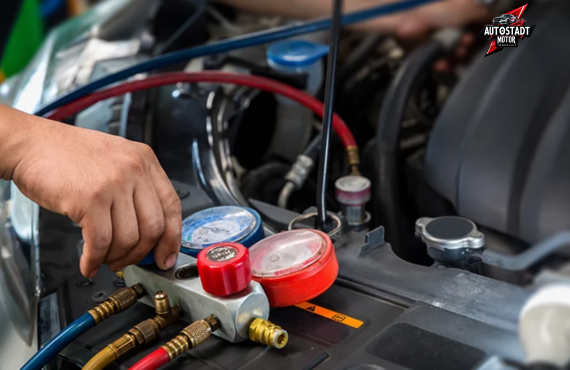
Although AC gas refill is a familiar term among car owners, the correct procedure involves more than adding refrigerant. The technician must consider the vehicle’s specifications, the type of refrigerant required, the amount specified by the manufacturer, and the condition of the cooling circuit. With the right approach, Mercury owners in Dubai can address cooling problems while reducing the risk of unnecessary repairs.
Signs Your Car Needs Mercury AC Gas Refill
Recognizing changes in AC performance can help you arrange an inspection before the cooling system becomes less effective. Nevertheless, these symptoms should be treated as diagnostic clues rather than proof that refrigerant is low.
1. The AC Blows Warm or Lukewarm Air
One of the most noticeable signs is warm air coming from the dashboard vents even when the temperature is set to its lowest setting.
Refrigerant absorbs heat as it circulates through the air conditioning system. If the refrigerant charge is below the required level, cooling performance may decline. However, a malfunctioning compressor, incorrect pressure readings, or a problem with the climate-control system can also cause warm airflow.
A professional inspection can determine whether a Mercury AC gas refill is appropriate or whether another fault needs to be repaired first.
2. Cooling Takes Longer Than Usual
If your Mercury previously cooled the cabin quickly but now takes much longer, the AC system may not be operating efficiently.
This difference can become especially noticeable after your vehicle has been parked outdoors in Dubai. A hot cabin naturally takes time to cool, but persistent weak performance may indicate a problem with refrigerant charge, condenser efficiency, airflow, or compressor operation.
Comparing current performance with the vehicle’s usual cooling behaviour can help identify when the problem began.
3. Cooling Becomes Inconsistent During the Journey
Another warning sign is an AC system that initially produces cold air but later becomes less effective.
Intermittent cooling can have several causes, including pressure-related issues, compressor control faults, electrical problems, or other cooling-system malfunctions. Low refrigerant may contribute in some circumstances, but it should not be assumed to be the cause without testing.
AutoStadt Motor Services can assess these symptoms and help identify the most appropriate solution.
4. The AC Runs Frequently but the Cabin Remains Warm
When the air conditioning is working correctly, it should provide suitable cooling under normal operating conditions.
If the system appears to run continuously without achieving the desired temperature, its cooling capacity may be reduced. A low refrigerant charge is one possibility, while a dirty condenser, restricted airflow, or faulty temperature sensor may also affect performance.
Adding refrigerant without investigating these possibilities could leave the original problem unresolved.
5. There Are Signs of a Refrigerant Leak
A damaged hose, worn seal, loose connection, or leaking condenser can allow refrigerant to escape from the system.
Because refrigerant loss can be difficult to identify visually, specialized leak-detection methods may be needed. In some cases, an oily residue around an AC connection can provide a clue, although residue alone does not confirm a refrigerant leak.
If the system repeatedly loses cooling after a refill, arranging a leak inspection is more effective than continuing to top it up.
6. Unusual AC Noises Develop
Clicking, rattling, or other unusual sounds when the AC is switched on may indicate a problem with the compressor, its drive components, or another related part.
Low refrigerant can affect system operation in certain circumstances, but unusual noises should not automatically be attributed to insufficient AC gas. A technician should inspect the system to determine whether the problem is refrigerant-related or mechanical.
Why Choose AutoStadt Motor Services for Mercury AC Gas Refill
Choosing the right workshop means finding a service provider that understands the complete cooling system, not simply the process of adding refrigerant.
Accurate Refrigerant Assessment
At AutoStadt Motor Services, the aim is to assess the cooling complaint before recommending a refill. The inspection can help establish whether the refrigerant charge is low and whether other conditions may be affecting performance.
Pressure readings should be interpreted alongside operating conditions, ambient temperature, compressor behaviour, and the vehicle’s specifications. This is more reliable than deciding how much refrigerant to add based on vent temperature alone.
Correct Refrigerant and Charge Quantity
Different vehicles can require different refrigerant types and specified charge quantities. Using an unsuitable refrigerant or adding an incorrect amount can affect system performance and potentially damage components.
The correct specification should be confirmed from the vehicle’s information label or appropriate manufacturer documentation before servicing begins.
This attention to specifications is important whether the vehicle needs a routine AC inspection or a more involved cooling-system repair.
Leak Detection Before Repeated Refills
If your Mercury repeatedly needs an AC gas refill, the underlying cause should be investigated.
Refrigerant is not normally consumed like engine oil or fuel during regular operation. A recurring reduction in refrigerant charge can indicate leakage or another system issue.
Identifying and addressing the source of the loss can help avoid repeated service visits and prevent the same cooling complaint from returning.
Comprehensive AC System Inspection
The compressor, condenser, evaporator, expansion device, hoses, seals, cooling fans, cabin filter, and electrical controls all influence air conditioning performance.
Depending on the symptoms, these components may need inspection alongside the refrigerant charge. This helps distinguish a simple maintenance issue from a mechanical or electrical fault.
Service for Different Vehicle Types
Automotive AC systems vary across manufacturers and model generations. A Toyota Corolla, Nissan Patrol, BMW 3 Series, Mercedes-Benz C-Class, and Tesla Model 3 may have different component layouts and system requirements.
Therefore, the correct service procedure depends on the particular vehicle rather than a universal refill method.
AutoStadt Motor Services can assess the vehicle’s requirements and recommend a suitable course of action based on the reported symptoms and inspection findings.
How Our Mercury AC Gas Refill Process Works
A dependable refrigerant service follows a sequence that checks the system, addresses the reason for low refrigerant where necessary, and verifies the results.
Step 1: Discuss the Cooling Problem
The process begins by understanding what the driver has experienced.
The technician may ask whether the AC has gradually become weaker, stopped cooling suddenly, works only while driving, or loses performance shortly after a previous refill.
These details help narrow down the possible causes and determine which checks are appropriate.
Step 2: Inspect the Air Conditioning System
The relevant AC components are inspected according to the symptoms.
This may include the condenser, compressor, refrigerant lines, accessible connections, cooling fans, and cabin air filter. The technician also considers whether airflow restrictions or electrical problems could explain the complaint.
This step helps avoid treating every cooling issue as a refrigerant problem.
Step 3: Assess Refrigerant Charge and System Pressure
Where appropriate, suitable equipment is used to assess refrigerant pressure and charge condition.
Pressure readings must be evaluated in context because ambient temperature, compressor operation, and other system conditions can influence the results. A pressure reading by itself does not always establish how much refrigerant is present.
The vehicle’s specified refrigerant type and charge quantity should guide the service.
Step 4: Check for Possible Refrigerant Leakage
If low refrigerant is suspected, the system should be evaluated for leakage.
Depending on the vehicle and circumstances, suitable methods may include an electronic leak detector, approved leak-detection procedures, or other manufacturer-compatible techniques.
If a leak is identified, the affected component or connection should be addressed before the system is recharged. Simply adding more refrigerant would not resolve the underlying cause.
Step 5: Carry Out the Required Service
Once the system’s condition has been assessed, the appropriate work can proceed.
Depending on the findings, this may involve repairing a leak, replacing a damaged component, servicing the refrigerant circuit, or carrying out an AC gas refill when justified.
Refrigerant handling should be performed with suitable equipment and according to the manufacturer’s specifications. Refrigerant should not be deliberately released into the atmosphere.
Step 6: Verify Cooling Performance
After the service, the AC system is operated and checked again.
The technician can assess vent temperature, airflow, system behaviour, and relevant pressure readings under suitable test conditions. Any repaired areas should also be checked as appropriate.
The purpose of this final assessment is to confirm that the original cooling complaint has been addressed and that the system is operating as expected.
Mercury AC Maintenance Tips for Dubai Conditions
Regular attention to your vehicle’s air conditioning can help identify developing problems before they affect everyday driving.
First, pay attention to gradual changes in cooling performance. If the system becomes noticeably weaker, arrange an inspection rather than waiting until it stops cooling altogether.
Second, keep the cabin filter maintained according to the vehicle’s recommended schedule. Dust accumulation can restrict airflow and reduce cabin comfort, even when the refrigerant charge is correct.
Third, avoid repeated AC gas refills without investigating recurring refrigerant loss. If cooling improves after a refill but declines again, the system may have an unresolved leak or another fault.
It is also sensible to pay attention to unusual noises and unpleasant smells. These symptoms may point to problems unrelated to refrigerant, such as a blower issue or contamination around the ventilation system.
Finally, remember that extreme outdoor heat places substantial demand on the AC system. Parking in shade when practical, allowing hot air to escape briefly before using maximum cooling, and maintaining the vehicle according to its service schedule can support comfort and system performance. These habits cannot repair a fault, but they can help make everyday AC use more practical.
Frequently Asked Questions About Mercury AC Gas Refill in Dubai
1. How much does Mercury AC gas refill cost in Dubai?
The cost depends on the vehicle’s refrigerant specification, the quantity required, the condition of the AC system, and whether additional repairs are necessary. A straightforward recharge may cost less than a service involving leak detection or component replacement. The best approach is to have the system assessed first so that the recommended work reflects the actual problem. AutoStadt Motor Services can help determine whether a refill alone is appropriate or whether further repairs should be considered.
2. How often should I refill the AC gas in my Mercury?
There is no universal schedule requiring every Mercury owner to refill the AC gas at fixed intervals. A properly functioning, sealed system should retain its refrigerant during normal operation. If the cooling performance declines or the system repeatedly requires recharging, an inspection should establish whether there is a leak or another fault. Routine AC checks are useful, but unnecessary refrigerant top-ups should be avoided.
3. Can I refill my Mercury AC gas without repairing a leak?
Although adding refrigerant may temporarily improve cooling, it does not repair a leaking hose, seal, condenser, or connection. The refrigerant may escape again, causing the same problem to return. A suspected leak should be assessed and repaired using an appropriate procedure before the system is recharged. This approach helps reduce repeated service costs and supports more reliable cooling.
4. Why is my Mercury AC still warm after a gas refill?
If the AC continues to blow warm air after recharging, several possibilities should be investigated. The system may have a continuing refrigerant leak, an incorrect charge, a faulty compressor, a blocked condenser, an expansion-device problem, or an electrical or climate-control fault. The original diagnosis may also have missed the actual cause. A further inspection is needed to determine why cooling has not improved rather than adding more refrigerant without testing.
5. Is AC gas refill important for driving in Dubai?
A functioning AC system is particularly valuable in Dubai because high outdoor temperatures can make the cabin uncomfortable very quickly. However, a refill is only necessary when the system’s refrigerant charge is below the required level and the cause has been considered. If your Mercury is cooling properly, routine refrigerant addition is not automatically required. When cooling declines, a professional inspection can determine whether refrigerant service, leak repair, or another form of AC maintenance is needed.
Conclusion
Mercury AC gas refill can help restore cooling performance when a vehicle’s refrigerant charge is insufficient, but the best results come from understanding why the system needs attention in the first place.
Weak airflow, warm vents, inconsistent cooling, unusual noises, and recurring refrigerant loss can all indicate that an inspection is needed. Since these symptoms may have several different causes, replacing parts or adding refrigerant without proper diagnosis can waste time and money.
AutoStadt Motor Services offers AC inspection and repair support for Dubai motorists seeking a practical solution to vehicle cooling problems. By checking refrigerant requirements, investigating potential leaks, assessing related components, and verifying system performance after service, the workshop can help owners make informed maintenance decisions.
If your Mercury is no longer cooling effectively, arrange an inspection to determine whether an AC gas refill is necessary. Addressing the actual fault can help restore cabin comfort and support dependable air conditioning during Dubai’s demanding driving conditions.


Leave a Comment