
Mercury water pump repair is essential when your vehicle develops coolant leaks, runs hotter than normal, or shows signs of a failing engine cooling system. The water pump plays a critical role in circulating coolant through the engine and radiator, helping maintain a stable operating temperature. If the pump becomes worn, damaged, or unable to circulate coolant effectively, engine temperatures can rise and potentially lead to serious mechanical damage.
For drivers in Dubai, a properly functioning cooling system is especially important. High ambient temperatures, congested roads, frequent stop-and-go driving, and extended journeys can place considerable demands on an engine’s cooling system. Even a relatively small coolant leak may become a bigger concern if it is ignored.
At AutoStadt Motor Services, Mercury water pump repair begins with identifying the cause of the problem rather than automatically replacing components. Depending on the vehicle’s engine design, the issue may involve a leaking water pump seal, worn bearing, damaged impeller, drive belt, pulley, or another cooling-system component.
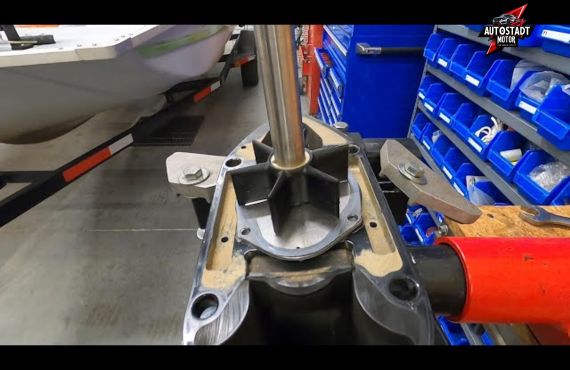
It is also important to distinguish between a water pump fault and other problems that produce similar symptoms. A damaged radiator, faulty thermostat, weak radiator fan, or leaking coolant hose can also cause overheating. Accurate diagnosis helps ensure that the right repair is recommended.
Whether your Mercury is showing a temperature warning, losing coolant, or making an unusual noise from the engine bay, professional inspection can help protect engine performance and reduce the risk of costly repairs.
Signs Your Car Needs Mercury Water Pump Repair
A failing water pump does not always stop working suddenly. In many cases, the component provides warning signs that become more noticeable over time. Recognizing these symptoms early can help you arrange repairs before the cooling system loses its ability to regulate engine temperature.
1. Engine Temperature Rising Above Normal
One of the most important warning signs is an engine temperature gauge that rises beyond its usual operating range.
The water pump circulates coolant between the engine and the radiator. If coolant circulation becomes insufficient, heat may build up inside the engine. The problem can become more noticeable during heavy traffic, extended driving, or other conditions that increase cooling demand.
However, overheating does not automatically confirm a failed water pump. A blocked radiator, faulty thermostat, cooling fan problem, or low coolant level may produce similar symptoms.
If the temperature warning appears, stop somewhere safe and switch off the engine. Do not continue driving an overheating vehicle in the hope that the temperature will return to normal.
2. Coolant Leaking Beneath the Vehicle
Fresh coolant underneath your Mercury may indicate a leak in the cooling system.
A water pump can develop leakage around its shaft seal, gasket, or housing, depending on its design. Coolant may then collect on nearby components before dripping onto the ground.
The fluid’s colour varies according to the coolant formulation, so appearance alone cannot reliably identify the source. Other components, including hoses, the radiator, and coolant connections, can also leak.
At AutoStadt Motor Services, locating the actual source is an important part of the repair process. Replacing the water pump without confirming the leak could leave the original problem unresolved.
3. Unusual Noise From the Engine Bay
A whining, grinding, or rumbling sound coming from the engine area can sometimes indicate water pump bearing wear.
As internal bearings deteriorate, the pump shaft may no longer rotate smoothly. In some engine designs, a water pump is driven by a belt, meaning bearing or pulley problems can also affect surrounding components.
Nevertheless, similar noises may come from an alternator, tensioner, idler pulley, or another rotating component. A proper inspection is needed to distinguish between these possibilities.
4. Coolant Level Repeatedly Dropping
If you repeatedly need to add coolant, the cooling system should be checked for leakage or another fault.
A damaged water pump seal is one possible explanation, but coolant may also escape from the radiator, hoses, expansion tank, thermostat housing, or other connections.
Regularly topping up coolant without identifying the cause is not a reliable long-term solution. Continued coolant loss can eventually lead to overheating, especially during Dubai’s warmer months.
5. Coolant Residue Around the Water Pump
Sometimes, a leak leaves dried coolant residue rather than a visible puddle.
A technician may find deposits around the pump housing, gasket area, or nearby engine components. These marks can provide useful clues, although old residue does not necessarily mean that the component is still leaking.
Cleaning the affected area and checking for fresh leakage can help confirm whether the pump needs repair or replacement.
6. Steam or a Coolant Warning
Steam from the engine compartment or a coolant-temperature warning can indicate a serious cooling-system problem.
A failing water pump may contribute to overheating, but the immediate priority is to protect the engine and avoid burns. Never remove a radiator cap or open a pressurised coolant reservoir while the engine is hot.
If your Mercury releases steam or shows a severe temperature warning, stop driving as soon as it is safe and arrange professional assistance.
Why Choose AutoStadt Motor Services for Mercury Water Pump Repair
Water pump problems require more than replacing a part and refilling the coolant. The entire cooling system should be considered to ensure that the repair addresses the underlying fault.
Accurate Cooling-System Diagnosis
AutoStadt Motor Services focuses on identifying the source of overheating or coolant loss before recommending a repair.
The inspection may include the water pump, surrounding hoses, radiator, thermostat housing, cooling fan operation, coolant reservoir, and relevant connections. Where appropriate, pressure testing can help reveal leaks that are difficult to identify visually.
This process reduces the risk of replacing a functioning component while overlooking the actual cause.
Repair Recommendations Based on the Fault
Not every cooling-system problem requires a new water pump.
For example, a leaking hose connection may be responsible for coolant loss, while a faulty thermostat may be preventing the engine from regulating temperature correctly. A worn water pump bearing or leaking pump seal, on the other hand, may require pump replacement.
The recommended solution should reflect the confirmed condition of the component and the vehicle manufacturer’s repair requirements.
Attention to Engine Protection
An engine that repeatedly overheats can suffer damage to gaskets, cylinder-head components, and other critical parts.
Therefore, addressing a water pump problem early can help prevent a relatively straightforward cooling-system repair from developing into a much larger mechanical issue.
Suitable Service for Different Vehicle Types
Cooling-system designs vary between manufacturers and engine configurations. A Mercury should be assessed according to its specific model, engine, and pump arrangement.
The same principle applies to vehicles such as the Toyota Land Cruiser, Nissan Patrol, BMW 5 Series, and Mercedes-Benz E-Class. Although each vehicle relies on effective engine cooling, its component layout and repair requirements can differ.
A Clear Approach to Maintenance
A good repair process should explain the fault, the recommended work, and any related issues found during inspection.
At AutoStadt Motor Services, the aim is to help drivers understand what their vehicle needs so they can make an informed maintenance decision.
How Our Mercury Water Pump Repair Process Works
A structured diagnostic process helps identify the cause of coolant loss or overheating and confirms whether the water pump is responsible.
Step 1: Review the Symptoms
The process begins with understanding what the driver has experienced.
This may include a rising temperature gauge, coolant warning, unusual engine noise, visible leakage, or repeated coolant top-ups. Information about when the symptoms occur can help narrow down the possible causes.
For example, overheating during slow traffic may suggest a different set of possibilities from coolant leakage that appears immediately after parking.
Step 2: Inspect the Cooling System
The technician examines accessible cooling-system components for signs of leakage, damage, corrosion, or deterioration.
Depending on the vehicle, this inspection may cover the water pump housing, coolant hoses, radiator, reservoir, thermostat area, belts, and related connections.
The purpose is to identify visible evidence and determine which additional diagnostic checks are necessary.
Step 3: Confirm Whether the Water Pump Is Faulty
If the initial inspection suggests a pump problem, the technician investigates the component more closely.
Signs of shaft movement, bearing noise, seal leakage, or other mechanical damage may indicate that the pump is no longer operating correctly. Pressure testing, where suitable, can also help identify leaks within the cooling system.
The inspection should distinguish a genuine water pump fault from problems involving the thermostat, radiator, fan, or hoses.
Step 4: Assess the Required Repair
Once the fault is identified, the appropriate repair is determined.
Depending on the engine design and the condition of the component, this may involve replacing the water pump, gasket, seal, or related parts. If another component is responsible for the symptoms, repairing that component may be the more appropriate solution.
Some engines have water pumps driven by a timing belt or other components that require substantial disassembly. In those cases, the manufacturer’s service procedure should guide the repair.
Step 5: Replace the Pump or Repair the Identified Fault
When water pump replacement is necessary, the component is removed using the appropriate procedure. Related sealing surfaces and accessible components are inspected before installation.
The replacement pump and associated parts should meet the vehicle’s requirements. Correct installation is important because improper sealing, alignment, or belt tension can cause further problems.
If the fault lies elsewhere, the necessary cooling-system repair is carried out instead.
Step 6: Refill and Bleed the Cooling System
After the repair, the cooling system must be filled with the correct coolant specification.
Depending on the engine design, trapped air may need to be removed using a specific bleeding procedure. Air pockets can interfere with coolant circulation and may cause temperature fluctuations or poor heater performance.
The procedure should follow the manufacturer’s instructions rather than relying on a universal method for every vehicle.
Step 7: Test the Repair
The final stage involves checking the system after the repair.
The technician verifies the coolant level, inspects for leakage, and assesses engine temperature and cooling-system operation. Where appropriate, the vehicle is allowed to reach its normal operating temperature so the repair can be evaluated under suitable conditions.
A final inspection helps confirm that the original concern has been addressed and that no obvious cooling-system issue remains.
Mercury Water Pump Maintenance Tips for Dubai Drivers
Preventive maintenance can help identify developing cooling-system problems before they become urgent.
First, pay attention to the engine temperature gauge and any coolant warnings. If the temperature begins rising above normal, do not ignore the change.
Second, inspect for coolant loss when the engine is completely cool. Repeatedly needing to top up the reservoir is a reason to investigate the system rather than simply continuing to add fluid.
Third, follow the manufacturer’s recommended coolant specification and maintenance schedule. Different vehicles may require different coolant formulations, and mixing incompatible products can create problems.
It is also sensible to have the cooling system inspected during routine servicing, particularly if the vehicle has developed unusual noises, visible residue, or a history of overheating.
Finally, remember that a water pump is only one part of the cooling system. Radiator condition, fan operation, thermostat performance, hoses, and coolant quality all contribute to effective temperature control.
For Dubai drivers, resolving early warning signs is especially important because a cooling-system fault can become more serious during hot-weather driving.
Frequently Asked Questions About Mercury Water Pump Repair in Dubai
1. How do I know if my Mercury water pump needs repair?
Common warning signs include coolant leaking from the engine area, repeated coolant loss, unusual whining or grinding noises, and an engine temperature that rises above normal. However, these symptoms can also result from other cooling-system faults. A professional inspection can determine whether the water pump is responsible and whether it needs repair or replacement.
2. Can I drive my Mercury with a leaking water pump?
Driving with a leaking water pump is risky because coolant loss can lead to overheating. Even if the vehicle initially appears to operate normally, the situation can worsen during a journey. If the temperature warning appears, steam develops, or coolant is escaping rapidly, stop safely and switch off the engine. Do not open a hot, pressurised cooling system. Arrange assistance if the vehicle cannot be operated safely.
3. How much does Mercury water pump repair cost in Dubai?
The cost depends on the vehicle’s model and engine, the pump design, the extent of the damage, and how much work is required to access the component. A pump that is relatively easy to reach may involve less labour than one requiring significant engine-area disassembly. Additional costs may arise if related components also need attention. AutoStadt Motor Services can assess the fault and recommend the appropriate repair before unnecessary work is undertaken.
4. Should I replace the thermostat when replacing the water pump?
Not in every case. The decision depends on the vehicle manufacturer’s recommendations, the engine design, the condition of the thermostat, and how the components are installed. Some vehicles have related parts that are practical to service together because access overlaps, while others do not require simultaneous replacement. The best approach is to inspect the cooling system and follow the appropriate maintenance procedure for the specific engine.
5. How long does Mercury water pump repair take?
Repair time varies according to the engine layout, pump location, availability of suitable replacement parts, and whether additional problems are discovered. Some water pumps are relatively accessible, while others require more extensive disassembly and careful coolant-system bleeding. An accurate estimate can be provided after inspecting the vehicle and identifying the required work.
Conclusion
Mercury water pump repair is an important part of maintaining engine reliability when coolant leaks, abnormal engine temperatures, or unusual pump-related noises appear. Because the water pump supports coolant circulation, a failure can affect the entire cooling system and potentially expose the engine to serious overheating damage.
The right solution begins with accurate diagnosis. A leaking seal, worn bearing, damaged pump, faulty thermostat, radiator issue, or deteriorated hose may produce similar symptoms, but each requires a different repair approach.
For Dubai car owners, acting promptly when warning signs appear can help prevent avoidable engine damage and reduce the chance of an unexpected breakdown. AutoStadt Motor Services offers professional inspection and repair support to help identify cooling-system faults and determine the appropriate solution for your vehicle.
If your Mercury is losing coolant, running hotter than usual, or showing signs of water pump failure, arrange an inspection before the problem becomes more severe. Proper diagnosis and timely maintenance can help keep your vehicle’s cooling system operating reliably on Dubai’s roads.


Leave a Comment