
Mercury radiator repair is essential when your vehicle develops coolant leaks, experiences rising engine temperatures, or shows signs that its cooling system is no longer working efficiently. The radiator plays a vital role in regulating engine temperature by transferring heat from the coolant to the surrounding air. When it becomes damaged, blocked, or unable to circulate coolant effectively, the engine may overheat and suffer expensive damage if the problem is ignored.
Although Mercury vehicles are no longer produced, many remain in use across the UAE. Owners of models such as the Mercury Grand Marquis, Mountaineer, Milan, and Mariner may continue to rely on their vehicles for everyday transportation. However, ageing cooling system components can gradually develop leaks, corrosion, restricted coolant flow, or other faults that require professional attention.
Dubai’s climate makes a properly functioning radiator particularly important. High ambient temperatures, congested roads, extended idling, and frequent stop-and-go driving can place additional demands on the engine cooling system. Consequently, even a relatively small cooling problem can become more noticeable during daily driving.
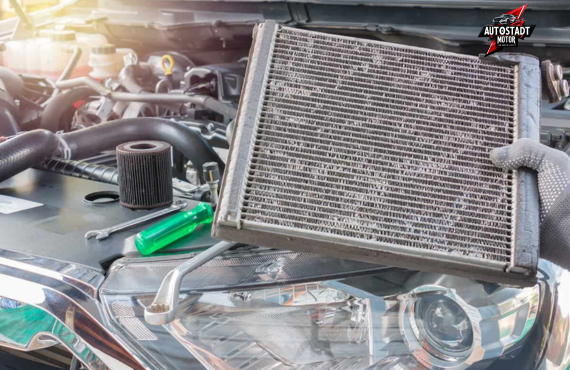
At AutoStadt Motor Services, Mercury radiator repair begins with identifying the actual cause of the cooling problem. Rather than automatically replacing the radiator whenever the engine overheats, the inspection should consider coolant circulation, radiator condition, hoses, the thermostat, cooling fans, the water pump, and the pressure cap. This diagnostic approach helps determine the appropriate repair for your vehicle.
Signs Your Car Needs Mercury Radiator Repair
Radiator problems do not always begin with dramatic overheating. In many cases, the vehicle displays smaller warning signs before the cooling system becomes seriously compromised. Recognizing these symptoms early can help protect your engine and reduce the risk of unexpected breakdowns.
1. Engine Temperature Keeps Rising
A temperature gauge that climbs above its normal operating range is one of the most important warnings of a cooling system problem.
A damaged or restricted radiator may struggle to remove heat from the engine coolant. However, overheating can also result from a faulty thermostat, malfunctioning cooling fan, failing water pump, low coolant level, or other mechanical issues.
For example, a Mercury Grand Marquis that begins overheating while waiting in traffic may have a cooling fan problem, restricted airflow, or another cooling system fault. The radiator should be inspected alongside the related components before the cause is confirmed.
If the temperature gauge enters the danger zone, stop driving as soon as it is safe to do so and switch off the engine. Never open a hot radiator cap because pressurized coolant can cause serious burns.
2. Coolant Leaking Beneath the Vehicle
Fresh coolant beneath your parked Mercury can indicate a leak in the radiator or another part of the cooling system.
Radiator leaks may develop around plastic end tanks, seams, joints, or damaged areas of the radiator core. Hoses, clamps, the coolant reservoir, and water pump can also be responsible.
Coolant colour varies depending on the product used, so appearance alone cannot reliably identify its source. A technician should inspect the affected area and determine whether the fluid is actually engine coolant.
Repeatedly topping up the reservoir without finding the leak is not a long-term solution. Continued coolant loss can eventually leave the engine without adequate temperature control.
3. Coolant Level Drops Repeatedly
If your Mercury requires frequent coolant top-ups, the cooling system needs attention.
A falling coolant level may indicate an external leak, a faulty pressure cap, or another problem that allows coolant to escape. In some cases, internal engine problems can also contribute to unexplained coolant loss.
At AutoStadt Motor Services, checking the cooling system for visible leakage and pressure-related faults can help narrow down the cause.
4. Steam or a Sweet Smell From the Engine Bay
Steam coming from beneath the bonnet may indicate that coolant is escaping onto hot engine components or that the engine has overheated.
Some coolant products also have a distinctive sweet smell. If this occurs alongside a falling coolant level or rising temperature, the cooling system should be inspected promptly.
Do not continue driving simply because the steam disappears after the vehicle cools down. The underlying leak may remain and return as soon as the engine reaches operating temperature.
5. Rust, Corrosion, or Visible Radiator Damage
Older Mercury vehicles may develop corrosion or deterioration around cooling system components over time.
Signs to watch for include damaged radiator fins, corrosion around connections, deteriorating hose fittings, and visible residue around joints. External debris can also restrict airflow through the radiator, reducing its ability to release heat.
Not every cosmetic imperfection requires radiator replacement. Nevertheless, damage that affects coolant containment or heat transfer should be assessed professionally.
6. Poor Cooling Performance During Traffic
If your Mercury maintains a normal temperature on open roads but begins overheating in slow-moving traffic, the cooling system may not be removing enough heat under those conditions.
Possible causes include insufficient airflow through the radiator, a faulty fan, restricted radiator passages, or a problem with coolant circulation.
Because several faults can produce similar symptoms, replacing the radiator without testing the rest of the system may fail to resolve the problem.
Why Choose AutoStadt Motor Services for Mercury Radiator Repair
Choosing the right workshop matters when dealing with an ageing vehicle or a cooling system fault. A suitable repair should address the immediate problem while considering the condition of the surrounding components.
Accurate Cooling System Diagnosis
At AutoStadt Motor Services, the first priority is to identify why the radiator or cooling system is not functioning correctly.
Depending on the symptoms, the inspection may include the radiator core, end tanks, coolant hoses, connections, reservoir, pressure cap, thermostat, water pump, and cooling fan operation.
A cooling system pressure test may also help reveal leaks that are difficult to identify visually. Additional checks may be necessary if the engine continues to overheat despite an apparently sound radiator.
Repair Options Suited to Older Mercury Models
Because Mercury production has ended, obtaining suitable replacement components may require additional care.
The correct part depends on the exact model, model year, engine, transmission configuration, and cooling system specification. A radiator that appears similar may not have the correct dimensions, connections, or cooling capacity.
AutoStadt Motor Services can assess the vehicle’s requirements and help determine whether a suitable repair or replacement component is appropriate.
Avoiding Unnecessary Part Replacement
An overheating engine does not automatically need a new radiator.
For instance, a faulty thermostat may prevent proper coolant circulation, while a failed cooling fan can reduce airflow when the vehicle is stationary. A leaking hose may also produce symptoms that initially appear to indicate radiator damage.
Testing the relevant components helps ensure that the recommended repair addresses the actual fault.
Attention to Related Cooling Components
A radiator works as part of a complete cooling system. Even after a damaged radiator has been repaired or replaced, another weak component could cause the same overheating problem to return.
For this reason, the inspection should consider the condition of the coolant, hoses, clamps, fan, thermostat, and water pump as appropriate.
This approach is useful for owners of older vehicles such as the Mercury Mountaineer, as well as drivers maintaining other makes, including Toyota, Nissan, BMW, and Mercedes-Benz.
Service Focused on Reliability
An effective repair should do more than stop a visible leak. The cooling system must also operate correctly under normal driving conditions.
By identifying the cause, selecting a suitable repair, and checking the system afterward, AutoStadt Motor Services aims to help vehicle owners make informed maintenance decisions and reduce the likelihood of repeat problems.
How Our Mercury Radiator Repair Process Works
A structured repair process helps prevent guesswork and ensures that the cooling system is assessed as a complete unit.
Step 1: Review the Symptoms
The process begins by discussing what the driver has noticed.
Important details include whether the temperature rises in traffic, whether coolant disappears, whether the vehicle has recently overheated, and whether any previous cooling system repairs have been carried out.
These observations help direct the inspection toward the most likely problem areas.
Step 2: Inspect the Radiator and Cooling System
The technician examines the radiator and accessible cooling components for leakage, damage, corrosion, loose connections, and signs of previous coolant loss.
The coolant reservoir, hoses, clamps, pressure cap, and other related parts may also require inspection.
The objective is to establish whether the radiator itself is defective or whether another component is responsible.
Step 3: Perform Appropriate Diagnostic Tests
Where necessary, pressure testing can help identify leaks in the cooling system. Other tests may be required to evaluate thermostat operation, cooling fan performance, or coolant circulation.
If overheating continues without an obvious external leak, further diagnosis may be needed to investigate possible internal engine problems.
The testing process depends on the symptoms and the vehicle’s specific cooling system design.
Step 4: Recommend the Correct Repair
After identifying the fault, the technician can recommend an appropriate solution.
Depending on the condition of the radiator, this may involve repairing a suitable connection, replacing a damaged hose, or installing a replacement radiator. A severely corroded, cracked, or internally restricted radiator may be unsuitable for repair.
The decision should consider reliability, component availability, and the overall condition of the cooling system.
Step 5: Complete the Repair and Refill Coolant
Once the required work has been approved, the affected component is repaired or replaced.
The cooling system should then be filled with the correct coolant specification for the vehicle. The system may also require proper bleeding to remove trapped air, following the manufacturer’s procedure.
Using the correct coolant matters because different formulations are not necessarily interchangeable. Mixing incompatible products can affect corrosion protection and cooling system performance.
Step 6: Test the Cooling System Again
After the repair, the system should be checked for leaks and correct operation.
Depending on the original fault, this may include verifying coolant circulation, checking fan operation, monitoring engine temperature, and confirming that the system maintains appropriate pressure.
If the engine previously overheated, the technician should also consider whether the incident may have affected other engine components.
A final inspection helps confirm that the original issue has been addressed rather than simply hidden by adding coolant.
Mercury Radiator Maintenance Tips for Dubai Drivers
Preventive maintenance is particularly useful for older vehicles because cooling system components naturally deteriorate with age and use.
First, check the coolant level regularly when the engine is completely cool and follow the manufacturer’s instructions. A recurring drop in coolant level should be investigated instead of treated as normal consumption.
Second, pay attention to the temperature gauge. If the reading changes unexpectedly, arrange an inspection before the vehicle experiences severe overheating.
Third, have deteriorating hoses, damaged connections, and visible corrosion assessed during routine servicing. Replacing a weak hose before it fails may prevent a roadside breakdown.
It is also important to keep the radiator and condenser area clear of excessive debris. Restricted airflow can reduce heat transfer, especially during slow driving in hot weather.
Finally, use the correct coolant specification and maintenance interval for your particular Mercury model. Avoid relying on universal assumptions because the recommended coolant and servicing requirements can vary by engine and model year.
Frequently Asked Questions About Mercury Radiator Repair in Dubai
1. How much does Mercury radiator repair cost in Dubai?
The cost depends on the cause of the problem, the vehicle’s model and engine, the availability of suitable parts, and whether repair or replacement is necessary. A minor hose or connection leak may be less expensive to resolve than a damaged radiator core or a radiator replacement. Additional costs may arise if the thermostat, water pump, or cooling fan also requires attention. AutoStadt Motor Services can assess the vehicle and recommend the appropriate work before the repair proceeds.
2. Can I drive my Mercury if the radiator is leaking?
Driving with a radiator leak is risky because coolant loss can cause the engine to overheat. Even a small leak can become worse as the system heats up and pressure increases. If the temperature rises above normal, a warning appears, or steam comes from the engine bay, stop safely and switch off the engine. Allow it to cool completely and arrange professional assistance if necessary. Never remove the radiator cap while the system is hot.
3. Should I repair or replace my Mercury radiator?
The decision depends on the location and severity of the damage, the radiator’s overall condition, and the availability of suitable components. Certain minor faults may be repairable, but a badly corroded, cracked, or internally restricted radiator may require replacement. The correct solution should also account for the age and cooling requirements of the vehicle. A proper inspection helps determine which option offers the most suitable balance of reliability and cost.
4. Why does my Mercury overheat in Dubai traffic?
Overheating in traffic can occur when the cooling system cannot remove heat effectively at low vehicle speeds. Possible causes include a malfunctioning cooling fan, restricted radiator airflow, a blocked radiator, low coolant, a faulty thermostat, or a water pump problem. High outdoor temperatures can make these faults more noticeable. Because several components may produce similar symptoms, the cooling system should be tested before any part is replaced.
5. Can AutoStadt Motor Services repair older Mercury models?
Older Mercury vehicles can require additional attention when sourcing compatible components and checking the condition of ageing cooling system parts. The repair options depend on the exact model, engine, year, and availability of suitable components. AutoStadt Motor Services can assess the vehicle, investigate the cooling problem, and advise on the appropriate repair or replacement options. Providing the model year and engine details when arranging an inspection can help make the assessment more efficient.
Conclusion
Mercury radiator repair is important for maintaining engine temperature, preventing coolant loss, and protecting older Mercury vehicles from avoidable overheating damage. Warning signs such as rising temperatures, coolant leaks, repeated fluid loss, steam, and inconsistent cooling should be investigated promptly.
For Dubai drivers, a reliable cooling system is especially important during hot weather and prolonged traffic delays. However, an overheating problem does not always mean the radiator needs replacement. Careful diagnosis can reveal whether the fault lies in the radiator, thermostat, cooling fan, water pump, hoses, pressure cap, or another component.
AutoStadt Motor Services offers radiator inspection and cooling system repair support for vehicle owners seeking a practical solution based on the condition of their car. By identifying the underlying fault, selecting suitable components, and checking the system after repairs, the goal is to restore dependable cooling and help prevent recurring problems.
If your Mercury is losing coolant, running hotter than usual, or showing signs of radiator damage, arrange an inspection before the problem develops into a more serious engine repair.


Leave a Comment