
Mitsubishi radiator repair is an important service when your vehicle starts showing signs of overheating, coolant loss, or poor engine temperature control. The radiator is one of the main components responsible for removing excess heat from the engine coolant before it circulates back through the cooling system. When the radiator becomes damaged, blocked, corroded, or unable to maintain proper coolant flow, continued driving can put significant stress on the engine.
For Mitsubishi owners in Dubai, keeping the cooling system in good condition is particularly important because vehicles regularly operate in high temperatures, heavy traffic, and extended periods of stop-and-go driving. A cooling system that appears to be working normally can still have an underlying issue, such as a small radiator leak, restricted coolant passage, damaged radiator fins, a faulty radiator cap, or an inefficient cooling fan.
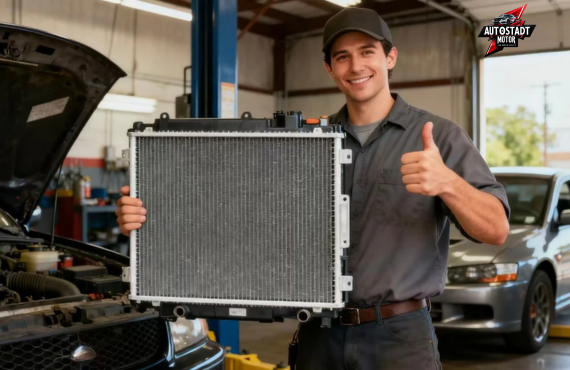
At AutoStadt Motor Services, Mitsubishi radiator repair is approached as a complete cooling-system diagnosis rather than simply replacing a visible damaged component. Our technicians inspect the radiator, hoses, coolant circulation, pressure, thermostat, fans, and related components to identify the actual source of the problem. This helps Mitsubishi owners avoid unnecessary repairs while protecting the engine from further overheating damage.
Signs Your Car Needs Mitsubishi Radiator Repair
A radiator problem does not always begin with a dramatic overheating warning. In many cases, the vehicle provides smaller indications that should be investigated early. Recognizing these symptoms can help you arrange Mitsubishi radiator repair before a minor cooling-system problem becomes an expensive engine repair.
Coolant Leaks Under the Vehicle
One of the most common signs is coolant appearing underneath the front section of the vehicle. Depending on the location of the leak, you may notice green, blue, pink, yellow, or another coolant color.
However, coolant color can vary according to the coolant type used, so the fluid should be properly identified rather than relying only on appearance. A leaking radiator may lose coolant through a damaged tank, cracked connection, failed seal, or compromised radiator core.
If the coolant level continues to fall, simply topping it up is not a permanent solution. The source of the leak needs to be located and repaired.
Rising Engine Temperature
If the temperature gauge begins moving higher than its normal operating position, the cooling system should be checked promptly. A radiator that cannot efficiently transfer heat may contribute to increasing engine temperature.
Overheating can also be caused by other components, including the thermostat, water pump, cooling fan, or insufficient coolant. That is why professional diagnosis is important before replacing parts.
Visible Radiator Damage
The radiator is positioned toward the front of the vehicle and can be exposed to road debris, dust, corrosion, and physical impact. Bent or damaged fins can restrict airflow and reduce cooling efficiency.
In addition, the plastic tanks used on many modern radiators can develop cracks or become brittle over time. During an inspection, technicians can examine these areas for signs of physical damage or deterioration.
Frequent Need to Add Coolant
If you repeatedly need to refill your Mitsubishi’s coolant reservoir, there is likely an underlying problem. The cooling system is designed to operate as a closed system, so regular coolant loss should not be considered normal.
A leak may be small enough that it is difficult to see when the vehicle is parked. Pressure testing can help identify leaks that are not immediately obvious.
Coolant Smell Around the Engine Bay
A sweet or unusual coolant smell after driving can indicate a coolant leak. Sometimes the leaking fluid reaches a hot engine component and evaporates, leaving little or no visible puddle.
This type of problem should not be ignored. Continued coolant loss can eventually reduce the system’s ability to control engine temperature.
Cooling Fan Running Excessively
If the cooling fan runs more frequently or for longer periods than usual, it can indicate that the cooling system is struggling to remove heat.
The fan itself may be faulty, but the radiator, coolant level, thermostat, fan control system, or other components can also be involved. A complete diagnosis is therefore more useful than immediately replacing the fan.
Why Choose AutoStadt Motor Services for Mitsubishi Radiator Repair
Choosing a workshop for cooling-system work involves more than finding someone who can replace a radiator. A proper repair should identify why the cooling system is failing and confirm that the vehicle is operating correctly afterward.
Cooling-System Diagnosis Before Repair
At AutoStadt Motor Services, our technicians begin by assessing the cooling system and identifying the symptoms. This can include checking coolant condition and level, inspecting hoses and connections, examining the radiator, and looking for evidence of leakage or overheating.
Where appropriate, pressure testing can help locate leaks that are difficult to identify through visual inspection alone.
Experience With Different Mitsubishi Models
Mitsubishi vehicles have different cooling-system layouts and component requirements depending on their model, engine, and production year. A Mitsubishi Pajero, for example, may have different cooling requirements from a Mitsubishi Outlander or Lancer.
Understanding the specific vehicle helps ensure that the repair approach is appropriate rather than applying a one-size-fits-all solution.
Attention to Related Components
A radiator rarely works alone. It forms part of a larger engine cooling system that includes the coolant, thermostat, water pump, radiator cap, cooling fans, hoses, and expansion reservoir.
For this reason, our technicians look beyond the radiator itself when diagnosing overheating or coolant-loss problems. This can prevent a repaired or replaced radiator from being affected by another unresolved fault.
Dubai-Focused Automotive Service
Dubai driving conditions can place considerable demands on a vehicle’s cooling system. Long traffic queues, high ambient temperatures, frequent air-conditioning use, and extended urban driving can increase the importance of effective engine cooling.
AutoStadt Motor Services provides professional automotive maintenance and repair for Dubai drivers who want their vehicles inspected before a cooling-system problem develops into a larger mechanical issue.
How Our Mitsubishi Radiator Repair Process Works
A systematic repair process helps ensure that the actual cause of the problem is addressed.
Initial Vehicle Inspection
The process begins with an inspection of the Mitsubishi and a discussion about the symptoms. Information such as overheating frequency, coolant loss, warning lights, recent repairs, and unusual smells can help technicians understand where to begin.
The cooling system is then examined for visible signs of leaks, damaged components, corrosion, or poor connections.
Cooling-System Testing
If a coolant leak is suspected, the system may require pressure testing. This can reveal leakage from the radiator, hoses, connections, or other components.
The radiator itself is also inspected for blocked passages, damaged fins, cracks, and signs of deterioration. The coolant reservoir and radiator cap are checked as part of the wider cooling-system assessment.
Checking the Thermostat and Water Pump
A radiator can be in good condition while the vehicle still overheats because coolant is not circulating correctly.
The thermostat controls coolant flow according to engine temperature, while the water pump circulates coolant through the engine and radiator. If either component is malfunctioning, the radiator may not receive or discharge coolant properly.
Therefore, these components should be considered when diagnosing overheating.
Cooling Fan and Airflow Inspection
Proper airflow is essential for radiator performance, especially when the Mitsubishi is stationary in traffic.
Technicians can check whether the cooling fans activate correctly and whether airflow through the radiator is being restricted. Dirt, debris, damaged fins, or fan problems can all reduce cooling performance.
Repair or Radiator Replacement
Once the fault has been identified, the appropriate repair is determined. Depending on the condition of the radiator, this may involve repairing a suitable connection or replacing the radiator with a compatible unit.
The correct solution depends on the severity and location of the damage, the radiator’s condition, and the vehicle’s requirements.
Coolant Refill and Final Testing
After the repair, the cooling system is refilled with the appropriate coolant and checked for proper circulation. Air trapped inside the system may need to be removed because air pockets can interfere with coolant flow and temperature control.
The vehicle is then tested to confirm that the cooling system is operating correctly and that there are no remaining leaks or abnormal temperature issues.
Preventing Future Radiator Problems
Regular maintenance can reduce the likelihood of unexpected cooling-system failure. Mitsubishi owners should periodically check the coolant level according to the vehicle manufacturer’s recommendations and pay attention to any unexplained coolant loss.
The radiator should also be kept reasonably clear of heavy dirt and debris. Because airflow is essential for heat transfer, excessive blockage around the radiator can reduce cooling efficiency.
It is also important not to ignore small symptoms. A minor coolant leak can eventually become a major loss of coolant, while a small temperature increase can develop into severe overheating.
Other vehicles, including the Toyota Land Cruiser, Nissan Patrol, BMW X5, and Mercedes-Benz GLE, also rely on properly maintained cooling systems despite differences in their engine and radiator designs. The same basic principle applies: identifying cooling problems early is generally preferable to waiting for an overheating event.
Frequently Asked Questions About Mitsubishi Radiator Repair in Dubai
1. How do I know if my Mitsubishi radiator needs repair or replacement?
A radiator may require repair when the issue is limited to a suitable repairable component or connection. However, a severely cracked, corroded, blocked, or physically damaged radiator may need replacement.
The correct choice depends on the location and severity of the damage. A professional inspection and cooling-system pressure test can help determine whether repair is practical or replacement is more appropriate.
2. Can I drive my Mitsubishi if the radiator is leaking?
Driving with a radiator leak is not recommended, particularly if the coolant level is dropping or the engine temperature is increasing. Continuing to drive can cause the engine to overheat, potentially leading to much more serious mechanical damage.
If you notice a significant coolant leak or overheating warning, it is safer to stop driving and have the vehicle inspected. Adding coolant may temporarily restore the level, but it does not fix the underlying leak.
3. How much does Mitsubishi radiator repair cost in Dubai?
The cost depends on the Mitsubishi model, the type of radiator problem, the parts required, and whether the radiator can be repaired or needs replacement. Additional cooling-system faults, such as a damaged hose, thermostat, water pump, or fan, can also affect the final repair cost.
AutoStadt Motor Services can inspect the vehicle first and determine what work is actually required rather than recommending unnecessary component replacement.
4. How often should I have my Mitsubishi cooling system checked?
There is no single inspection interval that applies to every Mitsubishi because maintenance requirements vary by model, engine, age, mileage, and driving conditions. However, the cooling system should be checked whenever you notice coolant loss, unusual temperature readings, leaks, warning lights, or changes in cooling performance.
Regular servicing is particularly useful for vehicles frequently driven through heavy Dubai traffic or exposed to demanding operating conditions.
5. What other parts should be checked during Mitsubishi radiator repair?
A complete cooling-system inspection should consider the radiator along with the thermostat, water pump, radiator cap, coolant reservoir, hoses, cooling fans, and coolant condition.
Checking these related components is important because an overheating problem may not originate from the radiator itself. Identifying the actual cause helps prevent repeated repairs and gives the vehicle a better chance of maintaining stable engine temperature.
Conclusion
Mitsubishi radiator repair should not be delayed when your vehicle shows signs of coolant loss, overheating, radiator damage, or abnormal cooling performance. The radiator plays a central role in controlling engine temperature, and a small cooling-system fault can become considerably more serious if it is ignored.
For Mitsubishi owners in Dubai, AutoStadt Motor Services provides a complete approach to radiator and cooling-system problems. From leak detection and radiator inspection to coolant-system testing and related component checks, the focus is on identifying the underlying issue and completing the necessary repair correctly.
Whether you drive a Mitsubishi Pajero, Outlander, Lancer, ASX, or another model, professional cooling-system maintenance can help protect the engine and keep your vehicle dependable in Dubai’s demanding driving conditions.


Leave a Comment