
Mitsubishi oil leak repair is an important service for Dubai drivers who notice oil spots under their vehicle, a burning-oil smell, or an unexplained drop in engine oil. Although a small leak may initially seem like a minor maintenance issue, continued oil loss can eventually reduce lubrication, increase engine wear, and lead to expensive mechanical problems.
Mitsubishi vehicles are built for everyday reliability, but seals, gaskets, hoses, oil filters, drain plugs, and other engine components can deteriorate over time. High mileage, regular stop-and-go driving, extended idling, and demanding operating conditions can make these problems more noticeable.
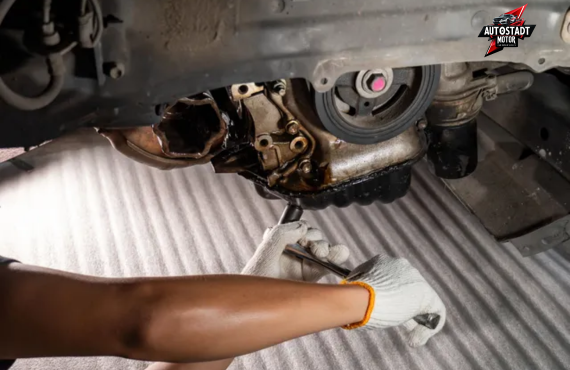
The key is to identify the source rather than simply adding more oil. At AutoStadt Motor Services, our technicians inspect the engine and related components to determine where the oil is escaping and what repair is appropriate. Whether your Mitsubishi has a visible oil leak or only shows early warning signs, professional diagnosis can help prevent a small problem from becoming an engine repair.
Signs Your Car Needs Mitsubishi Oil Leak Repair
Not every oil leak appears as a large puddle underneath the vehicle. In many cases, the first warning signs are subtle. Paying attention to these changes can help you arrange an inspection before the problem becomes more serious.
Oil Spots Under the Mitsubishi
One of the easiest signs to notice is oil appearing on the ground after parking. Fresh engine oil may leave dark brown or black marks beneath the vehicle. However, the location of the spot does not always identify the exact source because oil can travel across engine components before reaching the ground.
For this reason, simply looking underneath the vehicle may not be enough. A technician should inspect the engine from above and below to locate the actual leak point.
Falling Engine Oil Level
If you regularly need to add engine oil between scheduled services, there may be an underlying leak. Oil consumption can have several causes, including internal engine issues, but an external leak should be ruled out first.
Checking the oil level according to the manufacturer’s recommended procedure can provide useful information. If the level is repeatedly dropping, professional Mitsubishi oil leak repair should not be delayed.
Burning Oil Smell
A noticeable smell of burning oil can occur when leaking oil reaches a hot engine component, such as the exhaust manifold or another heated surface. You may notice the smell after driving or when stopping the vehicle.
This symptom deserves attention because oil contacting hot components can create additional risks and indicates that the leak may be occurring in an area where it should not.
Oil Around the Engine
During an inspection, oil may be visible around the valve cover, timing-related areas, oil pan, filter housing, or other engine components. In some cases, old oil residue makes it difficult to determine whether the leak is active.
Cleaning the affected area and monitoring it can help technicians identify fresh oil and distinguish an active leak from older residue.
Dashboard Oil Warning
If the oil pressure warning light comes on, the situation should be treated more seriously. Low oil pressure can indicate insufficient lubrication or another engine problem.
A warning light should not simply be reset. Continuing to drive without determining the cause can increase the possibility of serious engine damage.
Unusual Engine Noise
Engine oil reduces friction between moving components. When oil levels become dangerously low, some engines may develop unusual ticking, tapping, or other mechanical noises.
Noise does not automatically mean that an oil leak is responsible, but when it occurs together with falling oil levels, an inspection should be arranged promptly.
Common Causes Behind Mitsubishi Oil Leaks
A Mitsubishi oil leak can originate from several different areas, which is why replacing one component without proper diagnosis is not always the right approach.
Worn Gaskets and Seals
Engine gaskets and rubber seals gradually lose their ability to maintain a tight barrier. Age, heat cycles, and normal wear can cause them to harden or deteriorate.
A leaking valve cover gasket, for example, may allow oil to collect around the upper portion of the engine before running down other surfaces.
Oil Pan or Drain Plug Problems
The oil pan sits underneath the engine and is exposed to road debris, heat, and vibration. Damage to the pan or deterioration around its sealing surface can result in an oil leak.
Likewise, a drain plug that has been damaged, incorrectly tightened, or fitted with a worn sealing washer can cause oil to escape after an oil service.
Oil Filter or Housing Leaks
A poorly installed oil filter or damaged filter seal can result in oil escaping from the filter area. Oil filter housing components can also develop leaks depending on the vehicle’s design and condition.
This is particularly worth checking if the leak appeared soon after an oil change.
Crankshaft and Camshaft Seals
Seals around rotating engine shafts are designed to prevent oil from escaping. As they age, they can become less effective and allow oil to leak into areas where it should not be.
Because these components may require more involved access, accurate diagnosis is important before beginning the repair.
Why Choose AutoStadt Motor Services for Mitsubishi Oil Leak Repair
Choosing a workshop for an oil leak should be about more than simply stopping visible oil loss. The underlying cause needs to be identified so that the repair addresses the actual problem.
AutoStadt Motor Services provides Mitsubishi oil leak repair in Dubai with a diagnostic-first approach. Our technicians inspect the affected area, assess the condition of relevant components, and determine the likely source before recommending repair work.
Detailed Leak Inspection
Instead of automatically replacing a gasket or seal, the vehicle is examined for signs of fresh oil, residue, damaged components, and surrounding contamination. This helps narrow down the source.
Appropriate Replacement Parts
A reliable repair depends on using suitable gaskets, seals, filters, washers, and other components. The replacement should be compatible with the Mitsubishi model and the specific repair requirement.
Attention to Related Components
An oil leak can sometimes affect nearby belts, electrical connectors, hoses, or other engine components. During the inspection, these areas can also be checked for contamination or damage.
Service for Different Mitsubishi Models
Mitsubishi owners may have vehicles with very different engine layouts and maintenance requirements. Whether you drive an Outlander, Pajero, ASX, Lancer, or another Mitsubishi model, diagnosis should be based on the actual vehicle rather than a generic repair assumption.
The same principle applies across other brands. A Toyota Camry, Nissan Patrol, BMW 3 Series, or Mercedes-Benz C-Class can also develop oil leaks, but the likely leak points and repair procedures can differ considerably.
How Our Mitsubishi Oil Leak Repair Process Works
A structured repair process helps prevent unnecessary part replacement and gives the vehicle owner a clearer understanding of the problem.
1. Initial Vehicle Assessment
The process starts by discussing the symptoms you have noticed. Oil spots, smells, warning lights, recent servicing, oil-level changes, and unusual engine behavior can all provide useful clues.
2. Visual Inspection
Technicians inspect the engine compartment and accessible areas underneath the vehicle. Oil residue and wet areas are examined carefully because the highest visible point of oil contamination may not always be the actual source.
3. Leak Source Identification
The affected area may require cleaning or additional diagnostic inspection so that fresh oil can be distinguished from old residue. The objective is to identify the specific component responsible for the leak.
4. Repair Recommendation
Once the source is identified, the appropriate repair can be determined. Depending on the diagnosis, this may involve replacing a gasket, seal, drain-plug washer, oil filter, damaged component, or another related part.
5. Component Replacement and Repair
The faulty component is repaired or replaced according to the requirements of the Mitsubishi model. Care is taken to ensure sealing surfaces and related components are properly handled.
6. Oil Level and Condition Check
After the repair, the engine oil level is checked and corrected as required. If the oil has been significantly contaminated or lost, an appropriate oil service may also be recommended.
7. Final Inspection
The repaired area is inspected again to confirm that the original leak has been addressed. Additional checks may be performed to make sure there are no related leaks or issues requiring attention.
Preventing Future Mitsubishi Oil Leaks
Although some leaks are caused by normal component aging, good maintenance can help identify problems earlier.
Follow the recommended engine oil and filter service intervals for your Mitsubishi. Regularly checking the oil level is also useful, especially before long journeys or when the vehicle has developed a history of oil loss.
During routine servicing, ask technicians to inspect the engine for oil residue around gaskets, seals, the oil pan, filter area, and other common leak points. Early detection can turn a potentially expensive repair into a relatively straightforward maintenance job.
It is also important to use the correct engine oil specification rather than choosing an oil solely based on price or viscosity. The correct specification should follow the vehicle manufacturer’s requirements.
If you regularly drive through heavy Dubai traffic, frequent stop-and-go conditions can also place additional demands on the vehicle. Consistent maintenance becomes particularly useful when the car is used heavily for commuting.
Frequently Asked Questions About Mitsubishi Oil Leak Repair in Dubai
1. How much does Mitsubishi oil leak repair cost in Dubai?
The cost depends on the location and severity of the leak. A relatively accessible gasket, seal, filter, or drain-plug issue may require less labor than a leak involving components that are difficult to access.
Because there is no single repair price for every Mitsubishi model, an accurate estimate should be based on inspection. AutoStadt Motor Services can identify the suspected leak source and explain the required repair before major work is carried out.
2. Can I drive my Mitsubishi with an oil leak?
It depends on the severity of the leak. A minor leak may not immediately cause noticeable engine problems, but continued oil loss can eventually reduce the available lubrication.
If the oil level is falling quickly, the oil pressure warning light is illuminated, or the engine is making unusual noises, driving should be avoided until the vehicle is properly assessed. Continuing to operate an engine with insufficient oil can result in serious damage.
3. Why is my Mitsubishi leaking oil after an oil change?
An oil leak following an oil change can sometimes be associated with the oil filter, filter seal, drain plug, sealing washer, or another component disturbed during service. However, the timing does not automatically prove that the service caused the leak.
A proper inspection can determine whether the oil is coming from the recently serviced area or from an unrelated gasket or seal that happened to become noticeable at the same time.
4. How can I tell what type of oil is leaking from my Mitsubishi?
Engine oil is generally dark brown to black when used, although its appearance can vary depending on age and condition. However, identifying a fluid solely by its color is not always reliable.
A technician can inspect the fluid, its location, and the surrounding components to determine whether the leak is engine oil or another automotive fluid. This distinction matters because transmission fluid, coolant, power steering fluid, and other fluids require different diagnostic and repair procedures.
5. Does Dubai’s climate affect Mitsubishi oil leaks?
Dubai’s hot operating environment can contribute to the aging of rubber seals, gaskets, and other components over time. However, climate is only one factor. Mileage, vehicle age, maintenance history, engine condition, driving patterns, and component quality can also influence leak development.
Regular inspections are therefore more useful than waiting for a visible puddle to appear. If you notice oil residue, a burning smell, or repeated oil-level loss, arranging an inspection at AutoStadt Motor Services can help identify the issue before it develops into a larger engine problem.
Conclusion
Mitsubishi oil leak repair should not be treated as a simple matter of topping up engine oil whenever the level drops. A leak indicates that oil is escaping from somewhere in the lubrication system or engine assembly, and the underlying cause needs to be identified.
From worn gaskets and seals to oil pan, drain plug, filter, and shaft-seal problems, the correct repair depends on accurate diagnosis. Early attention can help protect engine lubrication, reduce unnecessary oil loss, and prevent a relatively manageable issue from developing into a costly mechanical problem.
For Mitsubishi owners in Dubai, AutoStadt Motor Services provides professional inspection and repair focused on identifying the source of oil leaks and restoring dependable vehicle performance. If your Mitsubishi is leaving oil spots, losing oil between services, or showing signs of an oil-related problem, professional inspection is the practical next step.


Leave a Comment