
Mitsubishi heating repair becomes important when your vehicle’s cabin heater stops producing enough warmth, takes too long to heat the interior, or only works intermittently. Although Dubai is known for its hot climate, a properly functioning heating system is still an important part of a vehicle’s overall climate-control system. More importantly, problems affecting the heater can sometimes indicate issues with the cooling system, thermostat, coolant circulation, blower motor, or HVAC controls.
Mitsubishi vehicles rely on several interconnected components to regulate cabin temperature. Depending on the model and year, the heating system can involve engine coolant, a heater core, thermostat, blower motor, air-mix doors, sensors, climate-control modules, and related electrical components. Therefore, replacing one component without identifying the underlying fault may not provide a lasting solution.
At AutoStadt Motor Services, Mitsubishi owners in Dubai can get professional heating-system diagnostics and repair based on the actual condition of the vehicle. Rather than treating every heating complaint the same way, technicians can inspect the relevant components and determine whether the problem is mechanical, electrical, coolant-related, or connected to the HVAC control system.
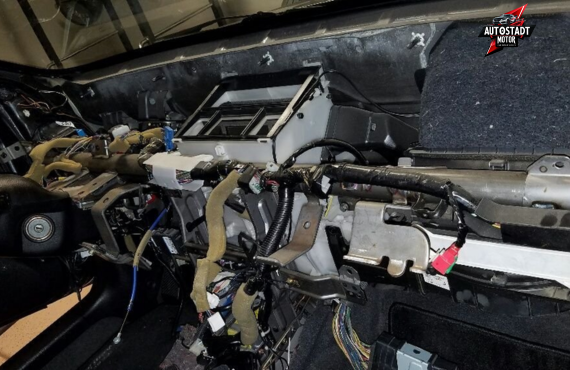
Whether you drive a Mitsubishi Pajero, Outlander, ASX, Lancer, or another Mitsubishi model, addressing unusual heating behavior early can help prevent a relatively manageable fault from developing into a more expensive repair.
Signs Your Car Needs Mitsubishi Heating Repair
A heating problem is not always obvious. Sometimes the system stops producing warm air completely, while in other cases the symptoms appear gradually. Recognizing these warning signs can help Dubai drivers arrange an inspection before the problem becomes more complicated.
Weak or Cold Air From the Heater
One of the clearest signs that you may need Mitsubishi heating repair is when the blower is operating but the air coming through the vents remains cold or only slightly warm.
This can happen for several reasons. Low coolant, restricted coolant circulation, a faulty thermostat, heater-core problems, or an issue with the temperature-control mechanism can all affect cabin heat. Since the correct diagnosis depends on the vehicle, a technician should inspect the system instead of assuming that the heater itself is defective.
Heater Takes Too Long to Produce Warm Air
If your Mitsubishi takes unusually long to produce warm air, the thermostat may not be regulating engine temperature correctly. A thermostat that remains open can prevent the engine from reaching its normal operating temperature efficiently.
However, slow heating can also have other causes. Coolant circulation, temperature sensors, HVAC controls, and air-mix mechanisms should be considered during diagnosis.
Uneven Temperature From the Vents
Another warning sign is when one side of the cabin feels warmer than the other or different vents produce noticeably different temperatures.
Modern Mitsubishi vehicles can use electronic climate-control systems that adjust airflow and temperature through sensors and actuators. If an air-mix door or actuator is not operating correctly, the selected cabin temperature may not be maintained.
Blower Works Only at Certain Speeds
If the blower motor works on some settings but not others, the issue may be electrical rather than a conventional heating fault. A blower resistor, control module, wiring connection, switch, or blower motor itself could be responsible.
This is particularly important because simply replacing the blower motor may not solve the problem if the actual fault is in the control circuit.
Unusual Smell From the Vents
A sweet or unusual smell inside the cabin can sometimes indicate a coolant leak. If coolant reaches the heater core or HVAC housing, you may notice an odor when the heater or ventilation system is operating.
A coolant-related smell should not be ignored. Coolant loss can eventually affect engine temperature and create a much larger mechanical problem.
Fogging Windows or Damp Carpet
Persistent windshield fogging or dampness around the front passenger area can sometimes be associated with a leaking heater core. While condensation can occur naturally under certain conditions, unexplained moisture combined with coolant odor deserves professional inspection.
Strange Sounds Behind the Dashboard
Clicking, rattling, buzzing, or unusual motor sounds when changing the temperature setting may indicate a problem with an HVAC actuator, blend door, blower motor, or related component.
Finding the source early can make the repair process more straightforward.
Why Choose AutoStadt Motor Services for Mitsubishi Heating Repair
A heating complaint can originate from several systems, so accurate diagnosis is an important part of Mitsubishi heating repair. At AutoStadt Motor Services, the focus is on identifying the cause before recommending replacement work.
Mitsubishi-Focused System Inspection
Mitsubishi vehicles have different HVAC configurations depending on the model, generation, and specification. A Pajero, for example, may have a different climate-control setup from an Outlander or Lancer.
A proper inspection considers the vehicle’s specific configuration rather than applying a generic heating-system solution.
Complete Cooling and Heating Diagnosis
The cabin heater and engine cooling system are closely connected in vehicles that use engine coolant to provide cabin heat. Consequently, technicians may need to inspect coolant level, circulation, thermostat operation, hoses, heater-core performance, and engine temperature.
This broader approach helps identify related faults that might otherwise be overlooked.
Electrical and HVAC Diagnostics
Modern vehicles increasingly depend on electronic controls. Therefore, a heating complaint may require inspection of sensors, actuators, wiring, switches, control modules, and diagnostic fault codes.
AutoStadt Motor Services can approach the problem from both mechanical and electrical perspectives, depending on the symptoms.
Practical Repair Recommendations
Not every heating problem requires major component replacement. Sometimes the solution may involve correcting coolant level, repairing a connection, replacing a thermostat, servicing a blower component, or addressing an HVAC actuator.
The goal is to match the repair to the actual fault instead of unnecessarily replacing multiple parts.
Experience With Different Vehicle Systems
The diagnostic principles used for Mitsubishi vehicles can also involve understanding how different automotive HVAC systems operate. Similar climate-control concerns can appear in vehicles such as the Toyota Land Cruiser, Nissan Patrol, BMW X5, or Mercedes-Benz GLE, although the components and repair procedures can differ.
This broader automotive experience can be useful when diagnosing modern vehicle climate-control systems.
How Our Mitsubishi Heating Repair Process Works
A professional heating repair should follow a logical diagnostic process. At AutoStadt Motor Services, the inspection can be structured around the vehicle’s symptoms and technical condition.
Step 1: Discuss the Heating Problem
The process begins by understanding exactly what the driver has noticed. The technician may ask whether the heater stopped suddenly, became weaker gradually, works only at certain settings, or produces different temperatures from different vents.
This information helps narrow down the possible causes.
Step 2: Inspect Coolant Level and Condition
For Mitsubishi models that use engine coolant as the heat source, coolant condition and level are important. Low coolant can reduce heater performance and may indicate an underlying leak.
The technician can inspect the cooling system for visible signs of leakage and assess whether further testing is required.
Step 3: Check Engine Temperature
The engine must reach an appropriate operating temperature for a conventional coolant-based heater to work effectively. Thermostat operation and temperature behavior can therefore provide important diagnostic clues.
If the engine is running unusually cool, the thermostat may require closer inspection.
Step 4: Test Heater Core and Coolant Circulation
The heater core transfers heat from the engine coolant into the cabin airflow. If coolant flow is restricted or the heater core is contaminated, heating performance can decline.
The technician can assess the relevant hoses, circulation, and temperature differences to determine whether the heater core is functioning as expected.
Step 5: Inspect Blower and Airflow
Strong heat is not useful if the blower cannot move enough air through the vents. Therefore, blower operation, airflow strength, filters where applicable, electrical connections, and blower controls may be checked.
A weak airflow problem should be separated from a temperature problem because they can have completely different causes.
Step 6: Test HVAC Controls and Actuators
If the heating temperature changes incorrectly or only certain vents operate properly, the HVAC control system may need inspection.
Temperature-control mechanisms, blend doors, actuators, sensors, and related electronics can all influence how warm air reaches the cabin.
Step 7: Perform the Appropriate Repair
Once the cause is identified, the required repair can be recommended. Depending on the diagnosis, this could involve a thermostat replacement, coolant-system repair, heater-core service, blower repair, actuator replacement, electrical repair, or another HVAC-related solution.
Step 8: Verify Heating Performance
After repairs, the system should be tested again. The technician can confirm airflow, temperature control, blower speeds, coolant behavior, and HVAC operation before the vehicle is returned.
This final check helps ensure that the original complaint has actually been addressed.
Mitsubishi Heating Repair and Preventive Maintenance
Heating-system problems can sometimes be reduced through proper vehicle maintenance. Regular coolant inspection is particularly important because the cooling system affects both engine temperature and cabin heating in many Mitsubishi models.
Drivers should also pay attention to unusual coolant loss, overheating warnings, strange smells, changing heater performance, or visible leaks. These signs should not simply be ignored because the vehicle is primarily used in Dubai’s warm climate.
In addition, keeping the vehicle’s HVAC system clean and addressing blower or electrical issues early can help maintain reliable climate-control performance.
For Mitsubishi owners who regularly drive through Dubai traffic, preventive inspections can be especially useful because extended periods of stop-and-go driving place additional demands on the vehicle’s cooling and electrical systems.
Frequently Asked Questions About Mitsubishi Heating Repair in Dubai
1. Why is my Mitsubishi heater blowing cold air?
Cold air from the heater can result from several issues, including low coolant, thermostat problems, restricted heater-core circulation, HVAC actuator faults, or control-system problems. The exact cause depends on the Mitsubishi model and symptoms.
If the blower is working normally but the air never becomes warm, professional diagnosis is recommended. Continuing to drive without investigating coolant-related symptoms can also create additional cooling-system concerns.
2. Does a Mitsubishi heater problem mean there is an engine problem?
Not necessarily. A heater issue can be caused by an HVAC component such as a blower motor, actuator, control module, or air-mix mechanism. However, because many conventional vehicle heating systems use engine coolant, heating problems can sometimes be connected to the cooling system.
That is why a complete inspection is more useful than immediately replacing an HVAC component.
3. How much does Mitsubishi heating repair cost in Dubai?
The cost depends on the actual fault, Mitsubishi model, replacement parts, labor requirements, and whether additional cooling-system or electrical repairs are necessary.
A minor control or thermostat issue can require significantly less work than a heater-core replacement or complex HVAC electrical repair. AutoStadt Motor Services can assess the vehicle first and determine the appropriate repair based on the diagnosis.
4. Can I drive my Mitsubishi if the heater is not working?
In some cases, a heater-only problem may not prevent the vehicle from being driven. However, if the heating issue is accompanied by coolant loss, an overheating warning, unusual smells, visible leaks, or abnormal engine temperature, the vehicle should be inspected promptly.
The reason is that the heater complaint may be a symptom of a cooling-system problem rather than an isolated cabin-comfort issue.
5. How can I prevent heating problems in my Mitsubishi?
Regular vehicle maintenance is the best starting point. Keep the cooling system properly maintained, monitor coolant levels, address leaks quickly, and pay attention to changes in heater performance or airflow.
If your Mitsubishi develops unusual smells, weak airflow, inconsistent temperatures, or repeated climate-control problems, having the system inspected early can help identify the issue before it develops into a more extensive repair.
Conclusion
Mitsubishi heating repair is not simply about restoring warm air to the cabin. A heating complaint can involve the cooling system, thermostat, heater core, blower motor, HVAC controls, actuators, sensors, or electrical components, so finding the underlying cause is essential.
For Mitsubishi owners in Dubai, AutoStadt Motor Services provides a practical approach to heating-system diagnosis and repair. From coolant and thermostat checks to HVAC controls, airflow testing, and component-level inspection, the right diagnostic process can help restore dependable climate-control performance.
If your Mitsubishi is producing cold air, heating inconsistently, making unusual HVAC noises, or showing signs of a coolant-related problem, arranging an inspection can help prevent a small issue from becoming a larger vehicle repair.


Leave a Comment