
Mitsubishi coolant system repair is essential when your vehicle begins losing coolant, running hotter than normal, or showing signs of an overheating engine. The cooling system plays a critical role in controlling engine temperature by circulating coolant through the engine, radiator, hoses and other components. When one part develops a fault, continued driving can turn a relatively manageable repair into serious engine damage.
For Mitsubishi owners in Dubai, maintaining an efficient cooling system is particularly important. Frequent traffic, long journeys, high ambient temperatures and demanding driving conditions can place additional stress on the radiator, coolant hoses, thermostat, water pump and cooling fans. A small coolant leak may therefore become a major problem if it is ignored.
At AutoStadt Motor Services, Mitsubishi vehicles are inspected systematically to identify the actual source of a cooling problem rather than simply adding coolant and sending the vehicle back onto the road. Our technicians check the condition of the cooling system, investigate leaks, assess coolant circulation and determine whether components require repair or replacement.
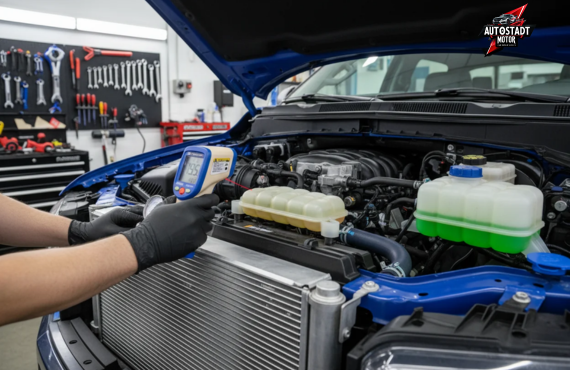
Whether you drive a Mitsubishi Pajero, Outlander, ASX, Lancer or another model, timely attention to the cooling system helps protect the engine and maintain dependable everyday performance.
Signs Your Car Needs Mitsubishi Coolant System Repair
Cooling system problems do not always begin with obvious overheating. In many cases, your Mitsubishi provides smaller warning signs first. Recognizing them early can prevent a more expensive breakdown.
1. Rising Engine Temperature
The temperature gauge moving higher than its normal position is one of the clearest warnings of a cooling system problem. If the gauge repeatedly rises during traffic or extended driving, there may be insufficient coolant circulation, restricted airflow or a problem with the thermostat, radiator or cooling fan.
Do not continue driving an overheating vehicle simply because the temperature later returns to normal. Intermittent overheating can still indicate an underlying fault.
2. Low Coolant Level
If you regularly need to add coolant to the expansion tank, the system should be inspected. Coolant does not normally disappear without a reason. A leak may develop around a hose connection, radiator, water pump, thermostat housing or another component.
Visible fluid underneath the vehicle is another warning sign. However, some leaks are small enough to evaporate before leaving a noticeable puddle, particularly when the engine is hot.
3. Coolant Warning Light
Depending on the Mitsubishi model and dashboard configuration, warning lights or messages may alert the driver to a cooling or temperature-related problem. These warnings should not be ignored.
A warning indicator does not necessarily identify the exact failed component. Professional diagnosis is still required to determine whether the issue involves coolant level, temperature, circulation or another cooling-system fault.
4. Sweet-Smelling Odor
A sweet smell around the engine bay or inside the cabin can sometimes indicate leaking coolant. If coolant reaches a hot engine component, it may produce a noticeable odor.
If the smell becomes stronger after driving, an inspection can help locate the source before the leak becomes severe.
5. Visible Coolant Leaks
Pink, green, blue or another coolant-related color underneath a vehicle can indicate a leak, although coolant appearance varies according to the product used.
Leaks may originate from radiator hoses, the radiator itself, the water pump, expansion tank or seals and connections. The exact source needs to be identified rather than assuming that replacing the most visible hose will solve the problem.
6. Weak Cabin Heating
The cabin heater depends on hot engine coolant circulating through the heater system. If the heater suddenly becomes less effective while the engine temperature behaves abnormally, low coolant level or poor coolant circulation may be involved.
This symptom should be assessed alongside other cooling-system signs rather than treated as a standalone diagnosis.
7. Steam or Coolant Smell From the Engine Bay
Steam coming from underneath the bonnet is a serious warning. It can occur when coolant escapes onto hot engine components or when the cooling system becomes excessively hot.
If this happens, stop safely and allow the vehicle to cool. Opening a hot coolant reservoir or radiator cap can be dangerous because the system may be pressurized.
Why Choose AutoStadt Motor Services for Mitsubishi Coolant System Repair
Choosing the right workshop matters because cooling-system problems can have multiple causes. Replacing one component without finding the underlying fault may not provide a lasting solution.
Model-Specific Cooling System Inspection
Mitsubishi vehicles use different engine configurations and cooling-system layouts across their model range. A Pajero, for example, can have different cooling requirements from a Mitsubishi Lancer or Outlander.
At AutoStadt Motor Services, the inspection begins with the symptoms and vehicle condition. This helps technicians focus on the areas most likely to be responsible for the problem.
Accurate Leak Detection
A coolant leak can be external, internal or difficult to see during a basic visual inspection. Pressure testing and detailed inspection can help identify leaks around hoses, radiator components, water pump areas and other connections.
Finding the actual leak is important because repeatedly topping up coolant is not a repair.
Radiator and Cooling Fan Checks
The radiator must be able to transfer heat effectively, while the cooling fans need to operate correctly when required. A restricted radiator, damaged fan, electrical fault or poor airflow can contribute to elevated engine temperatures.
Our technicians assess these areas as part of the overall cooling-system diagnosis.
Thermostat and Water Pump Assessment
The thermostat regulates coolant flow according to engine temperature, while the water pump helps circulate coolant throughout the system. A malfunction in either component can affect temperature control.
Instead of treating overheating as a generic problem, AutoStadt Motor Services checks the components responsible for maintaining proper coolant circulation.
Quality Repairs and Preventive Advice
A repair should address the immediate problem while also reducing the possibility of another cooling-system failure. After inspection, customers can receive guidance about coolant condition, hoses, service intervals and other maintenance considerations relevant to their Mitsubishi.
This approach is useful for vehicles that are regularly driven through Dubai traffic or used for longer UAE journeys.
How Our Mitsubishi Coolant System Repair Process Works
A structured diagnostic process helps avoid unnecessary parts replacement. At AutoStadt Motor Services, the repair process can include the following stages.
Initial Cooling System Assessment
The vehicle is first checked according to the customer’s symptoms. Information such as overheating frequency, coolant loss, warning lights, unusual smells and recent maintenance can help narrow down the possible causes.
The technician also visually inspects the engine bay for obvious signs of leakage, damaged hoses, corrosion or other abnormalities.
Cooling System Leak Inspection
The cooling system is then examined for signs of coolant loss. Depending on the symptoms, pressure testing may be used to help reveal leaks that are not immediately visible.
Radiator connections, hoses, thermostat areas, the expansion tank and water pump region can all require inspection.
Component Testing
If a leak is not the primary cause, other components may be assessed. These can include the thermostat, radiator, cooling fan, water pump and related electrical controls.
The objective is to determine why the engine is not maintaining its expected operating temperature.
Repair or Component Replacement
Once the problem is identified, the required repair can be carried out. This might involve replacing a damaged hose, repairing or replacing a radiator, changing a thermostat, addressing a water pump problem or resolving another cooling-system fault.
The correct repair depends on the Mitsubishi model, engine configuration and condition of the affected component.
Coolant Service and System Check
After the repair, the appropriate coolant is installed according to the vehicle’s requirements. The system may also need to be properly bled to remove trapped air, since air pockets can interfere with coolant circulation and temperature control.
The vehicle is then checked again to confirm that the cooling system is operating correctly.
Final Inspection
Before completing the service, the cooling system is inspected for continuing leaks and abnormal temperature behavior. This final step helps ensure that the original problem has been addressed rather than temporarily masked.
For comparison, the same basic diagnostic principle applies to other vehicles such as a Toyota Land Cruiser, Nissan Patrol, BMW X5 or Mercedes-Benz GLE: identifying the actual cause is more important than simply replacing parts based on symptoms.
Mitsubishi Coolant System Maintenance Tips for Dubai Drivers
Good maintenance can reduce the likelihood of unexpected cooling-system problems.
First, check the coolant level periodically when the engine is completely cool. If the level repeatedly drops, arrange an inspection instead of continuing to refill the reservoir.
Next, pay attention to the temperature gauge. A Mitsubishi that normally operates at a stable temperature should not regularly run hotter during routine driving.
It is also useful to inspect hoses and connections during scheduled servicing. Rubber hoses can deteriorate over time, while clamps and connections may eventually develop leaks.
Coolant condition also matters. Using the correct coolant and maintaining the appropriate mixture can support corrosion protection and effective heat transfer. Mixing unsuitable coolant products can create compatibility problems, so the correct specification should be confirmed before servicing.
Finally, if your vehicle has experienced overheating, do not assume that allowing it to cool down has solved the issue. The underlying cause should still be diagnosed.
Frequently Asked Questions About Mitsubishi Coolant System Repair in Dubai
1. How do I know if my Mitsubishi has a coolant leak?
A falling coolant level, visible fluid underneath the vehicle, a sweet coolant odor, steam from the engine bay or repeated overheating can indicate a leak. However, a leak is not always visible. Some coolant leaks occur only when the system becomes pressurized or when the engine reaches operating temperature. A professional inspection and, when appropriate, pressure testing can help identify the source.
2. Can I drive my Mitsubishi if the coolant level is low?
Driving with low coolant is risky because the engine may not receive adequate temperature control. Continued operation can lead to overheating and potentially serious engine damage. If the coolant level is low, allow the engine to cool before checking it and arrange an inspection to determine why the level has dropped. If the temperature gauge is already high or steam is present, continuing to drive is not advisable.
3. How often should Mitsubishi coolant be changed in Dubai?
The appropriate coolant replacement interval depends on the Mitsubishi model, engine, coolant specification and maintenance schedule. There is no single interval that applies to every Mitsubishi. Owners should follow the vehicle’s recommended service information and have the coolant inspected during regular maintenance. If the coolant appears contaminated, the system has suffered a leak or components have been replaced, additional service may be required.
4. Why does my Mitsubishi overheat even when there is enough coolant?
Having enough coolant does not necessarily mean the cooling system is functioning correctly. Overheating can result from a faulty thermostat, damaged water pump, restricted radiator, malfunctioning cooling fan, trapped air, poor coolant circulation or another mechanical or electrical issue. Therefore, simply adding more coolant may not solve the problem. A complete diagnostic inspection is needed to identify the actual cause.
5. How much does Mitsubishi coolant system repair cost in Dubai?
The cost depends on the specific fault and the parts required. A minor hose or connection repair will generally involve a different level of work from radiator, thermostat or water pump replacement. Vehicle model, engine type, parts selection and labor requirements can also affect the final cost. AutoStadt Motor Services can inspect the vehicle first and determine the repair required before proceeding with the necessary work.
Conclusion
Mitsubishi coolant system repair should not be postponed when your vehicle shows signs of overheating, coolant loss, unusual smells or temperature fluctuations. The cooling system protects the engine from excessive heat, and even a relatively small fault can become more serious if it is left unresolved.
For Mitsubishi owners in Dubai, regular inspection is particularly useful when vehicles are exposed to heavy traffic, long drives and demanding operating conditions. Early diagnosis can help identify radiator problems, coolant leaks, thermostat faults, water pump issues and other cooling-system concerns before they develop into major engine repairs.
AutoStadt Motor Services provides professional Mitsubishi cooling-system inspection and repair in Dubai, with a focus on identifying the cause of the problem and carrying out the appropriate repair. Whether your Mitsubishi needs a coolant leak inspection, radiator service, thermostat replacement, water pump diagnosis or broader cooling-system repair, getting the issue checked promptly can help keep your vehicle reliable and road-ready.


Leave a Comment