
Mitsubishi evaporator change becomes necessary when the evaporator inside your vehicle’s air conditioning system develops a leak, becomes contaminated, or can no longer provide effective cooling. Because the evaporator is located deep inside the HVAC system, replacing it is more involved than a simple AC gas refill or cabin filter replacement. A proper diagnosis is therefore important before any major repair is started.
For Mitsubishi owners in Dubai, a properly functioning air conditioner is essential for comfortable daily driving. Long traffic periods, high ambient temperatures and frequent use of the AC system can expose weak components and turn a minor cooling problem into a more complicated repair. If your Mitsubishi takes too long to cool the cabin, loses refrigerant repeatedly, or produces unusual smells from the vents, the evaporator may need professional inspection.
AutoStadt Motor Services provides Mitsubishi AC inspection and evaporator replacement services for drivers in Dubai. Rather than replacing components based only on symptoms, the technicians can inspect the cooling system, identify the source of the problem and determine whether the evaporator is actually responsible.
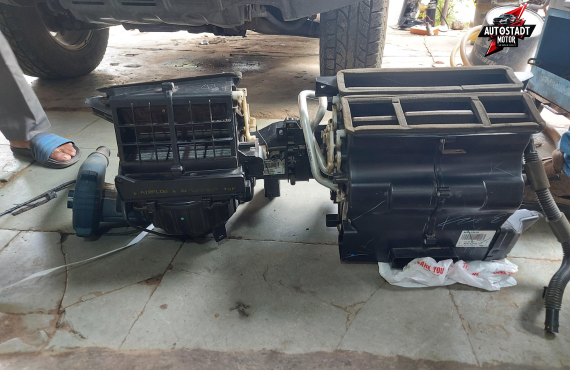
Understanding the Mitsubishi AC Evaporator
The evaporator is one of the central components of an automotive air conditioning system. It sits within the HVAC housing and absorbs heat from the air passing through it. Refrigerant flowing through the evaporator changes state and removes heat, allowing cooler air to enter the cabin.
When the evaporator develops a leak, the refrigerant level gradually falls. Since the evaporator is usually positioned behind or underneath the dashboard, accessing it can require substantial dismantling. This is one reason why an evaporator repair should be handled by technicians familiar with automotive HVAC systems.
Signs Your Car Needs Mitsubishi Evaporator Change
Not every Mitsubishi AC problem means the evaporator needs to be replaced. However, certain symptoms can make an evaporator inspection especially important. Recognizing them early can prevent unnecessary stress on other air conditioning components.
1. AC Refrigerant Keeps Disappearing
One of the strongest warning signs is repeated refrigerant loss. If the AC works properly after a gas recharge but stops cooling again after a relatively short period, there may be a refrigerant leak somewhere in the system.
Leaks can occur at several points, including pipes, connections, seals, the condenser, compressor or evaporator. Therefore, simply adding refrigerant does not solve the underlying issue. A proper leak test should be performed to identify its location.
2. Weak Cooling Despite Correct AC Settings
If your Mitsubishi air conditioner is running but the cabin never becomes properly cool, several components could be responsible. Low refrigerant, a restricted expansion valve, compressor problems or an evaporator issue may all produce similar symptoms.
An experienced technician can measure system pressures and inspect the AC operation before recommending an evaporator replacement.
3. Unusual Smell From the Air Vents
A persistent musty or unpleasant odor can indicate contamination around the evaporator and HVAC housing. Moisture naturally forms around the evaporator during normal AC operation. Over time, dirt, bacteria and other contaminants can accumulate if the system is not maintained properly.
An odor does not automatically mean the evaporator must be changed, but it is a reason to have the HVAC system inspected.
4. Refrigerant Leak Detected Around the HVAC System
If professional testing indicates that the leak is coming from the evaporator, replacement may be required. External components can sometimes be repaired or replaced without major dashboard work, but an evaporator located inside the HVAC housing generally requires access to the unit itself.
5. Cooling Performance Changes During Driving
Intermittent cooling can be caused by several different faults. If your Mitsubishi blows cold air at some times and warm air at others, the problem could involve refrigerant pressure, the compressor, expansion valve, electrical controls or evaporator performance.
Rather than repeatedly refilling the AC gas, have the complete system diagnosed.
6. Moisture or Drainage Problems
The evaporator removes moisture from cabin air, and condensation normally drains through the AC drain system. If the drain becomes blocked, water can accumulate inside the HVAC area and potentially contribute to odors or moisture-related problems.
If you notice unusual dampness inside the vehicle, professional inspection is advisable.
Why Choose AutoStadt Motor Services for Mitsubishi Evaporator Change
Replacing an evaporator is not simply a matter of removing an old part and installing a new one. The entire AC system needs to be handled correctly before, during and after the replacement.
AutoStadt Motor Services approaches Mitsubishi evaporator change as a complete air conditioning repair rather than an isolated component replacement. The process starts with diagnosis so that customers are not encouraged to replace an expensive component when another part is actually causing the problem.
Mitsubishi AC System Diagnosis
Before dismantling the HVAC system, technicians can assess cooling performance, refrigerant pressure, compressor operation and other relevant components. This helps establish whether the evaporator is genuinely responsible for the symptoms.
Leak Detection
A refrigerant leak should be located rather than repeatedly covered up with additional refrigerant. Leak detection can help distinguish an evaporator problem from issues involving hoses, fittings, condenser components or other parts of the AC system.
Experienced HVAC Repair
The evaporator is generally positioned in a difficult-to-access area. Careful removal and installation are therefore important. Improper handling of dashboard and HVAC components can create additional problems such as rattles, damaged trim or air leakage.
Complete AC Performance Check
Once the evaporator replacement is completed, the system should be checked for leaks and proper operation. Refrigerant evacuation and charging must be carried out according to the vehicle’s specified requirements.
This approach is useful for Mitsubishi owners who want the original problem addressed rather than receiving another temporary refrigerant refill.
How Our Mitsubishi Evaporator Change Process Works
A professional evaporator replacement follows several stages. The exact procedure can vary according to the Mitsubishi model and HVAC configuration.
Step 1: Initial AC Inspection
The technician begins by discussing the symptoms and checking how the AC behaves. Cooling temperature, airflow and system operation provide useful information about the condition of the air conditioning system.
Step 2: System Testing and Leak Diagnosis
The AC system is tested to identify abnormal refrigerant loss or pressure issues. Additional leak-detection methods may be used when necessary.
This stage is particularly important because a Mitsubishi can have poor cooling for reasons unrelated to the evaporator. Confirming the fault before dismantling the HVAC system helps reduce unnecessary repair work.
Step 3: Confirming the Evaporator Fault
If testing points toward an evaporator leak or serious evaporator-related failure, the technician can explain the required repair. The Mitsubishi model, year and specific HVAC design determine how much access work is needed.
Step 4: HVAC Access and Evaporator Removal
Because the evaporator is installed inside the HVAC housing, surrounding components may need to be removed carefully to gain access. Dashboard or interior components can be handled systematically to minimize the risk of damage.
The old evaporator is then removed and inspected as appropriate.
Step 5: New Evaporator Installation
The replacement evaporator is installed with the required seals and connections. Correct fitting is important because even a small leak at a connection can cause the system to lose refrigerant again.
Step 6: Vacuum and Leak Check
After the AC system is reassembled, it should be evacuated and checked before refrigerant is introduced. This helps remove unwanted air and moisture and provides an opportunity to identify leakage.
Step 7: Refrigerant Recharge and Performance Testing
The system is recharged using the appropriate refrigerant quantity for the vehicle. The AC is then operated and checked for cooling performance, airflow and stable operation.
Step 8: Final Inspection
Finally, the technician checks the HVAC system and surrounding components to ensure everything has been correctly reinstalled. The goal is to return the Mitsubishi to dependable cooling performance without creating secondary issues.
Mitsubishi Models That May Need Evaporator Inspection
Different Mitsubishi models use different HVAC configurations, so the repair procedure can vary. Models such as the Mitsubishi Pajero, Outlander, Lancer and ASX may require different access procedures depending on their model year and specification.
For comparison, AC problems in vehicles such as the Toyota Land Cruiser or Nissan Patrol can also involve hidden HVAC components, while BMW and Mercedes-Benz models may use more complex climate-control arrangements. This is why diagnosing the actual vehicle rather than assuming every AC problem has the same cause is important.
For a Mitsubishi owner, providing the exact model and year to AutoStadt Motor Services can help technicians prepare for the appropriate inspection and repair procedure.
When Should You Replace the Evaporator Instead of Refilling AC Gas?
An AC gas refill can restore cooling when the system simply has insufficient refrigerant because of a correctly diagnosed issue. However, refrigerant does not normally disappear from a healthy sealed system.
If the refrigerant level repeatedly drops, there is likely a leak somewhere. Continuing to refill the system without locating that leak can become an expensive cycle.
When the evaporator itself is confirmed as the leaking component, replacing it addresses the source of the problem. The rest of the system should also be inspected because an AC failure may involve more than one component.
This distinction is particularly important in Dubai, where drivers may rely heavily on their air conditioning throughout the year.
How to Reduce Future Mitsubishi AC Problems
Regular maintenance cannot prevent every evaporator failure, but it can help identify AC problems earlier. Pay attention to changes in cooling performance instead of waiting until the system stops producing cold air completely.
Using the air conditioner periodically, keeping the cabin air filter in suitable condition and having unusual smells or weak cooling investigated can also support better HVAC performance.
If the compressor begins making unusual noises, the AC cycles abnormally, or refrigerant appears to be disappearing quickly, arrange an inspection rather than repeatedly adding gas.
For Dubai drivers, timely diagnosis is especially useful because a small AC issue can become much more inconvenient when the vehicle is used extensively in hot weather.
Frequently Asked Questions About Mitsubishi Evaporator Change in Dubai
1. How do I know if my Mitsubishi evaporator is leaking?
Repeated refrigerant loss, weak cooling and an inability to maintain AC performance can indicate a leak. However, these symptoms can also be caused by other components. A professional leak test is needed to confirm whether the evaporator is responsible.
2. How long does Mitsubishi evaporator change take?
The time depends heavily on the Mitsubishi model, HVAC design and the amount of interior access required. Because the evaporator is usually installed inside the HVAC housing, the job can take considerably longer than a standard AC gas refill. AutoStadt Motor Services can assess the vehicle and provide a more accurate time estimate after diagnosis.
3. Can I just refill the AC gas instead of changing the evaporator?
A refill may temporarily restore cooling if refrigerant is low, but it does not repair a leaking evaporator. If testing confirms that the evaporator is leaking, replacing the faulty component is the appropriate long-term repair. Repeatedly adding refrigerant without fixing the leak is not a substitute for proper AC repair.
4. Will the dashboard need to be removed for Mitsubishi evaporator replacement?
It depends on the Mitsubishi model and the design of its HVAC system. Some vehicles require significant dashboard or interior disassembly to reach the evaporator housing, while others may allow more limited access. The technician should inspect the specific vehicle before confirming the required procedure.
5. How much does Mitsubishi evaporator change cost in Dubai?
The cost varies according to the Mitsubishi model, evaporator part, labor requirements and the amount of interior disassembly involved. Additional faults discovered during diagnosis can also affect the final repair cost. AutoStadt Motor Services can inspect the vehicle and explain the required work before proceeding.
Conclusion
Mitsubishi evaporator change is a specialized AC repair that should be considered when testing confirms an evaporator leak or serious evaporator failure. Since the component is positioned inside the vehicle’s HVAC system, replacing it requires more care than a simple refrigerant recharge.
For Mitsubishi owners in Dubai, the most useful approach is to diagnose the actual cause of poor cooling before replacing parts. Weak airflow, warm AC, repeated refrigerant loss and unusual odors can have several possible causes, so professional inspection is essential.
AutoStadt Motor Services provides Mitsubishi AC diagnosis, evaporator replacement and related air conditioning services for Dubai car owners. With proper testing, careful HVAC access, correct component installation and final AC performance checks, the repair can restore dependable cabin cooling and help prevent repeated refrigerant-related problems.


Leave a Comment