
Mercedes water pump repair is essential when your vehicle develops coolant leaks, struggles to maintain a stable engine temperature, or shows signs of an overheating problem. The water pump plays a vital role in the engine cooling system by circulating coolant through the engine and radiator. When it fails to maintain proper circulation, engine temperatures can rise, potentially leading to serious mechanical damage.
For Mercedes-Benz owners in Dubai, maintaining an efficient cooling system is particularly important. High ambient temperatures, heavy traffic, frequent stop-and-go driving, and extended periods of air-conditioning use can place considerable demands on a vehicle’s cooling system. Even a relatively small coolant leak or a weakening water pump can become a significant concern if it is ignored.
At AutoStadt Motor Services, we understand that Mercedes owners want dependable performance, accurate diagnosis, and repairs suited to their vehicle. Our approach focuses on identifying the actual cause of the cooling problem rather than automatically replacing parts based on symptoms alone.
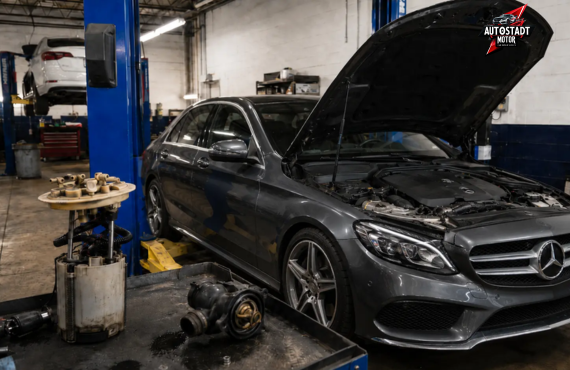
Whether you drive a Mercedes-Benz C-Class, E-Class, GLC, GLE, or another model, recognizing water pump problems early can help protect your engine and avoid unnecessary repair expenses. This guide explains the common warning signs, possible causes, repair process, and maintenance considerations for Mercedes water pump problems in Dubai.
Signs Your Car Needs Mercedes Water Pump Repair
A failing water pump does not always stop working suddenly. In many cases, the vehicle develops warning signs that become more noticeable over time. Recognizing these symptoms can help you arrange an inspection before the cooling system suffers further damage.
1. Engine Temperature Rises Above Normal
An unusually high engine temperature is one of the most important warning signs of a possible cooling system fault.
The water pump helps move coolant through the engine so that heat can be transferred to the radiator. If circulation becomes insufficient, the engine may struggle to maintain its normal operating temperature.
You might notice the temperature gauge rising during traffic, an overheating warning appearing on the dashboard, or the engine temperature increasing during longer journeys.
However, overheating does not automatically mean the water pump has failed. A faulty thermostat, radiator restriction, cooling fan problem, low coolant level, or another issue can produce similar symptoms. Professional diagnosis is necessary to determine the cause.
If your Mercedes displays an overheating warning, stop safely and switch off the engine when appropriate. Do not continue driving in the hope that the temperature will return to normal.
2. Coolant Leaking Beneath the Vehicle
Coolant leakage is another reason to arrange Mercedes water pump repair.
A worn seal, damaged gasket, or deteriorated pump housing can allow coolant to escape. Depending on the coolant and the surrounding conditions, you may notice coloured liquid beneath the front of the vehicle or dried residue around cooling system components.
Nevertheless, the location of a puddle does not always identify the exact source. Coolant can travel along engine components before dripping onto the ground, making a leak appear to originate somewhere else.
At AutoStadt Motor Services, a proper inspection helps distinguish a water pump leak from problems involving radiator hoses, the expansion tank, the radiator, or other cooling system connections.
3. Coolant Level Keeps Dropping
If you regularly need to add coolant to your Mercedes, the cooling system should be inspected.
A repeated drop in coolant level may indicate an external leak, including a potential water pump seal failure. In some cases, the problem may instead involve a hose, radiator, expansion tank, or an internal engine issue.
Simply topping up the coolant does not solve the underlying fault.
Furthermore, driving with insufficient coolant can reduce the cooling system’s ability to control engine temperature. This is particularly concerning in Dubai, where high outside temperatures can make an existing cooling problem more difficult to manage.
4. Grinding, Whining, or Unusual Engine-Bay Noises
A damaged water pump bearing can sometimes produce grinding, whining, or other unusual mechanical sounds.
The noise may become more noticeable as engine speed changes. Depending on the pump design, bearing wear or a problem with the drive mechanism may affect the pump’s operation.
However, other engine accessories can also make similar noises. The source should therefore be confirmed before any component is replaced.
5. Coolant Residue Around the Water Pump
During an inspection, dried coolant deposits or fresh wetness around the water pump may indicate a developing leak.
Some pumps have a designated leakage opening that can reveal seal deterioration. The precise inspection points depend on the engine design.
A small amount of residue does not always establish the full extent of a fault, but repeated leakage or visible deterioration deserves attention. Identifying the problem early may prevent a minor repair from developing into a more expensive cooling system issue.
6. Steam or a Burning Smell From the Engine Bay
Steam coming from beneath the bonnet can indicate that coolant is escaping onto hot engine components or that the engine is overheating.
A sweet or unusual smell may also accompany a coolant leak, although smells alone cannot confirm the cause.
If you see steam or receive an overheating warning, pull over safely and turn off the engine. Never remove the coolant reservoir cap while the engine is hot because pressurized coolant can cause severe burns.
Arrange professional assistance instead of risking further engine damage.
Why Choose AutoStadt Motor Services for Mercedes Water Pump Repair
Selecting the right workshop involves more than finding a mechanic who can install a replacement pump. The cooling system needs to be assessed carefully so that the repair addresses the actual fault.
Accurate Cooling System Diagnosis
AutoStadt Motor Services focuses on identifying the source of the problem before recommending a repair.
For example, a Mercedes that overheats may have a failing water pump, but the cause could also be a thermostat, radiator fan, coolant leak, or restricted radiator. Replacing the pump without confirming the fault may leave the original problem unresolved.
A systematic inspection helps narrow down the possibilities and supports a more appropriate repair decision.
Vehicle-Specific Repair Approach
Mercedes-Benz models use different engine configurations and cooling system arrangements. The water pump design, accessibility, drive mechanism, and recommended repair procedure can vary by model and engine.
A C-Class may require a different repair approach from a GLC, GLE, or S-Class. Therefore, the vehicle’s model year, engine specification, and installed components should be considered before work begins.
Attention to Related Components
A water pump does not operate independently. Its performance is connected to the wider cooling system.
Depending on the vehicle, an inspection may include the thermostat, radiator, coolant hoses, expansion tank, drive belt where fitted, relevant electrical connections, and coolant condition.
Checking related components can help identify additional problems that might otherwise affect the success of the repair.
Repair Recommendations That Match the Fault
Not every cooling system problem requires a complete replacement of multiple components.
A confirmed pump leak may require pump replacement, while a loose or damaged hose may need a different solution. If the pump is functioning correctly, replacing it may be unnecessary.
The objective is to identify the defective component and explain the recommended repair clearly.
Service for Dubai Driving Conditions
Dubai’s heat makes cooling system reliability especially important. Traffic congestion and repeated low-speed driving can expose weaknesses that might be less noticeable during shorter journeys in cooler weather.
Regular inspections and timely repairs can help Mercedes owners maintain dependable engine temperature control throughout the year.
How Our Mercedes Water Pump Repair Process Works
A structured repair process helps ensure that the underlying fault is addressed and that the cooling system is checked after the work is completed.
Step 1: Review the Symptoms
The first stage involves understanding what the driver has experienced.
This may include overheating, coolant loss, unusual noises, warning messages, or visible leakage. Information about when the symptoms occur can help narrow down the possible causes.
For example, an engine that overheats mainly in traffic may require checks beyond the water pump, including radiator fan operation and airflow.
Step 2: Inspect the Cooling System
The technician examines the relevant cooling system components for leakage, damage, residue, or abnormal operation.
Depending on the symptoms, the inspection may include the water pump, radiator, expansion tank, hoses, thermostat, and other related parts.
This stage helps establish whether the problem is isolated to the pump or involves another component.
Step 3: Confirm the Fault
Where appropriate, suitable diagnostic checks or cooling system pressure testing can help locate a leak. Mechanical and electronic checks may also be required, depending on the vehicle.
The aim is to distinguish a failing water pump from other causes of coolant loss or overheating.
Step 4: Recommend the Appropriate Repair
Once the problem has been identified, the repair options can be explained.
If the water pump is leaking or no longer operating correctly, replacement may be necessary. The work required depends on the particular Mercedes engine and pump design.
The technician should also determine whether any related components require attention rather than assuming that every component needs replacement.
Step 5: Replace the Faulty Component
When replacement is required, the appropriate procedure and compatible parts should be selected for the vehicle.
The old component is removed as necessary, and the replacement is installed according to the relevant service requirements. Any associated seals, gaskets, or specified one-time-use components should be handled according to the manufacturer’s procedures.
Correct coolant specification is also important. Using an unsuitable coolant or mixing incompatible products can create additional cooling system concerns.
Step 6: Refill and Bleed the Cooling System
After the repair, the cooling system may need to be refilled and bled using the correct procedure for that Mercedes model.
Air trapped in the cooling system can interfere with coolant circulation and contribute to temperature fluctuations. Some vehicles require specific bleeding procedures or diagnostic equipment.
Following the correct process helps restore reliable circulation.
Step 7: Perform Final Checks
The final stage involves checking the repair and evaluating cooling system operation.
Depending on the vehicle and the original symptoms, this may include checking coolant level, inspecting for leaks, monitoring engine temperature, and verifying the operation of relevant cooling components.
The objective is to confirm that the original concern has been addressed before the vehicle returns to normal use.
Mercedes Cooling System Maintenance Tips for Dubai Owners
Preventive maintenance can help identify cooling system concerns before they lead to unexpected breakdowns.
First, check the coolant level according to the vehicle’s instructions and only when the engine is cool. If the level repeatedly drops, arrange an inspection instead of continuing to top it up indefinitely.
Second, pay attention to temperature warnings. A warning light, rising temperature gauge, or repeated overheating should never be dismissed, even if the vehicle appears to return to normal afterward.
Third, follow the recommended coolant specifications and maintenance schedule for your particular Mercedes model. Coolants are not universally interchangeable, and the correct product should be selected according to the vehicle’s requirements.
Finally, have unusual noises, visible leaks, and unexplained coolant loss investigated promptly.
These principles also apply to other vehicles, including the BMW 5 Series, Audi Q5, Toyota Land Cruiser, and Nissan Patrol. However, each model has its own cooling system design and service requirements.
Frequently Asked Questions About Mercedes Water Pump Repair in Dubai
1. How do I know if my Mercedes water pump needs repair?
Common signs include coolant leaking from the engine area, repeated coolant loss, unusual noises near the pump, and engine overheating. However, these symptoms can also result from a faulty thermostat, radiator, hose, or cooling fan. A professional inspection is necessary to confirm whether the water pump is responsible and determine the correct repair.
2. How much does Mercedes water pump repair cost in Dubai?
The cost depends on the Mercedes model, engine type, pump design, labour requirements, and whether related components also need attention. Some pumps are relatively accessible, while others require more extensive dismantling. The best way to obtain an accurate estimate is to have the vehicle inspected so the workshop can identify the fault and explain the parts and labour involved before proceeding.
3. Can I drive my Mercedes with a leaking water pump?
Driving with a leaking water pump is risky because coolant loss can lead to overheating and potentially severe engine damage. If the temperature rises, an overheating warning appears, or steam comes from the engine bay, stop safely and switch off the engine. Do not continue driving simply because the vehicle still runs. Arrange professional assistance and allow the engine to cool before anyone checks the coolant system.
4. Should I replace the thermostat when replacing the Mercedes water pump?
Not automatically. Whether the thermostat should also be replaced depends on its condition, the engine design, the repair procedure, and the manufacturer’s recommendations. If testing reveals a thermostat fault, it may need attention alongside the water pump. In other cases, replacement may not be necessary. A proper inspection helps determine which components genuinely require service and avoids unnecessary spending.
5. How long does Mercedes water pump repair take?
Repair time varies according to the model, engine layout, accessibility of the water pump, and the extent of the work. The process may take longer if related components need replacement or additional diagnosis is required. Coolant refilling, bleeding, and final checks also need to be included. AutoStadt Motor Services can provide a more realistic time estimate after inspecting the vehicle and identifying the required repair.
Conclusion
Mercedes water pump repair is an important part of maintaining engine reliability, particularly for vehicles driven regularly in Dubai’s demanding conditions. Coolant leaks, falling coolant levels, unusual pump noises, and overheating can all indicate a cooling system problem that deserves prompt attention.
The key is to identify the actual cause rather than assuming that every overheating issue comes from the water pump. A careful inspection can help distinguish pump failure from thermostat, radiator, hose, fan, or other cooling system faults.
At AutoStadt Motor Services, the focus is on diagnosing the problem, recommending the appropriate repair, and checking cooling system operation after the work is completed.
If your Mercedes is losing coolant, making unusual noises, or showing signs of overheating, arranging an inspection early can help protect the engine and reduce the risk of more extensive repairs. Maintaining a healthy cooling system is a practical investment in the long-term performance and reliability of your Mercedes-Benz.


Leave a Comment