
Mercedes brake repair near me is an important search for Dubai drivers who notice unusual braking noises, a vibrating brake pedal, longer stopping distances, or a brake warning light on the dashboard. Mercedes-Benz vehicles are engineered for refined performance, responsive handling, and confident braking. However, even a well-maintained luxury vehicle needs regular brake inspections to maintain safe and predictable stopping performance.
Dubai driving conditions can put additional demands on a braking system. Heavy traffic, frequent stop-and-go driving, high ambient temperatures, and repeated braking around busy roads can contribute to brake pad wear and heat buildup. Consequently, brake components should be inspected whenever performance changes rather than waiting until a problem becomes severe.
Mercedes braking systems can vary by model, year, and specification. A Mercedes-Benz C-Class may have different brake components from an E-Class, GLE, or S-Class. Some vehicles also feature electronic parking brakes, brake-wear sensors, and advanced driver-assistance technologies that require appropriate diagnostic procedures.
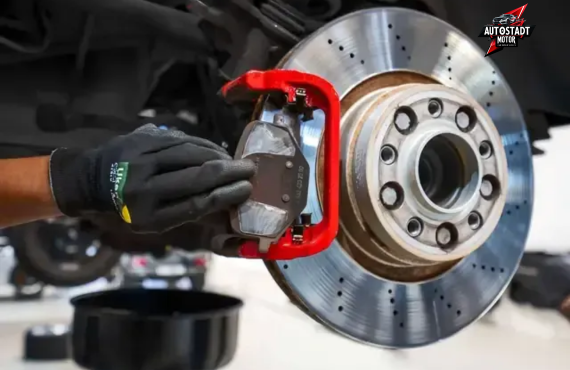
At AutoStadt Motor Services, Mercedes brake repair begins with identifying the cause of the problem. Whether your vehicle needs brake pad replacement, brake disc inspection, brake fluid service, or further investigation into a warning light, the objective is to recommend a repair suited to the vehicle’s actual condition.
Signs Your Car Needs Mercedes Brake Repair Near Me
Brake problems do not always begin with an obvious loss of stopping power. In many cases, the vehicle provides warning signs that indicate the braking system needs attention.
1. Squealing or Grinding Brake Noises
A high-pitched squeal when applying the brakes may indicate worn brake pads, vibration between braking components, or another issue that needs inspection. Some brake pads include wear indicators designed to produce an audible warning when the pads approach the end of their service life.
Grinding noises are more concerning. They can indicate that the friction material has worn away and metal components are contacting the brake disc. Continuing to drive in this condition may damage the discs and increase repair costs.
If your Mercedes develops a new or persistent braking noise, arrange an inspection rather than assuming that the sound is harmless.
2. Vibrations When Applying the Brakes
If the steering wheel, brake pedal, or vehicle body vibrates during braking, the system should be checked.
Brake disc thickness variation, uneven disc surfaces, deposits, or suspension-related problems may contribute to these symptoms. The precise cause depends on when the vibration occurs and how strongly it affects the vehicle.
For example, vibration that appears mainly during higher-speed braking may require a different diagnostic approach from a pedal that feels uneven during ordinary city driving.
3. Longer Stopping Distances
A Mercedes that takes longer than usual to stop should never be ignored.
Worn brake pads, damaged discs, contaminated friction surfaces, brake fluid problems, or faults in the hydraulic or electronic braking system can affect braking performance.
Tyre condition and road grip can also influence stopping distance. Therefore, a complete assessment should consider the braking system and other factors that affect how effectively the vehicle slows down.
If braking performance has noticeably deteriorated, avoid unnecessary driving and arrange professional assistance.
4. Brake Warning Light on the Dashboard
A brake-related warning light may indicate low brake fluid, a parking brake issue, worn pads on vehicles equipped with suitable sensors, or a fault in the braking system.
The meaning depends on the specific warning displayed and the vehicle’s equipment. A warning associated with the ABS or electronic stability system may require diagnostic scanning rather than a routine pad replacement.
Do not dismiss a warning simply because the brakes appear to work normally. Some faults may affect safety systems that assist during emergency braking or slippery conditions.
5. Soft or Spongy Brake Pedal
A brake pedal that feels unusually soft, sinks farther than normal, or requires repeated pumping needs urgent attention.
Possible causes include air in the hydraulic system, a fluid leak, a master cylinder problem, or another hydraulic fault.
If the pedal sinks toward the floor or braking ability is reduced, do not continue driving the vehicle. Arrange recovery and have the system inspected.
6. Mercedes Pulls to One Side While Braking
If your vehicle pulls left or right when you apply the brakes, the problem may involve uneven braking force, a sticking caliper, damaged components, tyre issues, or suspension faults.
This behaviour can make the car less predictable, particularly during sudden stops. A technician should inspect the relevant wheels and braking components to identify the cause.
7. Burning Smell After Braking
A persistent burning smell following ordinary driving may indicate excessive brake heat, a sticking caliper, or another problem causing friction when the brakes should be released.
Although brakes naturally generate heat during operation, unusual smells accompanied by smoke, pulling, or excessive wheel heat require immediate attention. Stop somewhere safe and seek professional assistance rather than continuing the journey.
Why Choose AutoStadt Motor Services for Mercedes Brake Repair Near Me
Searching for Mercedes brake repair near me is about finding a workshop that understands the importance of accurate diagnosis, suitable replacement parts, and proper testing. Replacing components without checking the complete system may leave the original problem unresolved.
Mercedes-Focused Brake Inspection
Different Mercedes-Benz models use different brake configurations. Component selection and service procedures can also vary depending on the model year, engine, wheel package, and braking equipment.
AutoStadt Motor Services can inspect the braking system according to the vehicle’s requirements and determine which components need attention. This helps avoid relying on assumptions based solely on the vehicle badge.
Brake Pad and Disc Assessment
Brake pads and discs work together to convert the vehicle’s movement into heat through friction. Both components must be in suitable condition for reliable braking.
During an inspection, the technician can assess pad thickness, disc condition, wear patterns, and any signs of damage. Disc replacement may be necessary if measurements or condition fall outside the manufacturer’s requirements.
Replacing pads alone is not always the right solution, particularly when the discs are damaged or excessively worn.
Diagnostic Support for Electronic Brake Systems
Modern Mercedes vehicles may include ABS, electronic stability control, brake-wear monitoring, and other integrated systems.
When a dashboard warning appears, diagnostic equipment and model-specific procedures may be needed to identify the fault. This is particularly important when the issue involves electronic controls rather than ordinary friction-component wear.
Appropriate Parts and Service Procedures
Brake components should match the vehicle’s specification. Incorrect parts or unsuitable installation procedures can affect fitment, braking performance, and component life.
AutoStadt Motor Services can assess the required components and recommend a suitable repair based on the vehicle’s configuration and condition.
Clear Recommendations for Dubai Drivers
A brake inspection should explain what requires immediate attention and what may be monitored during future maintenance.
For instance, a vehicle with worn pads and serviceable discs may need a different repair from one with damaged discs, a sticking caliper, and a brake warning light.
The same principle applies across other vehicles, including the BMW 5 Series, Audi Q7, Toyota Land Cruiser, and Nissan Patrol. Each model has its own specifications, so a vehicle-specific assessment remains essential.
How Our Mercedes Brake Repair Near Me Process Works
A systematic repair process helps ensure that the original complaint is addressed and that the braking system is checked before the vehicle returns to regular use.
Step 1: Discuss the Symptoms
The process begins by understanding what the driver has noticed.
This may include squealing noises, grinding, vibration, a soft pedal, dashboard warnings, or a change in stopping performance. The technician may also ask when the symptoms started and whether they occur during gentle or firm braking.
These details help guide the initial inspection.
Step 2: Inspect the Braking Components
The relevant wheels and braking components are inspected as appropriate. This can include brake pads, discs, calipers, visible hydraulic lines, and other parts associated with the reported symptoms.
The inspection may also identify uneven wear, corrosion, leaks, or signs of excessive heat.
Step 3: Perform Diagnostic Checks When Needed
If the Mercedes displays an ABS, brake-wear, or electronic braking warning, further testing may be necessary.
A diagnostic scan can help identify stored fault codes, although the codes must be interpreted alongside physical inspection and the manufacturer’s procedures. Clearing a warning without correcting the cause is not a complete repair.
Step 4: Determine the Required Repair
After assessing the system, the technician identifies the components that require attention.
Depending on the findings, the work may involve brake pad replacement, brake disc replacement, caliper servicing, hydraulic leak repair, brake fluid service, or investigation of an electronic fault.
The repair recommendation should reflect the actual condition of the vehicle rather than automatically replacing every brake component.
Step 5: Carry Out the Repair
The confirmed repair is completed using suitable components and the appropriate procedures for the Mercedes model.
Where necessary, the work may include correctly servicing the parking brake system, following specified torque requirements, or completing electronic service procedures. Certain models require special preparation or diagnostic steps before work can be carried out safely.
Step 6: Check Brake Fluid and Related Systems
Brake fluid should be assessed according to the manufacturer’s maintenance requirements and the condition of the system.
If hydraulic work has been performed, the correct bleeding procedure may be necessary to remove air. The specified fluid type must be used, as different fluids are not universally interchangeable.
Step 7: Verify the Results
The final checks depend on the repair performed. They may include confirming pedal feel, checking for leaks, verifying warning indicators, and assessing the operation of the repaired components.
A controlled road test may be appropriate when the vehicle is safe to drive and the repair procedure permits it. If a serious braking fault remains, the vehicle should not be returned to normal driving until it has been resolved.
Mercedes Brake Maintenance Tips for Dubai Conditions
Preventive maintenance can help identify brake wear before it affects normal driving.
First, pay attention to changes in sound or pedal feel. If your Mercedes begins squealing, vibrating, or taking longer to stop, arrange an inspection rather than waiting for the next routine service.
Second, follow the recommended maintenance schedule for brake fluid. Brake fluid can absorb moisture over time, potentially affecting its performance. The correct replacement interval depends on the manufacturer’s requirements for the particular vehicle.
Third, keep tyres in good condition. Even perfectly functioning brakes cannot deliver their full potential if the tyres have insufficient tread, incorrect pressure, or poor road grip.
Additionally, avoid unnecessary aggressive braking where traffic conditions allow. Smooth driving can reduce avoidable heat and wear, although emergency braking should always take priority when required for safety.
Finally, do not ignore recurring brake warnings. A warning that disappears temporarily may still indicate an intermittent problem that needs investigation.
Frequently Asked Questions About Mercedes Brake Repair Near Me in Dubai
1. How do I find reliable Mercedes brake repair near me in Dubai?
Look for a workshop that can inspect brake pads, discs, calipers, fluid, and relevant electronic systems rather than recommending parts based on symptoms alone. It is also useful to ask whether the proposed components and procedures are suitable for your exact Mercedes model. AutoStadt Motor Services offers brake inspection and repair support for drivers seeking to identify and resolve braking problems.
2. How much does Mercedes brake repair cost in Dubai?
The cost depends on the model, the condition of the braking system, the parts required, and the amount of labour involved. Replacing brake pads may be less expensive than replacing both pads and discs, while caliper, hydraulic, or electronic faults may require additional work. The best way to obtain an appropriate estimate is to have the vehicle inspected and receive a repair recommendation based on the confirmed fault.
3. When should I replace Mercedes brake pads?
Brake pads should be replaced when their remaining friction material reaches the applicable service limit or when inspection identifies damage or another reason for replacement. Some Mercedes models have brake-wear sensors that provide a warning, but not every configuration monitors every wheel in the same way. Regular inspection is important because driving conditions, vehicle weight, and braking habits can all influence pad life.
4. Why does my Mercedes make a grinding noise when braking?
Grinding may indicate that the brake pads are severely worn and that metal components are contacting the discs. However, debris, damaged components, or other mechanical issues can also produce unusual sounds. Because grinding can quickly damage braking components and may compromise safety, stop driving if braking performance is affected and arrange a professional inspection or vehicle recovery.
5. How often should I service my Mercedes braking system in Dubai?
There is no single inspection interval suitable for every Mercedes model and driving pattern. Follow the manufacturer’s maintenance schedule and have the brakes checked when servicing the vehicle, particularly if it experiences frequent stop-and-go driving. Arrange an earlier inspection whenever you notice noise, vibration, warning lights, fluid leaks, or changes in pedal feel. If the brakes are not functioning normally, safety should take priority over waiting for a scheduled service.
Conclusion
Mercedes brake repair near me is a valuable search when you need dependable braking performance and a workshop that can identify the source of a problem. Squealing pads, worn discs, pedal vibration, brake fluid issues, and electronic warning lights can all require different diagnostic and repair procedures.
For Dubai drivers, timely inspection is particularly important because frequent traffic and repeated braking can contribute to component wear. Addressing a problem early may help prevent additional damage, but the correct repair always depends on the vehicle’s actual condition.
AutoStadt Motor Services provides brake inspection and repair support for Mercedes-Benz vehicles, helping drivers assess worn components, investigate warning signs, and determine the appropriate service.
If your Mercedes is making unusual braking noises, showing a warning light, or no longer stopping as expected, arrange an inspection promptly. If braking performance is seriously reduced or the pedal feels unsafe, do not drive the vehicle; arrange professional recovery instead.


Leave a Comment