
Mercedes heating repair is essential when your vehicle’s cabin heater stops producing warm air, the climate control system behaves unpredictably, or the windows take longer than usual to clear. Although Dubai is known for its hot weather, a properly functioning heating system remains important for climate control, comfortable night driving, effective demisting, and maintaining the correct cabin temperature when conditions change.
Mercedes-Benz vehicles use sophisticated heating and climate-control systems designed to regulate cabin temperature and distribute air efficiently. Depending on the model, these systems may include a heater core, coolant control valves, an electric auxiliary heater, temperature sensors, blower motors, and electronically controlled climate settings. A fault in any of these components can affect heating performance.
For example, a Mercedes-Benz C-Class that blows cold air despite the engine reaching operating temperature may have a different problem from a GLE that produces inconsistent heat or an E-Class with weak airflow. Therefore, replacing parts without proper diagnosis can waste time and money.
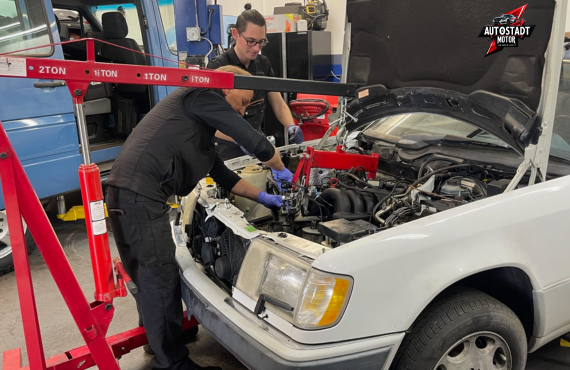
At AutoStadt Motor Services, we help Dubai car owners identify heating-system problems and determine the appropriate repair. Whether your Mercedes has stopped producing warm air, struggles to maintain a comfortable cabin temperature, or displays unusual climate-control behaviour, a systematic inspection can help uncover the underlying cause.
Signs Your Car Needs Mercedes Heating Repair
Heating problems do not always begin with a complete loss of warm air. In many cases, the system provides warning signs before its performance deteriorates significantly. Recognizing these symptoms early can help you arrange the right repair.
1. The Heater Blows Cold Air
One of the most noticeable signs is cold air coming from the vents when the temperature setting is increased.
In a conventional engine-heated system, warm engine coolant transfers heat through the heater core, allowing the ventilation system to deliver warm air into the cabin. If the coolant level is low, the thermostat is malfunctioning, or the heater core is restricted, the system may struggle to produce heat.
However, not every Mercedes uses exactly the same heating arrangement. Some models have additional electric heating components or more advanced climate-control configurations. The correct diagnostic procedure depends on the vehicle’s model and equipment.
2. Heating Works Intermittently
If your Mercedes produces warm air sometimes but becomes cold unexpectedly, the problem may involve coolant circulation, a temperature-control valve, a sensor, an actuator, or another climate-control component.
For instance, you might notice that the heater works during a longer drive but becomes less effective during a short journey. Alternatively, one temperature setting may behave differently from another.
These symptoms should be investigated rather than managed by repeatedly adjusting the climate controls.
3. Weak Airflow From the Vents
Sometimes the heater produces warm air, but very little reaches the cabin.
A dirty cabin air filter can restrict airflow. A worn blower motor, faulty fan controller, blocked air passage, or malfunctioning air-distribution flap can also affect ventilation.
The distinction between weak airflow and insufficient heat is important. If the air is warm but barely comes out, the repair may involve the ventilation system rather than the heater core.
4. Engine Temperature Takes Too Long to Rise
A heating problem can occasionally indicate an engine cooling-system issue.
For example, a thermostat that remains open when it should regulate coolant circulation may prevent the engine from reaching its intended operating temperature efficiently. Consequently, the heater may take longer to produce warm air.
If the temperature gauge behaves unusually or the engine takes much longer than expected to warm up, a broader cooling-system inspection may be necessary.
5. Sweet Smell or Foggy Windows
An unusual sweet smell inside the cabin, persistent misting, or dampness around the front footwell can sometimes indicate a leaking heater core or coolant entering the ventilation area.
These symptoms should not be ignored. Coolant leaks can affect visibility, reduce coolant levels, and potentially contribute to engine overheating.
If you suspect coolant is leaking into the cabin, arrange an inspection promptly. Avoid touching or tasting unidentified fluid, and do not continue driving if the engine overheats.
6. Different Temperatures From Different Vents
Some Mercedes-Benz models feature dual-zone or multi-zone climate control. This allows the driver and passengers to select different cabin temperatures.
If one side consistently blows warm air while the other remains cold, a blend-door actuator, temperature sensor, control valve, or climate-control setting may be responsible.
A diagnostic scan and functional checks can help determine whether the problem is mechanical, electrical, or related to system settings.
Why Choose AutoStadt Motor Services for Mercedes Heating Repair
Mercedes climate-control systems can combine mechanical components with electronic sensors and control modules. Therefore, an effective repair requires more than checking whether the heater produces warm air.
Accurate Diagnosis Before Replacing Parts
At AutoStadt Motor Services, the aim is to identify the cause of the heating problem before recommending a repair.
A cold heater does not automatically mean the heater core needs replacement. Low coolant, trapped air, thermostat faults, circulation problems, or electronic control issues can produce similar symptoms.
Testing the relevant systems helps narrow down the possibilities and reduces the risk of unnecessary component replacement.
Inspection of Heating and Cooling Components
The heating system depends on several interconnected parts. Depending on the symptoms, inspection may include the coolant level, thermostat, heater core, hoses, coolant control valves, water pump, blower motor, cabin filter, and climate-control actuators.
Because heating and engine cooling can be closely connected, it is important to consider both systems when the symptoms indicate a possible coolant-related fault.
Mercedes-Specific Considerations
A Mercedes-Benz C-Class, E-Class, S-Class, GLC, and GLE may have different heating layouts and climate-control features. Even vehicles within the same model range can differ according to their model year, engine, and equipment.
AutoStadt Motor Services can assess the particular vehicle and determine which diagnostic checks are appropriate. This vehicle-specific approach is preferable to assuming that every Mercedes heating fault has the same solution.
Clear Repair Recommendations
Some heating problems can be resolved through routine maintenance or a relatively straightforward component repair. Others may require more extensive work, particularly when a heater core, water pump, control valve, or electronic component is involved.
Understanding the actual fault helps the vehicle owner make an informed decision about the repair and its expected scope.
Support for Dubai Driving Conditions
Even when cabin heating is used infrequently, the climate-control system still needs to operate correctly. Demisting, ventilation, temperature regulation, and coolant circulation remain relevant to everyday vehicle operation.
AutoStadt Motor Services helps Dubai drivers address these issues so they can maintain dependable climate-control performance throughout the year.
How Our Mercedes Heating Repair Process Works
A structured repair process helps ensure that the original complaint is addressed and that related problems are not overlooked.
Step 1: Understand the Symptoms
The first stage is to establish what happens when the heating system is used.
The technician may ask whether the air remains cold, whether heating improves during longer drives, whether the blower works at every speed, or whether the engine temperature behaves unusually.
These details help guide the initial inspection.
Step 2: Check Coolant Level and Engine Temperature
For vehicles using engine coolant to provide cabin heat, coolant level and engine operating temperature are important diagnostic starting points.
Low coolant may indicate a leak, while an engine that does not reach its normal operating temperature may have a thermostat-related problem.
The cooling system should be checked safely, with the engine allowed to cool before the coolant reservoir or cooling system is opened. A hot, pressurized system can cause serious burns.
Step 3: Inspect the Heater Core and Coolant Circulation
If the initial checks suggest a coolant-flow problem, the technician may inspect the heater hoses, heater core, relevant valves, and circulation components.
A restricted heater core can reduce heat transfer, while a coolant leak or circulation fault can prevent the system from working correctly.
The inspection helps establish whether the problem is related to heat supply or another part of the climate-control system.
Step 4: Test the Blower and Air-Distribution System
If warm air is available but airflow is poor or directed incorrectly, the ventilation system needs attention.
Depending on the symptoms, checks may include the cabin filter, blower motor, fan controller, temperature blend doors, and air-distribution actuators.
This step is particularly important when different vents produce inconsistent temperatures or airflow.
Step 5: Perform Electronic Diagnostics When Needed
Modern Mercedes-Benz vehicles use electronic controls to manage many climate functions.
If the system displays a warning, fails to respond correctly, or produces inconsistent temperatures, a suitable diagnostic scan may help identify stored fault codes and guide further testing.
However, a fault code should be interpreted alongside physical checks rather than treated as automatic proof that a particular component has failed.
Step 6: Complete the Required Repair
Once the fault has been identified, the appropriate repair can be recommended.
Depending on the diagnosis, this may involve replacing a thermostat, repairing a coolant leak, addressing a heater-core restriction, servicing a blower component, or correcting a climate-control actuator fault.
If coolant has been drained, the system must be refilled and bled according to the manufacturer’s procedure. Correct coolant specification and proper filling procedures are important for reliable operation.
Step 7: Verify Heating Performance
After the repair, the technician should recheck the system under suitable operating conditions.
This may include confirming that the engine reaches its expected operating temperature, warm air is delivered correctly, airflow responds to the controls, and there are no signs of coolant leakage.
The final check helps establish whether the original complaint has been resolved.
Mercedes Heating Maintenance Tips for Dubai Drivers
Preventive maintenance can help identify problems before they cause a complete loss of heating.
First, monitor the engine coolant level according to the manufacturer’s instructions. If the level repeatedly drops, investigate the cause instead of continuing to top it up without diagnosis.
Second, pay attention to changes in engine temperature. An overheating engine, a temperature gauge that behaves unusually, or a heater that suddenly stops producing warm air can indicate a cooling-system problem. If overheating occurs, stop safely and switch off the engine as soon as appropriate. Do not open a hot coolant reservoir.
Third, replace the cabin air filter at the recommended interval. A restricted filter can reduce ventilation performance and make the climate-control system less effective.
Finally, do not ignore unusual smells, persistent window fogging, damp carpets, or unexplained coolant loss. These symptoms may indicate a leak or another fault that requires inspection.
These principles also apply to other vehicles, including the BMW 5 Series, Audi Q5, Toyota Land Cruiser, and Nissan Patrol. However, the specific maintenance requirements and repair procedures differ between models.
Frequently Asked Questions About Mercedes Heating Repair in Dubai
1. Why is my Mercedes heater blowing cold air?
Cold air can result from low engine coolant, a thermostat fault, restricted coolant flow through the heater core, a faulty control valve, or an electronic climate-control problem. The correct cause depends on the model and its heating-system design. A professional inspection can establish whether the problem is related to coolant circulation, temperature regulation, or airflow control before any parts are replaced.
2. How much does Mercedes heating repair cost in Dubai?
The cost depends on the cause of the problem, the Mercedes model, parts availability, and the labour required. A cabin filter or accessible control component may be relatively straightforward to address, whereas a heater core replacement or complex electronic fault can require more extensive work. AutoStadt Motor Services can assess the symptoms and identify the repair required before providing a more accurate estimate.
3. Can I drive my Mercedes if the heater is not working?
If the heater has stopped working but the engine temperature remains normal and there are no other warning signs, the vehicle may still operate; however, the fault should be investigated. The situation is more serious if the coolant level is low, the engine overheats, a coolant leak is present, or the windows cannot be cleared safely. In these circumstances, stop driving when safe and arrange professional assistance. Never open the cooling system while it is hot.
4. Can a faulty thermostat affect Mercedes heating performance?
Yes. A thermostat that does not regulate engine temperature correctly can affect how quickly the engine warms up and how much heat is available for the cabin heater. If the thermostat remains open, the engine may take longer to reach its normal operating temperature. However, a cold heater can have other causes as well, so the thermostat should be tested rather than replaced based on symptoms alone.
5. Where can I get Mercedes heating repair in Dubai?
Choose a workshop that can inspect the heating system, evaluate coolant circulation, check the ventilation components, and perform electronic diagnostics when necessary. AutoStadt Motor Services can help assess Mercedes heating problems and recommend a repair based on the vehicle’s symptoms and configuration. Before arranging service, explain whether the heater blows cold air, airflow is weak, the engine temperature changes, or you have noticed possible coolant leakage.
Conclusion
Mercedes heating repair requires careful diagnosis because cabin heating depends on several mechanical, cooling, and electronic components working together. Cold air from the vents, inconsistent temperatures, weak airflow, unusual smells, and unexplained coolant loss can all indicate a problem that deserves attention.
For Dubai car owners, identifying the fault early can help prevent avoidable repair costs and reveal related cooling-system issues before they become more serious. The right solution may involve a thermostat, heater core, coolant valve, blower motor, sensor, or another component, depending on the vehicle.
AutoStadt Motor Services provides professional inspection and repair support for Mercedes-Benz heating and climate-control problems. By identifying the underlying fault and checking system performance after the repair, the workshop can help restore reliable cabin temperature control.
If your Mercedes is no longer producing warm air or its climate-control system is behaving unusually, arrange an inspection to determine the cause and choose the appropriate repair for your vehicle.


Leave a Comment