
McLaren evaporator change is an important service when your supercar’s air conditioning system develops persistent cooling problems, refrigerant leaks, or unpleasant smells that cannot be resolved through routine AC maintenance. The evaporator is a key component of the vehicle’s climate-control system. It helps remove heat from the cabin air, allowing the AC to deliver the cool, comfortable environment expected from a premium performance vehicle.
In Dubai, a dependable air conditioning system is essential throughout much of the year. High outdoor temperatures, traffic congestion, and frequent journeys can make even a small reduction in cooling performance noticeable. For McLaren owners, however, AC problems require particular attention because the vehicle’s design, component packaging, and specialised systems can make diagnosis and repairs more involved than those of an ordinary passenger car.
The evaporator sits within the HVAC assembly, where it absorbs heat from the air passing through it. When the component develops a refrigerant leak, becomes contaminated, or suffers internal damage, the entire cooling system may be affected. Because the evaporator is generally located behind the dashboard or within the HVAC housing, accessing it can require substantial dismantling.
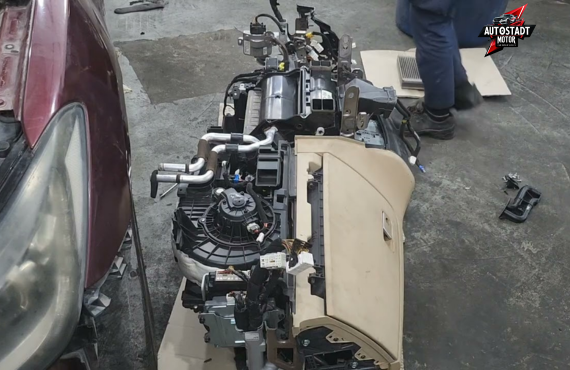
At AutoStadt Motor Services, the objective of McLaren evaporator replacement is to identify the actual fault, select the appropriate repair solution, and verify the AC system’s operation after the work is completed. Instead of assuming that every cooling issue requires an evaporator change, a proper inspection helps determine whether the problem originates from the evaporator or another component.
Signs Your Car Needs McLaren Evaporator Change
An evaporator problem can produce symptoms similar to other AC faults. Therefore, recognising the warning signs is useful, but professional diagnosis remains essential before replacing any component.
1. Weak or Inconsistent AC Cooling
One of the most common signs is an AC system that no longer delivers consistently cold air.
Your McLaren may initially produce cool air before the temperature gradually rises. Alternatively, the system may struggle to maintain a comfortable cabin temperature even when the climate controls are set correctly.
A leaking evaporator can reduce refrigerant charge and affect cooling performance. Nevertheless, a faulty compressor, condenser problem, refrigerant leak elsewhere, or electrical control issue can produce similar symptoms. The complete system should be checked before an evaporator replacement is recommended.
2. Refrigerant Leakage Inside the HVAC System
The evaporator contains passages through which refrigerant circulates. If corrosion, physical damage, or deterioration causes a leak, refrigerant can escape from the component.
Because the evaporator is usually concealed inside the dashboard assembly, the leak may not be visible during a basic inspection of the engine compartment.
A technician may need to use appropriate refrigerant leak-detection methods and supporting diagnostic checks to establish whether the evaporator is responsible. Confirming the source is particularly important because replacing this component can involve considerable labour.
3. AC Requires Repeated Refrigerant Recharging
If your McLaren’s AC works well after refrigerant service but gradually loses cooling again, an unresolved leak may be present.
However, repeated refrigerant loss does not automatically prove that the evaporator has failed. Leaks can also occur at pipe connections, seals, service ports, the condenser, or other parts of the refrigerant circuit.
A systematic inspection helps prevent unnecessary dashboard dismantling and ensures that the repair addresses the actual source of refrigerant loss.
4. Unpleasant Smell From the Air Vents
A musty or unpleasant smell may originate from moisture, microbial growth, dirt, or contamination within the HVAC system.
The evaporator operates under conditions that allow condensation to form as warm cabin air passes over its cold surface. If moisture and debris accumulate, odours may develop.
Nevertheless, a bad smell alone is not sufficient evidence that the evaporator needs replacing. Cabin filters, drainage passages, and other ventilation components should also be considered.
5. Water Appearing Inside the Cabin
Water around the passenger footwell or carpeting should be investigated promptly, especially if it appears after using the AC.
One possible cause is a restricted or blocked evaporator condensate drain. When condensation cannot drain correctly, water may collect and enter the cabin.
This does not necessarily mean the evaporator itself is damaged. A technician should inspect the drainage system and HVAC housing before deciding whether a replacement is required.
6. Cooling Problems That Persist After Other Repairs
Sometimes an owner has already replaced a cabin filter, checked the refrigerant charge, or repaired another AC component without achieving lasting results.
If the symptoms continue, further investigation may be necessary. An evaporator leak or internal fault could be responsible, but the diagnosis should be supported by evidence rather than assumption.
Why Choose AutoStadt Motor Services for McLaren Evaporator Change
Replacing an evaporator is more involved than topping up refrigerant or changing an accessible filter. The repair requires careful diagnosis, suitable tools, attention to vehicle-specific procedures, and thorough testing.
Accurate Diagnosis Before Evaporator Replacement
At AutoStadt Motor Services, the first priority is determining whether the evaporator is genuinely faulty.
The inspection may include checking AC performance, examining system pressures where appropriate, scanning for relevant fault codes, and testing for refrigerant leakage using suitable equipment.
Other potential causes, including compressor faults, condenser damage, expansion-device problems, and electrical issues, should be considered where the symptoms indicate them.
This approach helps reduce the risk of replacing an expensive component that is not responsible for the problem.
Careful Handling of Premium Vehicle Components
McLaren vehicles are engineered around performance, packaging efficiency, and precise component integration. Accessing the HVAC assembly may require the removal of dashboard panels, trim, ducts, or other interior components, depending on the model.
Careful handling is essential to minimise the risk of damage to interior finishes, electrical connectors, wiring, and surrounding components.
The correct procedure also depends on the particular McLaren model and production year, so the repair should be planned around the vehicle’s specifications.
Complete AC System Assessment
A successful evaporator change should not end when the replacement part has been installed.
The technician should also consider the condition of related components, refrigerant lines, seals, expansion devices, and the condensate drainage system. If the original fault has affected other parts of the system, those issues may need attention as well.
A complete assessment helps ensure that the repair addresses the cause of the problem rather than only its most visible symptoms.
Clear Repair Recommendations
Not every McLaren AC fault justifies a complete evaporator replacement.
For example, a blocked drain may require cleaning, while a leaking connection may need a suitable seal or line repair. Conversely, a confirmed evaporator leak may make replacement the appropriate solution.
AutoStadt Motor Services can assess the symptoms and explain the recommended work so that owners can make informed maintenance decisions.
Support for Different Vehicle Makes
Although this service focuses on McLaren, automotive AC systems differ between manufacturers. A BMW, Mercedes-Benz, Toyota, or Nissan may use different component layouts and service procedures.
Understanding these differences reinforces the importance of model-specific diagnosis, especially when dealing with a high-performance vehicle whose components may be difficult to access.
How Our McLaren Evaporator Change Process Works
A structured repair process helps ensure that the original problem is identified, the correct component is replaced, and the air conditioning system is tested before the vehicle is returned.
Step 1: Discuss the Cooling Symptoms
The process begins by reviewing the problems experienced by the owner.
The technician may ask whether the AC blows warm air, whether cooling disappears after a period of operation, whether refrigerant has been recharged previously, or whether there is a persistent smell or moisture inside the cabin.
These details help guide the initial inspection.
Step 2: Perform an AC System Diagnosis
The AC system is assessed to identify possible faults.
Depending on the vehicle and symptoms, this may involve checking vent temperatures, reviewing relevant diagnostic codes, evaluating system operation, and assessing refrigerant pressure using appropriate equipment.
The objective is to distinguish an evaporator fault from other issues that can create similar symptoms.
Step 3: Confirm the Evaporator Leak or Failure
If the evidence suggests an evaporator problem, further checks are carried out to confirm the diagnosis.
Suitable leak-detection procedures can help determine whether refrigerant is escaping from the evaporator area. The technician should also consider other possible leak locations before recommending a major dismantling procedure.
Once the fault is confirmed, the repair requirements can be explained.
Step 4: Access the HVAC Assembly
Evaporator access varies according to the McLaren model and HVAC design.
In some vehicles, accessing the component can require substantial removal of dashboard sections, interior panels, ducting, and associated hardware. Electrical connectors and surrounding trim must be handled carefully throughout the process.
Following the appropriate service procedures helps reduce the risk of damage and ensures that components can be correctly reinstalled.
Step 5: Remove and Replace the Faulty Evaporator
After gaining access, the faulty evaporator is removed and the surrounding area is inspected.
Related seals, connections, and other components are assessed for signs of deterioration or damage. Any additional work should be based on the condition of the parts and the vehicle’s service requirements.
The replacement evaporator must be compatible with the specific McLaren model and configuration. Using the correct component is essential for fitment and reliable operation.
Step 6: Reassemble the Interior and HVAC Components
Once the replacement is installed, the HVAC housing and removed interior components are carefully reassembled.
Connectors, wiring, ducts, trim panels, and relevant fasteners must be correctly positioned. This stage also provides an opportunity to check the condensate drain and related components where appropriate.
Careful reassembly helps prevent rattles, airflow problems, and avoidable interior issues after the repair.
Step 7: Evacuate, Recharge, and Test the AC System
After the refrigerant circuit has been correctly reconnected, the system is serviced according to the vehicle’s requirements.
This generally involves evacuating the circuit with appropriate equipment, confirming that the system can hold a vacuum as required by the service procedure, and charging it with the specified refrigerant type and quantity. A vacuum test alone does not guarantee that every leak has been eliminated, so suitable leak checks are also important.
Finally, the AC system is operated and checked for cooling performance, abnormal noises, correct airflow, and signs of leakage. Relevant diagnostic faults are reviewed where necessary.
McLaren Evaporator Maintenance Tips for Dubai Conditions
Although the evaporator is not usually a routine replacement item, sensible AC maintenance can help identify developing problems early.
First, pay attention to changes in cooling performance. If the AC gradually becomes weaker or repeatedly loses refrigerant, arrange a proper inspection rather than relying on repeated recharging.
Second, follow the recommended cabin-filter maintenance schedule. A clean filter supports airflow and helps reduce the amount of dust entering the ventilation system.
Third, investigate persistent odours and water inside the cabin. These symptoms may relate to drainage or ventilation problems rather than evaporator failure, and early attention can help prevent moisture-related damage.
Finally, ensure that AC repairs are performed using the correct refrigerant and service procedures. Different vehicles may have different refrigerant specifications, so the type and charge quantity should be verified for the particular McLaren.
For owners who drive frequently in Dubai, maintaining the climate-control system can help preserve cabin comfort during hot weather. More importantly, diagnosing a fault early may prevent unnecessary replacement of other components.
Frequently Asked Questions About McLaren Evaporator Change in Dubai
1. How do I know if my McLaren evaporator needs replacement?
Common warning signs include weak or inconsistent cooling, confirmed refrigerant leakage from the evaporator, and AC performance that deteriorates after recharging. Unpleasant smells or water inside the cabin may also indicate HVAC-related issues, although these symptoms can have other causes. Because the evaporator is usually concealed inside the HVAC assembly, a proper diagnosis is needed before replacement is recommended.
2. How much does a McLaren evaporator change cost in Dubai?
The cost depends on the McLaren model, the replacement component, parts availability, and the labour required to access the evaporator. Since the component may be located behind dashboard assemblies, labour can represent a significant part of the total expense. Additional seals or related components may also require attention. An inspection by AutoStadt Motor Services can help establish the scope of work before a repair estimate is prepared.
3. How long does McLaren evaporator replacement take?
The repair duration varies according to the model and how difficult it is to access the HVAC assembly. Some vehicles require extensive interior dismantling and careful reassembly, which makes the job more time-consuming than routine AC servicing. Parts availability and the need for additional repairs can also affect completion time. The workshop should provide a realistic estimate after identifying the vehicle and confirming the repair requirements.
4. Can I fix a leaking McLaren evaporator by adding AC gas?
Adding refrigerant does not repair a leaking evaporator. It may temporarily improve cooling if the refrigerant charge is low, but the system can lose refrigerant again if the leak remains. Repeatedly recharging a leaking system is not a substitute for proper diagnosis and repair. If an evaporator leak is confirmed, replacement may be necessary, depending on the component’s condition and the applicable repair options.
5. Why should I choose a specialist workshop for McLaren AC repairs?
McLaren vehicles have specific component layouts, refrigerant requirements, and service procedures. Evaporator replacement can involve sensitive interior components, electrical connections, and extensive HVAC disassembly. A workshop should be able to diagnose the problem, use compatible replacement parts, follow suitable service procedures, and test the system after reassembly. AutoStadt Motor Services can assess your McLaren’s AC concerns and advise on the repair required for the identified fault.
Conclusion
McLaren evaporator change can be necessary when a confirmed evaporator leak or internal failure prevents the air conditioning system from delivering reliable cooling. However, weak airflow, unpleasant smells, warm air, and repeated refrigerant loss can also result from faults elsewhere in the system.
For this reason, the correct approach is to diagnose the complete AC system before beginning an evaporator replacement. Once the fault has been confirmed, careful component removal, correct installation, appropriate refrigerant service, and final performance testing are essential parts of the repair.
Dubai’s demanding climate makes dependable cabin cooling particularly important for McLaren owners. Addressing AC problems early can help restore comfort and reduce the risk of repeated repairs caused by an unresolved fault.
AutoStadt Motor Services offers automotive AC inspection and repair support for drivers seeking a practical solution to cooling-system problems. If your McLaren is losing refrigerant, blowing warm air, or showing persistent AC symptoms, arrange a professional assessment to determine whether an evaporator change is required and identify the most suitable repair for your vehicle.


Leave a Comment