
McLaren AC condenser change is an important service when your supercar’s air conditioning system struggles to maintain cold airflow, particularly during Dubai’s hot weather. The AC condenser plays a vital role in removing heat from the refrigerant, allowing the system to deliver cool air into the cabin. If the condenser becomes damaged, develops a refrigerant leak, or loses its ability to transfer heat efficiently, the entire air conditioning system can be affected.
McLaren vehicles are engineered for high performance, precise handling, and advanced technology. Maintaining their climate-control systems requires careful inspection and a repair approach suited to the vehicle’s particular model and configuration. Whether you drive a McLaren 570S, 720S, GT, or another model, weak AC performance should be investigated before it becomes a more serious inconvenience.
In Dubai, air conditioning is essential for comfortable daily driving. High ambient temperatures, dusty roads, traffic congestion, and repeated exposure to road debris can place additional demands on a vehicle’s cooling system. Although not every AC problem originates in the condenser, identifying a damaged or leaking condenser early can help prevent repeated refrigerant loss and unnecessary component stress.
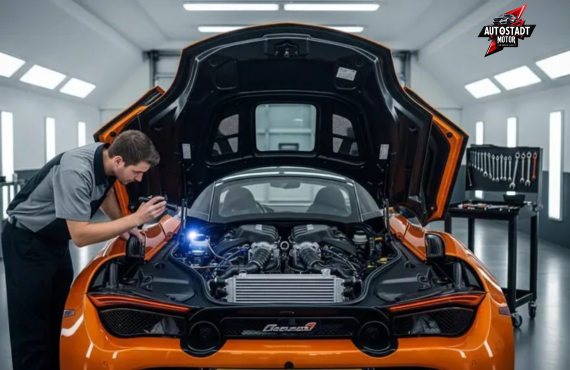
At AutoStadt Motor Services, McLaren AC condenser change begins with proper diagnosis. Rather than replacing parts based only on weak cooling, the aim is to establish whether the condenser is responsible, identify any related faults, and recommend the appropriate repair for your vehicle.
Signs Your Car Needs McLaren AC Condenser Change
A failing condenser can produce several symptoms, although some overlap with problems involving the compressor, refrigerant circuit, fans, and other AC components. Recognizing these warning signs can help you arrange an inspection before cooling performance deteriorates further.
1. The AC Blows Warm or Slightly Cool Air
One of the most noticeable symptoms is air that no longer feels sufficiently cold. You might set the climate control to a low temperature, yet the cabin remains uncomfortable.
The condenser releases heat from the refrigerant as part of the air-conditioning cycle. If its fins are damaged, airflow is restricted, or refrigerant escapes through a leak, the system may struggle to cool effectively.
However, warm air alone does not confirm condenser failure. A professional inspection can distinguish a condenser problem from low refrigerant, compressor faults, or electrical issues.
2. Refrigerant Leaks Around the Condenser
The condenser is positioned where it can be exposed to road debris and environmental contaminants, depending on the vehicle’s design. Small stones, damaged fins, corrosion, or physical impact can sometimes compromise its condition.
If refrigerant escapes through a damaged section, the AC may gradually lose cooling performance. In some cases, a technician may identify oily residue around a suspected leak because refrigerant systems circulate compressor oil.
A visible mark is not enough to confirm the source, however. The suspected area should be tested using an appropriate leak-detection method.
3. Cooling Becomes Worse in Traffic
If your McLaren’s AC seems more effective at speed but becomes warmer when the vehicle is stationary, the condenser’s heat-transfer performance and airflow deserve attention.
The condenser needs adequate airflow to release heat. A faulty cooling fan, obstructed condenser surface, or other airflow-related problem can affect its performance, especially in hot conditions.
Replacing the condenser without checking the fan and related components may leave the original complaint unresolved. That is why a complete diagnosis is important.
4. The AC Works Intermittently
An AC system that cools inconsistently may have a refrigerant-pressure issue, an electrical fault, a compressor-control problem, or another underlying defect.
A leaking condenser can contribute to this behaviour as the refrigerant level falls. Nevertheless, intermittent cooling should not automatically be treated as proof that the condenser needs replacement.
The technician should evaluate system performance and check the components associated with the symptoms.
5. Visible Damage to the Condenser Fins
Condenser fins help transfer heat away from the refrigerant. If the fins are heavily bent, obstructed, or damaged, airflow and heat dissipation may be reduced.
Some fin damage is superficial and does not necessarily require replacement. More extensive damage, structural deterioration, or a confirmed refrigerant leak may justify installing a new condenser.
Because access to components varies between McLaren models, the inspection procedure should follow the vehicle’s design and service requirements.
6. The AC Requires Repeated Refrigerant Refills
If the AC has been recharged more than once but continues to lose cooling, the underlying reason should be investigated.
A refrigerant circuit is designed to operate as a sealed system. Repeated refrigerant loss may indicate a leak at the condenser, hose connections, seals, evaporator, or another component.
Continually topping up refrigerant without finding the leak can waste money and delay the correct repair.
Why Choose AutoStadt Motor Services for McLaren AC Condenser Change
Replacing a condenser involves more than installing a new component. The source of the fault, the correct replacement specification, system cleanliness, and post-repair testing all matter.
Accurate Diagnosis Before Replacement
At AutoStadt Motor Services, the first priority is determining whether the condenser is actually defective.
The inspection may include checking refrigerant pressures, assessing cooling performance, examining the condenser for physical damage, and investigating suspected leaks. Related components, such as cooling fans and refrigerant connections, may also need attention.
This process helps avoid unnecessary parts replacement and supports a more informed repair decision.
Repair Procedures Suited to McLaren Vehicles
McLaren models can differ in component layout, access requirements, refrigerant specifications, and service procedures. The correct approach depends on the particular vehicle rather than assumptions based on another model.
A McLaren 720S, for example, should be assessed according to its own configuration and service information. The same principle applies to the McLaren GT and other vehicles in the range.
Appropriate Replacement Parts
Selecting a compatible condenser is essential. The replacement must suit the vehicle’s model, year, and specification.
Incorrect parts can create fitment difficulties, connection problems, or cooling-system complications. Therefore, the replacement specification should be verified before installation.
Attention to Related AC Components
A condenser fault may not be the only issue affecting cooling performance. A damaged connection, faulty fan, contaminated refrigerant circuit, or another component problem can also affect the system.
Inspecting the relevant components during the repair helps identify associated faults instead of leaving them untreated.
Professional Service for Dubai Driving Conditions
Dubai drivers often rely on their AC systems for daily commuting, business travel, and longer journeys. An inefficient system can make even a short trip uncomfortable.
AutoStadt Motor Services focuses on diagnosing the cause of the cooling problem and recommending a suitable repair, helping McLaren owners make informed decisions about their vehicles.
Similar AC concerns can affect other premium vehicles, including the BMW M4, Mercedes-Benz AMG models, Audi R8, and Porsche 911. However, each vehicle requires a repair procedure appropriate to its own design.
How Our McLaren AC Condenser Change Process Works
A systematic repair process helps ensure that the damaged component is identified correctly and that the AC system is checked after the work is completed.
Step 1: Review the Symptoms and Vehicle Details
The process begins by understanding the cooling problem and identifying the exact McLaren model.
Information about when the AC loses cooling, whether it works better at speed, whether refrigerant has been added previously, and whether any unusual noises have developed can help guide the inspection.
The vehicle’s specification also helps determine the correct service procedure and replacement part.
Step 2: Inspect the Air Conditioning System
The technician assesses the system’s current condition and cooling performance.
Depending on the symptoms, this may involve checking operating pressures, examining the condenser surface, inspecting refrigerant connections, and evaluating airflow through the cooling assembly.
The purpose is to establish whether the condenser is damaged, leaking, obstructed, or operating alongside another fault.
Step 3: Confirm the Leak or Condenser Fault
If a refrigerant leak is suspected, suitable diagnostic equipment can help locate its source.
A condenser replacement is recommended when the evidence supports it, such as a confirmed leak from the condenser or damage that prevents reliable operation.
If the problem is instead caused by a fan, compressor, electrical control, or another component, the repair recommendation should reflect that finding.
Step 4: Recover Refrigerant Safely
Before the condenser can be removed, any refrigerant remaining in the system must be recovered using suitable equipment and procedures.
Refrigerant should not simply be released into the atmosphere. Proper recovery protects the environment and allows the repair to proceed safely.
The vehicle’s specified refrigerant type and service requirements must be followed throughout the work.
Step 5: Remove and Replace the Condenser
Accessing the condenser may require the removal of selected surrounding components, depending on the McLaren model.
The damaged condenser is removed carefully, and the associated pipes, fittings, seals, and mounting points are inspected. Appropriate seals should be renewed as required by the manufacturer’s repair procedure.
The replacement condenser is then installed according to the relevant specifications. Correct fitment is important to prevent leaks and ensure that surrounding components are not damaged.
Step 6: Evacuate and Recharge the System
After installation, the AC circuit is prepared for recharging according to the required service procedure.
The system may need to be evacuated to remove air and moisture before the specified refrigerant charge is added. Any required oil adjustment should follow the vehicle’s service requirements rather than an assumed quantity.
Correct refrigerant charging matters because both undercharging and overcharging can interfere with system performance.
Step 7: Perform Final Testing
Once the system has been recharged, its operation is checked again.
The technician can assess cooling performance, relevant operating pressures, condenser airflow, and signs of leakage. The system should also be checked for proper operation under appropriate test conditions.
This final stage helps confirm whether the repair has resolved the original problem and whether any additional concerns remain.
Maintaining Your McLaren AC System in Dubai
Preventive maintenance can help identify developing problems before they significantly affect cabin comfort.
First, pay attention to gradual changes in cooling performance. If the AC begins taking longer to cool the cabin or loses effectiveness in traffic, arrange an inspection instead of waiting for complete failure.
Second, have the condenser area inspected when appropriate. Dust, debris, and physical damage can affect heat transfer, although cleaning must be performed carefully to avoid bending delicate fins or damaging nearby components.
Third, investigate repeated refrigerant loss. A properly functioning sealed system should not require frequent refilling. Finding and repairing a leak is generally more useful than repeatedly restoring the refrigerant level.
Finally, follow the vehicle’s maintenance guidance and use suitable replacement parts. High-performance vehicles have specific technical requirements, so a repair method suitable for a Toyota Land Cruiser or Nissan Patrol should not automatically be applied to a McLaren.
Frequently Asked Questions About McLaren AC Condenser Change in Dubai
1. How do I know if my McLaren needs an AC condenser change?
Common signs include weak cooling, confirmed refrigerant leakage from the condenser, visible physical damage, or cooling difficulties associated with restricted condenser airflow. However, these symptoms can also result from a faulty fan, compressor, or another AC component. A proper inspection is necessary to confirm whether condenser replacement is the right solution.
2. How much does McLaren AC condenser replacement cost in Dubai?
The total cost depends on the McLaren model, condenser availability, replacement-part specification, labour requirements, and the accessibility of the component. Additional costs may apply if damaged seals, connections, or other AC components also require attention. AutoStadt Motor Services can assess the vehicle and provide a repair recommendation based on the confirmed fault and required parts.
3. Can I drive my McLaren if the AC condenser is leaking?
A leaking condenser may initially affect cooling without immediately changing how the vehicle drives. Nevertheless, continued refrigerant loss can reduce AC performance, and operating the system with insufficient refrigerant may affect compressor lubrication in systems that depend on refrigerant circulation for oil return. If the AC stops cooling or a leak is suspected, arrange an inspection promptly and avoid unnecessary use of the system until the fault is assessed.
4. Does a new AC condenser mean the refrigerant must be replaced?
The system’s refrigerant must be properly recovered before the condenser is removed, then the system must be serviced and recharged according to the vehicle’s specifications. The refrigerant type and quantity depend on the particular McLaren. A technician should also follow the correct procedure for checking leaks, evacuating the system, and addressing any required compressor-oil adjustment.
5. Can an AC gas refill fix a damaged McLaren condenser?
A gas refill cannot repair a physically damaged or leaking condenser. It may temporarily improve cooling if refrigerant is low, but the system can lose refrigerant again if the leak remains. The appropriate solution is to locate the leak, determine whether the condenser can be serviced or must be replaced, and then recharge and test the system correctly.
Conclusion
McLaren AC condenser change can restore dependable cooling when a damaged or leaking condenser is responsible for poor air-conditioning performance. Since Dubai’s climate places substantial demands on vehicle AC systems, addressing weak cooling and refrigerant leaks early can help prevent continued discomfort and avoid unnecessary repeat servicing.
However, not every AC problem requires a new condenser. Accurate diagnosis is essential to distinguish condenser damage from refrigerant leaks elsewhere, restricted airflow, compressor faults, and electrical problems.
At AutoStadt Motor Services, the focus is on identifying the cause, selecting a compatible replacement when required, following the correct refrigerant service procedure, and testing the system after the repair.
If your McLaren is blowing warm air, repeatedly losing refrigerant, or showing signs of condenser damage, arranging a professional inspection is a practical step towards restoring cabin comfort and maintaining your vehicle’s air-conditioning performance in Dubai.


Leave a Comment