
McLaren AC compressor change is an important service when your supercar’s air conditioning stops cooling effectively, produces unusual noises, or struggles to maintain a comfortable cabin temperature. In Dubai, where high outdoor temperatures can make driving uncomfortable within minutes, a properly functioning AC system is essential for enjoying your McLaren as intended.
McLaren vehicles combine high-performance engineering with carefully designed climate-control systems. Their air conditioning systems depend on several components working together, including the AC compressor, condenser, evaporator, expansion valve, refrigerant lines, sensors and electronic controls. If the compressor develops a fault, the entire cooling process can be affected.
However, weak cooling does not automatically mean that the compressor needs replacement. Low refrigerant, a refrigerant leak, a faulty pressure sensor, an electrical issue or a restricted condenser can produce similar symptoms. Accurate diagnosis is therefore essential before approving an expensive repair.
At AutoStadt Motor Services, McLaren AC compressor change begins with assessing the system’s condition and identifying the source of the problem. The objective is to recommend a suitable repair, protect other AC components and restore reliable cooling performance.
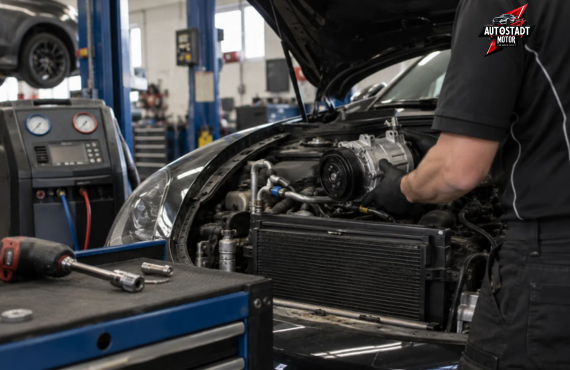
Whether you drive a McLaren 570S, 720S, GT or another model, the correct repair procedure depends on the vehicle’s specific configuration. A careful inspection helps ensure that the replacement compressor, refrigerant specification and servicing procedure are appropriate for your car.
Signs Your Car Needs McLaren AC Compressor Change
An AC compressor problem may develop gradually or appear suddenly. Recognizing the warning signs can help you arrange an inspection before the issue affects additional components.
1. The AC Blows Warm Air
One of the most common symptoms is warm air coming from the dashboard vents even when the temperature is set to its lowest setting.
The compressor helps circulate refrigerant through the air conditioning system. If it cannot operate correctly, the refrigerant may not complete the cooling cycle as intended.
Nevertheless, warm air can also result from low refrigerant, a faulty control valve, electrical problems or a malfunctioning sensor. A technician should test the system before concluding that compressor replacement is necessary.
2. Unusual Noise When the AC Is Activated
Grinding, rattling, squealing or other unusual sounds may indicate a mechanical problem.
Depending on the compressor design, internal wear, bearing damage or related drive components can create noise when the system operates. A change in sound when the AC is switched on is useful diagnostic information.
If the noise becomes severe or is accompanied by a burning smell, switch off the AC and arrange an inspection. Continuing to operate a failing component may increase the risk of further damage.
3. Cooling Becomes Inconsistent
Your McLaren may produce cold air initially, followed by warmer air after some time. In other cases, cooling may fluctuate during traffic or after the vehicle has been running for an extended period.
This behaviour can be associated with compressor performance, refrigerant pressure, temperature sensors or electronic controls. Because several faults can create similar symptoms, the system needs to be tested under suitable operating conditions.
4. The AC Compressor Does Not Engage
If the compressor does not activate when cooling is requested, there may be a fault within the compressor or its control system.
Possible causes include an electrical supply issue, a faulty relay where applicable, pressure-related protection, a sensor fault or a compressor failure.
Modern vehicles may use electronically controlled compressor systems, so diagnosis should follow the particular McLaren’s design rather than relying on assumptions based on older cars.
5. Refrigerant Leaks or Oily Residue
Visible residue around AC connections or compressor-related components may indicate a refrigerant leak. Refrigerant can escape through damaged seals, hoses, connections or the compressor itself.
Refrigerant circuits may also carry compressor oil, so oily residue can provide a useful clue during inspection. However, the location and appearance of residue alone cannot confirm the exact source.
A professional leak test helps determine whether the compressor is leaking or whether another part of the AC system requires attention.
6. Burning Smell or AC-Related Electrical Symptoms
A burning smell should never be ignored. It may indicate an electrical problem, excessive friction or another mechanical fault.
If the AC system produces a burning smell, unusual smoke or a sudden loud noise, turn the system off and have the vehicle checked. If the vehicle itself appears unsafe to operate, arrange appropriate recovery rather than continuing to drive.
Why Choose AutoStadt Motor Services for McLaren AC Compressor Change
Replacing an AC compressor on a performance vehicle requires more than fitting a new part. The underlying cause of failure must be understood, and the surrounding system should be assessed before the repair is completed.
Accurate Diagnosis Before Replacement
At AutoStadt Motor Services, the diagnostic process focuses on determining whether the compressor is actually responsible for the cooling problem.
The inspection may include AC pressure readings, refrigerant leak checks, electrical testing, control-system assessment and examination of related components. The exact checks depend on the McLaren model and the symptoms reported.
This approach helps avoid replacing an expensive compressor when the fault originates elsewhere.
Vehicle-Specific Repair Procedures
McLaren models differ in their component layout, cooling-system configuration and service requirements. Access to the compressor can also vary between vehicles.
For this reason, the replacement procedure should follow the appropriate technical information for the specific model. Correct installation helps reduce the risk of leaks, connection problems and other avoidable issues.
Suitable Replacement Components
Selecting a suitable compressor is essential. Compatibility should be confirmed using the vehicle’s exact model, year, specification and relevant part information.
A suitable replacement must meet the system’s technical requirements. Where appropriate, the technician should also follow the manufacturer’s guidance on compressor oil, seals and related components.
Attention to the Entire AC System
A failed compressor can sometimes affect other parts of the cooling circuit, especially if internal wear has introduced debris into the system.
Consequently, replacing the compressor without assessing the refrigerant circuit may leave the original cause of failure unresolved or expose the replacement component to contamination.
AutoStadt Motor Services can assess related components and determine whether additional work is necessary based on the inspection findings.
Professional Service for Dubai Driving Conditions
Frequent stop-and-go traffic, high ambient temperatures and extended periods of AC use place considerable demands on a vehicle’s climate-control system.
A McLaren owner should not have to rely on temporary cooling improvements that disappear shortly after servicing. Proper diagnosis, suitable parts and post-repair testing are important for dependable operation.
How Our McLaren AC Compressor Change Process Works
A structured repair process helps identify the fault, establish the appropriate solution and verify the result.
Step 1: Discuss the Symptoms
The process begins with the driver’s description of the problem.
The technician may ask when the cooling stopped working, whether the AC produces unusual sounds, if cooling changes during driving, and whether previous AC servicing has been performed.
These details help establish a useful starting point for diagnosis.
Step 2: Inspect the AC System
The relevant components are examined for visible damage, leakage, loose connections or other signs of a fault.
Depending on the vehicle, the inspection may include the compressor, condenser, refrigerant lines, electrical connections, cooling fans and associated controls.
The aim is to identify the possible cause without immediately committing to replacement.
Step 3: Test Compressor Operation
Suitable diagnostic equipment is used to assess system operation and refrigerant pressures. Electrical and control-system checks may also be required.
The results help determine whether the compressor has failed internally, is not receiving the correct control signals, or is being prevented from operating by another fault.
Step 4: Check for Refrigerant Loss and Contamination
If a leak is suspected, the refrigerant circuit should be checked using an appropriate method.
The technician should also consider whether compressor failure has contaminated the system. Depending on the findings and the applicable service procedure, additional cleaning or component replacement may be required.
This stage is important because a replacement compressor should not be installed without considering the condition of the rest of the circuit.
Step 5: Remove and Replace the Compressor
Once replacement is confirmed, the old compressor is removed using the correct procedure for the vehicle.
The relevant connections and sealing components are inspected, and the replacement part is checked for compatibility. Compressor oil quantities and specifications must follow the applicable technical requirements rather than being estimated.
Careful installation helps ensure that the replacement component can operate as intended.
Step 6: Service and Recharge the System
After installation, the system is serviced according to the vehicle’s requirements.
Where required, the circuit is evacuated and recharged using the specified refrigerant type and quantity. The technician should also follow the appropriate procedure for leak testing and system preparation.
Incorrect refrigerant quantities or unsuitable oil can affect performance and component reliability.
Step 7: Perform Final Performance Checks
After servicing, the AC system is operated and tested.
The technician checks cooling performance, system pressures where applicable, compressor operation, unusual noises and signs of leakage. Relevant controls should also be checked to confirm that the original problem has been addressed.
This final assessment helps establish whether the repair has restored the expected AC operation.
McLaren AC Compressor Maintenance Tips for Dubai Owners
Although a compressor may eventually require replacement, sensible maintenance can help identify problems before they become more serious.
First, pay attention to changes in cooling performance. If your McLaren takes longer to cool the cabin or begins producing unusual sounds, arrange an inspection rather than waiting for complete failure.
Second, avoid repeatedly adding refrigerant without investigating why the level has fallen. Refrigerant loss may indicate a leak that needs repair.
Third, follow the vehicle’s recommended maintenance and servicing procedures. The correct refrigerant specification, compressor oil and replacement components are important for preserving system performance.
Finally, address other AC faults promptly. A condenser airflow problem, electrical malfunction or restricted cooling circuit may affect the system’s operation and should not be overlooked.
These principles also apply to other premium vehicles, although the exact procedures vary. A BMW M4, Mercedes-AMG GT, Porsche 911 and McLaren may all require careful AC diagnosis, but their component designs and repair requirements are not interchangeable.
Frequently Asked Questions About McLaren AC Compressor Change in Dubai
1. How do I know if my McLaren AC compressor needs replacement?
Common warning signs include warm air from the vents, unusual noises when the AC is operating, inconsistent cooling or a compressor that fails to function correctly. However, these symptoms can also be caused by refrigerant leaks, electrical faults, sensors or other components. A diagnostic inspection is necessary to confirm whether compressor replacement is the appropriate solution.
2. How much does McLaren AC compressor change cost in Dubai?
The cost depends on the McLaren model, the compatible replacement compressor, labour requirements and the condition of the rest of the AC system. Additional work may be necessary if the circuit contains debris or has damaged seals, hoses or other components. The most reliable way to estimate the cost is to inspect the vehicle and identify the actual fault before preparing a repair recommendation.
3. Can I drive my McLaren if the AC compressor is faulty?
If the AC simply stops cooling and there are no other symptoms, the vehicle’s ability to drive may not be immediately affected. However, the answer depends on the compressor design and the nature of the fault. A seized component, abnormal mechanical noise, burning smell or related drive-system problem may require the vehicle to be stopped and inspected. If you are unsure whether it is safe to continue, arrange professional assistance.
4. Does a new AC compressor mean the entire AC system must be replaced?
No. Compressor replacement does not automatically require replacing every AC component. However, the condition of the condenser, refrigerant lines, seals, expansion device and other parts should be assessed. If internal compressor failure has spread debris through the circuit, additional cleaning or component replacement may be required. The repair should be based on the inspection findings and the applicable service procedure.
5. How long does McLaren AC compressor replacement take?
The time required depends on the particular McLaren, compressor accessibility, parts availability and whether additional repairs are necessary. A straightforward replacement may take less time than a repair involving a refrigerant leak, contaminated system or damaged connections. The workshop should confirm the expected timeframe after inspecting the vehicle and establishing the full scope of work.
Conclusion
McLaren AC compressor change can restore cooling performance when the compressor has genuinely failed, but accurate diagnosis should always come first. Warm air, inconsistent cooling, unusual noises and refrigerant leaks can have several possible causes, making it important to assess the complete AC system before replacing expensive components.
For Dubai owners, a reliable air conditioning system makes daily driving considerably more comfortable, especially during the hotter months. Choosing the correct replacement compressor, following the appropriate service procedure and checking the system after installation all contribute to a more dependable repair.
AutoStadt Motor Services offers professional automotive AC inspection and repair support for McLaren owners in Dubai. If your vehicle is no longer cooling properly or the compressor is producing unusual sounds, arrange an inspection to identify the cause and determine the most suitable repair for your car.


Leave a Comment