
Mercedes radiator repair is essential when your vehicle develops coolant leaks, struggles to maintain a stable engine temperature, or shows signs of overheating. Mercedes-Benz vehicles are engineered for performance, comfort, and reliability, but their cooling systems still require proper maintenance to protect the engine from excessive heat. When the radiator or a related component stops working correctly, even a routine journey through Dubai traffic can become a concern.
The radiator plays a central role in regulating engine temperature. It transfers heat from the engine coolant to the surrounding air, helping the engine operate within its intended temperature range. However, cooling performance depends on more than the radiator alone. Coolant hoses, the thermostat, water pump, radiator fan, expansion tank, and pressure cap must also function properly.
Dubai’s hot climate and frequent stop-and-go traffic can make cooling-system problems particularly noticeable. A damaged radiator may cause coolant loss, while restricted airflow or a faulty cooling fan can reduce heat dissipation when the vehicle is stationary. Therefore, identifying the actual cause of a cooling problem is more effective than replacing parts without a confirmed diagnosis.
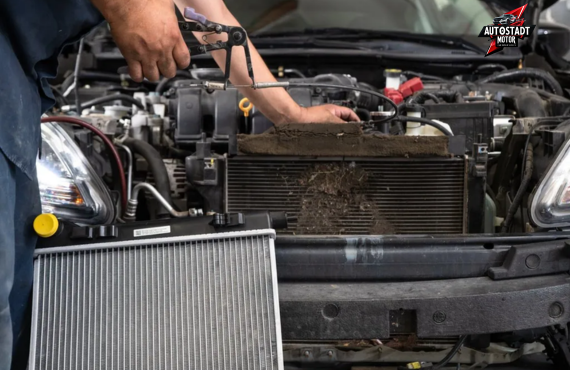
At AutoStadt Motor Services, Mercedes radiator repair begins with examining the cooling system and identifying the source of the fault. Whether you drive a Mercedes-Benz C-Class, E-Class, GLE, or another model, a timely inspection can help protect important engine components and reduce the risk of more extensive repairs.
Signs Your Car Needs Mercedes Radiator Repair
Radiator problems do not always begin with dramatic overheating. In many cases, the vehicle provides smaller warning signs that should be investigated before the situation becomes more serious.
1. Engine Temperature Rises Above Normal
An unusually high engine temperature is one of the most important warning signs.
If the temperature gauge rises beyond its normal range or a coolant-temperature warning appears, the cooling system may not be removing heat effectively. A blocked radiator, low coolant level, damaged radiator, faulty thermostat, or malfunctioning fan could contribute to the problem.
However, overheating does not automatically mean the radiator is defective. A proper inspection is needed to distinguish radiator trouble from other cooling-system faults.
If the engine overheats, stop in a safe location and switch it off when appropriate. Do not continue driving in the hope that the temperature will return to normal. Never remove a hot radiator or expansion-tank cap because pressurised coolant can cause serious burns.
2. Coolant Leaks Beneath the Vehicle
Fresh coolant beneath your Mercedes can indicate a leak that requires attention.
Depending on the fault, coolant may escape from the radiator core, plastic end tanks, hose connections, drain point, or nearby cooling-system components. The colour of coolant varies, so appearance alone is not enough to identify the source.
If you repeatedly find liquid under the front of your vehicle or notice that the coolant level keeps falling, arrange an inspection. Simply adding more coolant does not repair a leak.
3. Coolant Warning Appears on the Dashboard
Modern Mercedes-Benz vehicles use sensors and electronic monitoring to alert drivers to certain cooling-system problems.
A low-coolant warning may indicate fluid loss, while a temperature warning can signal overheating. The exact message depends on the model and system.
These warnings should not be ignored, even if the vehicle appears to drive normally. Continuing to operate an engine with insufficient coolant can lead to overheating and potentially expensive engine damage.
4. Visible Corrosion or Damage Around the Radiator
Over time, a radiator may develop corrosion, physical damage, or deterioration around its connections. Road debris can also damage exposed cooling components.
During an inspection, technicians may identify bent fins, damaged areas, signs of coolant residue, or deteriorating connections. A radiator with restricted airflow may also struggle to transfer heat effectively.
The appropriate repair depends on the type and extent of the damage.
5. Air Conditioning and Engine Cooling Concerns
Although the engine cooling system and air-conditioning system perform different functions, their components can be located close together at the front of the vehicle.
For example, the AC condenser sits near the radiator on many vehicles. Debris or restricted airflow around this area can affect heat exchange, while a faulty cooling fan may influence both engine cooling and AC performance under certain conditions.
If your Mercedes develops both overheating symptoms and poor AC performance, an inspection of the relevant components may help identify whether the issues are connected.
6. Steam or an Unusual Smell From the Engine Bay
Steam rising from the engine compartment can indicate escaping coolant or overheating. A sweet or unusual smell may also accompany a coolant leak, although smells alone cannot confirm the source.
If you notice steam, a rapidly rising temperature, or a significant coolant leak, stop driving as soon as it is safe to do so. Allow the engine to cool and arrange professional assistance rather than opening the cooling system while it is hot.
Why Choose AutoStadt Motor Services for Mercedes Radiator Repair
A reliable cooling-system repair involves more than replacing the radiator. The objective is to identify the underlying fault, select the appropriate repair, and verify that the system operates correctly afterward.
Accurate Cooling-System Diagnosis
At AutoStadt Motor Services, the diagnostic process focuses on identifying why the vehicle is overheating or losing coolant.
The radiator may be responsible, but other possibilities include a leaking hose, faulty thermostat, weak water pump, defective pressure cap, cooling fan problem, or expansion-tank leak.
Checking the related components helps reduce the risk of replacing a radiator when another part is causing the problem.
Repair Recommendations Suited to Your Mercedes
Different Mercedes-Benz models use different cooling-system configurations. A C-Class may not have the same component layout or service requirements as an E-Class, S-Class, or GLE.
For this reason, the vehicle’s model, engine, year, and cooling-system design should be considered before recommending a repair.
Attention to Coolant Leaks
A coolant leak can sometimes be difficult to locate because fluid may travel across surrounding components before dripping onto the ground.
A suitable inspection, including pressure testing where appropriate, can help reveal leaks that are not immediately visible. Identifying the source makes it easier to determine whether the radiator, a hose, a connection, or another component requires attention.
Protection Against Further Engine Damage
An overheating engine should never be treated as a minor inconvenience. Excessive temperatures can damage engine components, seals, and other parts of the cooling system.
Timely Mercedes radiator repair can help address the original problem before continued coolant loss or overheating causes further complications.
Professional Support for Dubai Drivers
Dubai’s driving conditions can place significant demands on the cooling system, especially during hot weather and prolonged traffic delays.
AutoStadt Motor Services helps drivers investigate cooling problems and determine the appropriate next step. The same diagnostic principle applies to other vehicles, including BMW 5 Series models, Toyota Land Cruiser SUVs, Nissan Patrol vehicles, and Audi sedans: the cause should be confirmed before parts are replaced.
How Our Mercedes Radiator Repair Process Works
A structured repair process helps ensure that the cooling system is inspected carefully and that the final result addresses the original complaint.
Step 1: Discuss the Symptoms
The process starts with understanding what you have noticed while driving.
You may have seen a coolant warning, detected a leak after parking, experienced rising engine temperatures, or noticed that the coolant reservoir needs frequent topping up.
Information about when the problem occurs can help narrow down the possible causes.
Step 2: Inspect the Radiator and Related Components
The technician examines the radiator and accessible parts of the cooling system.
Depending on the symptoms, the inspection may include radiator tanks, the radiator core, hoses, clamps, expansion tank, pressure cap, cooling fan, and visible connections. The water pump and thermostat may also need assessment.
This broader inspection helps distinguish a radiator fault from a problem elsewhere in the system.
Step 3: Test for Coolant Leaks
If coolant loss is suspected, appropriate leak-detection methods can be used.
A cooling-system pressure test, when suitable for the vehicle and performed according to the correct procedure, can help reveal leaks around the radiator and related connections. Additional inspection may be needed if the leak occurs only under certain operating conditions.
The goal is to locate the source before deciding on the repair.
Step 4: Determine Whether Repair or Replacement Is Appropriate
Not every radiator problem requires the same solution.
A damaged hose connection may be straightforward to address, whereas a cracked radiator tank or badly damaged radiator core may require radiator replacement. Restricted airflow or a defective fan can require a different repair altogether.
The decision should account for the type of damage, the radiator’s condition, the vehicle’s requirements, and the practicality of a reliable repair.
Step 5: Complete the Necessary Repair
Once the fault has been confirmed, the relevant repair can proceed.
Depending on the diagnosis, this may involve repairing a connection, replacing a damaged hose, installing a replacement radiator, or addressing another cooling-system component.
The correct coolant specification and service procedure should be followed for the particular Mercedes-Benz model. Mixing incompatible coolant types or using an unsuitable product can create avoidable problems.
Step 6: Refill and Bleed the Cooling System Where Required
After a cooling-system repair, the system may need to be refilled and bled according to the manufacturer’s procedure.
Some modern vehicles require specific filling methods or equipment to remove trapped air correctly. Air remaining in the system can interfere with coolant circulation and temperature regulation.
The correct procedure depends on the vehicle’s design.
Step 7: Verify Cooling Performance
The final stage involves checking the repaired system.
The technician can inspect for continuing leaks, confirm the coolant level, and assess temperature regulation and related component operation. Additional testing may be appropriate depending on the original fault.
This final verification helps establish whether the repair has addressed the reported problem rather than simply removing the visible evidence of a leak.
Mercedes Radiator Maintenance Tips for Dubai Conditions
Preventive maintenance can help identify cooling-system problems before they develop into more serious faults.
First, pay attention to coolant warnings and follow the maintenance schedule specified for your Mercedes-Benz. Check the coolant level only when the engine is cool and follow the vehicle handbook’s instructions. A repeatedly falling level should always be investigated.
Second, arrange an inspection if you notice fluid beneath the vehicle. Do not assume that every leak is engine oil or air-conditioning condensation. Identifying the fluid and its source can prevent delays in diagnosis.
Third, avoid ignoring changes in engine temperature. If the temperature rises above its normal range, continuing to drive may turn a manageable cooling-system fault into a much more expensive repair.
Finally, keep up with routine servicing. Radiator condition, hose deterioration, coolant condition, and cooling-fan operation can all be relevant during a cooling-system assessment. However, coolant replacement intervals and specifications vary by model, so the manufacturer’s recommendations should guide maintenance.
Frequently Asked Questions About Mercedes Radiator Repair in Dubai
1. How much does Mercedes radiator repair cost in Dubai?
The cost depends on the Mercedes-Benz model, the type of radiator damage, parts availability, labour requirements, and whether related components are also faulty. A leaking connection may cost less to repair than replacing a damaged radiator assembly. An accurate estimate should follow an inspection that identifies the cause of the problem. AutoStadt Motor Services can assess the cooling system and recommend the appropriate repair based on the vehicle’s condition.
2. Can I drive my Mercedes with a leaking radiator?
Driving with a radiator leak is risky because coolant loss can cause the engine to overheat. Even a small leak may worsen as the vehicle warms up and the cooling system becomes pressurised. If the coolant level drops rapidly, a warning appears, or the temperature rises above normal, stop in a safe location and switch off the engine. Do not open the coolant reservoir while it is hot. Arrange professional assistance if the leak is significant or the engine has overheated.
3. Should I repair or replace my Mercedes radiator?
The correct option depends on the location and severity of the damage, the radiator’s condition, and the feasibility of a dependable repair. Some faults originate from hoses or connections rather than the radiator itself. However, a cracked tank, substantial core damage, or severe deterioration may make replacement the more suitable option. A proper diagnosis helps prevent unnecessary spending while ensuring that the cooling system can operate reliably.
4. What causes a Mercedes radiator to leak?
Radiator leaks can develop because of physical damage, corrosion, deteriorating seals, damaged plastic tanks, or failing connections. Leaks may also originate from nearby hoses, the expansion tank, or other cooling-system components, making the source difficult to identify visually. In Dubai, regular inspections are useful because high operating temperatures and demanding driving conditions can expose existing weaknesses. The actual cause should be confirmed before any component is replaced.
5. How can I prevent my Mercedes from overheating in Dubai?
Follow the recommended maintenance schedule, use the correct coolant, investigate falling coolant levels, and address leaks promptly. It is also important to respond immediately to temperature warnings rather than continuing to drive. If overheating occurs mainly in traffic, the cooling fan and airflow through the radiator may need inspection, although other faults are possible. Regular servicing by a qualified workshop can help identify developing problems before they cause serious engine damage.
Conclusion
Mercedes radiator repair is an important part of maintaining engine reliability, especially for drivers dealing with Dubai’s heat and demanding traffic conditions. Coolant leaks, rising engine temperatures, warning messages, and visible radiator damage should be investigated promptly rather than left until the vehicle overheats.
Because the radiator works alongside the water pump, thermostat, hoses, cooling fan, and other components, the most effective repair starts with an accurate diagnosis. This helps determine whether the radiator itself needs repair or replacement or whether another part of the cooling system is responsible.
AutoStadt Motor Services offers cooling-system inspection and repair support for Mercedes-Benz owners in Dubai. By identifying the source of the problem and recommending a repair suited to the vehicle, the workshop can help drivers make informed maintenance decisions.
If your Mercedes is losing coolant, showing temperature warnings, or struggling to maintain normal engine temperature, arrange an inspection before the issue develops into a more serious problem. Timely attention can help protect your engine, maintain dependable performance, and reduce the risk of avoidable repair costs.


Leave a Comment