
Mitsubishi AC condenser change is an important repair when the condenser becomes damaged, blocked, corroded, or unable to release heat effectively. The condenser is a key component of your vehicle’s air conditioning system. It helps transform high-pressure refrigerant gas into a liquid so the AC system can continue producing cool air inside the cabin.
For Mitsubishi owners in Dubai, a properly functioning air conditioning system is particularly important because comfortable driving depends heavily on dependable cabin cooling. However, when the condenser develops a leak or becomes damaged, simply adding refrigerant may only provide temporary relief. A professional inspection is needed to determine whether the condenser can be serviced or requires replacement.
AutoStadt Motor Services provides professional Mitsubishi AC condenser change services for drivers looking for dependable automotive AC repairs in Dubai. Our technicians inspect the AC system, identify the source of the problem, replace the faulty condenser when necessary, and check the system afterward to help restore proper cooling performance.
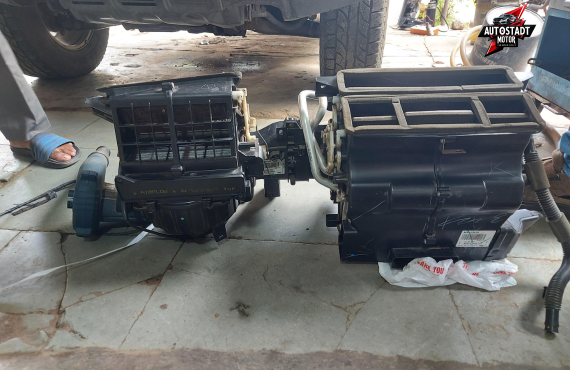
A Mitsubishi AC problem can sometimes be caused by other components, such as the compressor, expansion valve, condenser fan, receiver drier, refrigerant lines, or electrical controls. Therefore, accurate diagnosis should come before replacing any part.
Signs Your Car Needs Mitsubishi AC Condenser Change
Recognizing condenser-related problems early can help prevent additional AC system damage. While some symptoms may also occur because of other faults, several warning signs deserve professional attention.
Weak Cooling From the AC
One of the most noticeable symptoms is air conditioning that no longer becomes properly cold. You may notice that the AC initially feels acceptable but gradually becomes warmer, especially during long drives.
A damaged condenser may struggle to remove heat from the refrigerant. As a result, the refrigerant cycle cannot operate efficiently, reducing the cooling performance delivered through the cabin vents.
Refrigerant Leaks Around the Condenser
Visible refrigerant or oily residue around the front portion of the AC system can indicate a leak. Because the condenser is normally positioned toward the front of the vehicle, it can be exposed to road debris, dust, moisture, and minor impacts.
A small leak can gradually reduce refrigerant pressure. Continuing to operate the AC with insufficient refrigerant may place additional strain on other components, depending on the system design.
AC Takes Too Long to Cool the Cabin
If your Mitsubishi AC requires considerably more time than usual to cool the interior, the condenser should be inspected. This is particularly noticeable when the vehicle has been parked outside and the cabin temperature is high.
Of course, cabin temperature, airflow, refrigerant level, compressor operation, and blower performance can all influence cooling speed. A proper inspection helps separate a condenser issue from other possible causes.
Strange Noises or Unusual AC Behavior
A damaged condenser itself may not always create a noticeable noise. However, abnormal AC operation can occur when refrigerant pressure is outside the expected range or when other connected components are affected.
If you hear unusual sounds whenever the AC is switched on, it is better to have the entire system checked instead of assuming the condenser is the only problem.
Refrigerant Pressure Problems
Professional AC equipment can measure system pressure and help identify whether the refrigerant circuit is operating within the expected range. Abnormal readings can point toward leaks, restrictions, compressor problems, or condenser-related issues.
Therefore, pressure testing is an important part of diagnosing whether your Mitsubishi actually needs a condenser replacement.
Visible Damage to the Condenser
Because the condenser sits near the front of the vehicle, physical damage can occur from road debris or minor collisions. Bent fins, impact damage, corrosion, or damaged connections may affect heat transfer and system performance.
If the condenser has suffered significant physical damage or has developed an unrecoverable leak, replacement may be the appropriate repair.
Why Choose AutoStadt Motor Services for Mitsubishi AC Condenser Change
Choosing the correct workshop matters because an AC condenser replacement involves more than simply removing an old component and installing a new one.
At AutoStadt Motor Services, our approach begins with diagnosis. Before recommending a Mitsubishi AC condenser change, technicians can inspect the cooling performance, refrigerant circuit, visible components, connections, and related AC parts.
Diagnosis Before Replacement
A weak AC system does not automatically mean the condenser has failed. For example, a Toyota may experience poor cooling because of a refrigerant leak, while a BMW could have an electrical or compressor-related fault. Mitsubishi vehicles can also have several possible causes for weak AC performance.
That is why diagnosis is important. Replacing an expensive component without identifying the actual fault can waste both time and money.
Professional Condenser Replacement
When the condenser is confirmed to be damaged or leaking, replacing it with a suitable component helps restore the refrigerant circuit. The technician also needs to inspect associated connections and components for signs of contamination, damage, or leakage.
The objective is not simply to install a new condenser but to make sure the surrounding AC system is ready to operate correctly.
Complete AC System Inspection
A condenser replacement can be an opportunity to check other parts of the system as well. Depending on the vehicle and fault, inspection may include the AC compressor, condenser fan, refrigerant lines, receiver drier, expansion valve, pressure sensors, and electrical connections.
This broader inspection can help identify problems that might otherwise cause the newly repaired system to perform poorly.
Customer-Focused Service in Dubai
Dubai driving conditions can involve long traffic periods, frequent stop-and-go driving, and extended AC usage. Consequently, an AC system that works properly is more than a convenience.
AutoStadt Motor Services focuses on explaining the identified problem and the required repair so customers can make an informed decision about their vehicle.
How Our Mitsubishi AC Condenser Change Process Works
A structured repair process helps reduce unnecessary replacements and ensures that the AC system is checked after the repair.
Initial AC Performance Check
The process starts by checking the current AC performance. Technicians may assess vent temperature, airflow, compressor operation, cooling behavior, and other visible symptoms.
This provides a starting point before further testing is performed.
AC System Diagnosis
The next step is identifying whether the condenser is actually responsible for the problem. Refrigerant pressure, visible leaks, condenser condition, connections, and related components may be inspected.
If the condenser is damaged but another component has also failed, both issues may need to be addressed to restore proper operation.
Refrigerant Recovery
If condenser replacement is required, the existing refrigerant should be handled using appropriate AC service equipment. Refrigerant recovery helps prevent unnecessary release and allows the system to be serviced properly.
The exact procedure can vary depending on the vehicle and refrigerant system.
Removing the Faulty Condenser
The damaged condenser is then removed carefully. Because it is connected to the refrigerant circuit, technicians need to handle the lines and fittings properly to avoid introducing additional contamination or damage.
At this stage, surrounding components can also be checked for impact damage, corrosion, or other problems.
Installing the Replacement Condenser
The replacement condenser is installed with attention to proper mounting and connection points. Related seals or components may require replacement depending on their condition and the vehicle manufacturer’s requirements.
Correct installation is important because even a high-quality condenser cannot perform properly if connections are not sealed correctly.
Vacuum and Leak Testing
After installation, the AC system can be evacuated and tested for leaks. Creating the appropriate vacuum helps remove unwanted air and moisture from the refrigerant circuit before recharging.
Leak testing is especially important because a system that loses refrigerant after repair will eventually experience the same cooling problem again.
Refrigerant Recharge
Once the system has passed the necessary checks, the correct refrigerant quantity can be restored according to the vehicle’s specifications.
Using the appropriate refrigerant and quantity matters. Too little or too much refrigerant can affect AC performance and system pressures.
Final Cooling Test
Finally, the AC is operated and checked again. Vent temperature, cooling consistency, compressor operation, airflow, and system behavior are assessed to confirm that the repair has produced the expected result.
This final stage helps ensure that the Mitsubishi leaves the workshop with a properly functioning AC system rather than simply a newly installed component.
Why Mitsubishi AC Condenser Problems Should Not Be Ignored
A small AC issue can sometimes become more complicated when ignored for an extended period. If refrigerant is escaping because of a condenser leak, continued operation may reduce cooling performance and potentially affect other parts of the system.
Moreover, Dubai’s hot environment means drivers often rely on the AC for extended periods. A system that is already struggling may become increasingly noticeable during daily commuting.
The best approach is to investigate unusual cooling behavior early. If your Mitsubishi AC is becoming weak, taking longer to cool, or showing signs of a refrigerant leak, professional inspection can help determine the appropriate repair.
It is also worth remembering that not every Mitsubishi uses the exact same AC configuration. Model year, engine, trim level, and system design can influence the components used. Therefore, replacement parts should be matched correctly to the vehicle.
Maintaining Mitsubishi AC Performance After Condenser Replacement
After a successful condenser replacement, regular attention can help keep the AC system operating efficiently.
Keep the cabin air filter clean because restricted airflow can make the AC feel weaker even when the refrigerant system is working correctly. It is also useful to pay attention to unusual smells, reduced airflow, slow cooling, or changes in compressor behavior.
If your Mitsubishi remains parked for long periods, occasional AC operation can help keep the system components active. However, any obvious refrigerant leak or abnormal system behavior should be professionally inspected rather than ignored.
For comparison, Mercedes-Benz and Nissan vehicles also rely on properly functioning AC components to maintain comfortable cabin temperatures, although their individual system designs and specifications differ.
Frequently Asked Questions About Mitsubishi AC Condenser Change in Dubai
1. How do I know if my Mitsubishi needs an AC condenser replacement?
A Mitsubishi may need condenser replacement when it has a confirmed refrigerant leak from the condenser, significant physical damage, severe corrosion, or restricted heat-transfer performance that cannot be resolved through simpler servicing.
Weak cooling alone does not prove the condenser has failed. Compressor problems, low refrigerant, electrical faults, blocked airflow, condenser fan issues, or other AC components can create similar symptoms. A professional diagnosis is therefore recommended before replacing the condenser.
2. How long does Mitsubishi AC condenser change take?
The exact time depends on the Mitsubishi model, condenser accessibility, condition of the refrigerant system, and whether additional faults are discovered during inspection.
A straightforward replacement can be completed within a service visit, while vehicles requiring additional repairs, leak testing, or replacement of related components may take longer. AutoStadt Motor Services can assess the vehicle and provide a more accurate timeframe after inspection.
3. Can I just refill the AC refrigerant instead of changing the condenser?
A refrigerant refill may temporarily improve cooling when the system is simply low on refrigerant. However, if the condenser has a confirmed leak, adding refrigerant without repairing the leak does not address the underlying problem.
The refrigerant will continue to escape, meaning cooling performance may decline again. For that reason, a leaking condenser should generally be repaired or replaced as appropriate before the system is properly recharged.
4. What other parts should be checked during Mitsubishi AC condenser replacement?
The AC compressor, condenser fan, refrigerant lines, fittings, seals, receiver drier, expansion valve, pressure sensors, and electrical connections may all deserve inspection depending on the vehicle and symptoms.
Checking these components can be particularly useful when the condenser was damaged by an impact or when the system has been operating with low refrigerant. Finding related problems during the same service can help prevent repeated AC repairs.
5. Where can I get Mitsubishi AC condenser change in Dubai?
Dubai car owners can contact AutoStadt Motor Services for professional Mitsubishi AC inspection and condenser replacement. The workshop can assess the AC system, identify the source of the cooling problem, and determine whether condenser replacement is necessary.
Rather than replacing parts based only on symptoms, a proper inspection helps establish the actual cause. This approach can provide a more reliable repair and reduce the risk of unnecessary component replacement.
Conclusion
Mitsubishi AC condenser change can restore proper air conditioning performance when a condenser is leaking, damaged, severely corroded, or no longer functioning effectively. Because the condenser works as part of a complete refrigerant system, replacement should be accompanied by appropriate inspection, leak testing, evacuation, refrigerant charging, and final performance checks.
For Mitsubishi owners in Dubai, timely attention to weak cooling or refrigerant leaks can help prevent a minor AC concern from developing into a larger repair. AutoStadt Motor Services provides a customer-focused approach to Mitsubishi AC diagnosis and condenser replacement, helping drivers identify the actual fault before proceeding with repairs.
If your Mitsubishi AC is no longer delivering the cooling performance you expect, professional inspection is the practical first step. With the correct diagnosis and properly performed condenser replacement, your vehicle’s air conditioning system can be restored for more comfortable daily driving in Dubai.


Leave a Comment