
Tesla Steering Oil Leak Repair requires accurate diagnosis because Tesla steering systems can differ significantly from traditional hydraulic steering systems used in many petrol and diesel vehicles. Several Tesla models use electric power steering, meaning there may be no conventional steering fluid reservoir or hydraulic steering pump. However, fluid found underneath a Tesla can still indicate a problem with another component, while certain steering-related systems or older configurations may require specialist inspection.
For Dubai car owners, identifying the source of a fluid leak quickly is particularly important. High temperatures, long-distance driving, traffic congestion, and frequent use of air conditioning can place additional demands on a vehicle’s mechanical and electrical systems. A fluid leak should never be ignored simply because the car still feels normal to drive.
At AutoStadt Motor Services, we approach Tesla steering concerns through proper inspection, leak identification, steering-system diagnostics, and component testing. Instead of replacing parts based only on visible fluid, our technicians determine where the leak or steering-related fault is actually coming from.
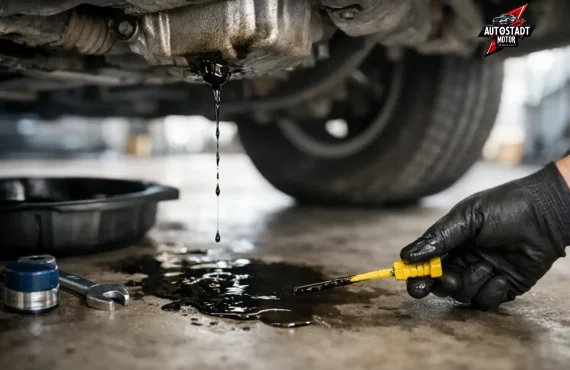
Whether you drive a Tesla Model 3, Model Y, Model S, or another vehicle such as a BMW, Mercedes-Benz, Toyota, or Nissan, early diagnosis can help prevent a minor issue from becoming an expensive repair.
Signs Your Car Needs Tesla Steering Oil Leak Repair
Recognizing early warning signs is one of the best ways to protect your Tesla from unnecessary repair costs. If you notice any of the following symptoms, professional inspection is recommended.
Fluid Spots Under Your Tesla
One of the clearest signs of a possible leak is liquid appearing underneath the vehicle after parking. However, not every liquid under a Tesla is steering fluid.
Water from the air conditioning system can normally drip beneath a vehicle, particularly in Dubai’s hot climate. Other automotive fluids can also come from different systems. Therefore, identifying the fluid by its location, appearance, smell, and source is essential.
If you notice an unusual oily or greasy substance, arrange a professional inspection rather than assuming it is harmless.
Heavy or Unusual Steering
Changes in steering feel should always be taken seriously. If the steering wheel becomes unusually heavy, inconsistent, or difficult to turn, there could be an issue involving the steering rack, electric power steering system, suspension components, or another related system.
A Tesla should provide predictable steering assistance. Any sudden change deserves diagnostic attention.
Steering Wheel Vibration
Steering vibration can have several causes. Wheel balancing, tire problems, suspension wear, alignment issues, brake components, or steering-system faults may all contribute.
If vibration appears together with unusual noises or fluid leakage, a comprehensive steering and underbody inspection becomes even more important.
Clicking, Grinding, or Whining Noises
Unusual noises when turning the steering wheel can indicate a problem with steering or suspension components. A clicking noise may come from a joint or suspension component, while grinding or other abnormal sounds could require immediate investigation.
Do not rely on sound alone to diagnose a steering problem. Professional technicians should inspect the vehicle to identify the exact source.
Warning Messages on the Dashboard
Modern Tesla vehicles depend heavily on electronic monitoring and onboard diagnostics. If the vehicle displays a steering, power steering, suspension, or related warning message, it should not be ignored.
Electronic faults do not necessarily mean that a mechanical leak exists. Diagnostic scanning can help establish whether the problem is electronic, mechanical, or related to another vehicle system.
Uneven Steering or Vehicle Pulling
If the vehicle pulls toward one side while driving, the cause could range from wheel alignment and tire pressure to suspension or steering problems.
Dubai roads can expose vehicles to potholes, uneven surfaces, road debris, and high temperatures. These conditions can gradually affect steering and suspension components.
Why Choose AutoStadt Motor Services for Tesla Steering Oil Leak Repair
Choosing the right workshop is especially important when dealing with a technologically advanced vehicle such as a Tesla. At AutoStadt Motor Services, our approach focuses on diagnosis first and repair second.
Accurate Leak and Fault Diagnosis
The first step is determining exactly what you are seeing under the vehicle. We inspect the suspected area and identify whether the substance is actually steering-related fluid or comes from another system.
This distinction is important because replacing steering components without confirming the source can result in unnecessary expenses.
Tesla-Focused Inspection
Tesla vehicles combine sophisticated electronics with conventional mechanical components such as suspension, steering hardware, wheels, tires, and braking systems.
Our inspection process considers both sides of the vehicle. We do not automatically assume that a visible leak is responsible for every steering symptom.
Professional Steering System Inspection
A steering concern can involve multiple components. Depending on the symptoms, technicians may inspect the steering rack, steering connections, suspension components, underbody areas, electrical steering components, and related systems.
This systematic approach helps identify the underlying cause rather than simply treating the most obvious symptom.
Transparent Repair Recommendations
At AutoStadt Motor Services, customers should understand what needs to be repaired and why. Once the issue has been identified, we can explain the condition of the affected component and recommend the appropriate repair or replacement.
This is particularly valuable for Tesla owners because the correct repair procedure depends on the specific model and system configuration.
Suitable for Different Premium Vehicles
Our workshop experience is not limited to Tesla. Modern vehicles such as BMW, Mercedes-Benz, Toyota, and Nissan can also develop steering, suspension, fluid leakage, or alignment problems.
The same principle applies across all brands: accurate diagnosis should come before parts replacement.
How Our Tesla Steering Oil Leak Repair Process Works
A structured repair process helps reduce guesswork and ensures that the actual problem is addressed.
Step 1: Initial Vehicle Assessment
The process begins with a discussion about the symptoms. Our technicians may ask when the issue started, whether the steering has changed, where the fluid was noticed, and whether any warning messages appeared.
These details can provide useful clues before physical inspection begins.
Step 2: Visual and Underbody Inspection
The vehicle is inspected around the steering and underbody areas. Technicians look for wet spots, residue, damaged components, loose connections, physical impact, and other signs that may help locate the source.
The condition of surrounding components is also considered because fluid can sometimes travel away from the original leak point.
Step 3: Identify the Fluid Source
This is a critical stage of Tesla Steering Oil Leak Repair. The technician determines whether the observed liquid is actually steering-related fluid or another substance.
For Tesla vehicles equipped with electric power steering, conventional hydraulic steering-fluid leakage may not be the explanation. The inspection may instead reveal another fluid leak or an electrical/mechanical steering issue.
Step 4: Diagnostic Testing
If electronic steering systems or warning messages are involved, diagnostic equipment may be used to identify stored faults and system abnormalities.
Combining diagnostic data with physical inspection provides a much clearer picture of the vehicle’s condition.
Step 5: Component Inspection
Depending on the findings, relevant steering and suspension components are examined more closely. This may include steering connections, rack-related components, suspension parts, protective boots, seals, and other associated areas.
The objective is to determine whether the issue can be repaired or whether a damaged component requires replacement.
Step 6: Repair or Component Replacement
Once the cause is confirmed, the appropriate repair is carried out. The exact procedure depends on the Tesla model, the affected component, and the nature of the problem.
A proper repair should address the underlying fault rather than simply cleaning visible fluid or replacing an unrelated component.
Step 7: Final Inspection and Testing
After the repair, the affected area is checked again. Where appropriate, the vehicle may undergo steering, diagnostic, and road testing to confirm that the original symptoms have been resolved.
This final step helps ensure the vehicle is ready for Dubai driving conditions.
Frequently Asked Questions About Tesla Steering Oil Leak Repair in Dubai
1. Does a Tesla use steering oil?
It depends on the Tesla model and system configuration. Many modern Tesla vehicles use electric power steering rather than a traditional hydraulic power steering system. This means they do not operate like conventional vehicles that have a power steering fluid reservoir and hydraulic pump.
Therefore, if you see oily fluid underneath a Tesla, it is important not to automatically assume that it is steering oil. A professional inspection can identify the actual source.
2. How much does Tesla Steering Oil Leak Repair cost in Dubai?
The cost depends entirely on the cause of the suspected leak or steering problem. A simple diagnosis may reveal that the liquid is unrelated to the steering system, while a damaged steering component, seal, connection, or other part may require more extensive work.
The Tesla model, replacement parts, labor requirements, and severity of the issue can all affect the final cost.
The best way to receive an accurate estimate is to have the vehicle inspected by a qualified workshop such as AutoStadt Motor Services before approving repairs.
3. Can I drive my Tesla if I notice fluid underneath it?
It depends on the type and severity of the leak. If the vehicle has normal steering, no warning messages, and the fluid is confirmed to be harmless condensation, the situation may not be urgent.
However, if the steering becomes heavy, unstable, noisy, or difficult to control, continued driving can be unsafe. Warning messages combined with steering problems should also be treated seriously.
When in doubt, professional inspection is the safer option.
4. Why does my Tesla have a steering problem even if there is no oil leak?
A steering problem does not necessarily require a fluid leak. Tesla vehicles use advanced electric steering technology, and steering symptoms can originate from electrical faults, sensors, steering components, suspension parts, alignment issues, tires, or other systems.
For example, uneven tire pressure or wheel alignment problems can affect steering behavior without producing any fluid whatsoever.
This is why Tesla Steering Oil Leak Repair should begin with diagnosis rather than assuming that every steering complaint is caused by a leak.
5. How quickly should I get a Tesla steering problem checked in Dubai?
You should arrange an inspection as soon as you notice an unexplained leak, unusual steering behavior, warning message, vibration, or abnormal noise.
Dubai’s hot climate can make vehicle maintenance particularly important. High ambient temperatures and extended periods of driving can increase stress on automotive components. Delaying diagnosis may allow a relatively small problem to develop into a more complicated repair.
At AutoStadt Motor Services, early inspection can help identify the problem and determine the most appropriate repair solution for your Tesla.
Conclusion
Tesla Steering Oil Leak Repair requires more than simply looking for a fluid reservoir or replacing a suspected steering component. Tesla vehicles use advanced steering technology, and many models rely on electric power steering rather than conventional hydraulic systems. As a result, an apparent oil leak may actually originate from another vehicle system or may be accompanied by a completely different steering-related fault.
For Dubai Tesla owners, early diagnosis is the smartest approach. Fluid underneath the vehicle, unusual steering, vibration, warning messages, strange noises, or changes in handling should be professionally inspected before the problem becomes more serious.
AutoStadt Motor Services provides professional vehicle inspection and repair services designed to identify the real cause of steering and fluid-related concerns. Whether you own a Tesla Model 3, Model Y, Model S, BMW, Mercedes-Benz, Toyota, or Nissan, proper diagnosis and timely maintenance can help maintain safe, dependable vehicle performance.
If you suspect a steering leak or notice unusual steering behavior in your Tesla, contact AutoStadt Motor Services for a professional inspection in Dubai and get the issue diagnosed before it develops into a larger repair.


Leave a Comment