
Renault Coolant Leak Repair is an important service for Dubai drivers because a vehicle’s cooling system has to work efficiently in demanding temperatures. Renault vehicles are engineered with sophisticated cooling systems that help maintain the correct engine temperature during everyday driving. However, a damaged hose, worn seal, leaking radiator, faulty water pump, or loose connection can allow coolant to escape. If the problem is ignored, a minor leak can eventually result in engine overheating and expensive mechanical damage.
Dubai’s hot climate makes coolant particularly important. Long traffic queues, high ambient temperatures, frequent stop-and-go driving, and extended journeys can place additional stress on the radiator, coolant hoses, thermostat, and other cooling components. Therefore, noticing a coolant leak early can save both time and money.
At AutoStadt Motor Services, we provide professional Renault coolant leak inspection and repair for Dubai car owners. Our approach focuses on identifying the actual source of the leak rather than simply topping up the coolant and sending the vehicle back onto the road. A proper diagnosis helps ensure that the underlying fault is repaired before it develops into a larger cooling-system problem.
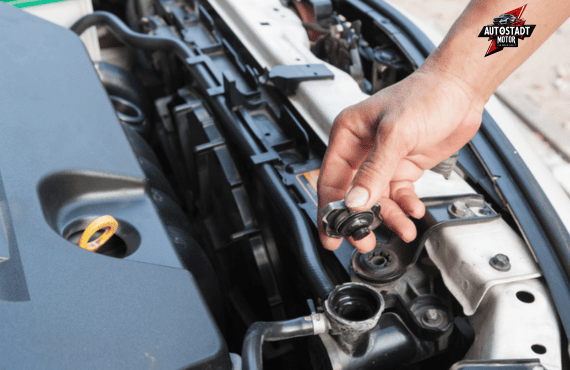
Whether you drive a Renault Duster, Koleos, Megane, Captur, or another Renault model, timely attention to coolant loss can help protect the engine and maintain dependable performance. Moreover, understanding the common warning signs allows drivers to arrange an inspection before overheating occurs.
Signs Your Car Needs Renault Coolant Leak Repair
1. Low Coolant Level
One of the clearest indications of a cooling-system problem is a coolant level that repeatedly drops. Some level changes can occur during normal maintenance intervals, but frequent coolant loss should not be ignored.
If you refill the expansion tank and notice that the level becomes low again after a short period, there may be a leak somewhere in the cooling system. The leak could be external and visible, or it may be located in an area that is difficult to see without a proper inspection.
AutoStadt Motor Services can inspect the cooling system to determine why your Renault is losing coolant and whether the issue is caused by a hose, radiator, reservoir, water pump, or another component.
2. Coolant Puddles Under the Vehicle
Another common warning sign is liquid underneath your Renault after parking. Coolant can appear in different colors depending on the type of coolant used and the vehicle’s maintenance history.
A puddle underneath the front section of the vehicle may indicate a radiator or hose problem, although the exact source cannot always be identified simply by looking at the ground. Coolant can travel along components before dripping, which means the visible puddle may not be directly below the failed part.
For this reason, professional leak diagnosis is preferable to replacing components based only on where the liquid appears.
3. Engine Temperature Rising
A healthy Renault cooling system should keep engine temperature within its normal operating range. If the temperature gauge starts rising higher than usual, the cooling system requires immediate attention.
A coolant leak can reduce the amount of coolant circulating through the engine. As the coolant level falls, the system may struggle to remove heat effectively. In Dubai’s high temperatures, this problem can become more serious during traffic or extended driving.
If your Renault begins overheating, continuing to drive can increase the risk of engine damage. It is safer to stop when appropriate and arrange professional assistance.
4. Warning Messages or Dashboard Alerts
Modern Renault models use sensors and electronic systems to monitor various engine parameters. Depending on the model and fault, a cooling-system problem may trigger a warning light or message on the dashboard.
A warning should not automatically be assumed to mean that coolant simply needs topping up. There may be an underlying leak, thermostat issue, sensor fault, or circulation problem.
A diagnostic inspection can help determine whether the warning is connected to the cooling system and what repair is required.
5. Sweet Smell Around the Engine Bay
Coolant can produce a noticeable sweet smell, particularly when it comes into contact with hot engine components. If you notice an unusual sweet odor after driving, it may indicate that coolant is escaping from the system.
In some cases, the leak may be small enough that there is no obvious puddle. Nevertheless, the smell can provide an early warning that coolant is reaching areas where it should not.
6. Steam or Visible Coolant Around Components
Steam coming from underneath the bonnet is a more serious warning sign. It can occur when coolant leaks onto hot engine components or when the engine becomes excessively hot.
If this happens, avoid opening a hot cooling-system cap because pressurized coolant can cause serious burns. Allow the vehicle to cool and seek professional assistance instead.
Why Choose AutoStadt Motor Services for Renault Coolant Leak Repair
Experienced Cooling-System Inspection
A coolant leak can originate from several different components. Simply replacing the first visibly damaged part may not always solve the problem. At AutoStadt Motor Services, the inspection focuses on finding the actual source of coolant loss.
Depending on the symptoms, the inspection may include checking hoses, radiator connections, expansion tanks, thermostat areas, water pump components, and other cooling-system parts.
Renault-Focused Repair Approach
Renault vehicles can have different cooling-system layouts and component configurations depending on the model and engine. A Renault Duster, for example, may have different service requirements from a Megane or Koleos.
Understanding these differences helps technicians approach the repair more efficiently. The goal is to identify the fault, explain the required repair, and avoid unnecessary replacement of unrelated components.
Proper Leak Diagnosis
Small leaks can sometimes be difficult to locate. A visual inspection may not be enough when coolant is escaping slowly or evaporating from a hot component.
A professional workshop can use appropriate diagnostic methods to narrow down the leak location. This is especially useful when there are no obvious puddles but the coolant level continues to fall.
Dubai-Ready Cooling System Service
Dubai’s environment places additional demands on vehicle cooling systems. High temperatures mean that cooling-system components must remain in good condition, especially during summer driving and heavy traffic.
AutoStadt Motor Services helps Dubai car owners address coolant leaks before they develop into overheating problems. Preventive attention can be particularly valuable for vehicles that are driven frequently in urban traffic.
Honest Repair Recommendations
A good repair should address the actual problem instead of encouraging unnecessary parts replacement. After inspection, AutoStadt Motor Services can explain the likely cause of the coolant leak and the recommended repair.
This customer-focused approach helps Renault owners understand what is happening with their vehicle and make an informed decision about maintenance.
How Our Renault Coolant Leak Repair Process Works
Step 1: Initial Vehicle Inspection
The process begins with an assessment of the Renault and a discussion about the symptoms. Information such as coolant loss, overheating, unusual smells, warning messages, or visible leaks can help narrow down potential causes.
The technician then inspects the relevant areas of the cooling system.
Step 2: Cooling System Examination
The radiator, hoses, clamps, expansion tank, connections, and other accessible components are examined for signs of leakage or damage.
The inspection also considers whether there are signs of dried coolant residue, cracks, corrosion, loose connections, or other abnormalities.
Step 3: Leak Detection
If the leak is not immediately visible, additional diagnostic methods may be required. A pressure test, where appropriate, can help identify leaks that are difficult to locate during a basic visual inspection.
The objective is to establish where coolant is escaping rather than simply treating the symptoms.
Step 4: Component Assessment
Once the suspected leak location is identified, the affected component is assessed. Depending on the vehicle and condition, the problem may involve a radiator hose, radiator, expansion tank, water pump, thermostat housing, seal, or connection.
The repair recommendation depends on the actual condition of the component.
Step 5: Renault Coolant Leak Repair
After approval, the required repair is carried out. Damaged or failed components are repaired or replaced as appropriate, and the cooling system is restored to proper operating condition.
The repair process should also consider the condition of surrounding components because a recently replaced part will not prevent future coolant loss if another major component is already deteriorating.
Step 6: Coolant Refill and System Check
After the repair, the appropriate coolant is added according to the vehicle’s requirements. The system may also need proper bleeding to remove trapped air.
The vehicle is then checked to confirm that coolant is circulating correctly and that the repaired area is no longer leaking.
Step 7: Final Inspection
The final stage involves checking the cooling system and monitoring the vehicle for abnormal temperature behavior or continued coolant loss.
This final verification is important because the purpose of Renault coolant leak repair is not merely to stop a visible drip. The goal is to restore reliable cooling-system operation.
Frequently Asked Questions About Renault Coolant Leak Repair in Dubai
1. How much does Renault coolant leak repair cost in Dubai?
The cost depends on the source and severity of the leak. A damaged hose or clamp may require a relatively straightforward repair, while a leaking radiator, water pump, or other major component can involve additional parts and labor.
Therefore, it is difficult to provide an accurate price without inspecting the vehicle. AutoStadt Motor Services can assess the Renault, identify the source of the coolant loss, and recommend the appropriate repair before unnecessary work is performed.
2. Can I drive my Renault with a coolant leak?
Driving with a coolant leak is generally not recommended, particularly when the coolant level is dropping quickly or the engine temperature is increasing. A small leak can become larger without warning, potentially causing the engine to overheat.
Dubai’s hot weather can make an existing cooling-system problem more difficult for the vehicle to manage. If you notice overheating, steam, or a rapidly falling coolant level, it is better to stop driving and arrange professional inspection.
3. What causes coolant leaks in Renault vehicles?
Several issues can cause coolant loss. Common possibilities include deteriorated hoses, damaged radiator components, loose clamps, cracked expansion tanks, worn seals, water pump problems, thermostat housing leaks, and damaged connections.
Age, mileage, heat exposure, previous repairs, and general maintenance condition can all influence cooling-system reliability. A professional inspection is the best way to determine the specific cause.
4. How often should Renault coolant be checked in Dubai?
Coolant should be checked as part of routine vehicle maintenance, particularly before long journeys and during periods of extreme heat. However, repeatedly needing to add coolant is not normal maintenance and should be investigated.
If the level consistently drops between checks, there is likely an underlying issue that needs attention. Regular cooling-system inspections can help identify deteriorating components before they cause a major breakdown.
5. Does a coolant leak always mean the radiator needs replacement?
No. A coolant leak does not automatically mean the radiator is damaged. The source could be a hose, clamp, reservoir, water pump, thermostat housing, seal, or another connection.
This is why accurate diagnosis is important. Replacing a radiator without confirming that it is the source of the leak can result in unnecessary expense. At AutoStadt Motor Services, the inspection is focused on identifying the actual cause before recommending the repair.
Conclusion
Renault Coolant Leak Repair should never be treated as a minor issue, especially for drivers dealing with Dubai’s high temperatures and demanding traffic conditions. Coolant is essential for controlling engine temperature, and even a relatively small leak can eventually contribute to overheating if it is ignored.
Warning signs such as low coolant levels, puddles underneath the vehicle, unusual smells, rising engine temperature, dashboard warnings, or steam should encourage Renault owners to arrange an inspection promptly.
At AutoStadt Motor Services, Dubai car owners can have their Renault cooling system professionally inspected to identify the source of coolant loss and determine the appropriate repair. From hose and connection problems to radiator, thermostat, or water pump issues, proper diagnosis helps ensure that the underlying fault is addressed rather than temporarily masked.
Whether you own a Renault Duster, Megane, Koleos, Captur, or another Renault model, maintaining the cooling system is an important part of protecting engine reliability. The same principle applies across other vehicles, from Toyota and Nissan models to BMW and Mercedes vehicles: early detection of cooling-system problems can help prevent a minor repair from becoming a major engine issue.
If your Renault is losing coolant or showing signs of overheating in Dubai, arranging a professional inspection with AutoStadt Motor Services can help you identify the problem and get your vehicle back to dependable operation.


Leave a Comment