
Nissan oil change is one of the simplest yet most important maintenance services for keeping your vehicle’s engine reliable on Dubai roads. Engine oil does far more than simply lubricate moving components. It helps reduce friction, carries away heat, suspends contaminants, and supports the proper operation of critical internal parts.
With daily traffic, frequent stop-and-go driving, long commutes, and demanding weather conditions, your Nissan can experience greater operating stress than a vehicle driven mostly on open roads. Over time, engine oil becomes contaminated and gradually loses some of its ability to protect the engine. Continuing to drive with degraded oil can contribute to increased friction, deposits, poor engine response, and unnecessary wear.
At AutoStadt Motor Services, we provide professional Nissan oil change services designed around the vehicle’s engine requirements rather than simply replacing the oil and sending the car back onto the road. Our technicians can inspect the oil condition, replace the oil filter where require, check fluid levels, and look for signs of leaks or other maintenance concerns.
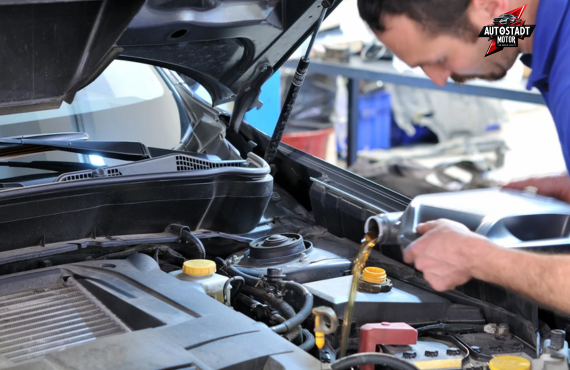
Whether you drive a Nissan Altima, Patrol, Sunny, X-Trail, Kicks, or another Nissan model, maintaining the correct oil and service interval is an important part of long-term vehicle ownership.
Why Regular Nissan Oil Change Matters
Engine oil operates inside an environment of heat, pressure, and constant movement. As the engine runs, oil circulates through components such as bearings, camshafts, pistons, and other moving parts. Eventually, heat and contamination affect the oil’s condition.
Old oil may become darker and carry accumulated particles. This does not automatically mean the oil is dangerously bad, but it is one reason regular servicing matters. The correct maintenance schedule depends on the Nissan model, engine, oil specification, driving conditions, and manufacturer’s recommendations.
A properly maintained engine generally operates more smoothly because its internal components receive appropriate lubrication. In contrast, postponing oil service repeatedly can increase the possibility of excessive deposits and accelerated wear.
For Dubai drivers, timely maintenance is especially useful because vehicles often spend considerable time idling in traffic. Even when the car is barely moving, the engine may continue running and generating heat.
Signs Your Car Needs Nissan Oil Change
1. The Oil Change Interval Is Due
The most reliable reason to schedule an oil service is reaching the recommended maintenance interval. Instead of waiting for noticeable engine problems, owners should follow the service schedule appropriate for their specific Nissan.
If you cannot remember when the oil was last replaced, a professional inspection at AutoStadt Motor Services can help establish what maintenance is currently due.
2. Engine Noise Becomes More Noticeable
Engine oil creates a lubricating layer between moving components. When oil becomes degraded or its level becomes too low, some engines may become noisier during operation.
A ticking, tapping, or unusual mechanical sound should not automatically be blamed on old oil, however. It can have several causes. Therefore, unusual engine noise deserves a proper inspection rather than simply adding fresh oil.
3. Oil Level Keeps Dropping
Regularly needing to add engine oil may indicate an underlying problem. Some engines can consume oil, while external leaks may also reduce the oil level.
Oil around the engine, underneath the vehicle, or near seals and gaskets can indicate a leak. A Nissan oil change should therefore be combined with a basic visual inspection whenever abnormal oil loss is noticed.
4. Oil Warning Light Appears
An oil-related warning light should never be ignored. Depending on the situation, it may indicate low oil pressure or another lubrication-system concern rather than simply reminding you that an oil change is due.
If the warning appears, continuing to drive without checking the vehicle can increase the risk of engine damage. Professional diagnosis is the safer approach.
5. Engine Performance Feels Different
Old or insufficient oil is not always the direct cause of poor acceleration or rough running, but changes in engine behavior should encourage you to inspect the vehicle.
If your Nissan feels less responsive, produces unusual sounds, or develops rough operation, an oil service can be part of the diagnostic process while technicians check for other possible causes.
6. You Notice an Oil Smell
A noticeable burnt-oil smell can sometimes indicate oil contacting a hot engine component. It may also point toward an oil leak or another mechanical issue.
Rather than assuming a simple oil replacement will solve the problem, have the source investigated.
Choosing the Right Engine Oil for Your Nissan
Not every engine oil is suitable for every Nissan. Oil viscosity and specification should be selected according to the particular engine and manufacturer’s requirements.
You may see grades such as 0W-20, 5W-30, or other specifications depending on the Nissan model and engine. The number printed on an oil container is not simply a measure of quality; it describes viscosity characteristics under different temperature conditions.
That is why using whatever oil happens to be available is not a good maintenance strategy.
At AutoStadt Motor Services, our technicians can identify the appropriate oil specification for your Nissan before carrying out the service. This helps prevent the common mistake of choosing oil based solely on price or brand recognition.
The same principle applies across other vehicles. A Toyota Land Cruiser, BMW 3 Series, Mercedes-Benz C-Class, or Nissan Patrol can all have different oil requirements even though they all use internal-combustion engines.
What Happens When You Delay an Oil Service?
Delaying an oil service once does not necessarily mean your engine will immediately fail. However, repeatedly extending maintenance intervals can gradually increase mechanical risk.
Engine oil collects contaminants while circulating through the engine. It also experiences repeated heating and cooling cycles. With enough use, its performance characteristics can change.
If maintenance is continuously postponed, several issues may become more likely:
- Increased friction between moving engine components
- Greater accumulation of deposits
- Reduced lubrication effectiveness
- Increased oil consumption in some engines
- Poorer engine cleanliness
- Greater risk of premature component wear
The important point is that oil maintenance is preventive rather than reactive. Spending a relatively small amount on routine servicing can help avoid more expensive engine-related repairs later.
Why Choose AutoStadt Motor Services for Nissan Oil Change?
Nissan-Focused Maintenance Approach
AutoStadt Motor Services takes a vehicle-specific approach to routine maintenance. Rather than treating every Nissan as identical, technicians consider the model, engine type, existing condition, and service requirements before recommending maintenance.
This is particularly important when a customer owns an older Nissan or a vehicle with a complicated maintenance history.
Oil and Filter Service
Replacing the engine oil without considering the oil filter can leave old contaminants circulating through the lubrication system. Depending on the service requirements, an oil filter replacement can be performed alongside the oil change.
A clean, suitable filter supports the engine’s lubrication system by helping remove contaminants from circulating oil.
Inspection Beyond the Oil
A good oil service is also an opportunity to notice developing problems. During maintenance, technicians can look for signs such as oil leaks, damaged components, abnormal fluid levels, or other visible concerns.
This does not mean every oil service requires major repairs. Instead, early identification gives the owner an opportunity to address smaller issues before they potentially become more expensive.
Customer-Focused Recommendations
At AutoStadt Motor Services, the objective is not to recommend unnecessary work. If additional maintenance is required, customers should understand why it matters and what could happen if the issue is ignored.
This approach makes routine Nissan maintenance easier to plan and helps owners make informed decisions about their vehicles.
How Our Nissan Oil Change Process Works
Step 1: Vehicle Assessment
The process begins with a basic assessment of the Nissan. Technicians can consider the vehicle model, engine type, current mileage, service history, and any concerns reported by the owner.
This provides useful context before the oil is removed.
Step 2: Existing Oil Inspection
The condition and level of the existing engine oil can provide useful clues about the vehicle’s maintenance condition. If there are signs of excessive contamination, unusual oil loss, or other concerns, technicians can investigate further.
Step 3: Safe Oil Removal
The existing engine oil is drained using an appropriate workshop procedure. Care is taken to avoid unnecessary contamination and ensure the old oil is handled appropriately.
Step 4: Oil Filter Check or Replacement
The oil filter is inspected and replaced when required by the service schedule or its condition. Using the correct filter is important because filtration is an integral part of the engine lubrication system.
Step 5: Correct Oil Installation
Fresh engine oil meeting the appropriate specification is added. Technicians ensure that the oil level is within the correct range rather than simply filling the engine to an arbitrary amount.
Step 6: Level and Leak Inspection
After installation, the oil level is checked and the surrounding area is inspected for obvious leaks. Other basic fluid levels may also be reviewed as part of routine vehicle care.
Step 7: Final Checks
The vehicle receives a final check before being returned to the customer. If technicians identify another maintenance concern during the service, they can explain the issue and recommend the appropriate next step.
Nissan Models That Benefit from Timely Oil Maintenance
Different Nissan models have different driving characteristics, but all require appropriate engine maintenance.
The Nissan Patrol, for example, is commonly used for long-distance driving, family travel, and demanding conditions. Its engine maintenance should therefore not be neglected.
The Nissan X-Trail may be used for daily commuting and family transportation, making consistent servicing important for dependable everyday operation.
For city drivers, models such as the Nissan Sunny or Nissan Kicks can spend significant time in traffic. Regular oil maintenance helps support reliable engine operation during frequent urban driving.
Meanwhile, a Nissan Altima used for longer commutes can accumulate mileage relatively quickly, making service tracking particularly important.
Regardless of the model, the correct maintenance schedule should be based on the specific vehicle rather than a generic assumption.
Maintenance Tips After a Nissan Oil Change
Fresh engine oil is not a substitute for complete vehicle maintenance. Owners should continue monitoring their Nissan between service visits.
Check the oil level according to the vehicle’s recommended procedure, particularly if the car has a history of oil consumption. Pay attention to unusual engine sounds, warning lights, visible leaks, or changes in performance.
It is also useful to keep a record of each service. Recording the date, mileage, oil specification, and filter replacement makes future maintenance easier to manage.
Additionally, do not overlook other maintenance areas. Air filters, coolant, brake fluid, transmission fluid, battery condition, tires, and braking components all contribute to overall vehicle reliability.
A well-maintained Nissan is not simply a vehicle that receives an oil change on schedule; it is a vehicle whose important systems are monitored consistently.
Frequently Asked Questions About Nissan Oil Change in Dubai
1. How often should I get a Nissan oil change in Dubai?
The correct interval depends on your Nissan model, engine, oil specification, mileage, driving conditions, and manufacturer’s maintenance recommendations. Frequent traffic, extended idling, and demanding operating conditions can make regular maintenance particularly important. Instead of following a universal mileage figure, check your vehicle’s recommended schedule and discuss the interval with a qualified technician if your driving conditions are unusual.
2. What type of oil should I use for my Nissan?
The correct oil depends on the specific Nissan engine. Different models can require different viscosity grades and specifications. Using the wrong oil may not provide the lubrication characteristics the engine was designed for. AutoStadt Motor Services can check your Nissan’s requirements and recommend the appropriate engine oil rather than relying on a one-size-fits-all option.
3. Should the oil filter be replaced during a Nissan oil change?
In many cases, replacing the oil filter alongside the engine oil is a sensible part of routine servicing, particularly when the filter has reached its service interval. The filter helps remove contaminants from the oil as it circulates through the engine. However, the exact maintenance requirement should be based on the vehicle and service schedule.
4. Can I drive my Nissan if the oil warning light comes on?
You should not assume that an oil warning light simply means the vehicle is due for a routine oil change. Depending on the warning system, it may indicate low oil pressure or another lubrication-related problem. Continuing to drive could cause serious engine damage. Safely stop the vehicle when appropriate and have the issue inspected by a qualified technician.
5. Why is my Nissan losing engine oil between services?
Oil loss can have several causes. The engine may consume oil internally, or there could be an external leak from a seal, gasket, filter area, oil pan, or another component. If you repeatedly need to top up the oil, the issue should be investigated instead of treating it as normal. AutoStadt Motor Services can inspect the vehicle and help identify whether the oil loss is related to leakage, consumption, or another mechanical condition.
Conclusion
Nissan oil change is a basic maintenance service, but its importance should not be underestimated. Clean, appropriate engine oil supports lubrication, helps control friction and heat, and contributes to the long-term health of the engine.
For Dubai car owners, staying ahead of routine maintenance can be especially valuable when vehicles experience heavy traffic, frequent idling, and regular commuting. Waiting until an engine develops a serious symptom can turn a simple maintenance requirement into a more complicated repair.
AutoStadt Motor Services provides professional Nissan oil change and general vehicle maintenance services with attention to the vehicle’s specific requirements. From checking the existing oil condition to installing the appropriate replacement oil and inspecting for potential issues, the goal is to keep your Nissan operating reliably.
Whether you own a Patrol, X-Trail, Sunny, Kicks, Altima, or another Nissan model, maintaining a consistent service routine is one of the practical ways to protect your engine and enjoy more dependable driving in Dubai.


Leave a Comment