
Nissan car repair Dubai services are essential for keeping your vehicle dependable in demanding driving conditions. Whether you own a Nissan Altima, Patrol, Sunny, X-Trail, or another model, regular maintenance can help prevent unexpected breakdowns and expensive repairs. Dubai driving often involves heavy traffic, frequent short trips, high temperatures, and long periods of air-conditioning use, all of which can place additional stress on a vehicle.
A Nissan may be known for durability, but even a reliable car requires proper servicing as it gets older. Engine components, suspension parts, braking systems, transmission components, cooling systems, and electrical equipment can gradually develop problems through normal use.
At AutoStadt Motor Services, Nissan owners can receive professional inspection, diagnostics, routine servicing, and mechanical repair based on the actual condition of the vehicle. Instead of replacing parts unnecessarily, a proper diagnostic approach helps identify the underlying problem and determine the most suitable repair.
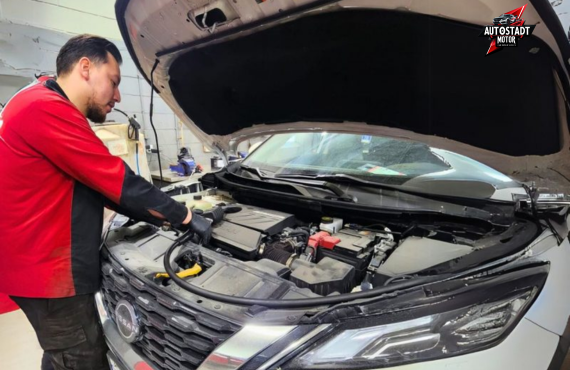
From an oil change and brake inspection to engine troubleshooting and transmission repair, choosing the right workshop can make a significant difference to your Nissan’s performance and long-term reliability.
Signs Your Car Needs Nissan Car Repair Dubai
Knowing the early warning signs of a vehicle problem can help you address an issue before it develops into a major repair. While some symptoms may appear minor initially, ignoring them can increase repair costs and affect driving safety.
Unusual Engine Noise
A healthy Nissan engine should operate relatively smoothly. If you notice knocking, ticking, rattling, grinding, or unusually loud engine sounds, the vehicle should be inspected.
Different noises can point toward different problems, including worn belts, low engine oil, damaged pulleys, internal engine wear, or other mechanical faults. A professional inspection can determine whether the noise requires immediate attention.
Dashboard Warning Lights
Modern Nissan vehicles use electronic systems to monitor important components. A check engine light, ABS warning, battery warning, transmission warning, or other dashboard indicator should not simply be ignored.
Sometimes a warning light is caused by a relatively simple sensor issue. However, it can also indicate a more serious mechanical or electrical fault. Nissan diagnostics equipment can help identify stored fault codes and guide the repair process.
Transmission Problems
Automatic transmission problems can become noticeable through delayed gear engagement, rough shifting, slipping, unusual noises, or hesitation while accelerating.
If your Nissan takes longer than normal to engage Drive or Reverse, or the transmission behaves differently from usual, arrange an inspection promptly. Continuing to drive with a developing transmission problem may make the eventual repair more complicated.
Brake Performance Changes
Your brakes should provide predictable stopping performance. If the brake pedal feels soft, the car takes longer to stop, or you hear squealing or grinding, the braking system needs attention.
Brake pads, discs, calipers, brake fluid, and related components should be checked according to the symptoms. Regular brake inspections are particularly important for drivers who spend considerable time in city traffic.
Steering or Suspension Issues
A Nissan that pulls to one side, vibrates excessively, produces suspension noises, or feels unstable over bumps may have a problem with its steering, wheel alignment, shocks, bushings, or other suspension components.
For example, a Nissan Patrol used regularly for longer journeys can experience different suspension demands compared with a compact Sunny mainly used for urban commuting. The repair approach should therefore consider the vehicle model and how it is driven.
Engine Overheating
Cooling-system problems should never be ignored. An unusually high temperature reading, coolant loss, steam, or repeated overheating can indicate problems involving the radiator, thermostat, water pump, cooling fan, hoses, or other components.
Because excessive engine temperature can cause serious damage, overheating should be investigated rather than managed by repeatedly adding coolant.
Poor Air-Conditioning Performance
Air conditioning is an important part of everyday driving in Dubai. If your Nissan AC stops cooling properly, produces unusual smells, blows weak air, or takes too long to cool the cabin, the system may require inspection.
Possible causes include refrigerant issues, compressor problems, clogged filters, electrical faults, or airflow restrictions.
Reduced Fuel Efficiency
A noticeable increase in fuel consumption can sometimes indicate an underlying mechanical or electronic problem. Faulty sensors, worn spark plugs, incorrect tire pressure, poor wheel alignment, injector issues, or engine-management faults can all affect efficiency.
A diagnostic check can help distinguish between normal changes in fuel consumption and a problem that needs repair.
Why Choose AutoStadt Motor Services for Nissan Car Repair Dubai
Selecting a workshop is not only about finding someone who can replace a damaged component. Good automotive repair should involve accurate diagnosis, appropriate parts, qualified technicians, and clear communication.
Diagnostic Approach Before Repair
AutoStadt Motor Services focuses on identifying the cause of a problem rather than immediately replacing parts. Vehicle diagnostics can reveal electronic fault codes, while physical inspection helps technicians assess mechanical components that may not generate a warning code.
This approach can reduce unnecessary replacements and make the repair process more efficient.
Nissan-Focused Maintenance
Nissan vehicles share many maintenance principles with other Japanese vehicles, but individual models can have different specifications and service requirements.
A Nissan X-Trail, for example, has different maintenance considerations from a Patrol or Altima. The workshop should therefore consider the specific model, engine, transmission, mileage, and condition of the vehicle.
Complete Mechanical Inspection
Some vehicle problems involve more than one component. A vibration, for example, could originate from tires, wheel balancing, suspension components, alignment, or drivetrain parts.
Rather than treating one symptom in isolation, a comprehensive inspection can help identify related issues and provide a clearer picture of the vehicle’s condition.
Transparent Repair Recommendations
A customer should understand what needs to be repaired and why. AutoStadt Motor Services can explain identified faults and recommend repairs according to their urgency.
This makes it easier for Nissan owners to distinguish between safety-critical repairs, preventive maintenance, and issues that may be monitored for the future.
Experience With Different Vehicle Types
Dubai workshops regularly deal with a wide variety of vehicles. While Nissan is a major focus for this service, technicians may also encounter vehicles such as Toyota Land Cruiser, BMW 5 Series, Mercedes-Benz E-Class, or Tesla models.
Understanding how different automotive systems operate can contribute to a broader diagnostic perspective, particularly when dealing with modern vehicle electronics.
How Our Nissan Car Repair Dubai Process Works
A professional repair process should be organized rather than based on guesswork. At AutoStadt Motor Services, the process can be approached through several practical stages.
Step 1: Vehicle Inspection
The first stage is understanding the complaint. The technician may ask when the problem occurs, whether it happens during cold starts or driving, and whether any recent repair or maintenance work was performed.
The vehicle is then inspected for visible signs of damage, leaks, unusual wear, fluid issues, or other abnormalities.
Step 2: Computer Diagnostics When Required
For electronically controlled systems, diagnostic scanning can provide valuable information. Fault codes may be retrieved from the engine, transmission, ABS, airbag, or other control modules depending on the vehicle.
However, a diagnostic code is not automatically proof that the named component needs replacement. It is one part of the overall troubleshooting process.
Step 3: Mechanical Testing
After initial diagnostics, technicians can perform relevant mechanical checks. These may include testing fluid levels, inspecting belts and hoses, examining suspension components, checking brakes, testing battery performance, or evaluating cooling-system operation.
This stage helps connect the symptoms with the actual mechanical condition of the Nissan.
Step 4: Repair Recommendation
Once the problem is identified, the required repair can be explained to the customer. Depending on the issue, the recommendation could involve a component replacement, adjustment, cleaning, fluid service, electrical repair, or more extensive mechanical work.
The goal is to address the root cause rather than temporarily hide the symptom.
Step 5: Repair and Component Replacement
After approval, the necessary repair work is performed. Depending on the job, this may include engine repair, brake service, suspension repair, AC servicing, transmission work, battery replacement, cooling-system repair, or electrical troubleshooting.
Using suitable replacement components is important because an incorrect or poor-quality part can create additional problems later.
Step 6: Final Testing
The vehicle should be checked after repair to confirm that the original complaint has been addressed. Depending on the repair, this can include diagnostic verification, fluid checks, road testing, brake testing, or inspection for leaks and unusual noises.
This final stage provides an additional layer of confidence before the Nissan returns to regular Dubai driving.
Maintenance Tips for Nissan Owners in Dubai
Preventive maintenance is often less expensive than dealing with a major breakdown. Nissan owners can take several practical steps to protect their vehicles.
Regularly check engine oil and other important fluids. Pay attention to coolant levels and never ignore repeated coolant loss. Keep tires correctly inflated and have wheel alignment checked when the vehicle begins pulling to one side.
The battery also deserves attention because extreme temperatures can place additional stress on automotive batteries. If starting performance becomes weaker than normal, have the battery and charging system tested.
Air filters and cabin filters should be inspected according to the vehicle’s maintenance requirements. A clean cabin filter can also support better airflow through the AC system.
Most importantly, follow the manufacturer’s recommended service intervals while also considering your actual driving conditions. A vehicle that spends hours in traffic may experience different wear patterns from one mainly used for highway driving.
Frequently Asked Questions About Nissan Car Repair Dubai
1. How often should I service my Nissan in Dubai?
The correct service interval depends on the Nissan model, engine, mileage, age, and manufacturer’s recommendations. Regular servicing generally includes inspections and replacement of maintenance items such as engine oil and filters, while larger services may involve additional components.
Dubai driving conditions can make preventative maintenance particularly valuable because prolonged traffic, frequent stops, and high ambient temperatures can increase vehicle operating demands. If your Nissan has reached its recommended service mileage or time interval, scheduling an inspection is advisable.
2. What are the most common Nissan repair problems?
Common repair requirements can include brake wear, battery problems, AC faults, suspension issues, cooling-system problems, oil leaks, electrical faults, and transmission-related symptoms.
However, the exact issue depends heavily on the model and vehicle condition. A Patrol may experience different wear patterns from a Sunny or X-Trail. Proper diagnostics should therefore be performed before deciding what needs replacement.
3. How much does Nissan car repair cost in Dubai?
There is no single price for Nissan car repair because the cost depends on the model, fault, replacement parts, labor requirements, and complexity of the repair.
A simple filter or brake-related service will normally require much less work than transmission, engine, or major electrical repairs. The best way to establish an accurate repair estimate is to diagnose the vehicle first and identify the components actually requiring attention.
4. Can I drive my Nissan if the check engine light is on?
It depends on the behavior of the warning light and the vehicle. If the check engine light is accompanied by severe shaking, loss of power, overheating, unusual noises, or other serious symptoms, continuing to drive may increase the risk of damage.
If the vehicle appears to be operating normally, arrange a diagnostic inspection as soon as reasonably possible. Reading the fault code can help determine whether the problem is related to an emissions component, sensor, ignition system, fuel system, or another part of the vehicle.
5. Why is professional Nissan repair better than delaying the problem?
Small problems can sometimes develop into larger failures when they are ignored. A minor coolant leak, for example, may eventually contribute to overheating, while worn brake components can affect other parts of the braking system.
Professional inspection allows problems to be identified earlier and gives the owner an opportunity to make informed maintenance decisions. At AutoStadt Motor Services, Nissan owners can have their vehicle inspected and repaired based on its actual condition rather than relying on assumptions.
Conclusion
Nissan car repair Dubai services play an important role in keeping your vehicle safe, comfortable, and dependable throughout everyday driving. From routine servicing and brake maintenance to engine diagnostics, transmission repairs, AC troubleshooting, suspension work, and electrical diagnostics, addressing problems at the right time can help prevent unnecessary complications.
A Nissan may be built for long-term reliability, but reliability depends heavily on proper maintenance. Paying attention to warning lights, unusual noises, fluid leaks, braking changes, overheating, steering problems, and declining performance can help you recognize issues before they become more serious.
For Nissan owners looking for professional vehicle inspection and repair in Dubai, AutoStadt Motor Services provides a practical option for maintaining and repairing different Nissan models. With proper diagnostics, careful inspection, suitable repairs, and regular maintenance, your Nissan can remain ready for Dubai’s daily roads and demanding driving conditions.


Leave a Comment