
Mitsubishi steering oil leak repair is an important service when your vehicle starts losing steering fluid, developing unusual steering noises, or becoming harder to control at low speeds. A steering fluid leak may begin as a small issue, but continued fluid loss can put additional stress on steering components and, depending on the system fitted to your Mitsubishi, may eventually affect steering assistance.
For Dubai drivers, early diagnosis is particularly useful because daily traffic, frequent stop-and-go driving, long journeys and high operating temperatures can place considerable demands on a vehicle’s steering system. A small fluid stain under the front of the car should therefore not automatically be dismissed as an ordinary oil leak.
Mitsubishi vehicles can use different steering technologies depending on the model and year. Some older or specific Mitsubishi systems use hydraulic power steering, where steering fluid circulates through components such as the steering pump, hoses and steering rack. Many newer vehicles use electric power steering and do not have conventional steering oil. For this reason, accurate diagnosis should come before replacing fluid or parts.
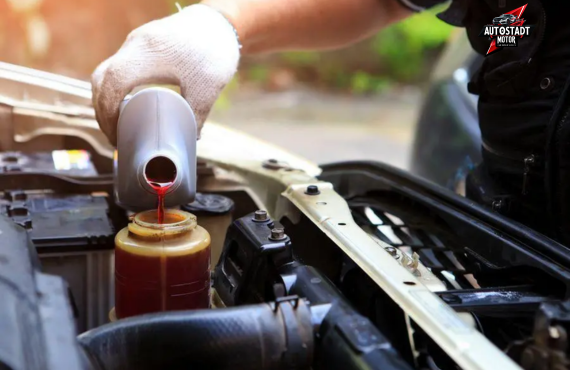
At AutoStadt Motor Services, our approach focuses on identifying the actual source of the leak rather than simply topping up fluid. We inspect the relevant steering components, check for worn seals or damaged lines, and recommend repairs according to the vehicle’s condition.
Whether you drive a Mitsubishi Pajero, Outlander, Lancer, ASX or another model, getting the steering system checked promptly can help prevent a minor leak from becoming a more expensive repair.
Signs Your Mitsubishi Needs Steering Oil Leak Repair
A steering leak does not always appear as a dramatic puddle. In many cases, drivers notice smaller symptoms first. Recognizing them early can make diagnosis easier and may prevent secondary damage.
1. Fluid Appearing Under the Front of the Vehicle
One of the clearest warning signs is a wet patch or oily residue beneath the front section of your Mitsubishi. The fluid may appear around the steering rack, hoses, pump or other components.
However, it is important to remember that several vehicle fluids can leak from the front area. Engine oil, transmission fluid, coolant and steering fluid can look different but may still be difficult to identify without inspection. A professional Mitsubishi steering oil leak repair inspection can determine what is actually leaking.
2. Steering Becomes Heavier
If your Mitsubishi uses hydraulic power steering, low fluid caused by a leak can reduce steering assistance. You may notice that the steering wheel requires more effort, particularly while parking or making tight turns.
This symptom should not be ignored. Continuing to drive with insufficient steering fluid can increase the workload on the power steering pump.
3. Whining or Groaning During Steering
A whining, humming or groaning sound when turning the steering wheel can indicate that a hydraulic steering system is struggling with low fluid or another problem.
The sound alone does not prove that a leak exists. A faulty pump, air entering the system or other steering-related problems can create similar noises. Therefore, technicians should inspect the complete system rather than assuming the cause.
4. Steering Fluid Level Keeps Dropping
If you repeatedly need to add steering fluid, there is a reason for the loss. Hydraulic steering systems are designed to retain their fluid, so frequent top-ups can indicate a leaking hose, connection, seal, reservoir or steering rack.
Simply adding more fluid may temporarily hide the symptom without solving the underlying problem.
5. Wetness Around Steering Components
During inspection, oily residue may be found around the steering rack, pump or fluid lines. Sometimes the leak is small enough that the driver never notices fluid reaching the ground.
This is particularly important when inspecting older Mitsubishi vehicles, where seals and rubber components may deteriorate over time.
6. Steering Problems After Parking
If you notice a fresh fluid mark after parking overnight, take note of its location. A stain near the front axle area can provide useful information for a technician, although its exact position does not always identify the leaking component.
For comparison, a Toyota with a steering-related fluid issue may show a completely different component arrangement from a Mitsubishi, which is why model-specific diagnosis matters.
Common Causes Behind Mitsubishi Steering Oil Leaks
A steering fluid leak can originate from several locations. Identifying the exact source is one of the most important parts of a successful repair.
Steering rack seals can deteriorate with age and allow hydraulic fluid to escape. If the rack itself is leaking internally or externally, replacing fluid alone will not provide a permanent solution.
Power steering hoses are another possible source. Rubber hoses can become brittle, cracked or weakened, while connections may develop leaks over time.
Steering pump seals and connections can also leak. A pump that is losing fluid may additionally produce abnormal noise or reduced steering assistance.
Reservoirs and fluid connections should also be checked. A loose connection, damaged reservoir or deteriorated sealing point can sometimes create a leak that looks more serious than it initially is.
There is also an important distinction between hydraulic and electric steering. If your Mitsubishi is equipped with electric power steering, there may be no steering oil to leak at all. In that situation, a technician should investigate the actual source of the fluid rather than assuming it is a steering-system leak.
Why Choose AutoStadt Motor Services for Mitsubishi Steering Oil Leak Repair
Choosing the right repair process matters because steering problems are directly connected with vehicle control. At AutoStadt Motor Services, the objective is to diagnose the source accurately and repair the affected component instead of relying on temporary solutions.
Model-Focused Diagnosis
Mitsubishi vehicles differ according to model, engine, year and steering configuration. Our technicians consider these differences before deciding what needs attention.
A Pajero may require a different diagnostic approach from an Outlander or Lancer. The same principle applies when comparing steering systems across brands such as Nissan, BMW or Mercedes-Benz.
Leak Detection Before Repair
Rather than immediately replacing expensive parts, the steering system should first be inspected for visible leakage, damaged hoses, worn seals, loose connections and other possible causes.
This helps reduce unnecessary part replacement and gives the customer a clearer understanding of the repair.
Steering Fluid Inspection
If the Mitsubishi uses hydraulic power steering, the fluid level and condition are checked as part of the diagnostic process. Incorrect, contaminated or insufficient fluid can contribute to steering problems, so using the appropriate fluid specified for the vehicle is important.
Inspection of Related Components
A leak can affect more than the component where the fluid originates. If fluid has been lost for an extended period, the power steering pump and other hydraulic components may have experienced additional stress.
Therefore, a proper inspection considers the overall steering system rather than focusing only on the visible wet area.
Customer-Focused Recommendations
At AutoStadt Motor Services, we aim to explain what has been found and what repair is required. If a seal, hose or connection is responsible, the recommendation should reflect that specific problem.
This approach helps Dubai car owners make an informed maintenance decision instead of paying for unnecessary work.
How Our Mitsubishi Steering Oil Leak Repair Process Works
A structured diagnostic process makes steering leak repairs more reliable. At AutoStadt Motor Services, the inspection can generally be approached through the following stages.
Step 1: Initial Steering Assessment
The vehicle is first checked for steering symptoms. The technician considers whether the steering has become heavier, whether unusual sounds occur during turning, and whether there are visible signs of fluid loss.
The vehicle’s model and steering configuration are also taken into account.
Step 2: Identify the Fluid
Before calling something a steering oil leak, the leaking substance should be identified. This distinction is especially important because engine oil, coolant, transmission fluid and hydraulic steering fluid can appear in similar areas.
If the Mitsubishi uses electric power steering, the investigation follows a different route because conventional steering fluid is not involved.
Step 3: Locate the Leak
The steering rack, pump, hoses, reservoir and connections are inspected where applicable. Residue around a component can help identify the leak source, although cleaning and further inspection may sometimes be required.
Step 4: Check Steering Components
Once the leak is located, related components are checked for signs of wear or damage. For example, a leaking steering rack may require more attention than simply replacing an external hose.
This stage helps determine whether the repair should involve a seal, hose, connection, pump, rack or another component.
Step 5: Carry Out the Required Repair
The damaged or leaking component is repaired or replaced according to its condition and the vehicle’s requirements. Appropriate steering fluid is used where the Mitsubishi has a hydraulic system.
Step 6: Recheck the System
After repair, the steering system is inspected again for signs of leakage. Hydraulic systems may also require proper fluid-level adjustment and removal of trapped air according to the appropriate service procedure.
The steering operation is then checked to confirm that the original symptoms have been addressed.
Step 7: Final Inspection
The final inspection looks beyond the original leak. The technician checks whether there are remaining signs of fluid loss, abnormal steering noise or other concerns that could require attention.
This final step is particularly useful for vehicles that have been driven with a leak for an extended period.
Preventing Future Mitsubishi Steering Problems in Dubai
Regular maintenance can help identify developing problems before they become major repairs. During routine servicing, ask for the steering system to be inspected if your Mitsubishi uses hydraulic power steering.
Pay attention to changes in steering effort, unusual noises and fluid spots. If you notice a recurring fluid level drop, arrange an inspection instead of repeatedly topping up the reservoir.
It is also useful to have the steering system checked when suspension or front-end work is being performed. Components around the front axle operate in close proximity, and early detection of worn boots, seals, hoses or connections can help prevent unexpected repairs.
For Dubai drivers who frequently spend time in congested traffic or make repeated parking manoeuvres, steering components can experience substantial use. Routine inspections are therefore a practical part of long-term vehicle maintenance.
Frequently Asked Questions About Mitsubishi Steering Oil Leak Repair in Dubai
1. How much does Mitsubishi steering oil leak repair cost in Dubai?
The cost depends on the source of the leak and the Mitsubishi model. A damaged hose or connection may require a relatively straightforward repair, while a leaking steering rack or power steering pump can involve more extensive parts and labor.
The best way to establish the actual cost is to diagnose the leak first. AutoStadt Motor Services can inspect the affected system and identify the component responsible before recommending the required repair.
2. Can I drive my Mitsubishi with a steering oil leak?
Driving with a hydraulic steering fluid leak is not recommended for an extended period. As fluid continues to escape, steering assistance can decrease and the power steering pump may be subjected to additional stress.
If steering suddenly becomes much heavier or you hear significant noise while turning, it is safer to stop driving and arrange a professional inspection. A small leak can become considerably more troublesome if ignored.
3. How do I know whether my Mitsubishi actually uses steering oil?
It depends on the model, year and steering configuration. Some Mitsubishi vehicles use hydraulic power steering, while others use electric power steering.
That distinction is important because an electric system does not use conventional power steering fluid. If you see fluid beneath an electric-steering Mitsubishi, the source may be unrelated to steering. A technician should identify the fluid and inspect the vehicle before any steering repair is recommended.
4. Can adding steering fluid fix a Mitsubishi steering leak?
Adding the correct fluid can restore the level temporarily, but it does not repair the cause of the leak. If the system continues losing fluid, the underlying hose, seal, connection, pump, rack or other component needs to be investigated.
Repeatedly topping up fluid without fixing the leak can also allow the problem to continue unnoticed. Professional diagnosis is therefore a better long-term approach.
5. When should I bring my Mitsubishi to AutoStadt Motor Services?
You should arrange an inspection if you notice fluid underneath the vehicle, repeated steering-fluid loss, heavier steering, unusual whining during turns or visible wetness around steering components.
Early inspection can help determine whether the issue is a minor hose or connection problem or something requiring more extensive steering-system work. AutoStadt Motor Services can assess the vehicle and recommend the appropriate repair based on the actual condition.
Conclusion
Mitsubishi steering oil leak repair should be approached as a diagnostic and safety-related maintenance service rather than simply a fluid top-up. A leaking hose, worn seal, steering rack, pump or connection can gradually affect the operation of a hydraulic steering system. At the same time, some Mitsubishi models use electric steering and therefore require a different diagnostic approach.
For Dubai car owners, recognizing symptoms such as fluid loss, heavier steering and unusual steering noise can help address problems earlier. Professional inspection also prevents confusion between steering fluid and other vehicle fluids that may leak from the front of the car.
AutoStadt Motor Services provides Mitsubishi-focused inspection and repair support designed around the actual condition of the vehicle. Whether you drive a Mitsubishi Pajero, Outlander, Lancer or another model, proper diagnosis can help restore reliable steering performance and support safer everyday driving in Dubai.


Leave a Comment