
Mitsubishi mechanical repair is essential when your vehicle begins showing unusual noises, reduced performance, warning lights, fluid leaks, or changes in handling. Mitsubishi vehicles are known for practical engineering, dependable engines, and models designed for both everyday driving and demanding road conditions. However, like any vehicle, they require proper mechanical inspection and timely maintenance to remain reliable.
For Dubai drivers, regular mechanical care is especially important because vehicles often experience long-distance commuting, heavy traffic, frequent stop-and-go driving, and high ambient temperatures. These conditions can place additional demands on the engine, transmission, cooling system, suspension, braking components, and other mechanical parts.
A small mechanical issue may initially appear harmless. For example, a minor engine vibration could be related to an ignition or mounting problem, while a slight transmission hesitation might indicate a developing drivetrain concern. If these symptoms are ignored, the repair can become more complicated.
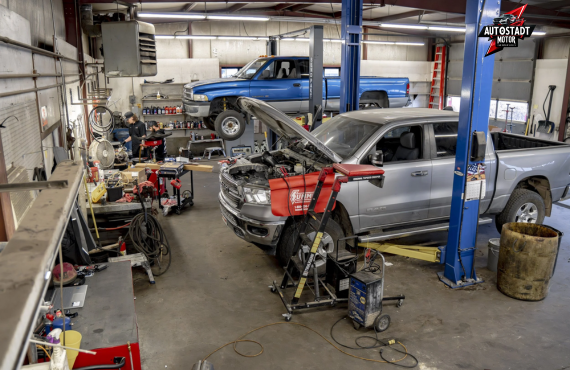
At AutoStadt Motor Services, Mitsubishi owners can receive professional inspection, mechanical diagnostics, repair, and maintenance under one roof. Our approach is to identify the actual cause of a problem rather than simply replacing parts based on symptoms.
Whether you drive a Mitsubishi Pajero, Outlander, ASX, Lancer, or another model, appropriate mechanical attention helps maintain smooth operation, road safety, and long-term vehicle dependability.
Signs Your Car Needs Mitsubishi Mechanical Repair
Mechanical problems rarely appear without warning. In many cases, your Mitsubishi gives you noticeable signs before a major component fails. Recognizing these symptoms early can help prevent unnecessary downtime and expensive secondary damage.
Unusual Engine Noise or Vibration
A healthy engine should operate relatively smoothly. If you begin hearing knocking, tapping, rattling, grinding, or unusual humming sounds, the vehicle should be inspected.
Engine vibration can have several possible causes, including worn engine mounts, ignition problems, accessory components, or internal mechanical issues. The exact cause should be confirmed through proper diagnosis rather than assuming that one particular component is responsible.
Difficulty Starting the Mitsubishi
Repeated hard starting is another reason to arrange Mitsubishi mechanical repair. Although starting problems can be electrical, they can also involve fuel delivery, engine timing, sensors, compression, or other mechanical systems.
If your Mitsubishi takes several attempts to start, struggles after sitting overnight, or cranks differently than usual, professional inspection is advisable.
Transmission Hesitation or Harsh Gear Changes
Transmission behavior is an important indicator of overall vehicle condition. Delayed engagement, slipping, unusual noises, hard shifting, or hesitation while accelerating may indicate a drivetrain or transmission-related issue.
Dubai traffic can involve frequent acceleration and braking, so transmission components may experience considerable operating cycles. Addressing unusual behavior early can help prevent more extensive repairs.
Overheating or Temperature Fluctuations
The cooling system plays a critical role in protecting the engine. If the temperature gauge rises unexpectedly, coolant levels repeatedly fall, or you notice coolant underneath the vehicle, the Mitsubishi should be checked promptly.
Potential causes can include cooling-system leaks, radiator problems, thermostat issues, water-pump faults, hoses, or other components.
Continuing to drive an overheating vehicle can cause serious engine damage.
Steering or Suspension Problems
A Mitsubishi that pulls to one side, feels unstable over bumps, produces suspension noises, or develops unusual steering behavior may require mechanical inspection.
Suspension components such as control arms, bushings, ball joints, shock absorbers, and stabilizer links can gradually wear. Proper inspection is particularly important when the vehicle is frequently driven over uneven roads or speed bumps.
Brake Noise or Reduced Braking Performance
Grinding, squealing, vibration, or a change in brake-pedal feel should never be ignored. Brake-related problems can involve pads, discs, calipers, brake fluid, or other components.
Although brake servicing is often treated as routine maintenance, identifying mechanical problems early is important for safe daily driving.
Warning Lights on the Dashboard
Modern Mitsubishi vehicles use electronic systems to monitor many mechanical and engine-related functions. A warning light can indicate anything from a relatively minor issue to a serious fault.
At AutoStadt Motor Services, diagnostic scanning can be combined with physical inspection so that stored fault codes are considered alongside actual vehicle symptoms.
Why Choose AutoStadt Motor Services for Mitsubishi Mechanical Repair
Choosing a workshop is about more than simply finding a place that can replace a component. Good mechanical service starts with understanding the vehicle, identifying the underlying fault, and carrying out repairs carefully.
Mitsubishi-Focused Mechanical Knowledge
Different Mitsubishi models use different engines, transmissions, suspension arrangements, and electronic systems. Therefore, a repair approach that works for one vehicle may not be appropriate for another.
AutoStadt Motor Services approaches each Mitsubishi according to its model, symptoms, mileage, maintenance history, and current condition.
For example, a Pajero used for long-distance driving may present different maintenance requirements from a Mitsubishi ASX used mainly for urban commuting.
Diagnostic Inspection Before Unnecessary Repairs
Replacing parts without confirming the actual fault can increase repair costs. A professional inspection helps narrow down the problem before repair work begins.
Our technicians can assess mechanical symptoms, inspect relevant components, use diagnostic equipment where appropriate, and determine which area requires attention.
This diagnostic-first approach is useful for problems involving engines, transmissions, cooling systems, suspension, steering, braking, and related mechanical components.
Complete Mechanical Service Under One Roof
Mitsubishi mechanical repair can involve several interconnected systems. A workshop that can handle different mechanical requirements makes the process more convenient for vehicle owners.
AutoStadt Motor Services can assist with services such as engine-related repairs, cooling-system work, suspension inspection, brake servicing, transmission-related concerns, steering components, fluid-related issues, and general vehicle maintenance.
Experience With Different Vehicle Brands
Our mechanical experience is not limited to Mitsubishi vehicles. Modern workshops regularly encounter vehicles from manufacturers such as Toyota, Nissan, BMW, Mercedes-Benz, and Audi.
Working with different automotive systems helps technicians understand how various manufacturers approach engine, drivetrain, suspension, braking, and electronic systems while still following the requirements of the specific vehicle being serviced.
Customer-Focused Recommendations
Not every issue requires immediate replacement of multiple components. A responsible workshop should explain what has been identified, what needs attention first, and which maintenance items may be monitored.
At AutoStadt Motor Services, the objective is to give Mitsubishi owners a clearer understanding of their vehicle’s condition so they can make informed maintenance decisions.
How Our Mitsubishi Mechanical Repair Process Works
A structured repair process helps avoid unnecessary work and makes it easier to identify the source of a vehicle problem.
Initial Vehicle Assessment
The process begins by discussing the symptoms with the vehicle owner. Details such as when the issue occurs, whether it happens during cold starts, acceleration, braking, turning, or highway driving can provide useful diagnostic information.
The technician then carries out an initial visual and mechanical inspection.
Diagnostic Testing
When the problem involves electronically monitored systems, appropriate diagnostic equipment may be used to identify stored fault codes or system abnormalities.
However, a diagnostic code is not automatically proof that the related component needs replacement. It should be interpreted alongside physical inspection and vehicle symptoms.
Mechanical Inspection
The relevant components are then examined more closely. Depending on the complaint, this could involve checking belts, hoses, engine mounts, suspension components, brake parts, cooling-system components, fluid levels, steering components, transmission behavior, or other mechanical areas.
This stage is particularly important when a vehicle has multiple symptoms that could have the same underlying cause.
Repair and Component Replacement
Once the cause has been identified, the required repair can be carried out. Depending on the condition of the component, the work may involve adjustment, cleaning, repair, fluid service, or replacement.
The focus should be on correcting the actual fault rather than performing unnecessary work.
Testing After Repair
After the repair, the vehicle should be checked again. Depending on the type of work performed, this can include system testing, fluid-level verification, noise checks, diagnostic verification, and a road test.
The purpose is to confirm that the original symptom has been addressed and that the vehicle is operating properly.
Maintenance Recommendations
Finally, the technician can highlight other maintenance items that may require attention based on the vehicle’s condition.
This is particularly useful for older Mitsubishi vehicles because preventative maintenance can help identify worn components before they become larger problems.
Mitsubishi Mechanical Maintenance for Dubai Driving Conditions
Mechanical repair should not only happen after something breaks. Preventative maintenance is an important part of keeping a vehicle dependable.
Regular engine oil and filter service helps maintain proper engine lubrication. Cooling-system inspections help reduce the risk of overheating, while brake inspections can identify worn pads, discs, or other components.
Suspension checks are also worthwhile when a vehicle frequently travels over speed bumps or uneven surfaces. Likewise, transmission fluid and drivetrain inspections should follow the manufacturer’s recommended maintenance requirements for the specific Mitsubishi model.
Dubai’s road network makes regular vehicle use convenient, but frequent traffic congestion and extended periods of idling can still place additional operating demands on a vehicle. Therefore, mileage and driving conditions should both be considered when planning maintenance.
A Mitsubishi that receives timely servicing is easier to monitor because changes in its condition can be identified before they develop into major failures.
When Should You Visit a Mitsubishi Workshop?
There is no single mileage figure that applies equally to every Mitsubishi because maintenance requirements vary by model, engine, age, mileage, and driving conditions.
However, you should arrange an inspection if you notice a new mechanical noise, fluid leak, unusual vibration, overheating, transmission hesitation, steering change, suspension noise, reduced braking performance, or persistent dashboard warning.
It is also sensible to have a used Mitsubishi inspected after purchase. A pre-existing issue may not be obvious during a short test drive, while a detailed mechanical inspection can provide a better understanding of the vehicle’s current condition.
For Dubai owners planning a long road trip, a pre-trip inspection can also help identify issues with tyres, brakes, fluids, cooling components, suspension, and other important systems before the journey.
Frequently Asked Questions About Mitsubishi Mechanical Repair in Dubai
1. What does Mitsubishi mechanical repair include?
Mitsubishi mechanical repair covers a wide range of vehicle systems and components. Depending on the problem, it may include engine repairs, cooling-system work, transmission-related repairs, suspension components, steering parts, braking systems, belts, hoses, mounts, fluid-related issues, and general mechanical maintenance.
The exact service depends on the Mitsubishi model and the symptoms identified during inspection. A professional workshop should diagnose the problem first and then recommend the appropriate repair.
2. How do I know whether my Mitsubishi needs mechanical repair or routine maintenance?
Routine maintenance is performed according to the vehicle’s service requirements, while mechanical repair generally addresses an existing fault or abnormal symptom.
For example, an oil and filter change may be routine maintenance. On the other hand, an engine producing an unusual knocking sound requires diagnostic inspection to determine whether a mechanical repair is necessary.
If you are unsure, an inspection at AutoStadt Motor Services can help determine the vehicle’s current condition.
3. Is Mitsubishi mechanical repair expensive in Dubai?
The cost depends on the model, fault, replacement parts, labor involved, and extent of damage. A small component or maintenance issue may be relatively straightforward, while a major engine or transmission repair can require considerably more work.
Early diagnosis can sometimes reduce the overall repair scope because developing problems may be addressed before they damage additional components.
For this reason, it is better to investigate unusual symptoms rather than continuing to drive until the vehicle develops a more serious failure.
4. Can AutoStadt Motor Services diagnose Mitsubishi warning lights?
Yes. Diagnostic equipment can be used when a Mitsubishi’s electronic systems store relevant fault information. However, proper diagnosis should not rely solely on a scanner.
The stored code needs to be interpreted alongside the vehicle’s symptoms and physical inspection. This helps determine whether the indicated component is actually faulty or whether another issue is causing the warning.
AutoStadt Motor Services can combine diagnostic testing with mechanical inspection to help identify the underlying problem.
5. How often should I have my Mitsubishi mechanically inspected?
The ideal inspection schedule depends on the Mitsubishi model, age, mileage, service history, and driving conditions. Following the manufacturer’s maintenance schedule is a good starting point.
However, an inspection should be arranged sooner if the vehicle develops unusual noises, vibrations, leaks, overheating, braking changes, steering problems, transmission symptoms, or dashboard warnings.
For older or high-mileage Mitsubishi vehicles, periodic mechanical inspections can be particularly useful because worn components may not always produce an obvious warning before failure.
Conclusion
Mitsubishi mechanical repair is an important part of maintaining dependable performance, safe handling, and long-term vehicle reliability in Dubai. From engine and transmission concerns to cooling, suspension, steering, and braking problems, timely diagnosis can prevent small issues from becoming more complicated repairs.
The most effective approach is not simply to replace parts when a symptom appears. Instead, the vehicle should be properly inspected, the underlying cause identified, and the necessary repair completed according to the vehicle’s requirements.
For Mitsubishi owners in Dubai, AutoStadt Motor Services provides a customer-focused approach to mechanical diagnostics, repair, and preventative maintenance. Whether you drive a Pajero, Outlander, ASX, Lancer, or another Mitsubishi model, professional mechanical care can help keep your vehicle ready for everyday Dubai driving.
If your Mitsubishi has developed an unusual noise, warning light, leak, vibration, overheating issue, transmission problem, or handling change, arranging an inspection early can help you understand the problem before it becomes a larger repair.


Leave a Comment