
Mitsubishi AC repair is essential when your vehicle’s air conditioning system stops delivering the strong, consistent cooling you need in Dubai. A properly working car AC is not simply a comfort feature in the UAE; it makes daily driving considerably more manageable, especially during long commutes, heavy traffic, and extremely warm weather.
Mitsubishi vehicles are known for practical engineering and dependable performance, but their air conditioning systems can still develop problems over time. Weak cooling, unusual noises, unpleasant smells, water dripping inside the cabin, or an AC compressor that repeatedly switches on and off can all indicate an underlying fault.
At AutoStadt Motor Services, we approach Mitsubishi AC repair by identifying the actual cause rather than simply adding refrigerant and sending the vehicle back onto the road. Depending on the condition of the system, the issue may involve refrigerant leakage, a compressor problem, blocked condenser fins, a faulty expansion valve, electrical components, the blower system, or restricted airflow.
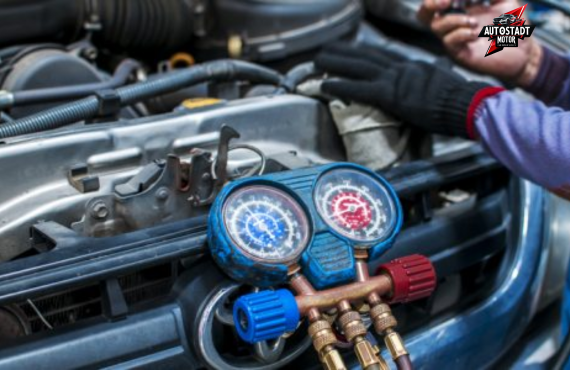
Whether you drive a Mitsubishi Pajero, Outlander, Lancer, ASX, or another model, professional inspection can help restore reliable cabin cooling while preventing a minor AC fault from becoming a more expensive repair.
Signs Your Car Needs Mitsubishi AC Repair
Weak or Inconsistent Cooling
One of the clearest indications that your Mitsubishi requires AC attention is when the air coming from the vents is no longer sufficiently cold. The system may initially feel cool but become warm after several minutes, or it may produce different temperatures from different vents.
Low refrigerant, a restricted condenser, a malfunctioning compressor, or an issue with the expansion system can contribute to poor cooling. Therefore, simply recharging the AC without finding the cause may only provide a temporary improvement.
Mitsubishi AC Takes Too Long to Cool the Cabin
A healthy AC system should begin reducing cabin temperature relatively quickly. If your Mitsubishi takes an unusually long time to become comfortable, particularly when the vehicle is parked outdoors, the system should be checked.
A dirty cabin filter can restrict airflow, while condenser problems or inadequate refrigerant pressure can reduce cooling efficiency. An inspection helps determine whether the problem is related to airflow, refrigerant circulation, or another component.
AC Blows Warm Air
Warm air from the vents can have several causes. In some cases, the refrigerant level is too low because of a leak. In other situations, the compressor may not be generating the required pressure, or an electrical fault may prevent the AC system from operating correctly.
AutoStadt Motor Services can test the system before recommending the appropriate Mitsubishi AC repair.
Strange Noises When the AC Is Turned On
Listen carefully when switching on your Mitsubishi’s air conditioning. Grinding, squealing, rattling, or clicking noises may indicate mechanical or electrical problems.
For example, abnormal compressor noise can suggest internal wear, while belt or pulley problems may produce sounds that become more noticeable when the AC engages. Ignoring these noises can allow a developing problem to become more serious.
Unpleasant Smell From the Vents
A musty or unpleasant smell does not necessarily mean the AC needs refrigerant. It can be associated with moisture accumulation, microbial growth around the evaporator area, a dirty cabin filter, or contamination within the ventilation system.
Cleaning and disinfecting relevant components, along with replacing the cabin filter when necessary, can improve both air quality and airflow.
Water Appears Inside the Cabin
Air conditioning naturally creates condensation, which is normally drained outside the vehicle. However, if water begins collecting around the passenger footwell or inside the cabin, the condensate drain may be blocked or another drainage issue may be present.
This should not be ignored because prolonged moisture can damage interior materials and contribute to unpleasant odors.
AC Works Better While Driving Than While Stationary
If your Mitsubishi produces cooler air while moving but struggles to cool the cabin when stationary, the condenser airflow system deserves attention.
A cooling fan problem, restricted condenser, or inadequate refrigerant performance may affect the system’s ability to remove heat when the vehicle is not moving. Proper diagnostics can identify the underlying issue instead of treating only the symptoms.
Why Choose AutoStadt Motor Services for Mitsubishi AC Repair
Diagnosis Before Replacement
At AutoStadt Motor Services, the objective is to identify the actual source of the AC problem before replacing components. This approach can help avoid unnecessary expenses.
For example, weak cooling does not automatically mean the compressor needs replacement. A refrigerant leak, blocked airflow path, faulty pressure sensor, electrical connection, or expansion component could produce similar symptoms.
Experience With Different Vehicle Systems
Automotive AC systems vary between manufacturers and models. A Mitsubishi Pajero system may have different service requirements from a Mitsubishi Outlander or Lancer.
Our technicians inspect the relevant components according to the vehicle’s symptoms and system configuration. This is particularly important when diagnosing intermittent AC problems that do not appear consistently.
Refrigerant and Pressure Checks
Correct refrigerant pressure is essential for efficient air conditioning. Too little refrigerant can reduce cooling, while incorrect servicing can also create system problems.
Rather than treating refrigerant as a simple refill item, technicians should determine whether the system is losing refrigerant and investigate possible leakage points.
Professional Component Inspection
Mitsubishi AC repair may involve several interconnected components, including the compressor, condenser, evaporator, expansion valve, receiver-drier, blower motor, cabin filter, pressure sensors, electrical wiring, and cooling fans.
A structured inspection helps narrow down the problem and determine which component actually requires attention.
Suitable for Dubai Driving Conditions
Dubai drivers frequently deal with extended periods of high ambient temperatures, traffic congestion, and vehicles being parked outdoors. These conditions place considerable demand on the cooling system.
A reliable AC system therefore needs more than occasional refrigerant top-ups. Regular inspection and timely repairs can help maintain cooling performance throughout the year.
Common Mitsubishi AC Problems That Should Not Be Ignored
Refrigerant Leakage
Refrigerant does not normally disappear simply because a vehicle gets older. If the refrigerant level repeatedly becomes low, there may be a leak somewhere in the system.
Possible leakage areas include hoses, seals, service ports, condenser connections, and other AC components. Finding the leak is important because repeatedly adding refrigerant without repairing it does not solve the underlying problem.
Compressor Failure
The AC compressor is responsible for circulating refrigerant through the system. Compressor wear can cause poor cooling, unusual noises, pressure problems, or complete AC failure.
Depending on the condition, repair or replacement may be considered after proper testing.
Condenser Problems
The condenser releases heat from the refrigerant. Because it sits toward the front of the vehicle, it can become contaminated with dust and debris or suffer physical damage.
A restricted or damaged condenser can reduce the efficiency of the entire AC system.
Evaporator Issues
The evaporator plays a central role in cooling the air entering the cabin. Problems in this area can lead to weak cooling, unusual smells, water-related issues, or refrigerant leakage.
Evaporator-related repairs can require more extensive work, which makes accurate diagnosis especially important.
Electrical and Blower Faults
Modern vehicle AC systems rely on electrical controls, sensors, motors, relays, and control modules. A fault in one of these areas can prevent the compressor, blower, or cooling fans from operating correctly.
Consequently, Mitsubishi AC repair should include electrical diagnosis when the symptoms indicate a control-related problem.
How Our Mitsubishi AC Repair Process Works
Initial Inspection
The process begins by discussing the symptoms with the vehicle owner. Information such as when the AC becomes warm, whether the problem is intermittent, and whether unusual sounds are present can provide useful diagnostic clues.
The vehicle is then inspected to establish the overall condition of the air conditioning system.
AC Performance and Pressure Testing
The system is checked to determine whether refrigerant pressure and cooling performance are within the appropriate range.
This step helps distinguish between low refrigerant, circulation problems, compressor issues, and other potential faults.
Leak Detection
If refrigerant loss is suspected, technicians investigate possible leakage points instead of simply refilling the system.
Identifying the source can prevent repeated AC failures and unnecessary refrigerant servicing.
Component and Electrical Testing
The compressor, condenser, fans, blower motor, sensors, controls, and other relevant components are assessed according to the vehicle’s symptoms.
For example, if the compressor does not engage, the cause could involve the compressor itself, an electrical circuit, a pressure-related safety control, or another system component.
Repair or Component Replacement
Once the fault has been identified, the required repair is carried out. Depending on the situation, this may involve repairing a leak, replacing a damaged hose, servicing the compressor, changing a faulty sensor, cleaning restricted components, replacing a cabin filter, or addressing an electrical fault.
The exact repair depends on the vehicle’s condition rather than a one-size-fits-all approach.
Final Cooling Test
After Mitsubishi AC repair is completed, the system is tested again. The goal is to confirm that the AC is producing appropriate cooling and that the repaired component is operating correctly.
This final check is important because an AC system contains several connected components, and repairing one fault should not be considered complete until overall performance has been verified.
Maintaining Mitsubishi AC Performance in Dubai
Regular AC care can reduce the likelihood of unexpected cooling problems. Start by paying attention to changes in cooling performance rather than waiting until the system stops working completely.
The cabin air filter should be inspected and replaced when necessary because a restricted filter can reduce airflow. The condenser should also remain reasonably clean so that heat can escape effectively.
In addition, unusual compressor sounds, repeated refrigerant loss, or inconsistent cooling should be investigated promptly. These symptoms can indicate problems that become more expensive if ignored.
The same principle applies across other vehicles. A Toyota Prado, Nissan Patrol, BMW X5, or Mercedes-Benz GLE may use different AC configurations, but all depend on correct airflow, refrigerant circulation, electrical control, and heat transfer for effective cabin cooling.
Frequently Asked Questions About Mitsubishi AC Repair in Dubai
1. How do I know if my Mitsubishi needs AC repair or just a gas recharge?
If the AC is blowing warm or weak air, low refrigerant is one possibility, but it is not the only explanation. A leak, compressor fault, blocked condenser, electrical problem, or restricted airflow can create similar symptoms.
If refrigerant repeatedly needs to be added, the system should be checked for leakage rather than relying on repeated refills. AutoStadt Motor Services can inspect the system and determine whether a recharge is actually appropriate.
2. How often should I have my Mitsubishi AC system checked in Dubai?
There is no single interval that applies to every Mitsubishi because usage, vehicle age, mileage, and system condition vary. However, an AC inspection is sensible when cooling performance changes, unusual noises appear, odors develop, or airflow becomes weaker.
Drivers who regularly use their vehicles in demanding conditions can also benefit from including AC checks during routine vehicle servicing.
3. Why is my Mitsubishi AC cold while driving but warm when stopped?
This symptom can point toward an issue with condenser airflow or cooling fan operation. When the vehicle moves, air naturally passes through the condenser. When stationary, the cooling fan becomes more important for maintaining airflow.
However, refrigerant pressure and other components should also be tested before identifying the exact cause. A proper diagnosis can prevent replacing the wrong part.
4. Is a bad smell from my Mitsubishi AC a sign of a serious problem?
A bad smell is often related to moisture, contamination, a dirty cabin filter, or microbial growth around parts of the ventilation system. It does not automatically indicate major mechanical failure.
Nevertheless, persistent odors should be inspected because the cause may require cleaning, filter replacement, or attention to the evaporator and condensate drainage system.
5. Can driving with a faulty Mitsubishi AC damage the vehicle?
A weak AC system does not always mean the vehicle is at immediate risk of mechanical damage. However, continuing to operate a system with a compressor fault, refrigerant leak, abnormal noise, or electrical issue can potentially make the original problem more complicated.
For that reason, unusual AC behavior should be checked rather than ignored. Early Mitsubishi AC repair can help identify the issue while the required repair is still manageable.
Conclusion
Mitsubishi AC repair is an important part of keeping your vehicle comfortable and dependable in Dubai. Whether the problem involves weak cooling, refrigerant loss, compressor noise, poor airflow, unpleasant odors, or an electrical fault, accurate diagnosis is the first step toward an effective solution.
AutoStadt Motor Services provides professional AC inspection and repair for Mitsubishi vehicles, with attention to the complete cooling system rather than relying on quick temporary fixes. From refrigerant and leak checks to compressor, condenser, evaporator, blower, and electrical diagnostics, the appropriate repair can be determined according to the vehicle’s actual condition.
If your Mitsubishi is no longer providing the cooling performance you expect, having the system inspected early can help restore comfortable driving and reduce the risk of a more complicated AC failure later.


Leave a Comment