
Mini Cooper radiator repair is essential when the vehicle begins showing signs of overheating, coolant loss, or poor temperature control. The radiator plays a central role in keeping the engine within its safe operating temperature by transferring heat from the coolant to the surrounding air. When the radiator becomes damaged, clogged, corroded, or develops a leak, the entire cooling system can become less effective.
For Mini Cooper owners in Dubai, addressing cooling-system problems early is particularly important. Daily traffic, long drives, high ambient temperatures, and frequent stop-and-go conditions can put additional demands on the cooling system. A minor coolant leak that seems manageable today can eventually result in overheating and expensive engine-related repairs.
At AutoStadt Motor Services, we provide professional Mini Cooper radiator repair and cooling system inspection for Dubai car owners. Instead of simply replacing a component based on symptoms, our technicians inspect the radiator, hoses, coolant circulation, thermostat, cooling fan, expansion tank, and related components to identify the actual cause of the problem.
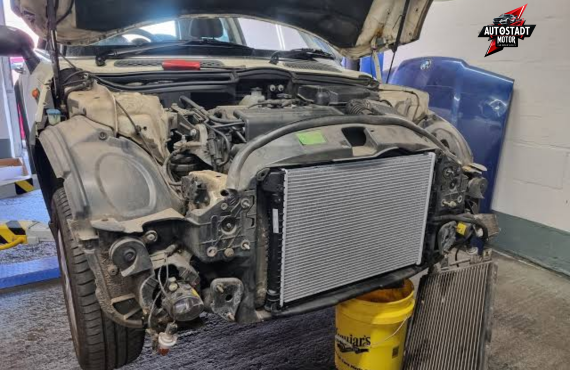
Whether you drive a Mini Cooper Hatch, Countryman, Clubman, or another Mini variant, timely cooling-system attention can help protect the engine and maintain dependable everyday performance.
Signs Your Car Needs Mini Cooper Radiator Repair
A radiator problem does not always begin with obvious overheating. In many cases, the vehicle gives smaller warning signs first. Recognizing these symptoms can help you arrange an inspection before the problem becomes more serious.
Coolant Leaking Under the Vehicle
One of the most noticeable signs is coolant appearing underneath the Mini Cooper after parking. The leak may come directly from the radiator, but it can also originate from a radiator hose, connection, expansion tank, or another part of the cooling system.
Because coolant can travel across different surfaces before reaching the ground, the visible location of a puddle does not always identify the source. Professional leak testing is therefore more useful than simply looking underneath the vehicle.
Engine Temperature Rising
If the temperature gauge begins moving higher than normal, the cooling system should be checked promptly. A restricted radiator, insufficient coolant, faulty thermostat, cooling fan issue, or circulation problem can all contribute to excessive engine temperature.
Continuing to drive an overheating vehicle can increase the risk of serious engine damage, so this symptom should never be ignored.
Coolant Level Keeps Dropping
A Mini Cooper that repeatedly needs coolant top-ups may have a leak somewhere in the cooling system. While the radiator is one possible source, technicians should also inspect hoses, connections, the expansion tank, water pump and other components.
Simply adding more coolant can temporarily hide the symptom without solving the underlying issue.
Visible Damage or Corrosion
During an inspection, technicians may discover damaged radiator fins, corrosion, cracked plastic tanks, deteriorated connections, or other physical problems. Radiator fins are important because they provide the surface area needed to release heat.
If a significant portion of the radiator is damaged or blocked, cooling performance may decline even before the driver notices severe overheating.
Coolant Smell Around the Engine Bay
A sweet coolant smell after driving can indicate that coolant is escaping from the system. Sometimes a leak is small enough that it evaporates on hot components instead of forming a large puddle.
If you notice an unusual coolant odor together with a falling coolant level, arrange a cooling-system inspection rather than continuing to refill the reservoir without diagnosis.
Cooling Fan Running Frequently
The radiator and cooling fan work together to manage engine temperature. If the fan runs unusually often or remains active after normal driving, it may indicate that the cooling system is working harder than it should.
However, this symptom does not automatically mean the radiator itself has failed. A proper diagnosis is needed to determine whether the cause is airflow, coolant circulation, temperature control, or another component.
Why Choose AutoStadt Motor Services for Mini Cooper Radiator Repair
Choosing the right workshop matters because a radiator issue can involve more than the radiator itself. At AutoStadt Motor Services, our approach focuses on finding the underlying cooling-system problem rather than treating only the most visible symptom.
Complete Cooling System Inspection
When a Mini Cooper arrives with overheating or coolant-loss symptoms, the radiator is not examined in isolation. Our technicians can inspect relevant components such as coolant hoses, radiator connections, expansion tank, thermostat, water pump, cooling fan and other associated parts.
This broader inspection helps prevent unnecessary component replacement.
Leak Detection and Diagnosis
A cooling system can lose coolant through a small crack or weak connection that is difficult to identify visually. Appropriate diagnostic and pressure-testing methods can help locate leaks more accurately.
Once the source is identified, the technician can determine whether repair, component replacement, or further inspection is appropriate.
Mini Cooper-Focused Service
Mini Cooper cooling systems can have specific component layouts and service requirements depending on the model and engine configuration. Our technicians take these differences into consideration when inspecting and servicing the vehicle.
This is especially useful when dealing with modern Mini models where several cooling-system components work together electronically and mechanically.
Quality Replacement Components
If the radiator cannot be economically repaired, replacement may be the practical solution. AutoStadt Motor Services can help determine the appropriate replacement component based on the Mini Cooper model and cooling-system specifications.
The goal is not simply to install a new radiator but to ensure that the surrounding system is also operating correctly.
Preventing Repeat Cooling Problems
Replacing a leaking radiator without checking why the cooling system experienced the problem can leave other issues unresolved. For example, an ineffective cooling fan or deteriorated hose can create additional trouble later.
Therefore, our service includes attention to related components whenever the symptoms indicate that they may be involved.
How Our Mini Cooper Radiator Repair Process Works
A structured repair process makes it easier to identify the problem and determine the appropriate solution.
Initial Vehicle Assessment
The process starts with a discussion about the symptoms you have noticed. Information such as overheating, coolant loss, warning lights, unusual smells, or recent repairs can help technicians understand the situation.
The vehicle is then visually inspected for obvious signs of coolant leakage, damaged components, or other abnormalities.
Cooling System Diagnosis
Next, the cooling system is examined more closely. Depending on the symptoms, technicians may check coolant condition and level, inspect hoses and connections, examine the radiator, and perform appropriate leak or pressure testing.
The purpose is to distinguish a radiator problem from other possible causes.
Radiator Condition Check
The radiator itself is inspected for leakage, blockage, corrosion, damaged fins, cracked sections, or other signs of deterioration. Airflow through the radiator is also relevant because restricted airflow can reduce heat transfer.
A radiator that is externally dirty or internally restricted may behave differently from one with a structural leak, so the repair recommendation depends on the actual condition.
Related Component Inspection
The thermostat, water pump, cooling fan, expansion tank and coolant hoses may also require attention. These components influence how coolant moves through the engine and how efficiently heat is removed.
For example, a perfectly good radiator cannot compensate for a cooling fan that fails to provide sufficient airflow when required.
Repair or Replacement Recommendation
After diagnosis, the technician can explain the required repair. Depending on the condition, this could involve repairing a minor issue, replacing the radiator, replacing a damaged hose or connection, or addressing another cooling-system component.
At this stage, the aim is to provide a clear explanation instead of recommending unnecessary work.
Coolant System Refill and Final Checks
After the required work is completed, the cooling system should be filled with the appropriate coolant and checked for leaks. The system may also require proper bleeding to remove trapped air.
The vehicle is then checked to confirm that coolant circulation and temperature management are functioning as expected.
Mini Cooper Radiator Maintenance Tips for Dubai Drivers
Good maintenance can reduce the likelihood of unexpected cooling problems. Regularly checking the coolant level is one simple step, although the engine should be cool before opening the relevant coolant reservoir or performing any inspection.
It is also useful to pay attention to changes in temperature behavior. If your Mini Cooper starts running hotter than usual, do not wait for a major overheating event before arranging an inspection.
The cooling system should also be inspected during routine servicing. Hoses can deteriorate with age, radiator fins can become restricted by dirt and debris, and connections can develop leaks.
Dubai driving conditions can involve extended periods of idling and heavy traffic, making effective airflow particularly important. A properly functioning cooling fan and clean radiator help the vehicle manage heat when natural airflow is limited.
Although the cooling principles are similar across vehicles, the exact maintenance requirements differ. A Toyota may have a different cooling-system arrangement from a Mini Cooper, while BMW, Mercedes-Benz, and Nissan models can also use different component designs and service procedures.
When Should You Stop Driving a Mini Cooper?
If the vehicle is showing severe overheating, steam, a strong coolant leak, or a critical temperature warning, continuing to drive can increase the possibility of engine damage.
In such circumstances, it is safer to stop the vehicle when conditions allow and arrange professional assistance. Never remove a pressurized coolant-system cap while the engine is hot because escaping coolant or steam can cause serious burns.
If the temperature issue is minor but recurring, arrange an inspection as soon as possible rather than assuming that topping up coolant has permanently solved the problem.
Frequently Asked Questions About Mini Cooper Radiator Repair in Dubai
1. How much does Mini Cooper radiator repair cost in Dubai?
The cost depends on the actual fault. A small leak from a hose or connection can require a different repair from a damaged radiator that needs complete replacement. Model year, engine configuration, parts requirements, coolant service, and additional cooling-system problems can also affect the final cost.
AutoStadt Motor Services can inspect the vehicle first and identify the required repair before proceeding with major work. This helps you understand what is actually causing the cooling problem rather than paying for unnecessary component replacement.
2. How do I know whether my Mini Cooper needs a radiator repair or replacement?
A radiator may sometimes be repairable depending on the location and severity of the problem. However, significant structural damage, extensive corrosion, internal restriction, or a damaged radiator assembly may make replacement the more appropriate option.
A professional inspection is the best way to make this distinction. The technician can evaluate the radiator’s physical condition and consider whether repairing it would provide a dependable long-term solution.
3. Can I drive my Mini Cooper with a coolant leak?
Driving with a coolant leak is risky because the engine depends on sufficient coolant circulation to control temperature. A small leak can become larger, while continued coolant loss can eventually lead to overheating.
If your Mini Cooper is losing coolant or showing a temperature warning, arrange an inspection promptly. If the engine is already overheating or producing steam, continuing to drive it can increase the risk of serious damage.
4. Does a radiator problem always cause the temperature warning light to appear?
No. A cooling-system problem can develop before a dashboard warning appears. A small leak, restricted airflow, deteriorating hose, or gradual reduction in cooling efficiency may initially produce only subtle symptoms.
That is why changes such as frequent coolant top-ups, unusual smells, or temperature behavior should be investigated even when no warning light is currently displayed.
5. How often should a Mini Cooper cooling system be inspected in Dubai?
There is no single inspection interval that applies to every Mini Cooper because maintenance requirements depend on the model, age, mileage, driving conditions, and manufacturer’s service schedule.
However, the cooling system should be checked whenever you notice coolant loss, overheating, unusual temperature behavior, visible leaks, or cooling-fan abnormalities. Including the radiator and related components in routine servicing can also help identify developing problems before they become major repairs.
Conclusion
Mini Cooper radiator repair should not be delayed when you notice coolant loss, overheating, unusual coolant smells, or other cooling-system symptoms. The radiator is a key part of engine temperature management, but effective diagnosis also requires checking the components that work alongside it.
For Mini Cooper owners in Dubai, AutoStadt Motor Services provides professional radiator inspection, leak diagnosis, cooling-system checks, repair and replacement services. By identifying the actual source of the problem and checking related components, the right repair can be completed with greater confidence.
If your Mini Cooper is losing coolant or running hotter than normal, arranging an inspection early can help prevent a relatively manageable cooling-system problem from developing into a much more expensive engine repair.


Leave a Comment