
Mazda evaporator change is an important repair when your vehicle’s air conditioning system develops a refrigerant leak, produces unpleasant smells, or struggles to cool the cabin despite other AC components appearing to work correctly. The evaporator plays a central role in the cooling process, so when it becomes damaged, corroded, or contaminated, a simple refrigerant refill may not resolve the problem.
For drivers in Dubai, a reliable car AC system is essential throughout much of the year. High outdoor temperatures, traffic congestion, frequent short journeys, and dusty conditions can make even a small decline in cooling performance noticeable. If your Mazda takes too long to cool down, releases an unusual smell through the vents, or repeatedly loses refrigerant, it may need a detailed air-conditioning inspection.
The evaporator is located inside the vehicle’s HVAC housing, where it absorbs heat from the cabin air. Refrigerant circulates through the evaporator, allowing the air-conditioning system to deliver cooler air through the dashboard vents. Because the component is usually hidden behind dashboard panels, identifying and replacing it can require considerably more work than changing an accessible filter or servicing an external AC component.
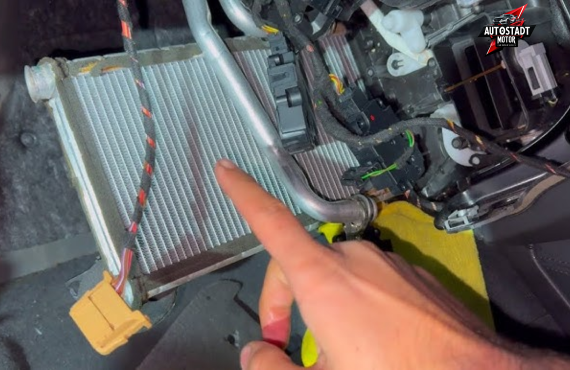
At AutoStadt Motor Services, Mazda AC problems should be approached through careful diagnosis before recommending an evaporator replacement. A refrigerant leak may originate from a hose, condenser, service connection, or another component instead. Identifying the actual fault helps avoid unnecessary expenses and ensures that the recommended repair addresses the problem rather than temporarily hiding its symptoms.
Signs Your Car Needs Mazda Evaporator Change
Evaporator problems do not always produce one unmistakable symptom. Instead, drivers may notice a combination of reduced cooling, recurring refrigerant loss, or changes in cabin air quality. Recognizing these signs can help you arrange an inspection before the AC system becomes completely ineffective.
1. Weak Cooling Despite AC Servicing
One common warning sign is air conditioning that remains weak even after the system has been serviced.
If your Mazda has received an AC gas refill but the cooling performance deteriorates again, a refrigerant leak should be investigated. An evaporator leak is one possibility, particularly when an inspection finds no clear leak around the accessible components.
However, weak cooling does not automatically mean the evaporator needs replacement. A faulty compressor, restricted condenser, expansion valve issue, or electrical problem can create similar symptoms. Proper testing is necessary before deciding which component requires attention.
2. Refrigerant Keeps Disappearing
Automotive AC systems operate as closed circuits, so repeatedly losing refrigerant is a reason to investigate the system for leakage.
An evaporator can develop a leak because of corrosion, material deterioration, or damage. Since it sits inside the HVAC housing, the leak may be difficult to identify through a basic visual inspection.
If your Mazda’s AC works well immediately after servicing but gradually stops cooling, ask a technician to investigate the refrigerant loss instead of repeatedly topping up the system.
3. Unpleasant Smell From the Dashboard Vents
A musty or unpleasant smell when the AC starts can indicate moisture, microbial growth, or contamination around the evaporator and ventilation system.
The evaporator naturally becomes cold during operation, and moisture can collect around it. If drainage is restricted or dirt accumulates in the HVAC housing, unwanted odours may develop.
Nevertheless, a bad smell alone does not prove that the evaporator is leaking or damaged. The cabin filter, drainage system, and other ventilation components should also be checked before replacement is considered.
4. AC Cooling Becomes Inconsistent
Your Mazda may initially produce cold air but gradually become less effective during a journey. Alternatively, cooling may fluctuate between cold and warm.
These symptoms can be related to refrigerant loss, temperature sensors, compressor control, airflow restrictions, or other AC faults. An evaporator leak may contribute if the refrigerant level falls over time.
A proper diagnosis should establish whether the problem is caused by the evaporator itself or another part of the cooling system.
5. Refrigerant Leak Confirmed Inside the HVAC System
Because the evaporator is hidden behind dashboard components, technicians may need specialised leak-detection procedures to confirm whether it is leaking.
Depending on the vehicle and the equipment available, diagnosis may involve an electronic refrigerant leak detector, pressure testing where appropriate, or other manufacturer-compatible procedures.
Once the evaporator leak has been confirmed, replacement may be the most suitable long-term solution, depending on the component’s design and repairability.
6. Reduced Comfort During Dubai’s Hot Weather
A damaged evaporator can make daily driving especially uncomfortable in Dubai. When the cabin remains warm despite the AC operating, the driver may experience longer cooling times and reduced comfort during commuting or extended journeys.
The same general concern can affect other vehicles, including Toyota Corolla, Nissan Altima, BMW 3 Series, and Mercedes-Benz C-Class models. However, evaporator access, component design, and replacement procedures vary by vehicle.
For Mazda owners, a model-specific inspection helps determine the correct repair rather than relying on assumptions based on another manufacturer’s system.
Why Choose AutoStadt Motor Services for Mazda Evaporator Change
Replacing an evaporator is often a labour-intensive repair. Choosing a workshop that takes diagnosis and the overall AC system into account can help you make a better-informed decision.
Accurate Diagnosis Before Replacement
The first priority should be confirming that the evaporator is actually responsible for the problem.
A technician should investigate refrigerant loss, inspect accessible AC components, and consider other possible causes of weak cooling. This helps reduce the risk of replacing an expensive component when the real fault is located elsewhere.
At AutoStadt Motor Services, the recommended repair should be based on the symptoms and diagnostic findings rather than the assumption that every poorly cooling Mazda needs a new evaporator.
Attention to Mazda AC System Requirements
Mazda vehicles differ by model, generation, engine configuration, and equipment. The correct evaporator and associated components must match the vehicle’s specific requirements.
Using the correct replacement part is important for fitment, sealing, and reliable operation. Before ordering parts, the vehicle’s model year and specification should be confirmed.
Careful Dashboard and HVAC Access
Unlike many external AC components, the evaporator is generally housed inside the dashboard HVAC assembly. Access may require removal of selected interior panels and other components.
Careful handling is essential to avoid damaging trim, connectors, wiring, clips, or nearby parts. The exact amount of disassembly depends on the Mazda model and the design of its HVAC system.
Complete AC System Checks
An evaporator replacement should not be treated as an isolated task. The technician should also consider the condition of related components and determine whether the refrigerant circuit requires additional attention.
For example, a restricted expansion valve, damaged connection, or contaminated system may affect cooling performance even after the evaporator has been replaced.
Clear Repair Recommendations
Because evaporator replacement can involve substantial labour, customers should understand why the repair is necessary.
AutoStadt Motor Services can assess the symptoms, explain the identified fault, and recommend an appropriate repair plan. This makes it easier to distinguish essential work from additional maintenance that may not be required.
How Our Mazda Evaporator Change Process Works
A structured repair process helps ensure that the source of the problem is confirmed, the correct component is fitted, and the AC system is tested after the work is completed.
Step 1: Discuss the Symptoms
The process begins with the driver’s observations.
The technician may ask whether the AC has stopped cooling completely, whether refrigerant has been refilled previously, whether a smell appears when the system starts, and whether cooling performance changes during a journey.
This information helps guide the initial inspection.
Step 2: Inspect the Air-Conditioning System
The AC system is checked to evaluate its current performance and identify possible causes of the complaint.
Depending on the symptoms, the inspection may cover refrigerant pressure, compressor operation, condenser condition, AC lines, electrical controls, airflow, and other relevant components.
The objective is to avoid jumping directly to evaporator replacement without sufficient evidence.
Step 3: Confirm the Evaporator Leak or Fault
If an evaporator problem is suspected, appropriate diagnostic methods are used to establish whether the component is leaking or otherwise defective.
Since the evaporator is concealed inside the HVAC housing, this stage may require more specialised testing than an inspection of an exposed hose or condenser.
Once the diagnosis supports replacement, the technician can explain the expected work and associated costs.
Step 4: Remove the Required Interior Components
If replacement is approved, access to the evaporator is prepared according to the vehicle’s service procedure.
Depending on the Mazda model, this can involve removing dashboard trim, selected interior panels, and parts of the HVAC assembly. Any refrigerant remaining in the system must be recovered using appropriate equipment before the refrigerant circuit is opened.
Careful handling of wiring, connectors, and interior components helps reduce the risk of unrelated damage during the process.
Step 5: Replace the Faulty Evaporator
The old evaporator is removed and checked against the replacement component. Relevant seals and connections should be assessed, and required sealing parts should be replaced according to the manufacturer’s procedure.
The replacement must be suitable for the exact vehicle specification. Incorrect fitment or damaged seals can lead to further leakage and additional repair costs.
Step 6: Reassemble and Service the AC Circuit
After installation, the HVAC assembly and removed interior components are reassembled.
The refrigerant circuit is then serviced according to the vehicle’s requirements. Depending on the system and repair procedure, this may include an appropriate leak check, evacuation, and recharging with the specified refrigerant and quantity.
If contamination or another fault has been identified, additional work may be necessary before the system is returned to service.
Step 7: Test Cooling Performance
The final stage is to verify that the AC system operates correctly.
The technician checks cooling performance, airflow, system operation, and relevant connections for signs of leakage. The ventilation system should also be assessed to ensure that the original complaint has been addressed.
This final check is important because successful evaporator installation alone does not guarantee that every other AC-related fault has been resolved.
Mazda Evaporator Maintenance Tips for Dubai Drivers
Although an evaporator may last for many years, sensible maintenance can help keep the wider AC system operating properly.
First, arrange an inspection if your Mazda repeatedly loses refrigerant. Continuing to refill the system without locating the leak may increase costs without solving the underlying problem.
Second, replace the cabin air filter according to the vehicle’s maintenance schedule and driving conditions. A restricted filter can reduce airflow and make the cabin feel less comfortable, even when the refrigerant circuit is functioning correctly.
Third, pay attention to drainage and odours. If water drainage appears abnormal or a persistent musty smell develops, have the ventilation system inspected. These symptoms may involve the evaporator area, but they can also originate from the cabin filter or drainage system.
Finally, avoid delaying an AC inspection until cooling stops completely. Early diagnosis may reveal a manageable fault before it affects additional components.
Frequently Asked Questions About Mazda Evaporator Change in Dubai
1. How do I know if my Mazda needs an evaporator replacement?
Common warning signs include repeated refrigerant loss, weak cooling that returns after servicing, and an evaporator leak confirmed through suitable diagnostic testing. An unpleasant smell may also indicate a ventilation-system issue, but it does not necessarily mean the evaporator is damaged. A technician should inspect the system and rule out other causes before recommending replacement.
2. How much does Mazda evaporator change cost in Dubai?
The cost depends on the Mazda model, replacement-part availability, labour requirements, and the amount of dashboard or HVAC disassembly needed. Some vehicles require extensive interior removal to access the evaporator, making labour a significant part of the total cost. Additional repairs may also affect the final price. An inspection and vehicle-specific quotation are the best ways to establish the likely expense.
3. Can I refill the AC gas instead of replacing the evaporator?
A refrigerant refill may restore cooling temporarily if the system is low, but it will not repair a leaking evaporator. If the refrigerant continues to escape, the AC may lose cooling again. The correct approach is to identify the cause of refrigerant loss and determine whether the evaporator or another component requires repair. Repeated refilling without diagnosis is not a reliable long-term solution.
4. How long does Mazda evaporator replacement take?
The repair duration varies by model and the complexity of accessing the HVAC assembly. Because the evaporator is generally located behind the dashboard, replacement may require several hours of labour and can sometimes take longer depending on the vehicle and any additional faults discovered. A workshop should provide a realistic time estimate after identifying the exact Mazda model and confirming the required work.
5. Will replacing the evaporator make my Mazda AC cold again?
If a leaking or defective evaporator is the main cause of poor cooling, replacing it can resolve that particular fault. However, cooling performance also depends on the compressor, condenser, expansion device, refrigerant charge, sensors, blower, and other related components. A complete post-repair check is therefore important to confirm that the system is operating correctly and that no separate fault remains.
Conclusion
Mazda evaporator change can be necessary when a confirmed evaporator leak or defect prevents the air-conditioning system from maintaining reliable cabin cooling. Since the component is usually concealed within the dashboard, the repair requires accurate diagnosis, suitable replacement parts, careful disassembly, and thorough testing afterwards.
For Dubai drivers, a properly functioning AC system makes everyday commuting more comfortable, particularly during hot weather and heavy traffic. However, weak cooling does not always mean the evaporator has failed. Refrigerant leaks, compressor problems, condenser restrictions, and electrical faults can produce similar symptoms.
AutoStadt Motor Services can help Mazda owners investigate AC problems, identify the source of refrigerant loss, and determine whether evaporator replacement is the appropriate solution.
If your Mazda’s AC repeatedly loses cooling, requires frequent refrigerant refills, or shows signs of an evaporator leak, arrange a professional inspection before committing to replacement. Accurate diagnosis is the first step toward a dependable repair and consistent cabin comfort.


Leave a Comment