
Mazda radiator repair is essential when your vehicle starts overheating, losing coolant, showing temperature warnings, or leaking fluid from the cooling system. The radiator helps regulate engine temperature by transferring heat from the engine coolant to the surrounding air. When it becomes damaged, clogged, or unable to dissipate heat efficiently, the engine may operate at an unsafe temperature.
For Mazda owners in Dubai, maintaining an efficient cooling system is especially important. High ambient temperatures, frequent stop-and-go traffic, extended journeys, and demanding driving conditions can place additional pressure on the engine cooling system. A radiator that is already leaking or partially restricted may struggle to maintain the correct temperature under these conditions.
However, not every overheating problem means the radiator needs replacement. A faulty thermostat, damaged radiator hose, malfunctioning cooling fan, weak water pump, defective radiator cap, or other cooling system fault can create similar symptoms. Proper diagnosis is therefore necessary before deciding on a repair.
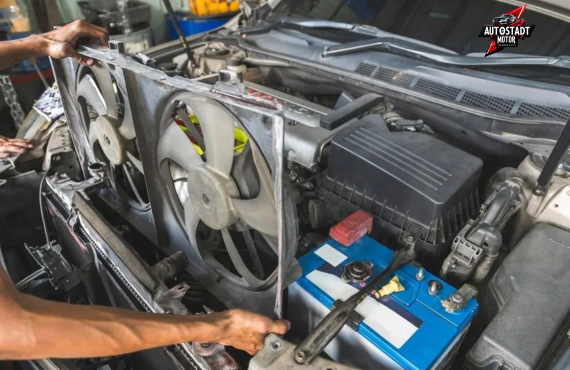
At AutoStadt Motor Services, Mazda owners can seek professional assistance with radiator inspection, coolant leaks, overheating concerns, and related cooling system problems. Whether you drive a Mazda 3 for daily commuting, a Mazda 6 for regular business travel, or a Mazda CX-5 for family journeys, identifying cooling system problems early can help protect your engine and reduce the risk of expensive mechanical damage.
Signs Your Car Needs Mazda Radiator Repair
Radiator problems do not always begin with a major leak or an immediate temperature warning. Sometimes, the first signs are subtle changes in coolant level, engine temperature, or vehicle performance. Recognizing these symptoms can help you arrange an inspection before the problem becomes more serious.
1. Engine Temperature Rises Above Normal
One of the most important warning signs is an engine temperature gauge that rises beyond its usual operating range.
If your Mazda begins overheating during traffic, while climbing a slope, or after a long journey, the cooling system may not be removing heat effectively. A restricted radiator, damaged cooling fan, thermostat problem, or low coolant level could be responsible.
Dubai traffic can make this issue particularly noticeable because the vehicle may spend long periods moving slowly while the engine continues producing heat.
If the temperature warning appears or the gauge enters the overheating range, stop somewhere safe and switch off the engine. Do not continue driving in the hope that the temperature will return to normal.
2. Coolant Leaks Beneath the Vehicle
Coolant leaking from the radiator or its connections may leave a wet patch underneath the front of your Mazda.
Depending on the coolant formulation, the liquid may appear green, pink, orange, blue, or another colour. However, colour alone cannot reliably identify the source because different manufacturers use different coolant specifications.
A leak may originate from a cracked radiator tank, damaged core, loose connection, deteriorated hose, or another cooling system component.
At AutoStadt Motor Services, the source should be identified before a repair is recommended. Replacing the radiator without confirming the leak location may lead to unnecessary expense.
3. Coolant Level Keeps Dropping
If you regularly need to add coolant, your Mazda should be inspected for a leak or another cooling system fault.
Coolant circulates through a closed system during normal operation. A recurring drop in the level can indicate leakage from the radiator, hoses, water pump, heater circuit, or other components.
In some cases, the cause may be internal rather than an obvious external leak. Therefore, a lack of visible puddles does not automatically mean the cooling system is healthy.
Always check coolant only when the engine is completely cool. Never open a hot radiator cap or pressurized coolant reservoir because escaping steam or hot coolant can cause serious burns.
4. Steam or a Sweet Smell From the Engine Bay
Steam coming from the engine compartment can indicate overheating or coolant escaping onto hot components.
Some coolant formulations also produce a distinctive sweet smell when leaking. Although this can be a useful clue, it is not enough to confirm that the radiator itself is responsible.
If you notice steam, a strong coolant smell, or a sudden temperature increase, stop safely and allow the vehicle to cool. Continuing to drive may turn a manageable cooling system repair into major engine damage.
5. Radiator Damage or Visible Corrosion
The radiator is exposed to heat cycles, vibration, road debris, and environmental contaminants. Over time, these conditions can contribute to physical damage or deterioration.
During an inspection, a technician may discover damaged fins, cracked plastic tanks, corrosion, leaking seams, or other signs of wear.
Damaged fins can reduce heat transfer, while a leak can lower the amount of coolant available to regulate engine temperature. The appropriate solution depends on the extent and location of the damage.
6. Air Conditioning or Cooling Performance Changes
Although the engine radiator and air-conditioning system perform different functions, they are located in related areas at the front of many vehicles. Airflow restrictions or cooling fan problems can sometimes affect both systems.
For example, an overheating Mazda may also experience reduced air-conditioning performance while stationary if a cooling fan or airflow-related issue is present.
However, weak AC cooling does not automatically indicate a radiator fault. The two systems should be checked separately, while considering any components they share.
Why Choose AutoStadt Motor Services for Mazda Radiator Repair
Choosing a workshop for Mazda radiator repair involves more than finding someone who can install a replacement part. A reliable repair starts with understanding the cause of the problem and checking whether other cooling system components have been affected.
Accurate Cooling System Diagnosis
At AutoStadt Motor Services, the first priority is to identify the source of the complaint.
Depending on the symptoms, the inspection may include the radiator, coolant hoses, radiator cap, reservoir, cooling fans, thermostat, water pump, and relevant connections.
A pressure test may also be appropriate to help identify leaks. If the vehicle is overheating without an obvious external leak, further testing may be needed to investigate other possible causes.
This diagnostic approach helps avoid replacing parts that are still functioning correctly.
Repair Recommendations for Your Mazda Model
Mazda vehicles differ in engine design, radiator configuration, and cooling system requirements. The appropriate procedure depends on the exact model, engine, year, and specification.
A Mazda 3, Mazda 6, Mazda CX-5, and Mazda CX-9 may require different parts and repair procedures. Therefore, identifying the vehicle correctly is an important part of the process.
Attention to the Entire Cooling System
A new radiator will not necessarily solve overheating if another component is responsible.
For instance, a defective thermostat can restrict coolant circulation, while a failing water pump may prevent coolant from moving efficiently through the engine. A malfunctioning fan can also reduce cooling performance when the vehicle is stationary.
Checking the related components helps ensure that the repair addresses the underlying issue rather than only one symptom.
Appropriate Coolant and Replacement Parts
Using the correct coolant specification is essential for protecting the cooling system. Different vehicles may require different coolant formulations, and mixing incompatible products can create problems.
Likewise, replacement radiators, hoses, caps, and related components should be suitable for the vehicle’s exact specification.
AutoStadt Motor Services can assess the repair requirements and recommend suitable parts and service procedures for the affected Mazda.
Convenient Support for Dubai Drivers
An overheating vehicle can disrupt work, family commitments, and daily travel. Arranging an inspection when the first warning signs appear may help prevent a more serious breakdown.
Whether you drive a Mazda regularly through busy city traffic or use it for longer journeys, maintaining the radiator and cooling system is an important part of responsible vehicle ownership.
How Our Mazda Radiator Repair Process Works
A structured repair process helps identify the fault, determine the appropriate solution, and verify that the cooling system is operating correctly afterward.
Step 1: Discuss the Symptoms
The process begins by understanding what you have noticed.
For example, the vehicle may overheat only in traffic, lose coolant overnight, show a temperature warning during longer journeys, or produce steam from the engine bay.
This information helps the technician narrow down the possible causes and decide which inspections are appropriate.
Step 2: Inspect the Radiator and Cooling Components
The radiator and accessible cooling system components are checked for signs of damage, leakage, blockage, or deterioration.
The inspection may include radiator tanks, cooling fins, hoses, clamps, coolant reservoir, radiator cap, and nearby connections.
If there is no visible leak, additional diagnostic testing may be required to investigate pressure loss or circulation problems.
Step 3: Test the Cooling System
Depending on the symptoms, the technician may carry out a cooling system pressure test, inspect cooling fan operation, assess coolant circulation, or investigate thermostat and water pump performance.
These checks help distinguish a radiator fault from other problems that can produce similar overheating symptoms.
Step 4: Determine Whether Repair or Replacement Is Appropriate
Not every radiator problem requires the same solution.
A damaged hose or connection may be relatively straightforward to address. A severely cracked radiator tank, extensive corrosion, or significant internal restriction may make radiator replacement the more suitable option.
The decision should consider the damage, repair reliability, part availability, and the vehicle’s requirements.
Step 5: Carry Out the Required Repair
Once the cause has been confirmed, the necessary work can be completed.
Depending on the findings, this may involve radiator replacement, hose replacement, repairing a suitable connection, addressing a faulty cap, or resolving another cooling system problem.
If the radiator is replaced, the correct coolant specification and filling procedure should be followed. Where required, the system must also be bled correctly to remove trapped air.
Step 6: Check for Leaks and Confirm Operation
After the repair, the cooling system should be checked again.
The technician can inspect the repaired area for leaks, verify the coolant level, assess fan operation, and confirm that the engine reaches and maintains its intended operating temperature under appropriate test conditions.
This final verification helps ensure that the original concern has been addressed and that another fault has not been overlooked.
Mazda Radiator Maintenance Tips for Dubai Conditions
Preventive maintenance can help you recognize cooling system problems before they develop into an emergency.
First, pay attention to temperature warnings. If your Mazda’s temperature gauge behaves differently from normal, investigate the reason rather than repeatedly continuing your journey.
Second, check the coolant level according to the manufacturer’s instructions, but only when the engine is cool. If the level repeatedly falls, arrange an inspection instead of relying on frequent top-ups.
Third, follow the recommended coolant replacement schedule for your particular model. Coolant has a service life, and using the correct specification helps maintain corrosion protection and cooling performance.
It is also sensible to have the radiator and condenser areas inspected for accumulated dust, debris, or physical damage. Airflow through these components contributes to effective heat transfer, particularly during hot weather.
Finally, do not ignore minor leaks. A small coolant leak may become more significant over time, especially during demanding driving conditions.
These maintenance principles apply across different manufacturers, although the precise requirements vary. Whether you own a Mazda, Toyota Corolla, Nissan Altima, BMW, or Mercedes-Benz, follow the maintenance guidance specified for your particular vehicle rather than assuming every cooling system is identical.
Frequently Asked Questions About Mazda Radiator Repair in Dubai
1. How do I know if my Mazda radiator needs repair or replacement?
Common signs include coolant leaking from the radiator, repeated coolant loss, visible cracks, damaged fins, or engine overheating. However, these symptoms can also result from a faulty hose, thermostat, water pump, or cooling fan. A professional inspection can identify the actual source of the problem and determine whether the radiator can be repaired reliably or should be replaced.
2. Why does my Mazda overheat in Dubai traffic?
Overheating in slow-moving traffic can occur when the cooling system cannot remove heat effectively. Possible causes include a malfunctioning cooling fan, restricted radiator airflow, low coolant, a thermostat fault, or radiator blockage. Because the vehicle receives less natural airflow when stationary, fan operation becomes particularly important. A proper diagnosis is needed to identify which component is responsible.
3. Can I drive my Mazda with a leaking radiator?
Driving with a radiator leak is risky because the coolant level can fall and cause the engine to overheat. Severe overheating can damage engine components and lead to expensive repairs. If the temperature warning appears, steam develops, or coolant loss is substantial, stop in a safe location and switch off the engine. Do not open the cooling system while hot. Arrange professional assistance rather than continuing to drive an overheating vehicle.
4. How much does Mazda radiator repair cost in Dubai?
The cost depends on the Mazda model, the location and severity of the leak, the parts required, and whether the radiator can be repaired or needs replacement. A damaged hose or connection may cost less to address than a complete radiator replacement. Additional work may be necessary if the thermostat, water pump, cooling fan, or another component is faulty. AutoStadt Motor Services can assess the vehicle and recommend the appropriate work based on the diagnosis.
5. How often should I have my Mazda radiator and coolant checked?
The radiator and coolant should be inspected according to the manufacturer’s maintenance schedule and whenever symptoms appear. Coolant replacement intervals vary by model, engine, and coolant specification, so there is no single interval suitable for every Mazda. In Dubai, paying attention to temperature changes, coolant loss, and visible leaks is especially useful. If you frequently need to top up coolant or notice overheating, arrange an inspection rather than waiting for the next scheduled service.
Conclusion
Mazda radiator repair plays an important role in maintaining engine temperature, protecting essential components, and keeping your vehicle dependable on Dubai roads. Warning signs such as overheating, coolant leaks, repeated fluid loss, steam, or visible radiator damage should be investigated promptly.
However, effective repair involves more than replacing the radiator whenever the engine gets hot. The underlying cause may involve a hose, thermostat, water pump, cooling fan, radiator cap, or another part of the cooling system. Identifying the actual fault helps ensure that the repair addresses the problem rather than temporarily masking its symptoms.
AutoStadt Motor Services can assist Mazda owners with radiator inspections, coolant leak diagnosis, overheating concerns, and related cooling system repairs. By arranging an inspection early and following the correct maintenance requirements, you can help protect your engine and reduce the likelihood of an unexpected cooling system breakdown.
If your Mazda is losing coolant or struggling to maintain its normal temperature, arrange a professional assessment before the problem becomes more serious.


Leave a Comment