
Mini Cooper ac compressor change is an important repair when the vehicle’s air-conditioning system can no longer circulate refrigerant correctly. The compressor is one of the main components responsible for moving refrigerant through the AC system, allowing the cabin to receive cool air. When it develops an internal fault, becomes noisy, leaks oil or stops engaging, simply refilling AC gas may not solve the problem.
For Mini Cooper owners in Dubai, a properly functioning air-conditioning system is particularly important because the vehicle can become uncomfortable very quickly when outside temperatures are high. However, replacing an AC compressor should not be treated as a routine parts-swap job. A weak compressor can sometimes be confused with an electrical problem, low refrigerant, a faulty pressure sensor, a damaged condenser, or another AC component.
At AutoStadt Motor Services, Mini Cooper AC problems are approached through diagnosis before replacement. Our technicians inspect the air-conditioning system, identify the underlying fault and determine whether the compressor actually needs to be changed. This helps avoid unnecessary repairs while ensuring that the new component is installed and tested correctly.
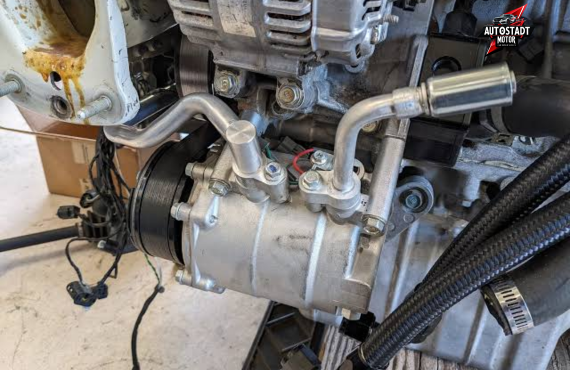
Whether you drive a Mini Cooper Hatch, Clubman, Countryman or another variant, the right diagnosis can make a major difference to cooling performance, reliability and long-term maintenance costs.
Signs Your Car Needs Mini Cooper AC Compressor Change
Weak Cooling Even When the AC Is Running
One of the most noticeable symptoms is air that remains warm or only slightly cool after the AC has been switched on. Before replacing the compressor, the refrigerant level and other components should be checked because insufficient refrigerant can also cause poor cooling.
If the system has the correct refrigerant charge but the compressor cannot create the required pressure difference, compressor performance becomes a strong suspect.
AC Compressor Making Unusual Noises
A healthy compressor should operate without severe knocking, grinding or metallic noises. A noticeable mechanical sound from the compressor area may indicate worn internal bearings or other internal damage.
A rattling noise can also come from the compressor clutch, pulley or belt-related components. Therefore, an experienced technician should determine exactly where the sound originates rather than immediately installing a replacement compressor.
Compressor Clutch Does Not Engage
On Mini Cooper models equipped with a conventional compressor clutch, failure to engage can prevent the compressor from operating. However, the compressor itself may not always be responsible.
Electrical wiring, relays, pressure sensors, control modules and refrigerant pressure can all affect compressor operation. Proper electrical and AC-system testing is therefore an important part of a Mini Cooper AC compressor change.
AC Works Intermittently
If your Mini Cooper produces cold air for a while and then becomes warm, the issue may involve compressor performance, refrigerant pressure, electrical controls or another part of the air-conditioning circuit.
Intermittent cooling should not be ignored. Continuing to operate a system with a mechanically failing compressor can potentially create additional problems if internal components begin breaking down.
Refrigerant or Compressor Oil Leakage
The AC system uses refrigerant and specialized compressor oil. Visible oily residue around compressor connections or nearby AC components can indicate a leak.
A refrigerant leak should be located and repaired before charging the system again. Otherwise, the same problem may return shortly after service.
Reduced Cooling at Idle
Some AC faults become more noticeable when the vehicle is stationary. If the air-conditioning performs reasonably well while driving but becomes warmer at traffic lights, the problem could involve several areas, including compressor performance, condenser airflow or cooling fan operation.
This is why a complete AC inspection is more useful than assuming the compressor is automatically the cause.
Why Choose AutoStadt Motor Services for Mini Cooper AC Compressor Change
Mini Cooper-Focused Diagnosis
Mini Cooper vehicles have specific electrical, mechanical and air-conditioning characteristics. At AutoStadt Motor Services, our technicians examine the system rather than relying only on symptoms.
The goal is to identify whether the compressor, AC pressure, refrigerant circuit, electrical controls or another component is responsible for the problem.
Proper AC System Inspection
A compressor replacement should begin with a system assessment. Depending on the vehicle and symptoms, inspection can include refrigerant pressure checks, compressor operation, electrical connections, AC lines, condenser condition, evaporator-related symptoms and signs of leakage.
This diagnostic approach is particularly useful because replacing an expensive component without confirming the fault can lead to unnecessary expense.
Quality Replacement and Correct Installation
If the compressor is confirmed to be defective, selecting a suitable replacement is essential. The correct compressor must match the vehicle’s specific model and AC system.
During installation, associated components and connections should also be inspected. If the old compressor suffered a serious internal failure, the condition of the refrigerant circuit should be evaluated before the system is returned to service.
Dubai Climate and Daily Driving Conditions
Dubai drivers often depend on their AC system for almost every journey. Long periods of operation, frequent traffic stops and high ambient temperatures can place considerable demand on the cooling system.
Therefore, an AC compressor problem should be addressed before it turns into a complete loss of cooling. AutoStadt Motor Services provides professional AC repair and compressor replacement for customers who want dependable performance rather than temporary fixes.
Transparent, Problem-Solving Service
Not every AC cooling problem requires a new compressor. For example, a Toyota may have a refrigerant leak, a Nissan may have a condenser-related issue, and a BMW may experience an electrical control fault that produces symptoms similar to compressor failure.
The same principle applies to Mini Cooper vehicles: diagnosis comes first. This helps customers understand what is wrong and what repair is actually required.
How Our Mini Cooper AC Compressor Change Process Works
Step 1: Initial AC Complaint Assessment
The process starts by understanding the symptoms. We check whether the AC is completely warm, partially cooling, producing unusual noises, working intermittently or behaving differently at idle.
Information about when the problem occurs can provide useful clues during diagnosis.
Step 2: AC Performance and Pressure Testing
The air-conditioning system is examined to determine whether it is producing appropriate cooling and operating pressures. Refrigerant-related issues are considered before compressor replacement is recommended.
If pressure readings are abnormal, further inspection is performed to determine why.
Step 3: Compressor and Drive-System Inspection
The compressor, pulley, clutch where applicable, belt and surrounding components are inspected. Signs of mechanical wear, leakage or abnormal operation can help confirm whether the compressor has failed.
For newer Mini Cooper configurations, the exact compressor and control arrangement may differ, so the vehicle’s specific system should be considered.
Step 4: Electrical and Control Checks
Modern vehicles use electronic systems to control air-conditioning operation. Wiring, connectors, sensors and control signals may therefore be checked when the compressor does not operate correctly.
This step helps distinguish an actual compressor failure from an electrical or control-system problem.
Step 5: Compressor Replacement
Once compressor failure has been confirmed, the defective unit is removed and replaced with a compatible component.
During this stage, the AC lines and related connections are inspected for contamination, leakage or other problems that could affect the replacement unit.
Step 6: Refrigerant Circuit Service
After installation, the system is serviced appropriately. The refrigerant circuit may need evacuation and recharging according to the vehicle’s specified requirements.
Using the correct refrigerant type and appropriate quantity is important for achieving reliable cooling and protecting the system.
Step 7: Final Cooling and Leak Testing
The job does not finish when the compressor is installed. The AC system is operated and checked again to confirm cooling performance, compressor operation and system stability.
Where necessary, the system is also checked for signs of refrigerant leakage. The purpose is to make sure the repair addresses the original problem rather than simply replacing a component.
What Can Cause Mini Cooper AC Compressor Failure?
Compressor failure can happen for several reasons. Normal mechanical wear is one possibility, particularly in vehicles with significant mileage. Refrigerant leaks can also reduce system lubrication if the compressor continues operating under unsuitable conditions.
Contaminated refrigerant, incorrect refrigerant service, electrical faults and damaged components elsewhere in the AC system can also contribute to compressor problems.
For this reason, changing the compressor without investigating the cause of failure may not provide a reliable long-term solution. If another component caused the original problem, that issue should also be addressed.
Regular AC inspection can help identify developing problems before they become major repairs.
How to Help Protect Your Mini Cooper AC System
Using the AC regularly can help keep the system components active, although it does not eliminate the need for maintenance. Pay attention to changes in cooling performance, unusual sounds or strange smells.
If cooling becomes weaker, have the system checked rather than repeatedly adding refrigerant without finding the reason for the loss.
It is also useful to maintain the cabin air filter because restricted airflow can affect how effectively cooled air reaches the interior. Keeping the vehicle’s cooling system and engine bay components properly maintained can also support overall thermal management.
If your Mini Cooper has recently received AC work, monitoring the system afterward can help identify a leak or recurring fault early.
Frequently Asked Questions About Mini Cooper AC Compressor Change in Dubai
1. How do I know if my Mini Cooper needs an AC compressor replacement?
A Mini Cooper may require compressor replacement if the AC remains warm despite correct refrigerant levels, the compressor produces severe mechanical noise, or testing confirms that it cannot operate or generate the required pressure. However, similar symptoms can come from electrical faults, leaks, sensors, the condenser or other AC components. A proper diagnosis by AutoStadt Motor Services is recommended before replacing the compressor.
2. Can I just refill the AC gas instead of changing the compressor?
An AC gas refill is appropriate when the system simply has insufficient refrigerant and no major component has failed. It will not repair a mechanically damaged compressor. If refrigerant is low because of a leak, repeatedly refilling the system only provides a temporary solution. The source of the leak and the compressor’s condition should be checked first.
3. How long does a Mini Cooper AC compressor change take?
The time can vary according to the Mini Cooper model, compressor design, accessibility and whether additional faults are discovered during inspection. A straightforward replacement can take less time than a repair involving refrigerant contamination, leaks or damaged AC components. AutoStadt Motor Services can assess the vehicle and explain the required work before proceeding.
4. Is it safe to drive a Mini Cooper with a bad AC compressor?
If the compressor is making severe mechanical noises or showing signs of internal failure, continued driving should be avoided until the vehicle is inspected. Depending on the compressor and belt arrangement, a mechanical failure can potentially create additional problems beyond simply losing cabin cooling. If the AC has suddenly become noisy, switching the system off and arranging an inspection is a sensible precaution.
5. Does every Mini Cooper use the same AC compressor?
No. Compressor specifications can vary between Mini Cooper generations, engines, model variants and production years. Some modern vehicles also use different methods of compressor control compared with older systems. Therefore, the replacement should be selected according to the vehicle’s exact specifications rather than simply buying a compressor listed for “Mini Cooper.” AutoStadt Motor Services can inspect the vehicle and identify the appropriate replacement for its particular AC system.
Conclusion
Mini Cooper ac compressor change should be carried out only after the actual cause of the AC problem has been identified. Weak cooling, unusual compressor noises, intermittent performance and refrigerant-related symptoms can point toward compressor trouble, but they can also be caused by other parts of the air-conditioning system.
For Dubai car owners, reliable AC performance is an important part of everyday driving comfort. AutoStadt Motor Services provides diagnostic inspection, AC repair and compressor replacement with attention to the complete refrigerant and control system.
If your Mini Cooper is no longer delivering the cooling performance you expect, professional diagnosis can help determine whether you need an AC compressor change, a leak repair, refrigerant service or another AC-related repair. Addressing the issue early can help prevent unnecessary component damage and restore dependable cabin cooling.


Leave a Comment