
Mercury coolant system repair is essential when your vehicle starts overheating, loses coolant repeatedly, or shows signs of a problem with its radiator, water pump, thermostat, or cooling hoses. The cooling system helps maintain the engine within its intended operating temperature range. When one of its components fails, continued driving can lead to expensive engine damage.
For Mercury owners in Dubai, a properly functioning cooling system is particularly important. High outdoor temperatures, congested roads, extended idling, and frequent stop-and-go driving can place considerable demands on the engine cooling system. A vehicle that appears to operate normally on a short journey may begin showing temperature problems during a longer drive or while waiting in traffic.
The cooling system consists of several connected components, including the radiator, coolant reservoir, water pump, thermostat, radiator fan, hoses, and coolant passages inside the engine. Each component has a specific function, and a fault in one area can affect the performance of the entire system.
At AutoStadt Motor Services, Mercury coolant system repair focuses on identifying the actual cause of the problem before recommending a solution. Whether your vehicle is experiencing a coolant leak, inconsistent engine temperature, radiator trouble, or overheating, a detailed inspection can help determine which components require attention.
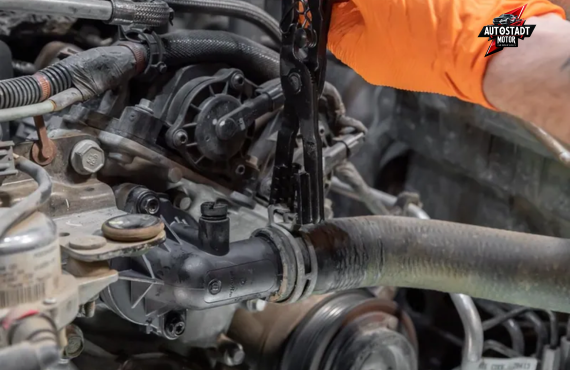
Rather than repeatedly adding coolant and hoping the issue disappears, it is better to address the underlying fault. Early diagnosis can help protect the engine, reduce unexpected breakdowns, and support reliable vehicle performance on Dubai roads.
Signs Your Car Needs Mercury Coolant System Repair
Cooling system problems do not always begin with a dramatic rise in engine temperature. Sometimes, the earliest warning is a small change in coolant level or a minor leak. Recognizing these signs can help you arrange repairs before the situation becomes more serious.
1. Engine Temperature Rises Above Normal
An unusually high temperature reading is one of the clearest indications that your Mercury needs a cooling system inspection.
The problem may involve insufficient coolant, restricted radiator flow, a malfunctioning thermostat, a faulty cooling fan, or a water pump that is not circulating coolant correctly. However, the temperature gauge alone cannot identify the exact cause.
If the engine temperature rises into the danger zone, pull over safely, switch off the engine, and allow it to cool. Do not continue driving in the hope that the temperature will return to normal. Never open a hot radiator cap or coolant reservoir because pressurized coolant can cause serious burns.
2. Coolant Levels Keep Dropping
If you regularly need to top up the coolant reservoir, the system should be checked for leakage or another fault.
Coolant may escape through deteriorated hoses, radiator joints, reservoir connections, water pump seals, or other components. In some cases, a leak becomes noticeable only when the engine is hot and the cooling system is pressurized.
At AutoStadt Motor Services, identifying the source of coolant loss is an important part of determining the correct repair. Simply adding more coolant may provide temporary relief without resolving the underlying problem.
3. Coolant Puddles Under the Vehicle
A coloured or watery fluid beneath the front of your Mercury may indicate a coolant leak, although the appearance of fluid alone is not sufficient to confirm its source.
Check whether the fluid repeatedly appears after parking, particularly following a journey. A mechanic can inspect the radiator, hoses, water pump, reservoir, and related connections to establish where the leak originates.
Even a small leak deserves attention because coolant loss can increase as the vehicle continues to operate.
4. Steam or a Sweet Smell From the Engine Bay
Steam rising from the engine compartment can indicate that coolant is escaping onto hot components or that the engine is overheating. Some coolant formulations also produce a distinctive sweet smell.
If you notice steam, a strong coolant smell, or a sudden temperature increase, stop safely and switch off the engine. Do not touch hot components or attempt to open the cooling system while it is pressurized.
These symptoms should be investigated promptly rather than treated as ordinary effects of Dubai’s hot weather.
5. Heater Performance Changes Unexpectedly
On Mercury models equipped with a conventional cabin heater, a sudden change in heating performance can sometimes indicate low coolant, trapped air, or a circulation problem.
Although cabin heating is not usually a priority during Dubai’s warmer months, changes in heater output can still provide useful diagnostic information. The symptom should be considered alongside coolant level, engine temperature, and any other warning signs.
6. Radiator Fan Runs Abnormally
The radiator fan helps remove heat from the radiator, particularly when the vehicle is moving slowly or standing in traffic.
If the fan fails, operates inconsistently, or does not provide sufficient airflow, the engine may become hotter than normal during stationary driving. Fan motors, relays, wiring, sensors, and control systems may all need consideration during diagnosis.
This is particularly relevant when the temperature rises while waiting at traffic signals but improves once the vehicle starts moving.
7. Coolant Looks Dirty or Contaminated
Coolant that appears rusty, unusually cloudy, or contaminated may indicate corrosion, an incorrect coolant mixture, or a problem elsewhere in the system.
Using incompatible coolant types can also create maintenance concerns. The correct specification should be selected according to the vehicle’s requirements rather than choosing a fluid based only on colour.
A professional inspection can determine whether the coolant needs replacement, whether the system requires cleaning, or whether contamination points to a more serious fault.
Why Choose AutoStadt Motor Services for Mercury Coolant System Repair
Cooling system repairs require more than replacing the first component that appears faulty. Because several parts work together, an accurate diagnosis helps prevent unnecessary expense and recurring overheating.
Detailed Cooling System Diagnosis
AutoStadt Motor Services can inspect the main components involved in engine temperature regulation, including the radiator, coolant reservoir, hoses, water pump, thermostat, radiator fan, and relevant connections.
Where appropriate, pressure testing can help identify leaks that are difficult to see during a visual inspection. Additional checks may be needed if the vehicle continues to overheat despite having sufficient coolant.
This diagnostic approach helps establish whether the issue is caused by coolant loss, restricted circulation, insufficient airflow, or another mechanical fault.
Repair Recommendations Based on the Actual Problem
Not every overheating vehicle needs a new radiator. A damaged hose, faulty thermostat, failing fan, or leaking water pump may produce similar symptoms but require a different repair.
By identifying the cause before recommending replacement parts, the workshop can focus on the components that genuinely need attention.
Suitable Coolant and Correct Procedures
Coolant specifications vary between vehicles, so using the correct product is important. An unsuitable coolant mixture may reduce corrosion protection or create compatibility problems.
The cooling system must also be filled and bled according to the relevant procedure. Trapped air can interfere with circulation and cause temperature fluctuations, making correct refilling an important part of the repair.
Support for Dubai Driving Conditions
Long periods in traffic and high ambient temperatures can expose existing weaknesses in a vehicle’s cooling system.
Regular inspections are particularly useful for older vehicles, vehicles with a history of coolant loss, and cars that have recently undergone cooling system repairs.
Whether you also maintain a Toyota, Nissan, BMW, or Mercedes-Benz, the underlying principle remains the same: cooling system service should follow the specific requirements of the vehicle being inspected.
A Focus on Preventing Further Damage
Ignoring overheating can turn a relatively manageable repair into a much more expensive engine problem.
Depending on the severity and duration of overheating, possible consequences include damage to the cylinder head gasket, cylinder head distortion, and other internal engine damage.
Arranging Mercury coolant system repair when early warning signs appear can help reduce the risk of these outcomes.
How Our Mercury Coolant System Repair Process Works
A structured repair process helps ensure that the source of the fault is identified, the appropriate repair is completed, and the cooling system is checked afterwards.
Step 1: Review the Symptoms
The process begins by establishing what the driver has noticed.
Information about temperature fluctuations, coolant loss, warning lights, steam, unusual smells, or previous repairs can help guide the inspection. The technician may also ask whether overheating occurs mainly in traffic, during longer journeys, or shortly after starting the engine.
These details help narrow down the potential causes.
Step 2: Inspect the Cooling System
The radiator, coolant reservoir, hoses, clamps, water pump area, thermostat housing, and other accessible components are examined for leakage, damage, corrosion, or deterioration.
The cooling fan and its operation may also be checked if airflow appears to be a concern.
This initial inspection provides a clearer picture of the cooling system’s condition.
Step 3: Test for Leaks and Other Faults
If the cause is not immediately visible, additional diagnostic tests may be required.
A cooling system pressure test can help reveal certain leaks. Depending on the symptoms, the technician may also assess thermostat operation, fan controls, coolant circulation, or signs of a more serious internal engine problem.
Testing should be appropriate to the fault rather than automatically replacing components based on assumptions.
Step 4: Identify the Required Repair
Once the cause has been established, the appropriate repair can be planned.
For example, a leaking hose may need replacement, while a damaged radiator could require more extensive work. A thermostat or radiator fan fault requires a different solution from a failing water pump.
If there are signs of internal engine damage, further investigation may be necessary before deciding how to proceed.
Step 5: Repair or Replace the Faulty Component
The confirmed fault is addressed using a repair method appropriate for the vehicle.
Depending on the diagnosis, this may involve replacing a hose, radiator, thermostat, water pump, reservoir, or another cooling system component. Connections and related parts should also be checked to ensure the repair addresses the actual problem.
The correct coolant specification and filling procedure are used when refilling the system.
Step 6: Refill, Bleed, and Check the System
After the repair, the system may need to be filled and bled to remove trapped air, following the manufacturer’s recommended procedure.
The technician then checks relevant operating conditions, including coolant circulation, temperature behaviour, fan operation, and signs of leakage. Additional testing may be required depending on the original complaint.
This final verification helps establish whether the repair has resolved the issue and whether further work is needed.
Preventive Maintenance Tips for Mercury Cooling Systems in Dubai
Preventive maintenance can help identify weaknesses before they result in an unexpected breakdown.
First, check the coolant reservoir periodically when the engine is completely cool and follow the vehicle manufacturer’s instructions. If the level repeatedly falls, arrange an inspection rather than treating regular top-ups as normal maintenance.
Second, pay attention to temperature changes. A gauge that begins rising above its usual position or a warning light that appears should never be ignored.
Third, include the radiator, hoses, fan, and coolant condition in routine servicing. Ageing rubber hoses, damaged connections, and corrosion can develop gradually and may not be obvious during everyday driving.
Finally, use the correct coolant specification and avoid mixing products unless compatibility has been confirmed. If your Mercury has a history of overheating, make sure the original cause has been identified before considering the problem resolved.
Frequently Asked Questions About Mercury Coolant System Repair in Dubai
1. How do I know if my Mercury needs coolant system repair?
Common signs include rising engine temperature, repeated coolant loss, fluid beneath the vehicle, steam from the engine bay, unusual coolant smells, and abnormal radiator fan operation. However, these symptoms can have different causes. A professional inspection can help identify whether the problem involves the radiator, thermostat, water pump, hoses, fan, or another component.
2. Why does my Mercury keep losing coolant without a visible leak?
Some leaks occur only when the engine is hot and the cooling system is pressurized, making them difficult to spot when the vehicle is parked. Other possible causes include leakage around the water pump, reservoir, radiator connections, or an internal engine problem. A pressure test and additional diagnostic checks may be needed to determine where the coolant is going.
3. Can I drive my Mercury if the engine is overheating?
Driving an overheating vehicle can cause serious engine damage. If the temperature enters the danger zone or an overheating warning appears, stop somewhere safe, switch off the engine, and allow it to cool. Never remove the radiator cap while the system is hot. If overheating persists or coolant has been lost, arrange professional assistance rather than continuing the journey.
4. How much does Mercury coolant system repair cost in Dubai?
The cost depends on the source of the fault, the affected component, parts availability, and the amount of labour required. A hose replacement may be relatively straightforward, while radiator, water pump, or internal engine repairs can be more involved. AutoStadt Motor Services can inspect the vehicle and recommend the necessary work based on the actual diagnosis.
5. How often should Mercury coolant be replaced?
The correct coolant replacement interval depends on the vehicle’s model, engine, coolant specification, and maintenance schedule. Follow the manufacturer’s recommendations rather than relying on one universal interval for every vehicle. During routine service, the coolant level and condition should also be checked. If the coolant is contaminated or the vehicle repeatedly loses fluid, the underlying problem should be investigated instead of simply replacing the coolant.
Conclusion
Mercury coolant system repair is essential for maintaining stable engine temperatures and protecting important engine components. Coolant leaks, overheating, radiator problems, water pump faults, thermostat failures, and cooling fan issues can all interfere with normal engine operation.
For Mercury owners in Dubai, early diagnosis is especially valuable because high ambient temperatures and frequent traffic can make an existing cooling problem more noticeable. The right repair depends on identifying the source of the fault rather than repeatedly adding coolant or replacing parts without confirmation.
AutoStadt Motor Services provides cooling system inspection and repair support to help drivers investigate coolant loss, temperature fluctuations, and related engine cooling concerns. By addressing warning signs promptly and following appropriate maintenance procedures, you can reduce the risk of avoidable damage and support more reliable vehicle operation.
If your Mercury is overheating, losing coolant, or showing signs of a cooling system fault, arrange an inspection to determine the appropriate repair before the problem becomes more serious.


Leave a Comment