
Mercedes AC condenser change is an important repair when your vehicle’s air conditioning struggles to cool the cabin, refrigerant leaks develop around the condenser, or the AC system loses efficiency during Dubai’s hot weather. A properly functioning condenser helps your Mercedes maintain comfortable cabin temperatures by releasing heat from the refrigerant as part of the air-conditioning cycle.
Mercedes-Benz vehicles are equipped with sophisticated climate-control systems designed to provide consistent cooling and comfort. However, the condenser is exposed to road debris, dust, insects, moisture, and changing operating conditions. Over time, physical damage, corrosion, restricted airflow, or refrigerant leaks can affect its performance.
In Dubai, a weak AC system can become particularly frustrating during afternoon commutes, traffic congestion, and extended periods of outdoor parking. If the condenser cannot release heat efficiently, the AC may struggle to maintain the desired temperature, even when the fan is running at full speed.
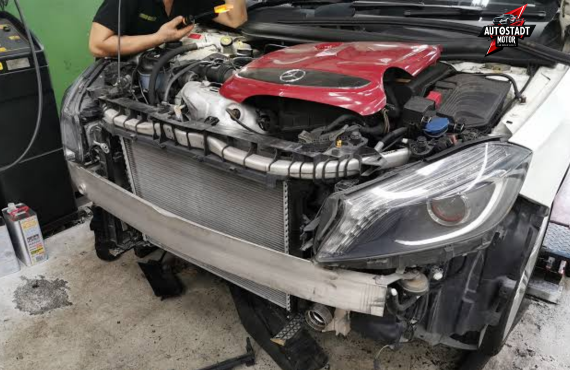
At AutoStadt Motor Services, Mercedes AC condenser replacement begins with identifying the actual cause of the cooling problem. Weak AC performance does not always mean the condenser needs changing. Refrigerant leaks, compressor faults, condenser fan problems, and other AC components can produce similar symptoms. A proper inspection helps determine whether condenser replacement is necessary and prevents avoidable repairs.
Whether you drive a Mercedes-Benz C-Class, E-Class, GLC, GLE, or another model, understanding the warning signs can help you address condenser problems before they affect your daily driving comfort.
Signs Your Car Needs Mercedes AC Condenser Change
A damaged condenser does not always cause immediate AC failure. Sometimes, cooling gradually becomes less effective, while other problems develop more suddenly. Recognizing the following symptoms can help you arrange an inspection at the right time.
1. Mercedes AC Blows Warm Air
One of the most noticeable signs is warm or insufficiently cool air from the vents.
The condenser releases heat from the refrigerant before it returns to the rest of the cooling circuit. If the condenser is leaking or unable to transfer heat effectively, the system may struggle to cool the cabin.
However, warm air can also result from low refrigerant, compressor problems, electrical faults, or insufficient condenser airflow. Therefore, the entire system should be checked before deciding to replace the condenser.
2. Refrigerant Leakage Near the Condenser
The condenser is usually positioned at the front of the vehicle, where it can receive airflow while driving. This location also exposes it to stones, road debris, and other potential sources of damage.
If the condenser develops a crack, puncture, or corroded section, refrigerant may escape. A technician may identify leakage around the condenser body, joints, or connecting pipes during an inspection.
Because refrigerant can escape without producing a visible puddle, the absence of fluid beneath your Mercedes does not rule out an AC leak.
3. AC Cooling Becomes Inconsistent
Your Mercedes may initially produce cold air but gradually become less effective, especially during hot weather or heavy traffic.
A condenser that is restricted by dirt or damaged internally may not release heat as efficiently as intended. Similarly, a cooling fan fault can affect condenser performance when the vehicle is stationary.
Before recommending a Mercedes AC condenser change, a workshop should distinguish between a physically damaged condenser and a component that is simply experiencing poor airflow.
4. AC Performance Drops During Traffic
If your Mercedes cools reasonably well at higher road speeds but struggles while stationary, condenser airflow deserves attention.
When the vehicle is moving, outside air passes through the condenser. At low speeds, the cooling fan becomes particularly important for maintaining airflow.
A faulty fan, blocked condenser fins, or another airflow problem can reduce cooling performance in traffic. Consequently, replacing the condenser without checking the fan may fail to resolve the original complaint.
5. Visible Damage to the Condenser
During an inspection, technicians may find bent fins, impact marks, corrosion, or damage to the condenser core.
Minor external fin damage does not automatically mean the entire condenser must be replaced. However, significant physical damage or a confirmed refrigerant leak may require replacement.
The correct decision depends on the extent of the damage, the component’s condition, and the manufacturer’s repair recommendations.
6. AC Requires Repeated Refrigerant Refills
If your Mercedes repeatedly loses cooling after refrigerant service, the system should be checked for leaks.
The condenser is one possible source, but leaking hoses, seals, service connections, and other components can produce the same problem.
Repeatedly adding refrigerant without finding the cause is not a long-term repair. A proper leak diagnosis helps identify the affected component and determine the next step.
Why Choose AutoStadt Motor Services for Mercedes AC Condenser Change
Replacing a Mercedes AC condenser requires more than removing an old component and installing a new one. The repair should address the original fault, protect the surrounding AC components, and verify that the system operates correctly afterward.
Accurate Condenser Leak Diagnosis
At AutoStadt Motor Services, the first priority is to establish whether the condenser is actually responsible for the problem.
Depending on the symptoms, inspection may include the condenser core, refrigerant connections, hoses, compressor operation, cooling fan, and other relevant components.
Appropriate leak-detection methods can help identify the source of refrigerant loss. This reduces the risk of replacing a condenser when another part is responsible.
Mercedes-Specific Repair Considerations
Different Mercedes-Benz models have different layouts, condenser designs, and climate-control configurations.
For example, the condenser replacement procedure for a C-Class may differ from the procedure required for a GLE or GLC. Access requirements and component specifications can also vary by model year and engine configuration.
A suitable replacement should therefore be selected according to the vehicle’s exact specifications rather than relying on appearance alone.
Quality Replacement Components
When a condenser requires replacement, compatibility is essential.
The replacement part should match the vehicle’s application and meet the relevant fitment and performance requirements. Incorrect parts can create installation difficulties, cooling problems, or unnecessary delays.
AutoStadt Motor Services can assess the vehicle’s requirements and recommend a suitable replacement based on the confirmed fault and available options.
Complete AC System Checks
A condenser problem can sometimes occur alongside another fault. For instance, restricted airflow, a malfunctioning cooling fan, or contamination in the refrigerant circuit may also affect performance.
Checking related components helps establish whether additional work is necessary. It also reduces the likelihood of fitting a new condenser while leaving the original cause of poor cooling unresolved.
Convenient AC Repair for Dubai Drivers
Dubai drivers depend heavily on effective vehicle air conditioning throughout much of the year. Weak cooling can make everyday journeys uncomfortable and disrupt regular commuting.
AutoStadt Motor Services helps Mercedes owners address AC problems through inspection, diagnosis, and appropriate repair recommendations. The goal is to restore dependable cooling rather than offer a temporary improvement that disappears after a short period.
How Our Mercedes AC Condenser Change Process Works
A structured repair process helps ensure that the condenser is replaced correctly and the air-conditioning system is checked before the vehicle returns to regular use.
Step 1: Initial AC Performance Assessment
The process begins with a discussion of the symptoms.
The technician may ask whether the AC blows warm air continuously, becomes weaker in traffic, loses refrigerant, or makes unusual noises. The vehicle’s model, year, and relevant service history can also help guide the inspection.
These details provide a starting point for identifying the likely cause.
Step 2: Inspect the Condenser and Related Components
The condenser and its accessible connections are examined for visible damage, corrosion, contamination, and signs of refrigerant leakage.
The inspection may also include the cooling fan, condenser airflow, refrigerant lines, compressor operation, and other parts that can influence cooling performance.
This step helps determine whether the problem is limited to the condenser or involves another component.
Step 3: Confirm the Refrigerant Leak or Condenser Fault
If a leak is suspected, the appropriate diagnostic method is used to locate it.
The technician must distinguish a leaking condenser from a damaged hose, connection, seal, or another refrigerant-system component. If the condenser is physically intact, poor cooling may require a different repair.
Confirming the fault before proceeding helps avoid unnecessary parts replacement.
Step 4: Recover the Refrigerant Safely
If condenser replacement is required, the refrigerant must be handled using suitable recovery equipment and the correct service procedure.
Refrigerant should not be deliberately released into the atmosphere. The system must be prepared for repair according to applicable safety and environmental requirements.
The correct procedure depends on the vehicle’s AC design and refrigerant specification.
Step 5: Remove and Replace the Condenser
Once the system has been prepared, the affected condenser is removed according to the manufacturer’s service procedure.
Depending on the Mercedes model, accessing the condenser may require removing certain surrounding components or front-end panels. Damaged seals and other single-use parts should be replaced where required.
The replacement condenser must be installed correctly, with appropriate attention to connections, mounting points, and related components.
Step 6: Check the System for Leaks
After installation, the system is checked using an appropriate leak-testing procedure.
Any issues identified during testing must be addressed before the refrigerant circuit is returned to normal operation. The technician should also consider whether the condition of the original condenser indicates possible contamination or another underlying issue.
This step helps confirm that the repair has addressed the leak rather than merely replacing the visible component.
Step 7: Recharge and Test AC Performance
The system is recharged with the correct refrigerant type and specified quantity, following the vehicle manufacturer’s requirements.
The technician then checks cooling performance, airflow, system pressures where appropriate, fan operation, and relevant controls.
Finally, the system is assessed to confirm that the original symptoms have improved and no further issues are evident during testing.
Mercedes AC Condenser Maintenance Tips for Dubai Conditions
Although the condenser cannot prevent every possible failure, sensible maintenance can help preserve AC performance.
First, arrange an inspection if cooling gradually becomes weaker or the system repeatedly requires refrigerant service. Early diagnosis can help identify leaks before they lead to more extensive problems.
Second, keep the front of the vehicle’s cooling system reasonably clear of accumulated debris. Dust, insects, and other material can restrict airflow through the condenser. Cleaning should be performed carefully because condenser fins can bend easily.
Third, do not ignore changes in cooling performance while the vehicle is stationary. A condenser fan or airflow issue may be responsible, and replacing the condenser alone may not solve it.
Finally, follow the maintenance requirements appropriate to your Mercedes model. Other vehicles, such as the Toyota Land Cruiser, Nissan Patrol, BMW 5 Series, and Audi Q7, also rely on effective heat exchange for AC operation, but their components and repair procedures are not necessarily interchangeable.
Regular attention to these details can help identify developing problems and maintain a comfortable cabin.
Frequently Asked Questions About Mercedes AC Condenser Change in Dubai
1. When does a Mercedes need an AC condenser change?
A Mercedes may need condenser replacement when the condenser is physically damaged, has a confirmed refrigerant leak, or cannot perform adequately because of an internal fault that cannot be appropriately repaired. Weak cooling alone is not enough to confirm that replacement is necessary. A technician should inspect the condenser and related components to identify the actual cause before recommending a new part.
2. How much does Mercedes AC condenser replacement cost in Dubai?
The cost depends on the Mercedes model, condenser type, replacement-part choice, labour requirements, and condition of the surrounding components. Some models provide easier access, while others require additional disassembly. The repair may also involve replacement seals, refrigerant recovery and recharge, or additional leak-related work. An inspection and vehicle-specific quotation provide a more reliable estimate than a single price for every Mercedes.
3. Can I drive my Mercedes if the AC condenser is leaking?
If the only confirmed symptom is an AC refrigerant leak, the immediate effect may be reduced or lost cooling rather than a direct change in steering or braking. Nevertheless, the leak should be assessed promptly, and refrigerant should not be repeatedly added without identifying the cause. If the vehicle also shows engine overheating, unusual mechanical noises, warning lights, or other serious symptoms, stop driving when safe and arrange professional assistance.
4. Is Mercedes AC condenser replacement the same as an AC gas refill?
No. An AC gas refill or refrigerant recharge restores the specified refrigerant quantity when appropriate, while condenser replacement addresses a damaged or faulty condenser. If the condenser is leaking, recharging the system without repairing the leak is unlikely to provide a lasting solution. The correct approach is to identify the fault, repair it, test the system, and then recharge it according to the manufacturer’s specifications.
5. How long does a Mercedes AC condenser change take?
Repair time varies according to the Mercedes model, condenser accessibility, condition of the surrounding components, and whether additional faults are discovered. Some replacements are relatively straightforward, while others require more extensive disassembly and testing. Refrigerant recovery, installation, leak checks, and final performance testing must also be considered. AutoStadt Motor Services can provide a more realistic timeframe after inspecting the vehicle and confirming the required work.
Conclusion
Mercedes AC condenser change can be necessary when a damaged or leaking condenser prevents the air-conditioning system from delivering reliable cooling. In Dubai, where effective AC performance is essential for comfortable daily driving, ignoring weak cooling or repeated refrigerant loss can leave the underlying problem unresolved.
However, condenser replacement should only be recommended after proper diagnosis. A faulty fan, damaged refrigerant line, compressor issue, or another AC component may cause similar symptoms. Identifying the actual fault helps prevent unnecessary expenses and improves the chances of a successful repair.
AutoStadt Motor Services provides professional Mercedes AC inspection and repair support for Dubai car owners, including condenser-related diagnosis and replacement when required.
If your Mercedes is blowing warm air, losing refrigerant, or struggling to cool the cabin in traffic, arrange an AC inspection to determine whether the condenser needs replacement. Addressing the issue promptly can help restore cooling performance and keep your vehicle comfortable throughout Dubai’s demanding driving conditions.


Leave a Comment