
Opel AC compressor change is an important repair when your vehicle’s air conditioning system can no longer produce consistent cooling because the compressor has become damaged, seized, or mechanically worn. The compressor is one of the main components of the automotive AC system because it circulates refrigerant between the compressor, condenser, expansion device, and evaporator.
For drivers in Dubai, a properly functioning AC system is not simply a comfort feature. Long journeys, heavy traffic, and high outside temperatures can make a weak air conditioner extremely difficult to tolerate. When the compressor starts failing, the problem can also affect other AC components if it is ignored for too long.
At AutoStadt Motor Services, Opel owners can receive professional AC inspection, compressor diagnosis, replacement, refrigerant-related services, and complete system testing. Instead of replacing parts based only on symptoms, technicians can inspect the AC system to determine whether the compressor itself is responsible for the problem.
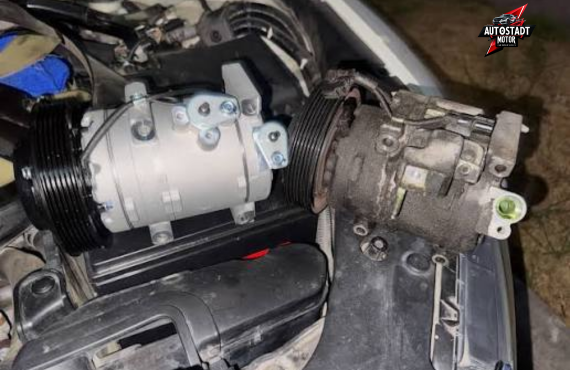
Different Opel models can use different compressor designs and AC configurations. Therefore, the correct replacement should be selected according to the vehicle’s model, engine, production year, and existing AC system.
Signs Your Car Needs Opel AC Compressor Change
An AC compressor does not always fail suddenly. In many cases, drivers notice smaller warning signs before the system stops cooling completely. Recognizing these symptoms early can help prevent additional repairs.
1. AC Blows Warm or Weakly Cool Air
One of the most obvious symptoms is warm air coming from the vents even when the AC is switched to its coldest setting.
A refrigerant problem, blocked condenser, faulty expansion valve, or electrical issue can also produce similar symptoms. However, if the system has been properly charged and other components are functioning, compressor failure becomes a strong possibility.
An Opel AC specialist should therefore perform pressure and system checks before recommending compressor replacement.
2. Unusual Noise When AC Is Turned On
Listen carefully when switching the AC on and off. A healthy compressor should operate without severe grinding, rattling, knocking, or screeching sounds.
A damaged compressor bearing, clutch, pulley, or internal component can create noticeable noise. If the noise appears specifically when the AC engages, professional inspection is advisable.
Continuing to operate a compressor that is mechanically failing can sometimes send contaminated material through the AC circuit, potentially increasing the repair requirements.
3. AC Works Intermittently
Does your Opel produce cold air for a few minutes and then become warm?
Intermittent cooling can have several causes, including compressor clutch problems, electrical faults, incorrect refrigerant pressure, temperature sensors, or compressor wear.
Because the symptom has multiple possible causes, replacing the compressor immediately may not be the correct approach. AutoStadt Motor Services can diagnose the system first and determine whether the compressor is actually responsible.
4. Compressor Clutch Does Not Engage
On compressor systems that use an electromagnetic clutch, the clutch should engage when the AC is activated under appropriate operating conditions.
If the clutch does not engage, the cause could be:
- Compressor clutch failure
- Low refrigerant pressure
- Electrical wiring problems
- Faulty relay or fuse
- Pressure sensor issue
- Control module problem
- Internal compressor damage
Therefore, a technician should test the complete AC control circuit rather than assuming that the compressor needs replacement.
5. Refrigerant Keeps Losing Pressure
Frequent refrigerant loss is another warning sign that should not be ignored.
However, low refrigerant does not automatically mean the compressor is defective. A leak could exist in an AC hose, condenser, evaporator, service port, or connection.
If the compressor is replaced without repairing the underlying leak, the new component may not solve the cooling problem.
6. Visible Oil or Refrigerant Residue
Automotive AC systems use refrigerant together with compressor oil. A technician may find oily residue around a leaking connection, hose, compressor seal, or other component.
A detailed inspection can help identify whether the compressor housing or its connections are leaking.
7. AC Performance Changes With Engine RPM
If cooling performance changes significantly as engine speed increases or decreases, the compressor and its drive system may require inspection.
This symptom can also be connected with belt condition, compressor efficiency, refrigerant charge, or other system faults. Proper diagnosis is therefore essential before carrying out an Opel AC compressor change.
Why Choose AutoStadt Motor Services for Opel AC Compressor Change?
Choosing the right workshop is important because replacing an AC compressor involves more than removing an old component and installing another one.
At AutoStadt Motor Services, the focus is on identifying the actual cause of the AC problem before carrying out major repairs.
Accurate AC System Diagnosis
A professional diagnosis can include visual inspection, pressure testing, compressor operation checks, electrical testing, and examination of related AC components.
This approach helps prevent unnecessary parts replacement.
Correct Compressor Selection
Opel vehicles can have different compressor specifications depending on model and engine configuration. A replacement compressor should match the vehicle’s requirements rather than being selected only because it physically fits.
This is particularly important when sourcing replacement parts for older Opel vehicles.
Inspection of Related Components
A compressor does not work alone. The AC system also includes components such as:
- AC condenser
- Evaporator
- Expansion valve
- Receiver-drier or accumulator
- Refrigerant lines
- Compressor clutch
- Pressure sensors
- Drive belt
- Electrical controls
If another component caused the original compressor failure, identifying that issue can protect the replacement compressor from premature damage.
Refrigerant and Lubrication Service
Correct refrigerant quantity and compressor oil are important for reliable AC operation. Overcharging, undercharging, or using incorrect oil can negatively affect system performance.
AutoStadt Motor Services can check the system requirements and carry out the necessary AC service as part of the repair.
Experience With Different European Vehicles
Dubai workshops regularly handle a wide range of European and luxury vehicles. The diagnostic approach used for an Opel can also be useful when working with vehicles such as BMW, Mercedes-Benz, Audi, and Volkswagen.
However, every vehicle still requires model-specific procedures and specifications.
Suitable for Dubai Driving Conditions
An AC system in Dubai often operates for extended periods. That means compressor reliability and proper refrigerant circulation are particularly important.
A professionally installed compressor, combined with correct system servicing, can help restore dependable cabin cooling for everyday driving.
How Our Opel AC Compressor Change Process Works
Step 1: Initial AC Inspection
The process begins with an assessment of the AC complaint. The technician checks whether the system produces cold air, whether the compressor engages, and whether abnormal noises are present.
The vehicle’s AC history can also provide useful clues. For example, a compressor that recently became noisy after months of declining cooling may require a different diagnostic approach from a system that suddenly stopped working.
Step 2: Refrigerant and Pressure Testing
AC pressures are checked to determine whether the system is operating within an appropriate range.
This step can reveal potential refrigerant-related problems and helps separate compressor issues from simple low-charge conditions.
Step 3: Electrical and Compressor Testing
The compressor’s electrical supply, clutch operation where applicable, wiring, fuses, relays, and control signals can be examined.
If the compressor receives the required commands but does not operate correctly, mechanical failure becomes more likely.
Step 4: Inspecting for Leaks and Contamination
Before installing a replacement compressor, technicians should check the system for refrigerant leaks and signs of contamination.
If the old compressor suffered internal failure, debris or contaminated lubricant may have entered the AC circuit. Depending on the condition, additional system cleaning or component replacement may be necessary.
Step 5: Removing the Failed Compressor
Once compressor failure has been confirmed, the damaged unit can be removed carefully.
The technician also inspects connected hoses, fittings, mounting points, drive components, and related parts during the removal process.
Step 6: Installing the Replacement Compressor
The correct replacement compressor is installed according to the vehicle’s specifications.
Attention should also be given to compressor oil quantity, connection seals, belt alignment, and electrical connections.
Step 7: Vacuum and Refrigerant Service
After installation, the AC system may require evacuation to remove unwanted air and moisture before the correct refrigerant charge is introduced.
This stage is important because moisture and incorrect refrigerant levels can affect cooling performance and compressor operation.
Step 8: Complete Performance Testing
The final stage is testing the repaired AC system.
Technicians can monitor vent temperature, pressure readings, compressor engagement, cooling consistency, and unusual sounds. The objective is to confirm that the entire system is functioning correctly rather than simply confirming that the new compressor turns on.
Frequently Asked Questions About Opel AC Compressor Change in Dubai
1. How much does an Opel AC compressor change cost in Dubai?
The cost depends on the Opel model, compressor type, replacement part, labor requirements, refrigerant service, and whether other AC components need attention.
For example, replacing a compressor on an older Opel may involve a different parts cost than servicing a newer model with a more complex AC configuration. If the system also requires leak repair, flushing, a receiver-drier, expansion valve, or other components, the total repair price can increase.
For an accurate estimate, AutoStadt Motor Services should inspect the vehicle and identify the exact compressor and repair requirements.
2. How do I know whether the compressor or refrigerant is the problem?
Warm air alone cannot confirm compressor failure.
Low refrigerant, a refrigerant leak, faulty pressure sensor, electrical problem, blocked condenser, expansion valve issue, and compressor failure can all produce poor cooling.
A proper AC diagnosis uses system pressures, compressor operation, electrical checks, and inspection of related components. This is why professional testing is preferable to simply adding refrigerant whenever the AC becomes weak.
3. Can I drive my Opel with a bad AC compressor?
You may be able to drive the vehicle, but the situation depends on the type of compressor failure.
If the compressor has seized or its pulley, clutch, or bearing is creating severe noise, continuing to drive can potentially create additional mechanical problems, particularly on belt-driven systems.
If you notice grinding noises, belt problems, burning smells, or sudden mechanical symptoms, it is better to have the vehicle inspected promptly instead of continuing normal use.
4. How long does an Opel AC compressor replacement take?
The time required depends on the specific Opel model and the condition of the AC system.
A straightforward compressor replacement may be completed within a service appointment, while a contaminated system, refrigerant leak, damaged condenser, or additional AC fault can extend the repair.
The technician may also need additional time for vacuuming, refrigerant charging, leak checks, and final performance testing. A proper repair should prioritize correct installation and testing rather than rushing the job.
5. Should I replace the AC compressor or repair it?
It depends on the type and severity of the failure.
Some compressor-related problems, such as certain clutch or electrical issues, may not require complete compressor replacement. On the other hand, serious internal mechanical damage can make replacement a more practical solution.
A professional inspection can determine whether repair, replacement, or another AC service is appropriate. AutoStadt Motor Services can assess the condition of the compressor and the rest of the cooling system before recommending the next step.
Conclusion
A reliable air conditioning system is essential for comfortable driving in Dubai, and Opel AC compressor change can become necessary when the compressor suffers internal wear, mechanical damage, clutch problems, or other serious faults.
However, replacing the compressor should not be based solely on warm air or unusual AC behavior. Refrigerant leaks, electrical faults, condenser problems, pressure issues, and expansion valve failures can create similar symptoms. Accurate diagnosis is therefore the first step toward an effective repair.
AutoStadt Motor Services provides professional Opel AC diagnostics, compressor replacement, refrigerant service, leak inspection, and complete cooling-system testing for Dubai drivers. By checking the underlying cause and testing the repaired system afterward, the goal is to restore dependable AC performance rather than provide a temporary fix.
If your Opel is blowing warm air, making unusual AC noises, or struggling to maintain consistent cooling, arranging an inspection early can help prevent a relatively manageable AC issue from developing into a more extensive repair.


Leave a Comment