
Renault Radiator Repair is an important service for Dubai drivers because the radiator plays a central role in keeping the engine at a safe operating temperature. In the UAE climate, where summer temperatures can become extremely high, a properly functioning cooling system is essential for reliable daily driving. A damaged radiator, coolant leak, blocked passage, faulty fan, or weak cooling system can quickly turn a minor issue into serious engine damage.
Renault vehicles are designed with efficient cooling systems, but components can still wear out because of age, road conditions, heat exposure, poor-quality coolant, corrosion, or neglected maintenance. Whether you drive a Renault Duster, Koleos, Megane, Captur, or another model, radiator problems should not be ignored.
When your Renault starts showing signs of overheating or losing coolant, professional diagnosis is the safest approach. AutoStadt Motor Services provides Renault radiator repair and cooling system services for Dubai car owners, helping identify the actual cause of the problem before unnecessary parts are replaced.
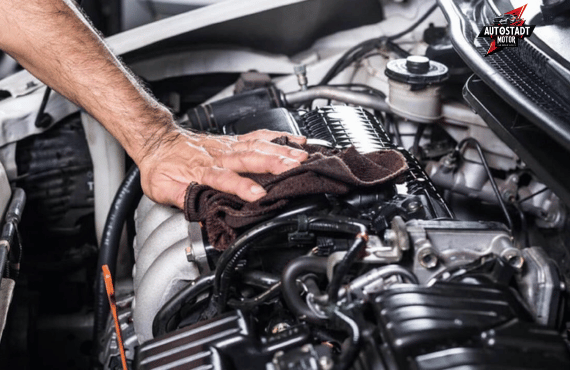
A radiator does more than simply hold coolant. It works with the water pump, thermostat, radiator fan, hoses, expansion tank, and engine cooling passages to control temperature. Therefore, proper diagnosis is essential. For example, replacing a radiator will not solve an overheating problem if the real cause is a failed thermostat or malfunctioning cooling fan.
Signs Your Car Needs Renault Radiator Repair
Recognizing cooling-system problems early can save you from expensive engine repairs. While some radiator failures are obvious, others develop gradually. Paying attention to changes in your Renault’s temperature, coolant level, and driving behavior can help you arrange Renault Radiator Repair before the problem becomes severe.
1. Engine Temperature Is Rising
One of the clearest warning signs is an engine temperature gauge that consistently runs higher than normal. If the temperature rises during traffic, especially when the air conditioning is operating, the radiator or another cooling-system component may not be working correctly.
Dubai’s stop-and-go traffic can place additional demand on the cooling system. A healthy radiator should continue transferring heat away from the engine even when the vehicle is stationary.
2. Coolant Leaks Under the Vehicle
Finding green, pink, yellow, orange, or another-colored liquid underneath your Renault can indicate a coolant leak. The exact color depends on the coolant used, so the appearance alone should not be used for diagnosis.
A radiator can develop leaks around its tanks, seams, connections, or core. Hoses and clamps can also leak, creating symptoms that may initially look like a radiator problem.
If coolant is disappearing repeatedly, do not simply keep topping up the reservoir. The source of the loss should be identified and repaired.
3. Frequent Coolant Top-Ups
A properly maintained cooling system should not require frequent coolant refilling. If you repeatedly add coolant but cannot see an obvious leak, there may be a hidden leak, pressure-related issue, damaged radiator, faulty expansion tank, or another cooling-system problem.
Ignoring this symptom can eventually leave the engine with insufficient coolant and increase the risk of overheating.
4. Steam or Excessive Heat From the Engine Bay
Steam coming from under the bonnet is a serious warning sign. It can occur when coolant reaches extremely high temperatures or escapes onto hot engine components.
If this happens, stop driving as soon as it is safe and allow the vehicle to cool. Opening a hot cooling system can be dangerous because pressurized coolant may cause severe burns. Professional inspection should follow before the vehicle returns to normal use.
5. Weak Air Conditioning or Unusual Cooling Fan Behavior
Although the air conditioning system and engine cooling system are different, they share components and operate in the same hot environment. A cooling fan problem can contribute to overheating and may also affect air conditioning performance when the vehicle is stationary.
If the radiator fan runs continuously, does not activate when required, or produces unusual noises, the complete cooling system should be checked.
6. Low Coolant Warning
Some Renault models use warning systems to alert drivers when coolant levels or engine temperatures become abnormal. Never ignore these warnings simply because the vehicle still appears to drive normally.
A warning light can be the first indication of a developing cooling-system problem. Prompt Renault Radiator Repair can prevent a small fault from becoming an engine-threatening failure.
7. Visible Corrosion or Radiator Damage
Road debris, corrosion, age, and repeated thermal cycles can damage radiator components. During an inspection, technicians may find bent fins, damaged sections, corrosion around connections, or evidence of previous repairs.
Even if the vehicle is not currently overheating, visible radiator damage deserves professional evaluation.
Why Choose AutoStadt Motor Services for Renault Radiator Repair
Choosing the right workshop matters because overheating can have several different causes. At AutoStadt Motor Services, the goal is not simply to replace a radiator whenever a Renault experiences a cooling problem. Instead, the vehicle should be properly inspected to determine whether repair, component replacement, flushing, or another cooling-system service is appropriate.
Renault-Focused Cooling System Diagnosis
A radiator issue can be connected to several components. Technicians may inspect the radiator, hoses, thermostat, cooling fan, water pump, expansion tank, coolant level, and other relevant components.
This diagnostic approach helps reduce the risk of replacing an expensive component that is not actually responsible for the fault.
Professional Leak Inspection
Small coolant leaks can be difficult to locate because coolant may evaporate when it reaches hot surfaces. A detailed inspection can help identify leaks around radiator connections, hoses, tanks, and other cooling-system components.
Finding the source of the leak is particularly important in Dubai because high ambient temperatures can make an existing cooling problem worse.
Quality Repair Approach
A radiator repair should be performed according to the condition of the component. In some cases, a connection, hose, clamp, or related component may be responsible. In other situations, the radiator itself may require replacement.
AutoStadt Motor Services can assess the condition of the cooling system and recommend the most suitable solution rather than relying on guesswork.
Dubai Climate Awareness
Extreme heat places significant stress on automotive cooling systems. A vehicle that performs adequately in a cooler climate can expose weaknesses when driven through Dubai’s hot weather and congested roads.
This is why cooling-system maintenance should be considered part of responsible vehicle ownership, particularly for older Renault vehicles.
Experience Across Multiple Vehicle Brands
Although the focus here is Renault Radiator Repair, modern automotive workshops regularly encounter cooling-system problems across different manufacturers. Vehicles such as the Toyota Land Cruiser, Nissan Patrol, BMW 3 Series, and Mercedes-Benz C-Class all depend on effective coolant circulation and heat management.
The exact system design differs between brands, but the underlying principle remains the same: excessive engine heat must be transferred away efficiently.
How Our Renault Radiator Repair Process Works
A professional repair process should begin with diagnosis rather than immediate parts replacement. At AutoStadt Motor Services, the cooling system can be evaluated systematically to determine the source of the problem.
1. Initial Vehicle Inspection
The process starts by discussing the symptoms with the vehicle owner. Information such as overheating frequency, coolant loss, warning lights, unusual smells, and previous repairs can provide valuable diagnostic clues.
The technician then performs a visual inspection of the engine bay and cooling-system components.
2. Radiator and Coolant System Examination
The radiator is checked for visible damage, leaks, corrosion, blocked areas, and damaged fins. Hoses, clamps, connections, and the expansion reservoir are also inspected.
The coolant condition and level can provide additional information about the health of the system.
3. Leak and Pressure Diagnosis
Where appropriate, the system can be checked for signs of pressure loss. This helps identify leaks that may not be immediately visible during a basic inspection.
A hidden leak should never be ignored because coolant loss can eventually result in overheating.
4. Cooling Fan and Thermostat Checks
The radiator cannot perform properly if supporting components are malfunctioning. The cooling fan, thermostat, water circulation, and related controls may therefore be examined.
For example, a thermostat stuck in the wrong position can restrict coolant circulation and cause the engine to run too hot.
5. Repair or Replacement Recommendation
Once the cause is identified, the technician can explain the required repair. Depending on the condition, the solution could involve repairing a leak, replacing a hose or clamp, flushing contaminated coolant, repairing a cooling component, or replacing the radiator.
This approach gives the vehicle owner a clearer understanding of what needs to be done and why.
6. Cooling System Testing
After the repair, the cooling system should be checked again to ensure that the original issue has been addressed. Coolant levels, temperature behavior, leaks, and relevant components should be verified before the vehicle is considered ready.
This final stage is particularly important for Dubai driving, where cooling performance can be heavily tested by high temperatures and traffic congestion.
Frequently Asked Questions About Renault Radiator Repair in Dubai
1. How much does Renault Radiator Repair cost in Dubai?
The cost depends on the actual cause of the cooling-system problem. A simple hose or clamp replacement can cost considerably less than replacing a complete radiator. The Renault model, radiator condition, required parts, labor, coolant, and extent of the damage can all affect the final price.
For that reason, it is better to diagnose the vehicle first rather than relying on a general price estimate. AutoStadt Motor Services can inspect the Renault and determine whether the radiator needs repair, replacement, or whether another component is causing the symptoms.
2. How do I know if my Renault radiator needs replacement instead of repair?
Not every radiator problem requires complete replacement. Minor issues involving connections or related components may be repairable. However, severe corrosion, extensive damage, repeated leakage, or significant deterioration of the radiator core may make replacement the more reliable option.
A professional inspection can determine whether repairing the existing radiator is practical or whether installing a replacement is the better long-term solution.
3. Can I drive my Renault if it is overheating?
Driving an overheating Renault is generally not advisable. Continued driving while the engine temperature is excessively high can cause serious damage to components such as the head gasket, cylinder head, or other engine parts.
If your temperature warning appears or the gauge reaches an abnormal level, safely stop the vehicle and arrange professional assistance. Allow the engine to cool before any inspection of the coolant system. Never remove a pressurized radiator or coolant-system cap while the engine is hot.
4. How often should a Renault cooling system be checked in Dubai?
There is no single inspection interval that applies equally to every Renault because vehicle age, model, mileage, driving conditions, and maintenance history all matter. However, regular cooling-system inspections are particularly valuable in Dubai because vehicles experience high ambient temperatures and frequent traffic congestion.
During routine servicing, owners should pay attention to coolant condition, radiator condition, hoses, fan operation, and signs of leakage. Early detection is usually less expensive than dealing with an overheating-related engine failure.
5. Why is Renault Radiator Repair especially important during Dubai summers?
Dubai’s extreme summer temperatures can place considerable stress on an engine cooling system. When outside temperatures are already high, the cooling system has to work harder to remove heat from the engine.
Traffic congestion can increase the challenge because the vehicle may spend long periods moving slowly or standing still while the engine and air conditioning continue operating.
Consequently, a weak radiator, failing fan, restricted coolant flow, or small leak can become much more noticeable during summer. Arranging Renault Radiator Repair at the first sign of trouble can help protect the engine and maintain dependable vehicle performance.
Conclusion
Renault Radiator Repair should never be treated as an optional service when your vehicle is showing signs of coolant loss, overheating, steam, unusual temperature behavior, or radiator damage. In Dubai, maintaining an effective cooling system is particularly important because extreme heat and heavy traffic can place additional demands on the vehicle.
A radiator problem can originate from the radiator itself, but it can also be connected to the thermostat, cooling fan, water pump, hoses, expansion tank, or another component. Therefore, accurate diagnosis is the foundation of an effective repair.
AutoStadt Motor Services provides professional automotive repair and cooling-system inspection for Dubai car owners who want their Renault vehicles maintained properly. From identifying coolant leaks to evaluating radiator condition and checking supporting components, a systematic approach can help prevent unnecessary repairs and reduce the risk of costly engine damage.
If your Renault is overheating, losing coolant, or showing any warning signs of a cooling-system problem, arranging an inspection early is a smart decision. A properly maintained radiator and cooling system can help your Renault handle Dubai’s demanding driving conditions with greater reliability, efficiency, and confidence.


Leave a Comment