
Mercury body repair near me is a useful search for Dubai drivers who need professional help restoring their vehicle after an accident, parking damage, scratches, dents, or deterioration of exterior panels. Although Mercury vehicles are no longer produced, many remain on the road, and maintaining their bodywork can help preserve their appearance, functionality, and value.
Mercury vehicles, including the Grand Marquis, Milan, Mountaineer, Mariner, and Sable, have different body designs and repair requirements. The correct repair method depends on the vehicle’s model, age, the location of the damage, and the condition of its panels, paintwork, and structural components. For example, a shallow parking dent may require paintless dent removal, while a damaged bumper or creased door panel may need conventional bodywork and refinishing.
Dubai’s driving environment presents several challenges for vehicle exteriors. Busy roads, crowded parking areas, construction dust, occasional sand exposure, and intense sunlight can affect a car’s appearance over time. Furthermore, scratches that expose bare metal may eventually develop corrosion if they are not treated appropriately.
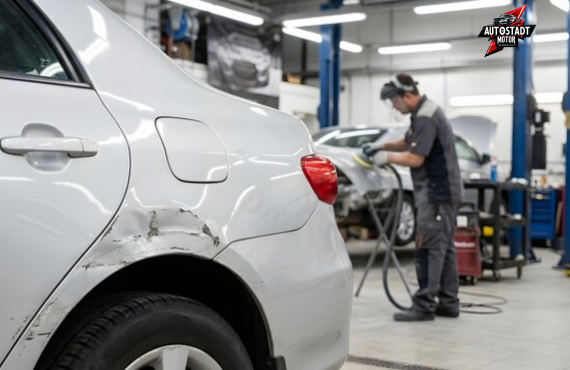
At AutoStadt Motor Services, the focus is on assessing body damage, recommending suitable repair methods, and helping vehicle owners restore their cars to a clean, presentable condition. Whether your Mercury has minor cosmetic damage or requires more extensive accident repair, a professional inspection can help determine the work needed before repairs begin.
Signs Your Car Needs Mercury Body Repair Near Me
Body damage is not always limited to obvious dents or broken panels. Sometimes, small changes in alignment, paint condition, or the way a door closes indicate that a vehicle needs closer attention.
1. Dents From Parking or Minor Collisions
Small dents can occur when another vehicle’s door strikes your car, a trolley hits a panel, or the bumper makes contact with an obstacle. Even a low-speed impact can leave visible damage on a Mercury’s doors, bonnet, boot lid, or rear quarter panels.
A shallow dent may be suitable for paintless dent repair if the paint remains intact and the panel can be accessed correctly. However, sharp creases, stretched metal, or damage near panel edges may require conventional panel beating.
Getting the damage assessed early helps establish whether a straightforward repair is possible or whether additional refinishing will be necessary.
2. Scratched, Faded, or Peeling Paint
Paint damage affects more than appearance. Deep scratches can expose the underlying primer or metal, while peeling clear coat can make an otherwise well-maintained vehicle look neglected.
Dubai’s strong sunlight can accelerate deterioration of exposed exterior finishes, especially when a vehicle spends long periods parked outdoors. Regular washing helps remove dust and contaminants, but it cannot correct damaged paint.
Professional automotive paint repair may involve surface preparation, localized refinishing, or repainting an entire panel. The appropriate option depends on the depth and extent of the damage.
3. Cracked or Misaligned Bumpers
A bumper may crack, become loose, or sit unevenly after a parking impact. Sometimes, the exterior damage appears minor while mounting brackets or supporting components underneath have also been affected.
For a Mercury Grand Marquis or Milan, the correct approach depends on the bumper design and the availability of suitable replacement components.
A technician should inspect the mounting points and surrounding panels before deciding whether the bumper can be repaired or needs replacement. This helps prevent recurring alignment problems after the repair.
4. Doors, Bonnet, or Boot Lid Do Not Close Properly
Body panels should align consistently and open or close without unusual resistance. If a door begins rubbing against another panel, the bonnet sits unevenly, or the boot lid appears misaligned, the vehicle may have damaged hinges, mounting points, or panel alignment.
These symptoms can follow an accident, even when the visible paint damage is limited.
Because correct panel alignment affects both appearance and practical operation, the underlying cause should be identified rather than simply adjusting the panel without checking for other damage.
5. Rust or Damaged Metal Panels
Mercury owners may encounter corrosion on older vehicles, particularly where paint has been chipped, previous repairs have deteriorated, or moisture has remained around damaged areas.
Rust should be assessed according to its location and severity. Surface corrosion may be treatable through appropriate preparation and refinishing, whereas advanced corrosion can compromise the strength of a panel.
If corrosion affects structural or load-bearing areas, the repair requires particular care. Covering rust with fresh paint without treating the underlying damage is not a durable solution.
6. Visible Damage After an Accident
A collision can affect several components at once. Besides dents and scratches, it may cause panel gaps, damaged headlights, broken brackets, or changes in the alignment of exterior parts.
Even if a Mercury remains drivable after an impact, that does not confirm that every affected component is safe or correctly aligned.
A proper post-accident inspection helps identify visible and hidden damage before the vehicle returns to normal use.
Why Choose AutoStadt Motor Services for Mercury Body Repair Near Me
Finding a workshop is only the first step. The quality of the assessment, repair planning, material selection, and finishing work all influence the final result.
Careful Assessment of Older Mercury Models
Since Mercury production ended in 2011, repairing these vehicles can involve additional considerations, particularly when specific panels, trim pieces, or model-related components are difficult to source.
AutoStadt Motor Services can assess the vehicle’s condition and help determine the practical repair options. Where replacement parts are needed, availability should be confirmed before the repair plan and timeline are finalized.
The goal is to choose a solution suited to the vehicle rather than assuming that every damaged component can be replaced immediately.
Repair Methods Matched to the Damage
Different types of body damage require different techniques. A small dent, a cracked plastic bumper, and a deeply scratched metal door cannot necessarily be repaired using the same method.
Depending on the condition of the vehicle, the work may involve dent removal, panel beating, bumper repair, panel replacement, surface preparation, or automotive painting.
Matching the technique to the damage helps avoid unnecessary work and supports a more consistent finish.
Attention to Paint Matching
A successful paint repair should blend naturally with the surrounding bodywork. However, matching an older vehicle’s paint can be challenging because the original finish may have faded or changed over time.
Factors such as the paint code, existing paint condition, lighting, and application technique can influence the final appearance.
Professional preparation and appropriate colour matching are therefore important when repairing scratches, repainting panels, or restoring accident-damaged areas.
Support for Different Vehicle Types
Body repair techniques vary between manufacturers and models. A Mercury Mountaineer, for example, has different body dimensions and exterior components from a Toyota Land Cruiser, Nissan Patrol, BMW 5 Series, or Mercedes-Benz E-Class.
The correct repair process should consider the vehicle’s construction and the specific components affected. For newer vehicles, technicians must also account for sensors, cameras, and driver-assistance equipment that may be integrated into bumpers or surrounding panels.
Clear Repair Recommendations
Before work begins, vehicle owners should understand the extent of the damage, the proposed repair method, and any parts that may need replacement.
AutoStadt Motor Services can assess the bodywork and recommend the next steps according to the vehicle’s condition. This makes it easier to distinguish essential repairs from cosmetic improvements that can be considered separately.
How Our Mercury Body Repair Near Me Process Works
A structured repair process helps ensure that visible damage is not treated in isolation. Each stage contributes to a more reliable result and makes it easier to identify additional work before the vehicle is returned.
Step 1: Initial Vehicle Inspection
The process begins with an assessment of the affected areas. The technician examines dents, scratches, paint damage, cracked components, and visible panel misalignment.
The vehicle owner can explain how the damage occurred and identify any concerns, such as a door that no longer closes correctly or a bumper that has become loose.
If the damage resulted from an accident, the inspection may need to extend beyond the most obvious impact area.
Step 2: Determine the Extent of Damage
After the initial assessment, the affected panels and components are examined more closely.
A dent may have damaged only the outer surface, or it may have affected a supporting bracket underneath. Similarly, a cracked bumper may have concealed damage to its mounts or nearby components.
Where necessary, additional inspection or removal of certain parts may be required to understand the full extent of the damage.
Step 3: Select the Appropriate Repair Method
Once the damage is understood, the suitable repair method can be selected.
Minor dents with intact paint may qualify for paintless dent removal. More severe panel damage may require reshaping, filling, sanding, and repainting. Cracked or badly deformed components may need replacement, depending on their material and condition.
For older Mercury models, the availability and suitability of replacement parts should also be considered when planning the work.
Step 4: Carry Out Panel and Surface Repairs
The required bodywork is then performed. Depending on the damage, this can include straightening panels, repairing suitable plastic components, replacing damaged parts, or preparing surfaces for refinishing.
Proper preparation matters because paint applied over an uneven or poorly prepared surface may not produce a satisfactory result.
The repair should restore the panel’s shape as closely as practical while addressing any underlying damage that could affect durability.
Step 5: Paint Refinishing and Colour Matching
Where repainting is required, the surface is prepared before the selected paint system is applied.
Colour matching and blending may be necessary to reduce visible differences between the repaired panel and the original finish. The amount of blending required depends on the colour, panel location, existing paint condition, and repair scope.
The objective is to achieve a consistent finish while protecting the repaired surface.
Step 6: Final Quality Inspection
Once the repair is complete, the affected areas should be checked for panel alignment, paint consistency, secure fittings, and overall appearance.
If doors, bonnet panels, or the boot lid were involved, their operation should also be checked. After accident repairs, any relevant safety components should be inspected according to the damage and the manufacturer’s requirements.
This final stage helps confirm that the work addresses the original complaint rather than merely improving the vehicle’s appearance.
Mercury Body Repair and Long-Term Exterior Maintenance
After body repair, a few practical habits can help preserve the results.
Whenever possible, park in shaded or covered areas to reduce prolonged exposure to direct sunlight. Wash the vehicle regularly to remove dust and contaminants, using suitable automotive cleaning products rather than abrasive materials that may damage the paint.
Inspect the bodywork periodically for fresh scratches, stone chips, loose trim, and signs of corrosion. Small paint defects are generally easier to address before they spread or expose a larger area of the underlying surface.
If your Mercury has recently been repaired, follow the workshop’s instructions concerning washing, polishing, or applying protective products. Paint systems and refinishing methods can have different care requirements.
It is also sensible to keep repair records, particularly for older vehicles. Documentation of previous bodywork, replaced components, and paint repairs can help future technicians understand the vehicle’s history.
Frequently Asked Questions About Mercury Body Repair Near Me in Dubai
1. Where can I find Mercury body repair near me in Dubai?
Look for an automotive workshop that can inspect the damage, explain suitable repair methods, and assess replacement-part availability for your particular Mercury model. AutoStadt Motor Services is an option for drivers seeking bodywork assessment, dent repair, panel restoration, and paint-related services in Dubai. Before authorizing the work, confirm the required service, estimated cost, parts availability, and expected completion time.
2. Can an older Mercury Grand Marquis or Mountaineer still be repaired?
Yes, many bodywork issues on older vehicles can still be addressed. The available options depend on the extent of the damage, the condition of the body structure, and the availability of appropriate replacement components. Dents and scratches may be repairable even when original parts are difficult to obtain. However, severe corrosion or structural damage requires a more detailed assessment before a repair decision can be made.
3. How much does Mercury body repair cost in Dubai?
The price depends on the affected panel, the depth of the damage, the amount of labour required, paint refinishing needs, and whether replacement parts are necessary. A minor dent may be relatively straightforward, whereas extensive accident damage can involve multiple panels and additional components. An inspection is the most reliable way to obtain a repair estimate based on your Mercury’s actual condition.
4. Can scratches and dents be repaired without repainting my Mercury?
Sometimes. Paintless dent repair may be suitable when the dent is shallow, the paint remains intact, and the panel can be accessed properly. Scratches that affect only the clear coat may also have different repair options from scratches that expose primer or metal. Deep dents, sharp creases, cracked paint, and damaged panel edges may require conventional bodywork and refinishing. The correct method depends on the damage rather than the vehicle’s age alone.
5. How long does Mercury body repair take?
Repair time varies according to the type and extent of the damage. A small dent may be repaired relatively quickly, while accident restoration involving panel replacement, paintwork, or hard-to-source Mercury components may take considerably longer. Paint preparation and finishing also influence the schedule. Ask the workshop for an estimated timeline after the vehicle has been inspected and any required parts have been identified.
Conclusion
Mercury body repair near me is an important search for Dubai owners who want to maintain an older vehicle, correct accident damage, or restore the appearance of worn or damaged exterior panels. From minor parking dents to scratched paint, cracked bumpers, panel misalignment, and corrosion, the appropriate solution depends on a careful assessment of the vehicle.
Although Mercury vehicles are no longer manufactured, many bodywork issues can still be repaired. The key is to select a suitable repair method, evaluate the condition of the affected components, and confirm parts availability when replacements are needed.
AutoStadt Motor Services can help Mercury owners assess body damage and identify suitable repair options, including dent correction, panel work, and paint restoration where applicable.
If your Mercury Grand Marquis, Milan, Mountaineer, Mariner, or Sable has visible body damage, arrange an inspection to understand the repair requirements before the problem worsens. A well-planned repair can improve the vehicle’s appearance, help protect its exterior, and support its continued use on Dubai roads.


Leave a Comment