
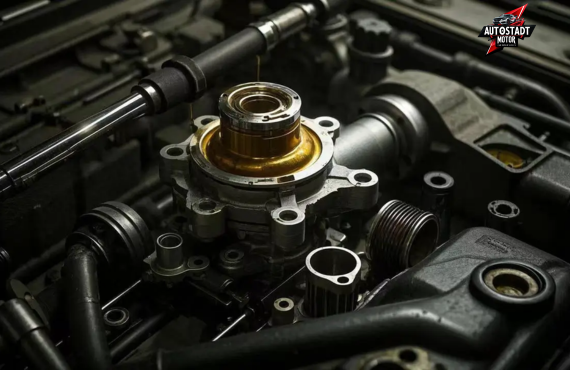
Mazda water pump repair is essential when your vehicle develops a coolant leak, experiences repeated engine overheating, or shows signs that the cooling system is no longer circulating coolant effectively. The water pump plays a critical role in maintaining the correct engine temperature by moving coolant through the engine and radiator. When this component fails, the engine may struggle to regulate heat, potentially leading to serious mechanical damage if the problem is ignored.
For Mazda owners in Dubai, a healthy cooling system is especially important. High outdoor temperatures, heavy traffic, frequent stops, and extended periods of air-conditioning use can place additional demands on the vehicle’s cooling system. Although these conditions do not automatically cause water pump failure, they make it particularly important to address cooling problems promptly.
At AutoStadt Motor Services, Mazda water pump concerns are approached through careful inspection and fault diagnosis. Rather than replacing parts based on symptoms alone, the aim is to identify whether the problem originates from the water pump, a coolant hose, radiator, thermostat, pressure cap, or another component.
Whether you drive a Mazda 3 for daily commuting, a Mazda 6 for family travel, or a Mazda CX-5 for regular journeys around Dubai, understanding the warning signs of water pump trouble can help you protect your engine and avoid unexpected breakdowns.
Signs Your Car Needs Mazda Water Pump Repair
A failing water pump may produce several warning signs. Some are easy to notice, while others become apparent only during a cooling system inspection. Recognizing these symptoms early can help prevent a minor repair from turning into a major engine problem.
1. Engine Temperature Rises Above Normal
An engine temperature gauge that climbs higher than usual is one of the most important warnings to take seriously.
The water pump helps circulate coolant between the engine and radiator. If circulation becomes inadequate, heat may build up inside the engine, causing the temperature to rise.
However, overheating does not always mean the water pump has failed. A blocked radiator, malfunctioning thermostat, cooling fan fault, low coolant level, or other issue may produce similar symptoms.
If your Mazda begins overheating, pull over safely, switch off the engine, and allow it to cool. Do not open the radiator cap while the system is hot, because pressurised coolant can cause serious burns. Arrange a professional inspection rather than continuing to drive an overheating vehicle.
2. Coolant Leaking Around the Water Pump
A coolant leak near the water pump can indicate a worn seal, damaged gasket, or problem with the pump housing or related connections.
You may notice a coloured liquid beneath the front of the vehicle or dried coolant residue around cooling system components. The exact colour varies according to the coolant formulation, so colour alone cannot reliably identify the source.
It is also possible for coolant to travel across nearby engine components before dripping onto the ground. Consequently, the visible puddle may not be directly beneath the failed part.
At AutoStadt Motor Services, identifying the leak’s origin is an important step before recommending a repair.
3. Unusual Noise From the Engine Area
A worn water pump bearing can sometimes produce a grinding, whining, squealing, or rumbling sound.
The noise may become more noticeable as engine speed changes. In some cases, a failing bearing can affect the pump’s shaft alignment or operation, reducing the component’s ability to circulate coolant properly.
Nevertheless, belts, pulleys, tensioners, and other engine accessories can make similar noises. A technician should inspect the relevant components to distinguish a water pump fault from another mechanical issue.
4. Coolant Level Keeps Dropping
If you regularly need to add coolant to your Mazda, the cooling system should be checked for leaks.
A repeated drop in coolant level may be associated with a leaking water pump, radiator, hose, expansion tank, or another part of the system. Internal coolant loss is also possible in certain engine faults.
Simply topping up the reservoir may temporarily restore the level, but it does not correct the underlying problem. Continued coolant loss can eventually cause overheating, particularly during demanding driving conditions.
5. Steam or a Sweet Smell From the Engine Bay
Steam from the engine compartment or a sweet smell may indicate that coolant is escaping onto a hot surface.
If the water pump seal or another cooling system component is leaking, coolant may evaporate when it contacts hot engine parts. This can make the problem noticeable even when there is no large puddle beneath the car.
If you see steam or the temperature warning appears, stop driving as soon as it is safe to do so. Allow the vehicle to cool and arrange assistance rather than attempting to inspect a hot, pressurised system.
6. Coolant Circulation or Temperature Fluctuations
Unstable engine temperature can sometimes point to inadequate coolant circulation. For example, the temperature may rise under load or behave differently during traffic and longer journeys.
Although a damaged water pump may contribute to this behaviour, air trapped in the cooling system, a thermostat problem, or a faulty sensor can create similar symptoms.
Proper testing helps establish whether the water pump is actually responsible.
Why Choose AutoStadt Motor Services for Mazda Water Pump Repair
Water pump replacement should be based on a confirmed fault, not simply on the assumption that every overheating problem has the same cause. A careful diagnostic process helps protect the engine and avoid unnecessary component replacement.
Accurate Cooling System Diagnosis
At AutoStadt Motor Services, the inspection focuses on the symptoms and the condition of the cooling system.
Depending on the vehicle, checks may include coolant level, visible leaks, pump condition, hose connections, radiator performance, thermostat operation, cooling fans, and system pressure where appropriate.
This broader assessment helps distinguish a water pump fault from other issues that can produce similar warning signs.
Mazda-Specific Repair Considerations
Mazda vehicles differ by model, engine, manufacturing year, and cooling system design. The repair procedure, pump arrangement, access requirements, and replacement parts can therefore vary.
A Mazda 3 may require a different procedure from a Mazda CX-5 or Mazda 6. Confirming the exact vehicle specification before starting work helps ensure that the correct parts and service procedures are used.
Focus on Preventing Further Engine Damage
The cost of ignoring a cooling system problem can be considerably greater than addressing the original fault.
An engine that repeatedly overheats may suffer damage to seals, gaskets, cylinder head components, or other critical parts. Therefore, identifying the source of coolant loss or circulation problems early is an important part of responsible vehicle maintenance.
Appropriate Parts and Coolant
A water pump repair should account for the vehicle’s requirements, including the correct replacement component, coolant specification, and installation procedure.
Using unsuitable coolant or failing to bleed air from the system correctly can create further cooling problems. The service procedure should follow the requirements applicable to the particular Mazda engine.
Support for Different Vehicle Types
AutoStadt Motor Services can assess cooling system concerns across a range of vehicles. Although a Mazda has its own repair requirements, other vehicles such as the Toyota Corolla, Nissan Altima, BMW X3, and Mercedes-Benz C-Class also rely on properly maintained cooling systems.
The components and procedures differ between models, which is why a vehicle-specific approach remains important.
How Our Mazda Water Pump Repair Process Works
A structured repair process helps ensure that the original problem is identified, the appropriate work is completed, and the cooling system is checked afterwards.
Step 1: Review the Symptoms
The process begins by understanding what the driver has experienced.
This may include overheating, coolant loss, a warning light, unusual noise, steam, or repeated coolant top-ups. Information about when the symptoms occur can help narrow down the possible causes.
For example, overheating that appears during slow traffic may require checks of several cooling system components, while a visible coolant leak may provide a more direct starting point for diagnosis.
Step 2: Inspect the Water Pump and Cooling System
The technician examines the water pump and nearby components for visible leaks, residue, physical damage, or signs of bearing wear where applicable.
The radiator, hoses, expansion tank, thermostat area, and other relevant parts may also be checked. This matters because replacing a water pump will not resolve an unrelated radiator blockage or cooling fan fault.
Step 3: Test for Coolant Leaks
If the source of coolant loss is unclear, suitable diagnostic methods can be used to identify the leak.
A cooling system pressure test may help reveal leaks that are difficult to see during a basic visual inspection. The test must be performed according to the vehicle’s specifications and appropriate safety procedures.
If the pump is dry but coolant is leaking from a nearby hose or housing connection, the repair recommendation should reflect the actual source.
Step 4: Confirm Whether the Water Pump Needs Replacement
Once the inspection is complete, the water pump’s condition is assessed.
If the pump is leaking, has excessive bearing play, is damaged, or cannot circulate coolant correctly, replacement may be necessary. If another component is responsible, that issue should be addressed instead.
This step helps prevent unnecessary replacement and ensures the recommended work is connected to the confirmed fault.
Step 5: Complete the Required Repair
If water pump replacement is required, the correct procedure depends on the Mazda’s engine design.
The work may involve removing related components to access the pump, replacing the necessary seals or gaskets, and inspecting associated parts. Depending on the engine, the water pump may be driven by an accessory belt or integrated into a different drive arrangement.
Where the pump is associated with timing belt components, the manufacturer’s service requirements should be followed carefully.
The cooling system is then refilled with the correct coolant as required.
Step 6: Refill, Bleed, and Check the System
After installation, the cooling system must be filled and bled according to the vehicle’s requirements. Air trapped inside the system can interfere with coolant circulation and cause temperature fluctuations.
The technician should then check for leaks and confirm that the system is operating as expected.
Step 7: Final Temperature and Leak Checks
The final stage involves checking the repair and reviewing engine temperature behaviour under suitable operating conditions.
The cooling system should be checked for signs of leakage, and relevant components should operate correctly. If the original complaint involved overheating, the repair should be evaluated against that symptom rather than simply confirming that the new pump has been installed.
Mazda Water Pump Maintenance Tips for Dubai Drivers
Preventive maintenance cannot eliminate every mechanical failure, but it can help identify cooling system problems before they become severe.
Check coolant levels regularly. Follow the owner’s manual for the correct checking procedure and only inspect the reservoir when the engine is cool. If the level repeatedly drops, arrange an inspection.
Respond quickly to temperature warnings. Continuing to drive while the engine is overheating can turn a cooling system fault into major engine damage. Stop safely and seek assistance.
Pay attention to new noises. A sound from the belt or pulley area should be investigated if it persists or changes with engine speed.
Use the correct coolant. Coolant types are not universally interchangeable. Follow the specification for your Mazda rather than selecting a product based on colour alone.
Inspect the wider cooling system. Water pump performance depends on the condition of other components, including hoses, the radiator, thermostat, and cooling fans. Checking the system as a whole can help uncover related issues.
For drivers who regularly travel through Dubai’s busy roads, these checks can be particularly valuable. However, maintenance intervals and replacement recommendations should be based on the vehicle’s model, age, mileage, and manufacturer’s guidance.
Frequently Asked Questions About Mazda Water Pump Repair in Dubai
1. How do I know if my Mazda water pump needs repair?
Common warning signs include coolant leaking near the pump, engine overheating, repeated coolant loss, unusual noises from the engine area, or unstable engine temperature. However, these symptoms can also be caused by a faulty thermostat, radiator, hose, cooling fan, or another component. A professional inspection can help confirm whether the water pump is responsible and determine the appropriate repair.
2. Can I drive my Mazda with a leaking water pump?
Driving with a leaking water pump is not recommended, especially if the coolant level is dropping or the engine temperature is rising. Continued driving may cause the engine to overheat and potentially suffer serious damage. If the temperature warning appears, steam is visible, or coolant loss is significant, stop safely, switch off the engine, and arrange recovery or professional assistance. Never open the cooling system while it is hot.
3. How much does Mazda water pump repair cost in Dubai?
The cost depends on the Mazda model, engine configuration, pump location, parts required, and labour involved. Some pumps are relatively accessible, while others require the removal of additional components. Related work may also be recommended if seals, drive components, or coolant hoses are worn. AutoStadt Motor Services can assess the vehicle and provide a repair recommendation based on the actual fault rather than an assumed problem.
4. Should I replace the thermostat when replacing the Mazda water pump?
Not necessarily. The decision depends on the thermostat’s condition, the vehicle’s maintenance requirements, the engine design, and whether the components are related in the repair procedure. If the thermostat is faulty or the manufacturer recommends associated service during the job, replacing it may be appropriate. However, a technician should explain why additional parts are needed instead of automatically replacing every cooling system component.
5. How long does Mazda water pump replacement take?
Repair time varies according to the model, engine, pump location, and amount of disassembly required. A pump that is easy to access may take less time than one positioned behind other engine components or associated with timing drive work. Parts availability and the need for additional cooling system repairs can also affect the schedule. A workshop can provide a more realistic estimate after identifying the exact Mazda model and inspecting the fault.
Conclusion
Mazda water pump repair is an important service when coolant begins leaking, engine temperature rises unexpectedly, or the cooling system no longer performs reliably. Because the water pump supports coolant circulation, a failure can affect the engine’s ability to control heat and may lead to costly damage if ignored.
For Dubai drivers, the sensible approach is to investigate warning signs early and avoid continuing to drive an overheating vehicle. Correct diagnosis is equally important because coolant leaks and temperature problems can originate from several different components.
AutoStadt Motor Services can help Mazda owners identify cooling system faults, assess water pump condition, and determine the appropriate repair. Whether the problem involves the pump itself or another part of the cooling system, the objective is to restore reliable operation and help protect the engine.
If your Mazda is losing coolant, making unusual noises, or showing signs of overheating, arrange an inspection before the problem becomes more serious. Early attention can help reduce the risk of further damage and keep your vehicle ready for everyday driving in Dubai.


Leave a Comment