
McLaren brake repair near me is an important search for supercar owners in Dubai who notice unusual braking noises, reduced stopping performance, vibration, or a brake warning on the dashboard. A McLaren is engineered for exceptional acceleration, precise handling, and high-performance driving. However, its braking system is equally important because it must manage substantial forces while providing predictable control in different driving conditions.
Whether you drive a McLaren 570S, 600LT, 720S, or another model, maintaining the brakes requires careful attention to the vehicle’s specifications. Brake pads, discs, calipers, hydraulic components, sensors, and electronic control systems all contribute to safe and consistent stopping performance. If one component develops a problem, the entire system may be affected.
Dubai driving conditions make regular brake inspections particularly valuable. Heavy traffic, repeated acceleration and deceleration, high ambient temperatures, and occasional high-speed journeys can place different demands on braking components. Additionally, a performance car that spends long periods parked may develop issues such as surface corrosion on its brake discs or changes in brake pedal feel.
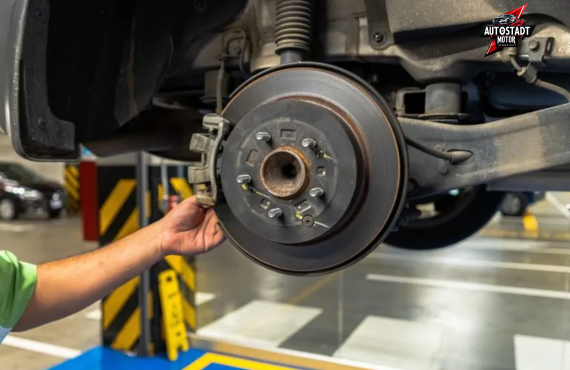
At AutoStadt Motor Services, McLaren brake repair begins with identifying the actual cause of the problem. Rather than replacing parts based only on a noise or warning light, a proper inspection helps determine whether the vehicle needs new brake pads, disc servicing or replacement, caliper attention, hydraulic repairs, or electronic diagnostics.
If you are searching for McLaren brake repair near you in Dubai, choosing a workshop that understands the importance of vehicle-specific procedures can help protect your investment and maintain dependable braking performance.
Signs Your Car Needs McLaren Brake Repair Near Me
Brake problems do not always begin with a complete loss of stopping performance. Often, the vehicle provides early warning signs that should be investigated before the condition becomes more serious.
1. Squealing or Grinding Brake Noises
A high-pitched squeal during braking can indicate pad wear, vibration between brake components, or other issues that require inspection. Some performance brake pads may produce noise under particular operating conditions, so sound alone does not confirm that a component has failed.
Grinding, however, should be treated more seriously. It may indicate that friction material has worn excessively or that another component is contacting the brake disc. Continuing to drive with severe grinding can damage the disc and increase repair costs.
If your McLaren develops a new or persistent braking noise, arrange an inspection rather than assuming it is normal for a supercar.
2. Vibration Through the Brake Pedal or Steering Wheel
A vibration that appears when you apply the brakes can indicate uneven disc surfaces, disc thickness variation, deposits on the braking surface, or issues involving suspension components.
For example, a McLaren that feels smooth during normal driving but vibrates during firm braking needs a different diagnostic approach from one that shakes even when the brakes are not applied.
The technician should inspect the brake discs, pads, wheel installation, and related components before deciding which repair is necessary.
3. Brake Pedal Feels Soft or Spongy
A brake pedal that feels unusually soft, travels farther than normal, or gradually sinks under pressure may indicate a hydraulic problem.
Possible causes include air in the brake lines, a fluid leak, or a fault involving a hydraulic component. These problems can affect braking performance and should never be ignored.
If the pedal suddenly becomes soft or braking performance deteriorates, stop driving as soon as it is safe to do so and arrange professional assistance.
4. Increased Stopping Distance
If your McLaren takes longer than usual to slow down, the braking system needs immediate attention.
Worn brake pads, contaminated friction surfaces, overheating, hydraulic faults, or other mechanical issues may affect stopping performance. Tyre condition and road surfaces also influence how quickly a vehicle stops, so the problem should be assessed as a complete safety concern.
A high-performance vehicle should not be driven aggressively to test whether the brakes are still working properly.
5. Brake Warning Light on the Dashboard
Modern McLaren vehicles use electronic monitoring systems to alert drivers to certain braking problems. Depending on the model and warning, the issue may involve pad wear, brake fluid, ABS, stability control, or another monitored system.
A warning light should be investigated using the appropriate diagnostic procedure. Simply clearing the warning without addressing the cause may leave an underlying fault unresolved.
6. Brake Fluid Level Drops Repeatedly
A falling brake fluid level may indicate a leak or another problem that requires inspection. Although pad wear can affect the fluid level as the caliper pistons move, repeated or significant fluid loss should not be dismissed.
Brake fluid is essential for transferring force through the hydraulic system. If the system cannot maintain the correct pressure, braking performance may be compromised.
7. Burning Smell After Braking
A strong burning smell after repeated braking can indicate excessive heat, overheated friction material, or a brake component that is not releasing correctly.
Performance brakes can become hot during demanding use, but persistent smells, smoke, or signs of dragging brakes require attention. Pull over safely if you suspect overheating, and allow the vehicle to cool without touching the brake components.
Why Choose AutoStadt Motor Services for McLaren Brake Repair Near Me
Finding a workshop for a McLaren involves more than choosing the nearest location. The braking system is a critical safety feature, and repairs should be based on accurate diagnosis, appropriate parts, and correct procedures.
Thorough Brake System Inspection
At AutoStadt Motor Services, the objective is to identify the source of the complaint before recommending a repair.
Depending on the symptoms and model, an inspection may include brake pad thickness, disc condition, caliper operation, hydraulic lines, brake fluid, wear sensors, and relevant electronic systems.
This helps distinguish routine wear from a more serious mechanical or hydraulic fault.
Repair Recommendations Based on Your Model
McLaren vehicles do not all use identical braking components. Equipment can vary by model, production year, trim, and optional performance packages.
Some vehicles may have carbon-ceramic brakes, while others use different brake configurations. These systems have different inspection considerations and replacement requirements.
A repair recommendation should therefore be based on the actual specification of your vehicle rather than a general assumption about all McLaren models.
Attention to High-Performance Brake Components
Performance braking systems operate under substantial thermal and mechanical loads. Correct pad selection, disc compatibility, caliper condition, and installation procedures all matter.
Using an unsuitable replacement component may affect braking feel, noise, wear, or performance. For that reason, parts should be selected according to the vehicle’s requirements and the intended use of the car.
Support for Related Brake Problems
Not every braking complaint originates with the pads or discs. A fault involving the ABS, wheel-speed sensors, hydraulic system, or related electronics may produce similar symptoms.
A broader diagnostic process helps avoid replacing serviceable components while overlooking the real cause.
Clear Communication With the Owner
Supercar repairs can involve expensive components, so owners need to understand what has been identified and why a particular repair is recommended.
AutoStadt Motor Services aims to provide a clear explanation of the inspection findings and the work required, helping customers make informed maintenance decisions.
The same diagnostic principle applies to other vehicles, including the BMW M4, Mercedes-AMG GT, Porsche 911, and Nissan GT-R, although their individual components and repair procedures differ.
How Our McLaren Brake Repair Near Me Process Works
A structured repair process helps ensure that the initial complaint is investigated properly and that the system is checked again after the work.
Step 1: Discuss the Symptoms
The process begins with understanding what the driver has experienced.
The technician may ask whether the brakes squeal, vibrate, feel soft, or trigger a dashboard warning. Information about when the problem started and whether it occurs during light or firm braking can help narrow down the possible causes.
The vehicle’s model, year, and braking configuration are also important when selecting the correct diagnostic procedure.
Step 2: Inspect Pads, Discs, and Calipers
The braking components are examined for wear, damage, uneven contact, overheating, contamination, and other visible problems.
Pad thickness and disc condition are assessed against the relevant specifications. If the vehicle has carbon-ceramic discs, their condition must be evaluated using suitable model-specific inspection criteria rather than the same assumptions used for conventional iron discs.
Caliper operation and related hardware are also considered where relevant.
Step 3: Check Brake Fluid and Hydraulic Components
If the symptoms suggest a hydraulic fault, the technician checks the fluid condition and level, accessible lines, connections, and other relevant components.
Any suspected leak needs to be identified and addressed. If air in the hydraulic system is suspected, the appropriate bleeding procedure must be followed.
The correct brake fluid specification is essential because the system must operate within the manufacturer’s requirements.
Step 4: Perform Electronic Diagnostics When Needed
If a warning light appears or the symptoms indicate an electronic issue, suitable diagnostic equipment may be needed.
The process can include checking relevant fault codes and examining systems such as ABS and stability control, depending on the vehicle and reported problem.
Electronic faults should be diagnosed before components are replaced or warnings are cleared.
Step 5: Recommend the Appropriate Repair
Once the findings are reviewed, the necessary repair can be identified.
Depending on the condition, this may involve replacing brake pads, replacing damaged discs, addressing a caliper fault, repairing a hydraulic leak, servicing related hardware, or investigating an electronic problem.
If the brakes are functioning normally and the issue is only a minor noise, the inspection may reveal that a full replacement is unnecessary. The repair should match the actual condition of the system.
Step 6: Carry Out the Repair Carefully
The approved work is completed using compatible components and the appropriate procedures for the vehicle.
Where necessary, the process may involve specific installation requirements, sensor handling, brake fluid replacement, hydraulic bleeding, or electronic service procedures.
Performance brake components should not be mixed or installed without checking compatibility.
Step 7: Complete Final Checks
After the repair, the affected components and system operation are checked again.
Depending on the work performed, this may include checking for leaks, confirming pedal feel, reviewing warning messages, and verifying that the repair has addressed the original concern.
Any road test should be carried out only when the vehicle is safe to operate and under appropriate conditions. A vehicle with unresolved brake safety concerns should not be driven for testing.
McLaren Brake Maintenance Tips for Dubai Drivers
Preventive maintenance is especially useful for performance vehicles because braking components can be affected by both driving style and storage conditions.
First, pay attention to changes in brake feel. New vibrations, persistent noises, a soft pedal, or a dashboard warning should be checked promptly.
Second, follow the maintenance schedule applicable to your specific McLaren. Inspection intervals and replacement requirements can differ according to the model, braking package, and driving conditions.
Third, avoid assuming that low mileage automatically means the brakes are in perfect condition. A vehicle that is rarely driven may develop corrosion on exposed disc surfaces, while extended storage can create other maintenance concerns.
Additionally, performance driving and repeated hard braking can generate substantial heat. Allow the system to cool appropriately after demanding use and arrange an inspection if you notice persistent smells, unusual noises, or changes in performance.
Finally, use compatible brake pads, discs, and brake fluid. A component that fits physically is not necessarily suitable for the vehicle’s exact braking system.
Frequently Asked Questions About McLaren Brake Repair Near Me in Dubai
1. Where can I get McLaren brake repair near me in Dubai?
Look for a workshop that can inspect the braking system, identify the specific fault, and recommend components that match your McLaren’s configuration. Ask whether the workshop can assess the relevant braking technology and perform the necessary diagnostic checks. AutoStadt Motor Services offers automotive inspection and repair support for drivers in Dubai. Confirm service availability for your particular McLaren model and braking package before arranging your visit.
2. How much does McLaren brake repair cost in Dubai?
The price depends on the model, brake configuration, parts required, and extent of the damage. Replacing worn pads is generally a different job from replacing carbon-ceramic discs, repairing a caliper, or resolving an ABS fault. Parts availability can also affect the final estimate. The most useful first step is to have the vehicle inspected so the workshop can identify the problem and provide a repair estimate based on the actual requirements.
3. How do I know whether my McLaren needs new brake pads or discs?
Brake pads may need replacement when their friction material reaches the applicable wear limit or when damage or contamination makes them unsuitable for use. Discs require separate inspection for wear, damage, and condition according to the specific brake design. Carbon-ceramic discs, in particular, require appropriate assessment rather than a routine visual judgment alone. Noise or vibration can provide clues, but an inspection is needed to determine which components actually require replacement.
4. Can I drive my McLaren if the brakes are making noise?
Not every brake noise indicates an immediate failure, but persistent squealing, grinding, vibration, or a change in pedal feel should be investigated. Grinding, reduced braking performance, a soft pedal, fluid leakage, or a serious brake warning can indicate a safety-critical problem. If the vehicle does not brake normally, do not continue driving it to the workshop; arrange suitable recovery assistance instead. Avoid high-speed driving until the issue has been assessed.
5. How often should McLaren brakes be inspected in Dubai?
Inspection frequency depends on the model, manufacturer’s maintenance guidance, mileage, storage conditions, and driving style. A vehicle used for frequent spirited driving may need more frequent attention than one used occasionally for short journeys. Brake pads and discs should be checked during scheduled maintenance and whenever symptoms appear. Following the vehicle-specific service guidance is more reliable than relying on one universal interval for every McLaren.
Conclusion
McLaren brake repair near me is a valuable search when your supercar develops braking noise, vibration, a warning light, unusual pedal feel, or reduced stopping performance. These symptoms can result from ordinary wear, damaged components, hydraulic problems, or electronic faults, so the correct repair begins with a thorough inspection.
Because McLaren braking systems vary by model and specification, using compatible parts and appropriate repair procedures is essential. Early diagnosis can also help identify developing issues before they lead to additional damage or compromise safe vehicle operation.
AutoStadt Motor Services provides automotive inspection and repair support for Dubai drivers seeking help with brake-related problems. If your McLaren needs attention, arrange an assessment to establish the cause, understand the recommended work, and determine the appropriate next step.
Maintaining the braking system is an essential part of protecting your McLaren’s performance, reliability, and road safety.


Leave a Comment