
Mercury suspension repair is essential when your vehicle develops unusual noises, excessive bouncing, uneven tyre wear, or a noticeable change in ride comfort. A properly functioning suspension system helps keep the tyres in contact with the road, supports vehicle stability, and absorbs the impact of uneven surfaces. When suspension components begin to wear out, the vehicle may become less comfortable and more difficult to control.
For drivers in Dubai, suspension condition deserves particular attention. Daily commuting, speed bumps, parking ramps, road imperfections, and frequent driving in heavy traffic can gradually affect suspension components. Even when a problem starts with a minor knocking sound, ignoring it may allow additional wear to develop in connected parts.
Mercury vehicles require an inspection that considers the specific model, suspension configuration, age, and condition of the components. Depending on the vehicle, the system may include shock absorbers, springs, control arms, ball joints, suspension bushes, stabilizer links, and other supporting parts. A fault in one component can sometimes produce symptoms that resemble a problem elsewhere.
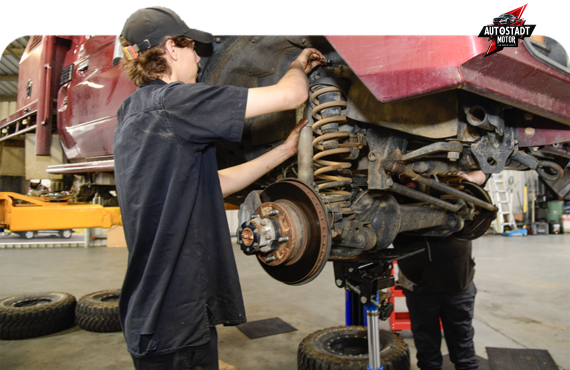
At AutoStadt Motor Services, the objective of Mercury suspension repair is to identify the source of the problem and recommend a suitable solution. Rather than replacing parts based on guesswork, a proper assessment helps determine whether the vehicle needs new shock absorbers, suspension bush replacement, control arm repair, or another service.
Whether your Mercury feels unstable over bumps or produces a clunking noise during turns, arranging an inspection early can help preserve ride quality, handling, and overall driving confidence.
Signs Your Car Needs Mercury Suspension Repair
Suspension problems do not always appear suddenly. In many cases, the vehicle gives noticeable warning signs before a component deteriorates further. Recognizing these symptoms can help you decide when professional inspection is necessary.
1. Excessive Bouncing After Road Bumps
One of the most recognizable signs of worn suspension is excessive bouncing after the vehicle passes over a bump.
Shock absorbers and struts help control the movement of the springs. When their performance deteriorates, the vehicle may continue moving up and down instead of settling quickly after an uneven section of road.
If your Mercury feels unsettled after speed bumps or repeatedly bounces on uneven surfaces, the suspension should be checked. Worn shock absorbers are one possible cause, although damaged springs and other suspension faults may produce similar symptoms.
2. Knocking or Clunking Noises
A knocking sound from the front or rear of the vehicle can indicate looseness or wear in suspension components.
Possible causes include worn suspension bushes, damaged stabilizer links, loose mounting hardware, ball-joint wear, or deteriorated shock absorber mounts. The noise may become more noticeable when driving over speed bumps, entering a parking ramp, or travelling on an uneven road.
However, not every knocking sound comes from the suspension. Brake components and other mechanical parts can also produce similar noises. An inspection helps distinguish between these possibilities.
3. Uneven Tyre Wear
Your tyres can reveal useful information about suspension condition.
If one side of a tyre wears more quickly than the other, or the tread develops unusual wear patterns, the cause may involve incorrect wheel alignment, worn suspension components, unsuitable tyre pressure, or a combination of factors.
Replacing tyres without addressing the underlying problem may lead to the same wear pattern returning. Therefore, suspension inspection and wheel alignment checks can be important when unusual tyre wear is detected.
4. Vehicle Dips or Leans Excessively
A vehicle that dips noticeably during braking or leans excessively through corners may have a suspension-related problem.
Worn shock absorbers, weak springs, or other damaged components can affect how effectively the vehicle controls body movement. Nevertheless, braking-related dipping can also involve braking technique or other mechanical issues, so symptoms should be assessed in context.
If your Mercury feels less stable than usual, particularly during sudden changes in direction, have the vehicle inspected rather than continuing to drive as though nothing has changed.
5. Steering Feels Loose or Unstable
Suspension and steering systems work together to maintain predictable vehicle control.
Worn control arm bushes, ball joints, or other connected components can sometimes cause vague steering, unusual movement, or instability. You may also notice that the vehicle does not track straight as consistently as before.
Because steering-related symptoms can affect safety, they should not be ignored. If the vehicle becomes difficult to control, avoid driving it until the fault has been assessed.
6. Uneven Ride Height
If one corner of your Mercury sits noticeably lower than the others, a damaged or weakened spring may be responsible. Other possible causes depend on the vehicle’s suspension design and condition.
A change in ride height can affect handling, tyre clearance, and suspension geometry. A professional inspection can help establish whether the issue involves a spring, mounting point, or another component.
Why Choose AutoStadt Motor Services for Mercury Suspension Repair
Suspension repairs require more than replacing the component that appears damaged. The system contains interconnected parts, and wear in one area can place additional stress on another. A careful diagnosis helps ensure that the recommended work addresses the actual problem.
Accurate Suspension Diagnosis
At AutoStadt Motor Services, the inspection process focuses on understanding the symptoms and identifying the components responsible.
Depending on the reported problem, the technician may examine shock absorbers, springs, control arms, bushes, ball joints, stabilizer links, mounts, and related hardware. Road-test observations, where appropriate and safe, can also help clarify the complaint.
This approach reduces the risk of replacing serviceable components unnecessarily.
Repair Recommendations Based on Vehicle Condition
Not every suspension problem requires a complete suspension overhaul.
For example, worn stabilizer links may produce knocking over uneven roads, while deteriorated shock absorbers may cause excessive bouncing. Damaged control arm bushes can affect stability and alignment.
The appropriate repair depends on the condition of the affected components, the vehicle’s design, and the manufacturer’s specifications. AutoStadt Motor Services can assess these factors before recommending the next step.
Attention to Ride Comfort and Handling
A suspension system must balance comfort, stability, and controlled wheel movement.
Replacing a worn component with an unsuitable part may change the vehicle’s handling characteristics. Therefore, component selection and installation should be appropriate for the particular Mercury model.
The aim is to restore dependable suspension operation rather than simply eliminate a noise temporarily.
Support for Dubai Driving Conditions
Dubai drivers encounter a range of everyday conditions, from smooth highways to speed bumps, uneven access roads, basement parking ramps, and congested urban streets.
Repeated impacts and normal component ageing can gradually affect suspension performance. Regular inspection can help identify wear before it develops into a more serious problem.
A Practical Approach to Repair Costs
The cost of Mercury suspension repair depends on which parts require attention, their availability, the complexity of the work, and whether additional alignment is needed.
A damaged bush may require a different repair from a failed shock absorber or broken spring. Clear diagnosis helps establish the scope of work before repairs begin and supports better maintenance decisions.
How Our Mercury Suspension Repair Process Works
A structured repair process helps ensure that the original complaint is addressed and that related problems are not overlooked.
Step 1: Discuss the Symptoms
The process begins by understanding what you have noticed while driving.
You may hear knocking over bumps, experience excessive body movement, feel steering instability, or observe uneven tyre wear. Information about when and where the symptoms occur can help narrow down the possible causes.
For example, a noise that appears only when turning may require a different inspection from a noise that occurs whenever the vehicle passes over a speed bump.
Step 2: Inspect the Suspension System
The relevant suspension components are inspected for visible damage, looseness, wear, leakage, or deterioration.
Depending on the vehicle, this may include shock absorbers, springs, suspension bushes, control arms, ball joints, stabilizer links, and mounting points.
The inspection also considers whether related steering or tyre issues could be contributing to the symptoms.
Step 3: Identify the Main Fault
After the initial inspection, the technician evaluates the findings to determine which components need attention.
For instance, an oil-covered shock absorber may require further assessment to establish whether it is leaking. Similarly, a clunking sound may originate from a worn bush rather than the shock absorber itself.
Correct identification is important because replacing the wrong component may leave the original problem unresolved.
Step 4: Recommend the Appropriate Repair
Once the fault is identified, the necessary work can be explained.
Depending on the findings, the repair may involve replacing shock absorbers, suspension bushes, springs, stabilizer links, ball joints, control arms, or damaged mounting hardware.
Where several components show wear, their condition should be considered together. However, replacement decisions should be based on inspection and vehicle requirements rather than an assumption that every part needs changing.
Step 5: Complete the Repair
The confirmed repair is then carried out using components suitable for the vehicle.
Correct installation matters because suspension parts operate under substantial loads and movement. Improperly installed hardware or unsuitable components can affect durability, ride comfort, and handling.
Any related issues discovered during the work should be discussed with the vehicle owner before additional repairs are undertaken.
Step 6: Check Alignment and Suspension Performance
After the repair, the vehicle should be checked to ensure the affected components are functioning correctly.
Wheel alignment may be necessary if the repair affects suspension geometry or if the inspection identifies an alignment problem. The need for alignment depends on the work performed and the vehicle manufacturer’s procedures.
A final assessment helps confirm that the original symptoms have been addressed and that the vehicle is ready for normal use.
Mercury Suspension Maintenance Tips for Dubai Drivers
Preventive maintenance can help identify suspension wear before it affects the driving experience significantly.
First, pay attention to changes in ride quality. If the vehicle begins bouncing more than usual, producing repeated knocking noises, or feeling unstable over bumps, arrange an inspection instead of waiting for the symptoms to worsen.
Second, check tyre condition regularly. Uneven tread wear can indicate alignment or suspension problems, although tyre pressure and other factors should also be considered.
Third, avoid driving aggressively over speed bumps or potholes. Reducing speed before crossing an obstacle can help limit unnecessary impacts on tyres, wheels, springs, and suspension components.
Finally, include suspension checks in routine servicing, particularly if your Mercury has high mileage or is frequently driven on uneven surfaces.
These maintenance principles apply across many vehicles, including Toyota sedans, Nissan SUVs, BMW models, and Mercedes-Benz cars. However, the correct repair specifications vary by vehicle, so parts and procedures should always be selected accordingly.
Frequently Asked Questions About Mercury Suspension Repair in Dubai
1. How do I know if my Mercury needs suspension repair?
Common warning signs include excessive bouncing, knocking noises over bumps, uneven tyre wear, changes in ride height, and reduced stability when cornering. Some symptoms may also originate from tyres, steering components, or brakes, so professional inspection is important. If the vehicle feels difficult to control or a suspension component appears broken, stop driving and arrange suitable assistance.
2. How much does Mercury suspension repair cost in Dubai?
The price depends on the specific Mercury model, the damaged components, parts availability, and the labour involved. Replacing a stabilizer link may be less involved than repairing a control arm assembly or replacing multiple shock absorbers. Wheel alignment may also be required after certain repairs. AutoStadt Motor Services can assess the vehicle and recommend an appropriate repair based on the actual condition of its suspension.
3. Can I drive my Mercury with worn shock absorbers?
Worn shock absorbers can reduce the vehicle’s ability to control bouncing and body movement, potentially affecting stability and tyre contact with the road. The severity depends on the condition of the components and the symptoms. If the vehicle is excessively unstable, leaking heavily from a shock absorber, or showing other serious suspension faults, avoid driving until it has been inspected. Delaying necessary repairs may also contribute to additional tyre or suspension wear.
4. Should I replace both shock absorbers at the same time?
Replacing shock absorbers in pairs on the same axle is often recommended because a significant difference in damping performance between the two sides can affect handling and stability. However, the appropriate decision depends on the vehicle manufacturer’s guidance, the condition of the existing components, and the repair requirements. A technician can inspect both sides and explain whether replacing one component or a pair is the better option for your Mercury.
5. Does wheel alignment need to be done after Mercury suspension repair?
Wheel alignment may be necessary after suspension repairs that affect wheel position or suspension geometry, such as certain control arm or related component replacements. It may also be recommended when uneven tyre wear or steering-related symptoms are present. However, not every suspension repair automatically requires alignment. The decision should be based on the work completed, the vehicle’s specifications, and the results of the inspection.
Conclusion
Mercury suspension repair plays an important role in maintaining ride comfort, predictable handling, and dependable vehicle performance. Knocking sounds, excessive bouncing, uneven tyre wear, and steering instability are all reasons to investigate the suspension system before the problem becomes more serious.
Because suspension components work together, the best repair begins with accurate diagnosis. Identifying whether the fault involves shock absorbers, springs, bushes, ball joints, stabilizer links, or control arms helps ensure that the recommended work addresses the underlying cause.
For Dubai drivers, routine inspections and sensible driving habits can help detect suspension wear early. AutoStadt Motor Services offers suspension inspection and repair support to help vehicle owners understand their car’s condition and determine the appropriate maintenance.
If your Mercury no longer feels as stable or comfortable as it should, arrange a professional suspension inspection and address the problem before it affects your next journey.


Leave a Comment