
Nissan ac compressor change is an important repair when your vehicle’s air conditioning system can no longer circulate refrigerant properly or the compressor has developed a serious mechanical or electrical fault. In Dubai, a properly functioning AC system is more than a comfort feature. It plays a major role in making daily commuting, school runs, business trips, and long-distance driving manageable throughout much of the year.
The AC compressor is often described as the heart of the vehicle’s air conditioning system because it circulates refrigerant between the major AC components. When the compressor operates correctly, refrigerant can move through the system, allowing the evaporator and condenser to perform their respective jobs and produce cold air inside the cabin.
However, a compressor problem does not always mean that replacement is immediately necessary. Weak cooling can also result from low refrigerant, a leaking hose, a blocked condenser, an electrical fault, a damaged clutch on certain compressor designs, or a problem with the expansion valve. That is why proper diagnosis should come before replacing an expensive component.
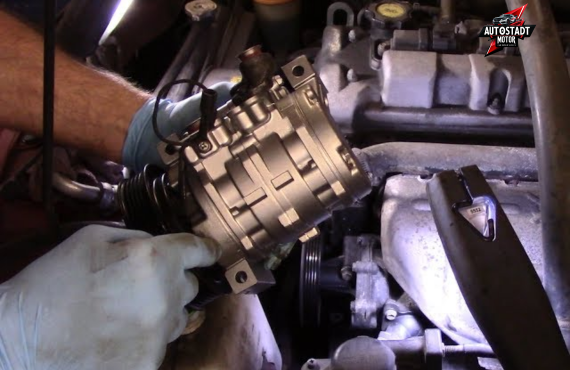
At AutoStadt Motor Services, the approach to Nissan AC repair focuses on identifying the actual cause of the problem. Once the condition of the compressor and the rest of the AC system have been checked, our technicians can recommend the appropriate repair or Nissan ac compressor change when replacement is genuinely required.
Signs Your Car Needs Nissan AC Compressor Change
Weak or Warm Air From the Vents
One of the most noticeable signs is an AC system that produces warm or only slightly cool air. If the cabin remains uncomfortable even when the temperature setting is at its lowest, the compressor may not be creating sufficient refrigerant pressure.
Nevertheless, warm air alone does not prove that the compressor has failed. Refrigerant loss, condenser problems, pressure sensors, and other components can create similar symptoms. A professional AC inspection helps separate a compressor problem from a simpler issue.
Unusual Noise When the AC Is Turned On
A healthy compressor should operate without producing loud grinding, knocking, squealing, or rattling sounds. If a strange noise appears when the AC is switched on, the compressor bearings, pulley, clutch, or internal components may be damaged.
For example, a bearing beginning to fail may create a noticeable growling sound that becomes more obvious as engine speed increases. Continuing to operate the vehicle with a severely damaged compressor can sometimes cause additional damage to the AC drive system.
AC Cooling Comes and Goes
Intermittent cooling can be frustrating, particularly when driving through Dubai traffic. The system may initially blow cold air but gradually become warm, or it may alternate between cooling and poor performance.
This can have several causes. A failing compressor, incorrect refrigerant pressure, electrical control problem, or temperature sensor fault can all affect AC operation. Therefore, technicians should test the system rather than assuming that compressor replacement is the answer.
Visible Refrigerant or Oil Leakage
The AC system uses refrigerant along with specialized compressor oil for lubrication. If a compressor seal, connection, hose, or nearby component develops a leak, traces of oily residue may sometimes appear around the affected area.
A leak should never be ignored. Simply adding refrigerant without identifying the source can result in repeated AC problems and unnecessary expense.
AC Compressor Clutch Problems
Some Nissan models use compressor designs with an electromagnetic clutch, while newer vehicles can use different compressor technologies. On systems equipped with a clutch, the clutch must engage correctly for the compressor to operate.
If the clutch does not engage, the cause could be electrical rather than mechanical. A technician should inspect the fuse, relay, wiring, control signal, pressure readings, and clutch before deciding on a compressor replacement.
Engine Performance Changes When AC Runs
A malfunctioning compressor can sometimes place excessive load on the engine. You may notice unusual engine vibration, belt noise, or a noticeable change in engine behavior when the AC is activated.
In severe cases, a mechanically damaged compressor can become difficult to turn. This is another reason to have unusual AC-related noises inspected early instead of waiting for complete failure.
What Can Cause a Nissan AC Compressor to Fail?
A compressor can fail for several different reasons, and understanding them can help prevent the same problem from returning.
One common cause is insufficient lubrication. Compressor oil circulates through the AC system, helping internal components operate smoothly. If the system loses refrigerant or oil because of a leak, lubrication may become inadequate and internal wear can increase.
Contaminated refrigerant can also create problems. If moisture, debris, or incorrect substances enter the AC circuit, sensitive components may become damaged. Previous improper repairs can sometimes contribute to contamination as well.
Age and normal mechanical wear are other factors. A Nissan that has covered substantial mileage may eventually experience worn bearings, seals, pulleys, or internal compressor components.
Dubai driving conditions can also place considerable demand on air conditioning systems because drivers frequently rely on the AC for extended periods. However, regular inspection and correct maintenance can help identify developing problems before they become major failures.
Why Choose AutoStadt Motor Services for Nissan AC Compressor Change
Diagnosis Before Replacement
At AutoStadt Motor Services, we do not recommend replacing the compressor simply because the AC is not cooling. The system needs to be diagnosed first.
Our technicians can assess refrigerant pressure, inspect AC components, check for leaks, evaluate compressor operation, and investigate electrical controls. This diagnostic approach helps determine whether the compressor is actually defective or whether another component is responsible for the symptoms.
Nissan-Focused AC Repair
Different Nissan models can have different AC configurations, component locations, and control systems. A repair approach that works for one vehicle may not be appropriate for another.
Whether you drive a Nissan Altima, Patrol, X-Trail, Sunny, or another model, the AC system should be evaluated according to the vehicle’s specific configuration.
The same principle applies across other manufacturers. A Toyota Camry, BMW 3 Series, Mercedes-Benz C-Class, or Audi Q5 may all have sophisticated climate-control systems, but their components and diagnostic procedures are not identical.
Complete System Inspection
Replacing a compressor without investigating the rest of the system can lead to repeat failures. If the original compressor failed because of contamination, debris, or another underlying issue, simply installing a new unit may not solve the long-term problem.
That is why a comprehensive AC inspection is valuable. Depending on the diagnosis, technicians may examine the condenser, evaporator, expansion device, hoses, pressure sensors, electrical connections, drive belt system, and other relevant components.
Customer-Focused Recommendations
Car owners want to know what is actually wrong with their vehicle, not simply receive a list of expensive parts. At AutoStadt Motor Services, the goal is to explain the condition of the AC system clearly and recommend the repair that makes sense for the vehicle.
If the compressor can be repaired or another component is responsible, replacement may not be necessary. If the compressor has suffered internal damage, however, professional Nissan ac compressor change may be the more reliable solution.
How Our Nissan AC Compressor Change Process Works
Initial AC Performance Check
The process starts with understanding the symptoms. Technicians may ask when the cooling problem occurs, whether the AC works intermittently, whether unusual noises are present, and whether the problem appeared suddenly or gradually.
The vehicle’s AC operation is then assessed to establish a starting point for diagnosis.
Refrigerant Pressure and System Inspection
The next step involves checking the AC system and its operating pressures. Abnormal pressure readings can provide important clues about refrigerant level, compressor performance, restrictions, or other system problems.
However, pressure readings should be interpreted alongside other tests rather than considered in isolation.
Compressor and Drive System Inspection
The compressor itself is inspected for signs of mechanical damage, leakage, abnormal noise, pulley or clutch problems where applicable, and other visible issues.
The associated drive system is also important because a damaged belt, pulley, or tensioner can create symptoms that may initially appear to be compressor-related.
Leak Detection
Before fitting a replacement compressor, the AC circuit should be checked for potential leaks. Replacing the compressor while an unresolved refrigerant leak remains elsewhere in the system can undermine the repair.
The objective is to identify and address the source of refrigerant loss rather than repeatedly refilling the system.
Removal of the Faulty Compressor
If testing confirms compressor failure, the defective unit can be removed carefully. The technician must take appropriate precautions because the vehicle’s AC system operates under pressure and contains refrigerant.
Other connected components and lines are handled carefully to reduce the possibility of introducing contamination into the system.
Installation of the Replacement Unit
The replacement compressor is installed according to the vehicle’s requirements. Correct compressor oil quantity and specification are important because improper lubrication can contribute to premature failure.
Depending on the condition of the system and the cause of the original failure, additional AC components may also need attention.
Vacuum and Recharge Procedure
After the repair, the system can be evacuated to remove air and moisture before being recharged with the correct refrigerant.
Using the appropriate refrigerant type and correct quantity matters. Overcharging or undercharging can negatively affect AC performance and system operation.
Final Cooling and Performance Test
The final stage is checking the complete system after installation. The AC should be tested for cooling performance, abnormal noises, pressure behavior, and proper operation of the climate controls.
This final inspection helps confirm that the replacement has addressed the original problem rather than simply restoring temporary cooling.
How to Avoid Premature Nissan AC Compressor Failure
Regular AC maintenance can reduce the likelihood of expensive failures. If you notice reduced cooling, strange noises, unusual odors, or inconsistent AC performance, arrange an inspection rather than continuing to operate the system for months.
It is also important not to treat refrigerant as something that simply needs periodic topping up. A healthy sealed AC system should not continually lose refrigerant. If the level repeatedly becomes low, there may be a leak that needs to be located.
Keeping the condenser area reasonably clean can also support effective heat transfer. Dust, debris, and accumulated contamination can restrict airflow and reduce AC efficiency.
Finally, professional servicing is preferable when an AC system requires refrigerant recovery, evacuation, leak diagnosis, or component replacement. Correct procedures help protect both the vehicle and the newly installed components.
Frequently Asked Questions About Nissan AC Compressor Change in Dubai
1. How do I know if my Nissan needs an AC compressor replacement?
Warm air does not automatically mean that the compressor needs replacement. A failed compressor may produce weak cooling, unusual mechanical noises, pressure abnormalities, or other symptoms, but similar problems can be caused by refrigerant leaks, electrical faults, condenser restrictions, sensors, or expansion components.
The best approach is to have the complete AC system tested. AutoStadt Motor Services can diagnose the cause before recommending a Nissan ac compressor change.
2. Can a Nissan AC compressor be repaired instead of replaced?
In some cases, individual compressor-related components may be serviceable, depending on the compressor design and the nature of the fault. However, internal mechanical damage may make replacement a more practical and reliable option.
The correct choice depends on the compressor’s condition, the vehicle model, the extent of damage, and the overall condition of the AC system. A proper inspection should therefore come before deciding between repair and replacement.
3. How long does a Nissan AC compressor change take in Dubai?
The time required depends on the Nissan model, compressor accessibility, the condition of the AC system, and whether additional problems such as leaks or contaminated refrigerant are discovered.
A straightforward replacement may be completed relatively quickly, while a more complicated repair can require additional diagnostic and system-cleaning work. AutoStadt Motor Services can assess the vehicle and provide a more accurate time estimate after inspection.
4. What happens if I continue driving with a bad AC compressor?
The consequences depend on the type and severity of the compressor fault. A failing compressor may continue producing noise, provide poor cooling, or place abnormal load on the drive system. In a serious mechanical failure, associated components can potentially be affected as well.
Even if you can tolerate warm air, ignoring unusual compressor noises or mechanical symptoms is not recommended. Early diagnosis can help prevent a relatively contained AC problem from becoming a more complicated repair.
5. Why is professional Nissan AC compressor replacement important?
An AC compressor is only one part of a connected system. Correct replacement involves more than removing the old component and installing another one. Refrigerant handling, oil quantity, leak inspection, vacuum procedures, recharge requirements, and system testing all need to be considered.
Professional Nissan ac compressor change helps ensure that the underlying problem is addressed and that the replacement compressor is operating within the appropriate conditions. For Dubai drivers who depend heavily on their vehicle’s AC, proper installation can make a significant difference to long-term reliability.
Conclusion
Nissan ac compressor change can restore reliable cooling when the compressor is genuinely responsible for an AC system failure. However, compressor replacement should be based on proper diagnosis rather than simply replacing the component whenever the cabin becomes warm.
From refrigerant pressure and leak inspection to compressor testing, replacement, evacuation, recharge, and final performance checks, every stage contributes to a successful AC repair. Addressing related problems at the same time can also help protect the replacement component from premature failure.
For Nissan owners in Dubai experiencing weak cooling, unusual compressor noise, intermittent AC performance, or other air conditioning concerns, AutoStadt Motor Services provides professional diagnostic and repair support focused on identifying the real cause of the problem.
A properly functioning AC system makes everyday Dubai driving considerably more comfortable. When your Nissan’s cooling performance starts to decline, getting the system inspected early can help you make a more informed repair decision and avoid unnecessary component replacement.


Leave a Comment