
Nissan evaporator change becomes necessary when the vehicle’s air conditioning system can no longer cool the cabin properly because the evaporator is damaged, leaking, blocked, or contaminated. The evaporator is one of the most important components inside the Nissan AC system. It absorbs heat from the cabin air as refrigerant passes through it, allowing the vents to deliver cool air to the occupants.
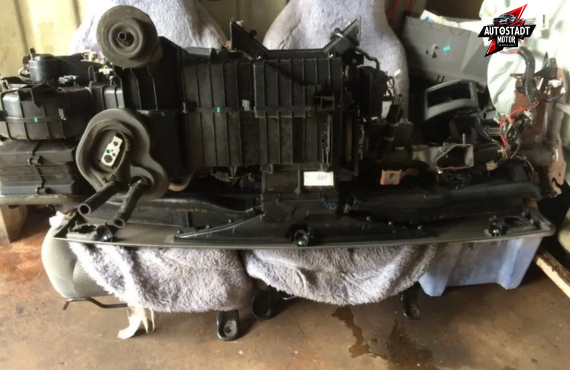
When the evaporator develops a refrigerant leak, the AC may gradually lose its cooling ability. In other situations, the problem can be accompanied by unpleasant odors, excessive moisture, weak airflow, or inconsistent cabin temperatures. Because the evaporator is usually installed deep inside the dashboard or HVAC housing, replacing it is considerably more involved than changing an easily accessible AC component.
For Nissan owners in Dubai, a properly functioning air conditioning system is particularly important. Long periods of driving in high ambient temperatures put considerable demand on the vehicle’s climate-control system. If the AC takes too long to cool the cabin or stops producing cold air altogether, delaying diagnosis can make everyday driving uncomfortable and may allow a refrigerant leak to continue.
AutoStadt Motor Services provides professional Nissan AC inspection and repair services in Dubai, including evaporator diagnosis and replacement. Our technicians focus on identifying the actual cause of the cooling problem before recommending component replacement, helping customers avoid unnecessary repairs.
Signs Your Car Needs Nissan Evaporator Change
Weak Cooling Despite a Properly Working Compressor
One of the first indications of an evaporator-related problem is air conditioning that is not as cold as it should be. You may notice that the AC works reasonably well in the morning but struggles to cool the cabin later in the day.
However, weak cooling does not automatically mean the evaporator needs replacement. Low refrigerant, a restricted expansion valve, condenser problems, compressor wear, or electrical faults can create similar symptoms. Therefore, proper AC diagnosis is essential before removing dashboard components.
Refrigerant Level Keeps Dropping
A recurring loss of refrigerant is a strong reason to investigate the evaporator and the rest of the AC circuit for leaks. Refrigerant should not normally disappear from a sealed air conditioning system.
If the system is repeatedly recharged but loses cooling again after a short period, simply adding more refrigerant is not a permanent solution. A technician should locate the source of the leak and determine whether the evaporator is responsible.
At AutoStadt Motor Services, leak diagnosis can help distinguish an evaporator leak from problems involving AC pipes, O-rings, condenser components, or other connections.
Unusual Smell From the AC Vents
A persistent musty or unpleasant smell can sometimes indicate contamination around the evaporator or HVAC housing. Dust, moisture, bacteria, and organic debris can accumulate in areas where condensation occurs.
A bad smell does not necessarily mean the evaporator itself has failed. Nevertheless, when odor is combined with poor cooling, moisture problems, or other AC symptoms, the evaporator area should be inspected.
Water or Moisture Problems Inside the Cabin
The evaporator naturally produces condensation while the AC operates. This moisture is normally collected and discharged through the vehicle’s drain system.
If the drain is blocked, water can accumulate around the HVAC assembly. In some situations, damaged components or drainage problems can contribute to moisture reaching areas where it should not. Persistent dampness, wet carpets, or unusual water inside the cabin should therefore be investigated instead of being ignored.
AC Performance Changes Frequently
An AC system that alternates between cold and warm air may have several possible causes. Refrigerant pressure issues, expansion valve problems, compressor operation, temperature sensors, blower faults, and evaporator restrictions can all influence cooling performance.
For this reason, an experienced technician should evaluate the entire Nissan air conditioning system rather than replacing the evaporator based on symptoms alone.
Frost or Ice Around the Evaporator Area
An evaporator that becomes excessively cold and develops ice can indicate an airflow restriction, refrigerant-related issue, sensor fault, or other AC problem. Ice formation may eventually reduce airflow and make the system appear to stop cooling.
Because evaporator access can require significant disassembly, accurate diagnosis is important before proceeding with replacement.
Why Choose AutoStadt Motor Services for Nissan Evaporator Change
Replacing an evaporator is not simply a matter of removing an old component and installing another one. The AC system must be handled carefully because the evaporator forms part of the sealed refrigerant circuit and is connected to the vehicle’s HVAC system.
AutoStadt Motor Services approaches Nissan AC repairs with diagnosis first. This means we examine symptoms, inspect the AC system, and determine whether the evaporator is actually the source of the problem.
Nissan-Focused AC Diagnosis
Different Nissan models use different HVAC layouts and component configurations. A Nissan Altima, for example, may have a different access procedure from a Nissan Patrol or Nissan X-Trail.
Understanding the vehicle’s specific configuration helps technicians plan the repair correctly instead of applying the same procedure to every model.
Complete Cooling-System Inspection
A professional evaporator replacement should be supported by a wider inspection of the AC system. Depending on the symptoms, technicians may examine refrigerant pressures, compressor operation, expansion components, AC lines, electrical controls, blower performance, and temperature-related functions.
This broader approach can prevent a situation where the evaporator is replaced but another unresolved problem continues to affect cooling.
Careful Dashboard and HVAC Access
Because the evaporator is commonly located inside the HVAC case behind dashboard components, replacement can require careful interior disassembly.
Poor handling during this process can result in broken clips, damaged wiring, loose trim, or other unnecessary issues. AutoStadt Motor Services focuses on controlled disassembly and reassembly to keep the repair process organized.
Suitable Replacement Components
The quality and compatibility of the replacement evaporator matter. A component should match the vehicle’s specifications and AC system requirements.
Using an unsuitable component can lead to poor cooling performance or compatibility problems. Our technicians can assess the appropriate replacement based on the Nissan model and system configuration.
Service for Dubai Driving Conditions
A Nissan AC system in Dubai needs to perform reliably during demanding daily use. Whether the vehicle is used for commuting, family trips, highway driving, or extended traffic conditions, consistent cabin cooling is important.
AutoStadt Motor Services provides AC repair support designed around the practical needs of Dubai motorists.
How Our Nissan Evaporator Change Process Works
Initial AC Inspection
The process begins with an assessment of the customer’s complaint. We look at symptoms such as weak cooling, refrigerant loss, unusual smells, abnormal airflow, or inconsistent temperature.
The purpose is to understand what the vehicle is experiencing before deciding on a repair.
Refrigerant and Leak Diagnosis
The AC system is evaluated to determine whether refrigerant loss is occurring. If a leak is suspected, technicians investigate the system to identify its location.
This stage is particularly important because low refrigerant can produce symptoms that resemble evaporator failure.
Confirming Evaporator Failure
Once other potential causes have been considered, the technician determines whether the evaporator itself requires replacement.
If an evaporator leak or internal failure is confirmed, the customer can be informed about the recommended repair and the work involved.
HVAC and Dashboard Disassembly
The next stage involves accessing the evaporator housing. Depending on the Nissan model, this can require removal of selected dashboard panels, HVAC components, electrical connections, and other parts that restrict access.
The exact procedure varies between Nissan vehicles, so technicians should follow the appropriate configuration rather than assuming every model is identical.
Removing the Old Evaporator
After reaching the HVAC assembly, the faulty evaporator is carefully removed. Related seals and connections are also inspected because damaged sealing points can contribute to refrigerant leakage.
Any contamination or unusual condition discovered inside the HVAC area can be assessed during this stage.
Installing the Replacement
The replacement evaporator is installed with appropriate seals and connections. The system is then reassembled carefully, ensuring that electrical connections, HVAC controls, ducting, and dashboard components are correctly positioned.
Vacuum and Refrigerant Service
After the AC circuit has been opened, the system requires appropriate evacuation and refrigerant service. Removing unwanted air and moisture from the circuit is an important part of restoring reliable AC performance.
The system is then charged according to the vehicle’s specified requirements rather than simply adding an arbitrary amount of refrigerant.
Final Cooling Test
Finally, the AC system is tested to confirm cooling performance, airflow, temperature behavior, and general operation. The objective is to make sure the repair addresses the original complaint rather than merely replacing a component.
Nissan Evaporator Change vs. Other AC Repairs
Not every Nissan AC problem requires an evaporator replacement. This is an important distinction for vehicle owners.
A damaged condenser may cause refrigerant leakage and poor cooling. A worn compressor can reduce refrigerant circulation. A faulty expansion valve can affect refrigerant flow through the evaporator. A blocked cabin filter can restrict airflow even when the refrigeration system is working correctly.
Similarly, vehicles such as the Toyota Land Cruiser, BMW 5 Series, Mercedes-Benz E-Class, and Tesla models can experience AC problems caused by completely different components.
Therefore, the right approach is to diagnose the entire climate-control system before deciding which part needs to be repaired or replaced.
When Should You Schedule an AC Inspection?
If your Nissan’s AC is gradually becoming weaker, it is better to investigate the problem before the system stops cooling completely. Early diagnosis can sometimes identify a relatively small issue before it develops into a larger repair.
Pay particular attention if you notice repeated refrigerant recharging, unusual smells, poor cooling at idle, inconsistent temperature, or moisture-related problems.
For Dubai drivers, ignoring an AC problem can quickly become inconvenient because the vehicle may spend significant time operating in hot conditions. Booking an inspection when symptoms first appear can help determine the most appropriate solution.
Frequently Asked Questions About Nissan Evaporator Change in Dubai
1. How do I know if my Nissan evaporator is leaking?
A leaking evaporator can cause refrigerant loss and progressively weaker AC cooling. However, refrigerant can leak from many other locations, including the condenser, hoses, fittings, and compressor area. If your Nissan repeatedly needs refrigerant refilling, professional leak diagnosis is recommended rather than assuming the evaporator is faulty.
2. How long does a Nissan evaporator change take?
The time required depends heavily on the Nissan model, dashboard design, HVAC layout, and extent of disassembly required. Some vehicles provide relatively better access, while others require substantial interior work before the evaporator can be reached. AutoStadt Motor Services can assess the specific vehicle and provide a more accurate repair timeframe after inspection.
3. Can I fix a leaking Nissan evaporator without replacing it?
In most cases, a physically damaged or leaking evaporator is replaced rather than permanently repaired. Temporary refrigerant solutions or repeated recharging do not address the underlying leak. A proper replacement is generally the more reliable approach when the evaporator itself has been confirmed as defective.
4. Will changing the evaporator make my Nissan AC colder?
If the evaporator is genuinely responsible for the cooling problem, replacing it can restore proper AC operation. However, overall cooling also depends on the compressor, condenser, expansion device, refrigerant charge, blower, cabin filter, sensors, and electrical controls. A complete AC test after the repair is therefore important.
5. Is Nissan evaporator replacement expensive in Dubai?
The cost varies according to the Nissan model, replacement part, dashboard access, labor requirements, and any additional AC components that need attention. Vehicles requiring extensive dashboard disassembly generally involve more labor than models with easier access. The best way to determine the actual cost is to diagnose the vehicle first and identify exactly what needs to be replaced.
Conclusion
Nissan evaporator change is a specialized AC repair that should be performed only after the source of the cooling problem has been properly identified. Because the evaporator is integrated into the HVAC system and often located behind the dashboard, the job requires careful diagnosis, controlled disassembly, correct component installation, and proper refrigerant servicing.
Weak cooling, repeated refrigerant loss, unusual AC odors, inconsistent temperatures, or moisture problems should not automatically be treated as a reason to replace the evaporator. Instead, a complete inspection can determine whether the evaporator, compressor, condenser, expansion valve, electrical system, or another component is responsible.
For Nissan owners in Dubai, AutoStadt Motor Services offers professional AC diagnosis and Nissan evaporator replacement support with a focus on accurate fault identification and reliable repair. If your Nissan AC is no longer providing the cooling performance you expect, having the system inspected can help you find the real problem and restore comfortable cabin temperatures.


Leave a Comment