
Nissan water pump repair becomes important when the engine’s cooling system can no longer circulate coolant efficiently. The water pump is responsible for moving coolant between the engine, radiator, and other parts of the cooling system so that operating temperatures remain under control. When the pump begins to wear out, the engine may gradually become hotter than normal, coolant can start leaking, or unusual noises may appear from the front of the engine.
For Nissan owners in Dubai, paying attention to cooling-system problems is particularly important. Daily traffic, long commutes, high ambient temperatures, and frequent stop-and-go driving can put considerable demand on the engine cooling system. A small water pump problem can therefore develop into a much more serious overheating issue if it is ignored.
At AutoStadt Motor Services, we approach water pump problems by identifying the actual cause instead of simply replacing parts based on symptoms. Depending on the Nissan model and engine, the problem may involve the pump itself, a worn bearing, damaged seal, drive belt, thermostat, radiator, coolant hose, or another cooling-system component.
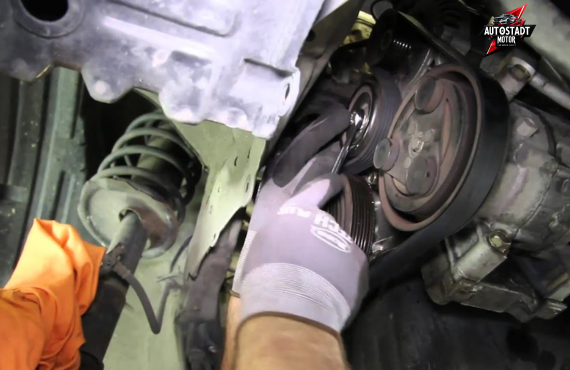
Whether you drive a Nissan Altima, Patrol, X-Trail, Pathfinder, Sunny, or another model, timely inspection can help prevent unnecessary engine damage and keep your vehicle dependable on Dubai roads.
Signs Your Car Needs Nissan Water Pump Repair
A failing water pump does not always stop working suddenly. In many cases, it gives warning signs first. Recognizing those signs allows the problem to be addressed before overheating causes expensive engine repairs.
Engine Temperature Starts Rising
One of the clearest indications of a cooling-system problem is an engine temperature that rises beyond its normal operating range. If your Nissan temperature gauge begins climbing during traffic or longer drives, the water pump should be included in the inspection.
A damaged pump may not circulate coolant at the required rate. Consequently, heat remains concentrated inside the engine instead of being transferred efficiently toward the radiator.
However, overheating does not automatically mean the water pump is defective. A blocked radiator, low coolant level, faulty thermostat, cooling fan issue, or leaking hose can produce similar symptoms. Professional diagnosis is therefore important.
Coolant Appears Under the Vehicle
A puddle or wet area underneath the engine bay may indicate a coolant leak. Water pump seals can deteriorate with age, allowing coolant to escape from the pump area.
Coolant leaks should never be treated as a minor inconvenience. As the coolant level decreases, the cooling system may lose its ability to remove engine heat effectively. Continuing to drive can eventually result in severe overheating.
Unusual Noise from the Engine Area
A worn water pump bearing can create humming, grinding, whining, or rattling sounds. The noise may become more noticeable as engine speed increases.
Since several engine components can produce similar sounds, technicians need to inspect the pump and surrounding components rather than assuming the source immediately. A drive belt, pulley, or another rotating component may also be responsible.
Coolant Level Keeps Dropping
If you regularly need to add coolant but cannot find an obvious external leak, the cooling system requires attention. A water pump seal, hose connection, radiator, or other component could be allowing coolant to escape.
Repeatedly topping up coolant only treats the symptom. Finding the source of the loss is the more reliable approach.
Steam or Excessive Heat
Steam from the engine compartment is a serious warning sign. It can occur when coolant reaches extremely high temperatures or escapes onto hot engine components.
If this happens, continuing to drive can increase the risk of major engine damage. The vehicle should be stopped safely and inspected rather than being driven until the problem becomes worse.
Poor Cooling Performance After Previous Repairs
Sometimes a Nissan continues to experience temperature problems even after another cooling-system component has been replaced. In such situations, the complete system should be reassessed.
A weak water pump, restricted coolant flow, air trapped in the cooling system, or an incorrectly functioning thermostat may be contributing to the problem.
Why Choose AutoStadt Motor Services for Nissan Water Pump Repair
Choosing the right workshop matters because a cooling-system repair involves more than simply removing an old pump and installing another one. The surrounding components must also be checked to understand why the issue occurred and whether anything else could affect the new installation.
Proper Diagnosis Before Replacement
At AutoStadt Motor Services, our technicians inspect the cooling system before recommending Nissan water pump repair. This helps distinguish a defective pump from problems involving the thermostat, radiator, hoses, coolant circulation, drive system, or cooling fans.
This diagnostic-first approach can prevent unnecessary part replacement and gives the vehicle owner a clearer understanding of the repair.
Nissan-Focused Mechanical Service
Different Nissan models use different engine configurations and cooling-system layouts. A repair procedure that applies to a Nissan Sunny may not be identical to one required for a Patrol or X-Trail.
Our workshop handles model-specific mechanical problems with attention to the engine configuration and manufacturer’s requirements.
Quality Replacement Components
The water pump plays a critical role in engine temperature management, so component quality matters. A poor-quality replacement may lead to premature wear, leakage, or reduced cooling performance.
AutoStadt Motor Services focuses on suitable replacement components and correct installation procedures to support reliable long-term operation.
Cooling System Inspection
Replacing the pump without checking the rest of the cooling system can leave an underlying problem unresolved. Therefore, we can inspect related components such as coolant hoses, thermostat operation, radiator condition, drive belts, pulleys, coolant level, and visible leaks as part of the diagnostic process.
This broader inspection is especially useful when a vehicle has experienced overheating more than once.
Suitable for Dubai Driving Conditions
A vehicle that performs normally during a short workshop test may experience significantly greater thermal demand during extended Dubai traffic. A properly functioning cooling system is essential when the vehicle is frequently driven in demanding conditions.
AutoStadt Motor Services provides Nissan mechanical and cooling-system services with everyday Dubai driving requirements in mind.
How Our Nissan Water Pump Repair Process Works
A structured repair process helps ensure that the actual fault is identified and corrected rather than simply treating one visible symptom.
1. Initial Vehicle Assessment
The process begins with a discussion about the symptoms you have noticed. We may ask whether the Nissan has been overheating, losing coolant, making unusual noises, or showing temperature fluctuations.
Understanding when the problem occurs can provide useful diagnostic clues.
2. Cooling System Inspection
The cooling system is then inspected for visible leakage, damaged hoses, coolant contamination, loose connections, and other abnormalities.
The water pump area receives particular attention if there are signs of leakage or abnormal mechanical noise.
3. Diagnostic Testing
Where necessary, additional testing can be used to identify coolant leaks or confirm whether the pump is circulating coolant properly. Other cooling-system components are also assessed because several faults can create similar overheating symptoms.
For example, a faulty thermostat can restrict coolant flow and produce an overheating condition even when the water pump itself is functioning.
4. Water Pump Evaluation
If the inspection indicates a worn or damaged pump, technicians assess its condition and determine whether replacement is required.
Depending on the Nissan engine design, access to the water pump can vary considerably. Some repairs may involve additional components that need to be removed to reach the pump safely.
5. Replacement and Installation
Once the repair is approved, the defective water pump is removed and the replacement component is installed using the appropriate procedures.
Seals and related components are checked during installation because a new pump cannot provide reliable service if surrounding sealing surfaces or associated parts are compromised.
6. Coolant Service and System Checks
After installation, the cooling system is refilled with the appropriate coolant and checked for leakage. The system may also need proper bleeding to remove trapped air.
This step is important because air pockets can interfere with coolant circulation and create temperature irregularities.
7. Final Testing
Finally, the vehicle is checked to confirm that the cooling system is operating correctly. Temperature behavior, coolant circulation, leakage, and other relevant symptoms are reassessed before the Nissan is returned.
The goal is not merely to make the warning symptom disappear but to restore dependable cooling-system operation.
Why Delaying Water Pump Problems Can Be Expensive
A water pump is relatively small compared with the engine, but its role is extremely important. If coolant circulation becomes inadequate, engine temperature can rise rapidly.
Continued overheating may affect components such as the head gasket, cylinder head, seals, and other internal engine parts. In severe situations, the engine can suffer major damage that costs considerably more than addressing the original cooling-system fault.
For this reason, an unusual temperature reading, coolant leak, or mechanical noise deserves attention.
The same principle applies to other vehicles. A Toyota Land Cruiser, BMW 5 Series, Mercedes-Benz E-Class, or Audi Q7 may have different cooling-system designs, but each relies on effective temperature management for dependable engine operation.
Maintaining Your Nissan Cooling System After Repair
Once a water pump has been repaired or replaced, good maintenance can help protect the entire cooling system.
Check the coolant level periodically and pay attention to unexplained changes. If the level repeatedly drops, have the vehicle inspected instead of continuously adding coolant.
It is also useful to monitor the temperature gauge during normal driving. A change from the vehicle’s usual operating behavior can provide an early warning of a developing problem.
Furthermore, coolant should be maintained according to the vehicle’s recommended service requirements. Using an unsuitable coolant or mixing incompatible coolant types can negatively affect the cooling system.
Regular inspection of belts, hoses, radiator condition, thermostat operation, and cooling fans can also help identify developing faults before they lead to overheating.
Frequently Asked Questions About Nissan Water Pump Repair in Dubai
1. How do I know if my Nissan water pump is failing?
Common signs include coolant leakage near the pump, engine overheating, unusual noise from the engine area, repeated coolant loss, and temperature fluctuations. However, these symptoms can also be caused by other cooling-system components. A professional inspection is therefore necessary to confirm whether the water pump is actually responsible.
2. Can I drive my Nissan with a bad water pump?
Driving with a seriously damaged water pump is not recommended. If coolant circulation is inadequate, engine temperature can rise quickly, particularly during heavy traffic or demanding driving conditions. Continued overheating can cause expensive internal engine damage. If your Nissan is overheating or losing coolant rapidly, stop driving when it is safe and arrange for professional inspection.
3. How long does Nissan water pump repair take?
The repair time depends on the Nissan model, engine design, pump location, and condition of related components. Some water pumps are relatively accessible, while others require significant component removal before technicians can reach them. After inspection, AutoStadt Motor Services can provide a more accurate estimate based on the specific vehicle.
4. Does a water pump replacement include coolant service?
Coolant handling is normally an important part of a water pump replacement because the cooling system has to be opened during the repair. The system should then be refilled with suitable coolant and checked for leaks and proper circulation. Depending on the vehicle’s condition, additional cooling-system service may also be recommended.
5. Why is Nissan water pump repair important in Dubai?
A properly functioning cooling system is essential for any Nissan, and demanding driving conditions can make cooling-system reliability even more important. Frequent traffic, extended driving, and high environmental temperatures can place additional thermal demands on a vehicle. Addressing water pump symptoms early can help reduce the risk of overheating and protect expensive engine components.
Conclusion
Nissan water pump repair should not be postponed when your vehicle shows signs of overheating, coolant loss, unusual engine noise, or temperature instability. The water pump is a key part of the cooling system, and its failure can eventually affect much more expensive engine components.
For Nissan owners in Dubai, early diagnosis is a practical way to avoid unnecessary breakdowns and potentially costly engine repairs. Rather than replacing parts based on symptoms alone, AutoStadt Motor Services focuses on identifying the source of the cooling-system problem and checking related components.
Whether your Nissan needs a water pump replacement, coolant leak inspection, thermostat diagnosis, radiator service, or broader cooling-system repair, professional attention can help restore reliable performance. Regular maintenance and timely repairs can keep your Nissan ready for daily Dubai driving while reducing the chances of an unexpected overheating problem.


Leave a Comment