
Range Rover Steering Repair is essential when your luxury SUV develops heavy steering, unusual noises, steering-wheel vibration, or difficulty maintaining a straight line. In Dubai, where high temperatures, dusty roads, heavy traffic, and long-distance driving can place additional stress on steering and suspension components, addressing steering problems early can prevent more expensive repairs.
A Range Rover uses a sophisticated steering system designed to provide precise control while maintaining the comfortable driving experience expected from a premium SUV. Depending on the model and generation, the system may involve electric or hydraulic power assistance, steering racks, tie rods, ball joints, steering columns, sensors, control modules, and related suspension components. When one part starts to fail, the symptoms can sometimes appear to be minor at first but become progressively more serious.
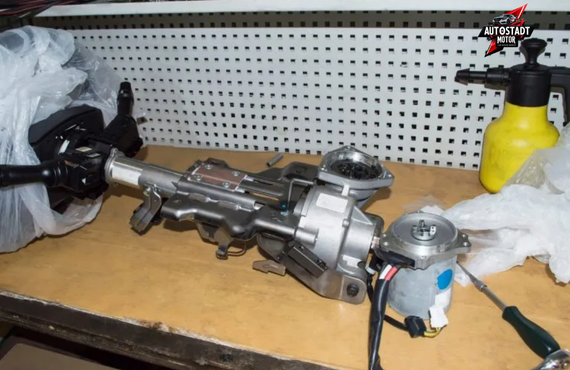
At AutoStadt Motor Services, we understand that steering problems should never be treated as an ordinary maintenance issue. Steering directly affects vehicle control, stability, tyre wear, and driving safety. Our approach combines professional inspection, accurate fault diagnosis, quality replacement parts, and careful testing to identify the actual cause rather than simply replacing components based on symptoms.
Whether you drive a Range Rover Sport, Range Rover Vogue, Range Rover Velar, or another model in the Range Rover family, timely inspection can help protect both your vehicle and your driving experience.
Signs Your Car Needs Range Rover Steering Repair
Recognizing steering problems early can make a major difference. Some symptoms may originate from the steering system itself, while others can be connected to suspension, wheel alignment, tyres, or electronic components. A proper inspection is therefore important.
1. Heavy or Stiff Steering
One of the most noticeable signs is steering that suddenly becomes harder to turn. If the steering wheel feels unusually heavy when parking or making slow-speed turns, there could be a problem with the power steering system, steering rack, pump, motor, fluid, or related components.
In modern Range Rover models, an electronic steering fault can also cause changes in steering assistance. Continuing to drive with significantly reduced steering assistance is not advisable because it can affect vehicle control.
2. Steering Wheel Vibration
A vibrating steering wheel can indicate several issues. Wheel imbalance, damaged tyres, worn suspension components, alignment problems, or steering-system wear can all contribute.
For example, if vibration becomes particularly noticeable at higher speeds, the problem may involve wheels or tyres rather than the steering rack itself. This is why AutoStadt Motor Services checks the surrounding systems instead of assuming every steering complaint requires a steering rack replacement.
3. Steering Pulls to One Side
If your Range Rover consistently moves toward the left or right when you release light pressure on the steering wheel, wheel alignment should be checked.
Uneven tyre pressure can also cause pulling. However, worn tie rods, suspension components, steering linkage, or incorrect wheel geometry can produce similar symptoms. In Dubai, regular inspection is particularly useful because frequent driving over speed bumps and uneven road surfaces can gradually affect suspension and steering components.
4. Unusual Steering Noises
Hearing clicking, knocking, whining, clunking, or grinding when turning the steering wheel should not be ignored.
A whining sound may point toward a power steering-related issue on systems that use hydraulic assistance, while clicking or knocking can sometimes originate from steering joints, suspension components, or other mechanical parts.
The exact source should be identified before repair work begins.
5. Excessive Steering Wheel Play
If the steering wheel feels loose or has more movement than usual before the wheels respond, there may be excessive wear within the steering linkage or steering rack.
Excessive play can reduce steering precision. It can also make the vehicle feel unstable, particularly when changing lanes or driving at highway speeds.
6. Uneven Tyre Wear
Steering and suspension problems can sometimes cause unusual tyre wear. If the inner or outer edges of your front tyres are wearing significantly faster than the rest of the tread, wheel alignment or suspension geometry should be inspected.
Ignoring the issue can lead to premature tyre replacement and may reduce road grip.
7. Steering Warning Light
Modern Range Rover vehicles contain sophisticated electronic systems that monitor steering assistance and related functions. If a steering warning message or dashboard warning light appears, professional diagnostic scanning should be performed.
Electronic faults should not be guessed at. The correct diagnostic equipment can help identify stored fault codes and determine whether the problem involves a sensor, wiring, steering control module, motor, or another component.
Why Choose AutoStadt Motor Services for Range Rover Steering Repair
Choosing the right workshop matters when dealing with a premium SUV. Range Rover steering systems can involve both mechanical and electronic components, meaning a basic visual inspection may not always reveal the underlying fault.
AutoStadt Motor Services focuses on systematic diagnosis and professional automotive repair. Rather than replacing expensive parts unnecessarily, technicians first investigate the symptoms and identify the component responsible for the problem.
Experienced Range Rover Diagnosis
Range Rover vehicles require technicians who understand the relationship between steering, suspension, wheel alignment, electronic controls, and vehicle dynamics. A steering complaint may sometimes be caused by a component outside the steering rack itself.
Our diagnostic approach is designed to identify the source of the problem before repair recommendations are made.
Complete Steering System Inspection
A proper Range Rover steering inspection may include checking:
- Steering rack condition
- Tie rods and steering linkage
- Steering joints
- Power steering components
- Steering fluid where applicable
- Electronic steering assistance
- Steering sensors
- Suspension components
- Wheel alignment
- Tyres and tyre pressure
- Related warning codes
This broader inspection helps prevent the common mistake of treating only the visible symptom.
Quality Replacement Components
When a component requires replacement, using an appropriate-quality part is important for reliability and long-term performance. Steering components are safety-critical, so shortcuts can create unnecessary risks.
AutoStadt Motor Services focuses on suitable replacement components and professional installation according to the vehicle’s requirements.
Dubai-Focused Automotive Expertise
Dubai driving conditions can be demanding. High temperatures, stop-and-go traffic, extensive highway driving, road construction, speed bumps, and dusty conditions can contribute to accelerated wear across different vehicle systems.
Although steering components are built for durability, regular inspection is still valuable for premium vehicles such as Range Rover.
The same principle applies to other vehicles. A Toyota used for daily commuting, a Nissan SUV regularly driven around Dubai, or a BMW used for highway travel can also develop alignment and steering-related problems. However, the complexity and repair requirements can vary significantly between vehicles.
How Our Range Rover Steering Repair Process Works
At AutoStadt Motor Services, an organized diagnostic process helps ensure that the repair addresses the actual fault.
Step 1: Customer Consultation
The process begins by understanding what you have noticed. Information such as when the problem occurs, whether it happens during parking or highway driving, whether there is a noise, and whether a warning light has appeared can provide valuable diagnostic clues.
Step 2: Visual and Mechanical Inspection
The steering and related suspension components are inspected for visible damage, leaks, excessive movement, worn joints, and other abnormalities.
Technicians also inspect tyres and wheels because these can sometimes create symptoms that feel like steering problems.
Step 3: Diagnostic Scanning
If the vehicle has an electronic steering system or dashboard warning, diagnostic equipment may be used to check the vehicle’s electronic modules for stored faults.
This helps determine whether the issue is mechanical, electrical, electronic, or a combination of factors.
Step 4: Steering and Suspension Testing
The steering system is evaluated for excessive play, abnormal resistance, noises, and other signs of wear. Related suspension components are also checked because worn suspension parts can influence steering response and alignment.
Step 5: Repair Recommendation
Once the cause has been identified, the recommended repair is explained clearly. Depending on the diagnosis, the solution could involve adjustment, replacement of a worn component, steering-system repair, electronic diagnosis, fluid-related service, or wheel alignment.
Step 6: Component Replacement or Repair
The required work is then carried out using suitable parts and professional installation procedures. If a steering rack, tie rod, joint, sensor, or other component requires replacement, the surrounding system should be checked at the same time.
Step 7: Alignment and Final Testing
After steering-related work, wheel alignment may be necessary depending on which components were removed or replaced.
The vehicle is then tested to verify steering response, stability, abnormal noises, and overall driving behavior. This final step is important because a repair is not complete simply because a replacement part has been installed.
Frequently Asked Questions About Range Rover Steering Repair in Dubai
1. How much does Range Rover Steering Repair cost in Dubai?
The cost depends on the exact problem, Range Rover model, required parts, and amount of labor involved. A minor steering-related issue may require considerably less work than a steering rack or electronic steering-system replacement.
For that reason, it is better to diagnose the vehicle first rather than relying on a fixed price without knowing the underlying fault. AutoStadt Motor Services can inspect the vehicle and determine which component actually requires attention.
2. How do I know whether my Range Rover needs a steering rack replacement?
A worn steering rack can produce symptoms such as excessive steering play, fluid leakage on hydraulic systems, abnormal noises, inconsistent steering response, or difficulty maintaining precise control. However, similar symptoms can also come from tie rods, steering joints, suspension components, alignment problems, or other parts.
A professional inspection is therefore necessary before replacing a steering rack. Replacing an expensive component without confirming the fault can unnecessarily increase repair costs.
3. Can wheel alignment cause Range Rover steering problems?
Yes. Incorrect wheel alignment can make a Range Rover pull to one side, create an off-center steering wheel, and contribute to uneven tyre wear. Alignment problems can sometimes develop after hitting potholes, curbs, or other road obstacles.
However, alignment should not automatically be considered the only cause. If the vehicle has worn steering or suspension components, an alignment alone may not permanently resolve the symptoms. The entire system should be inspected.
4. Is it safe to drive a Range Rover with heavy steering?
If steering suddenly becomes very heavy, difficult, or unpredictable, it is better to have the vehicle inspected as soon as possible. Heavy steering may indicate a loss of power assistance or another mechanical or electronic fault.
Because steering is directly related to vehicle control, delaying diagnosis can increase the possibility of additional component damage or an unsafe driving situation. If the steering becomes severely difficult or the vehicle cannot be controlled normally, avoid driving it and arrange appropriate roadside assistance.
5. How often should I have my Range Rover steering system inspected in Dubai?
There is no single inspection interval that applies to every Range Rover because model, mileage, driving conditions, and vehicle age all matter. However, steering should be checked whenever you notice changes in steering weight, unusual noises, vibration, pulling, excessive play, uneven tyre wear, or dashboard warnings.
Routine servicing is also a good opportunity to inspect steering and suspension components. Early detection can help prevent a relatively manageable issue from becoming a major repair.
Conclusion
Range Rover Steering Repair is an important service for maintaining precise handling, driving stability, and confidence behind the wheel. Heavy steering, vibration, unusual noises, steering play, pulling, uneven tyre wear, and warning lights should never be ignored, particularly on a sophisticated luxury SUV.
Dubai’s demanding driving environment makes regular inspection even more valuable. Whether the problem involves the steering rack, tie rods, steering joints, power assistance, electronic components, suspension, or wheel alignment, accurate diagnosis is the first step toward an effective repair.
AutoStadt Motor Services provides a professional approach to Range Rover steering diagnosis and repair, focusing on identifying the actual cause of the problem and carrying out the necessary work correctly. From initial inspection and electronic diagnostics to component replacement, alignment, and final testing, every stage should be handled with attention to safety and reliability.
If your Range Rover no longer feels as precise or responsive as it once did, do not wait for the problem to become more serious. Professional Range Rover Steering Repair in Dubai can help restore proper steering performance and keep your luxury SUV ready for the road.


Leave a Comment