
Range Rover Heating Repair is essential when your luxury SUV stops producing warm air, develops inconsistent cabin temperatures, or struggles to maintain comfortable climate control. Although Dubai is known for extreme heat, a properly functioning heating system remains an important part of your Range Rover’s HVAC system. The heater works alongside the air conditioning and climate control components, helping regulate cabin temperature and supporting clear visibility when needed.
A Range Rover heating problem can originate from several components, including the heater core, blower motor, thermostat, coolant system, heater control valve, temperature sensors, climate control module, or electrical connections. Because these systems are interconnected, replacing one component without identifying the actual fault can lead to unnecessary expenses.
At AutoStadt Motor Services, we provide professional Range Rover Heating Repair in Dubai with a diagnostic-first approach. Our technicians inspect the heating and climate control system to identify the underlying problem before recommending repairs. Whether you drive a Range Rover Evoque, Range Rover Sport, Velar, or full-size Range Rover, timely inspection can prevent a minor HVAC issue from becoming a more expensive repair.
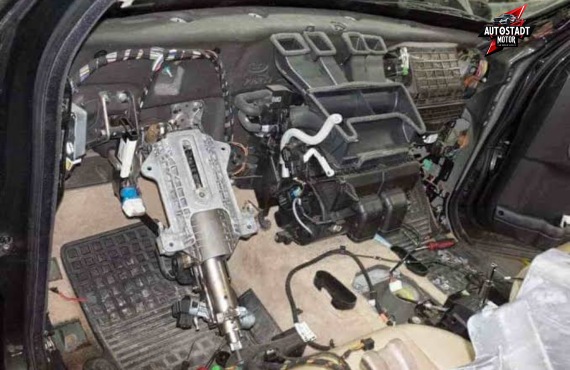
Dubai’s driving conditions can also place additional stress on cooling and climate-control components. Frequent traffic, high ambient temperatures, long journeys, and extensive use of the vehicle’s HVAC system can contribute to premature wear. Therefore, recognizing early warning signs is an important part of Range Rover maintenance.
Signs Your Car Needs Range Rover Heating Repair
Recognizing heating problems early can help protect your vehicle and avoid more complicated HVAC repairs. If your Range Rover shows any of the following symptoms, professional inspection is recommended.
No Warm Air From the Vents
One of the clearest signs that you need Range Rover Heating Repair is when the blower operates but the air coming through the vents remains cold. Several problems can cause this symptom.
Low coolant, a restricted heater core, a malfunctioning thermostat, a faulty heater control valve, or a climate-control fault may prevent sufficient heat from reaching the cabin. A technician should diagnose the system rather than assuming that the heater itself needs replacement.
Heater Produces Weak or Inconsistent Heat
If your Range Rover initially produces warm air but becomes cold while driving, there may be an issue with coolant circulation or temperature regulation. A partially blocked heater core can restrict coolant flow, while a thermostat problem can prevent the engine from reaching or maintaining the correct operating temperature.
In some cases, the problem may also be related to the HVAC blend door or actuator responsible for controlling the temperature of air entering the cabin.
Strange Smell From the Heating System
An unusual sweet smell inside the cabin can indicate a coolant leak. If coolant is leaking from or around the heater core, the smell may become noticeable when the heating system operates.
A coolant-related smell should not be ignored. Continuing to drive without identifying the source can potentially result in coolant loss and engine overheating.
Fogging or Moisture Inside the Cabin
Persistent windshield fogging combined with a sweet coolant smell can be another warning sign of a heater core problem. Since the heater core is part of the vehicle’s HVAC system, a leak can introduce moisture into the cabin.
Professional Range Rover Heating Repair can determine whether the heater core, hoses, seals, or another cooling-system component is responsible.
Blower Motor Works Slowly or Makes Noise
The blower motor pushes heated or cooled air through the cabin vents. If it operates intermittently, produces unusual noises, or only works at certain speed settings, the problem could involve the blower motor, resistor, fuse, wiring, or climate-control module.
A weak blower can make the heating system appear ineffective even when the heater is producing sufficient heat.
Temperature Controls Do Not Respond Properly
Modern Range Rover models use sophisticated electronic climate-control systems. If changing the temperature setting produces little or no difference, the problem may involve a temperature sensor, blend door actuator, control module, or related electrical component.
A proper diagnostic scan can help identify electronic faults that cannot be accurately diagnosed through visual inspection alone.
Coolant Level Keeps Dropping
Repeated coolant loss is another important warning sign. Coolant does not normally disappear from a healthy closed system. If the level continues to fall, there could be a leak involving hoses, the radiator, water pump, heater core, expansion tank, or another component.
Ignoring coolant loss can affect both heating performance and engine cooling.
Why Choose AutoStadt Motor Services for Range Rover Heating Repair
Choosing the right workshop matters when repairing a sophisticated luxury SUV. Range Rover models combine mechanical cooling components with electronically controlled HVAC systems, so accurate diagnosis is essential.
Experienced Range Rover Technicians
At AutoStadt Motor Services, our technicians approach Range Rover Heating Repair by examining the complete heating and climate-control system rather than focusing on a single symptom.
Whether the problem involves coolant circulation, the heater core, blower motor, thermostat, HVAC actuator, or electronic controls, the objective is to locate the actual source of the fault.
Diagnostic-First Approach
Replacing parts without confirming the problem can quickly increase repair costs. Our diagnostic process helps determine whether a component requires repair, replacement, cleaning, or further testing.
This approach is particularly valuable for modern Range Rover vehicles where electronic modules and sensors can create symptoms that appear to be mechanical problems.
Quality Replacement Components
A heating system repair should be performed using components appropriate for the vehicle. Depending on the diagnosis, repairs may involve hoses, thermostats, heater control valves, blower components, sensors, actuators, or heater-core-related parts.
Using suitable replacement components helps maintain reliable operation and reduces the likelihood of repeated failures.
Complete HVAC Inspection
Heating problems can sometimes be connected to other systems. Therefore, our inspection may include the cooling system, coolant level, heater hoses, blower operation, HVAC controls, temperature sensors, and related electrical components.
This broader approach helps prevent situations where a temporary repair hides an underlying problem.
Dubai-Focused Automotive Service
Dubai’s climate creates unique demands on vehicle cooling and climate-control systems. Although heating may not be used as frequently as air conditioning, the same cooling-system components can influence both engine temperature management and cabin heating.
At AutoStadt Motor Services, we understand the importance of reliable HVAC performance for Dubai drivers and provide service focused on long-term vehicle reliability.
How Our Range Rover Heating Repair Process Works
A structured repair process makes it easier to identify faults accurately and avoid unnecessary component replacement.
Initial Inspection
The process begins with an assessment of the symptoms. Our technician may ask when the problem occurs, whether the heater works intermittently, whether the engine temperature is normal, and whether unusual smells or noises have appeared.
These details can provide useful clues before physical testing begins.
HVAC and Cooling System Diagnosis
The heating system is connected to the engine cooling system, so both areas may need inspection. Technicians check coolant levels, inspect hoses and connections, and evaluate whether coolant is circulating correctly.
The thermostat and other temperature-management components may also be examined if the engine is not reaching its expected operating temperature.
Heater Core and Airflow Inspection
If coolant and engine-temperature checks do not explain the problem, attention can shift toward the heater core and airflow system. A restricted heater core may reduce heat transfer, while airflow problems can point toward the blower motor, cabin filter, ducts, or related components.
Where necessary, the system is tested to determine whether heat is being generated but not properly delivered into the cabin.
Electronic Diagnostic Testing
Modern Range Rover vehicles use electronic controls for climate management. Diagnostic equipment can help identify stored fault codes and communication problems involving HVAC modules, sensors, actuators, and other components.
However, fault codes are treated as diagnostic information rather than automatic instructions to replace a part. Physical testing remains important.
Repair or Component Replacement
Once the cause has been identified, our technicians explain the recommended repair. Depending on the fault, this could involve repairing a coolant leak, replacing a thermostat, servicing a blower motor, addressing an actuator problem, repairing wiring, or replacing a defective HVAC component.
The repair is selected according to the vehicle’s condition and diagnostic findings.
Final Testing
After the repair, the heating system is tested again. Temperature output, blower speeds, climate-control operation, coolant levels, and other relevant functions are checked to ensure the original issue has been addressed.
This final step is important because a successful repair should restore consistent system operation rather than simply eliminate one symptom.
Range Rover Heating Repair and Preventive Maintenance
Regular maintenance can reduce the risk of heating-system problems. Checking coolant condition and level is particularly important because the same coolant system contributes to engine temperature management and cabin heating.
Drivers should also pay attention to unusual smells, coolant leaks, temperature fluctuations, weak airflow, and changes in climate-control performance.
Although Range Rover owners may primarily think about air conditioning in Dubai, the vehicle’s HVAC system should be maintained as a complete system. A problem affecting coolant circulation, temperature control, or airflow can eventually influence other components.
Preventive inspections can also be useful before long road trips. Addressing a small coolant leak or weak blower motor before a failure occurs may help prevent an inconvenient breakdown.
Other premium vehicles, including BMW, Mercedes-Benz, and Tesla models, also use sophisticated climate-control technology, but Range Rover systems have their own model-specific diagnostic requirements. Similarly, owners of Toyota Land Cruiser and Nissan Patrol vehicles understand the importance of maintaining reliable climate systems in Dubai’s demanding environment.
Frequently Asked Questions About Range Rover Heating Repair in Dubai
1. Why is my Range Rover heater blowing cold air?
Cold air from the heater can have several causes. Low coolant, a faulty thermostat, restricted coolant circulation, a blocked heater core, a heater control valve problem, or a malfunctioning blend door actuator can all affect heating performance.
The correct repair depends on the underlying cause. AutoStadt Motor Services can inspect the cooling and HVAC systems to determine why your Range Rover is not producing sufficient heat.
2. Can low coolant cause Range Rover heating problems?
Yes. The cabin heater depends on hot engine coolant flowing through the heater core. If the coolant level becomes too low, there may not be enough coolant circulating through the heater core to provide consistent cabin heat.
However, low coolant should not simply be topped up repeatedly without finding the reason for the loss. A leak may exist somewhere in the cooling system. Professional inspection can help locate the source.
3. How do I know if my Range Rover heater core is damaged?
Possible heater-core warning signs include weak or inconsistent heating, a sweet coolant smell inside the cabin, unexplained coolant loss, and persistent windshield fogging. In some cases, dampness around the passenger-side carpet can also indicate a coolant-related leak.
Because similar symptoms can come from other components, proper testing is necessary before confirming a heater-core fault.
4. Is Range Rover Heating Repair expensive in Dubai?
The cost depends on the actual cause of the problem. A simple electrical connection, sensor, fuse, or thermostat issue may require considerably less work than a heater-core replacement or major HVAC repair.
At AutoStadt Motor Services, the recommended repair should be based on diagnosis rather than replacing multiple parts unnecessarily. This helps customers understand what needs to be repaired and why.
5. How often should I have my Range Rover heating and climate system inspected?
There is no single inspection interval that applies to every Range Rover because maintenance requirements vary by model, age, mileage, and driving conditions. However, the heating and climate-control system should be checked whenever you notice reduced airflow, inconsistent temperature, unusual smells, coolant loss, or abnormal noises.
For Dubai drivers, regular cooling-system and HVAC inspections are particularly worthwhile because high ambient temperatures place considerable demands on vehicle thermal-management systems.
Conclusion
Range Rover Heating Repair should not be delayed when your SUV develops cold airflow, inconsistent cabin temperatures, coolant loss, strange smells, weak blower performance, or climate-control faults. A heating problem can be more than a comfort issue because it may be connected to the vehicle’s cooling system, electrical controls, or other important components.
The most effective solution is accurate diagnosis followed by the appropriate repair. At AutoStadt Motor Services, our technicians inspect the heating, HVAC, cooling, and electronic systems to identify the underlying fault before recommending a solution.
Whether you own a Range Rover Evoque, Range Rover Sport, Velar, or another Range Rover model, professional maintenance can help keep the vehicle dependable in Dubai’s demanding driving environment.
If your Range Rover is not heating correctly, producing unusual smells, losing coolant, or experiencing climate-control problems, arrange an inspection with AutoStadt Motor Services. Addressing the issue early can help protect the vehicle, improve HVAC performance, and prevent a minor fault from developing into a more complicated repair.


Leave a Comment