
McLaren electrical repair is essential when your supercar develops warning lights, unexplained battery drain, malfunctioning electronics, starting difficulties, or problems with its advanced vehicle systems. Modern McLaren vehicles combine high-performance engineering with sophisticated electronic controls, meaning even a seemingly minor electrical fault can affect drivability, performance, or the operation of important vehicle functions.
From the McLaren 570S and 720S to the Artura and GT, different models use complex electrical architectures to coordinate engine management, transmission controls, sensors, driver assistance features, and infotainment systems. Identifying a fault correctly requires more than checking the battery or replacing a fuse. Technicians need to investigate the symptoms, examine relevant circuits, and use suitable diagnostic equipment to identify the underlying cause.
Dubai’s driving conditions make reliable electrical performance particularly important. High ambient temperatures, frequent stop-and-go traffic, extended parking periods, and heavy use of air conditioning can place additional demands on vehicle batteries and electrical components. Over time, a weak battery, damaged connection, deteriorating wiring, or faulty sensor may cause intermittent problems that become increasingly frustrating.
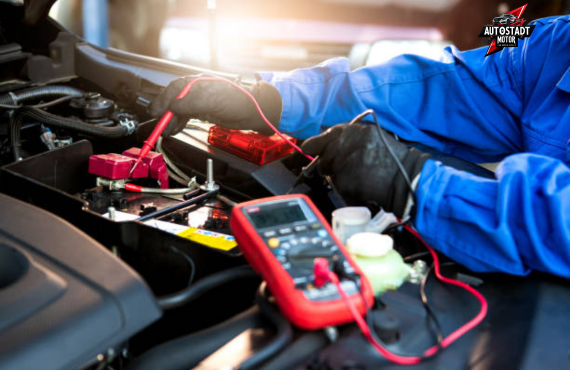
At AutoStadt Motor Services, McLaren electrical repair begins with understanding the symptoms and determining which components or circuits require attention. The goal is to identify the actual fault, recommend an appropriate solution, and help restore the vehicle’s reliable operation without unnecessary parts replacement.
Whether your McLaren displays an electrical warning, struggles to start, or develops an intermittent electronic malfunction, arranging a professional inspection can help prevent a minor issue from becoming a more complicated repair.
Signs Your Car Needs McLaren Electrical Repair
Electrical problems do not always appear as a complete system failure. In many cases, the vehicle continues to operate while displaying smaller warning signs. Recognizing these symptoms early can help technicians diagnose the issue before additional systems are affected.
1. Dashboard Warning Lights and Error Messages
Unexpected dashboard warnings are among the most common reasons to arrange McLaren electrical repair.
A warning may relate to the battery, charging system, engine management, transmission, braking electronics, or another monitored system. However, a warning message does not automatically mean the component named on the dashboard has failed. Sometimes the underlying cause is a voltage fluctuation, damaged connection, faulty sensor, or communication problem.
A professional diagnostic scan can help identify stored fault codes and determine whether the problem is active, intermittent, or associated with another system.
2. Battery Drain or Repeated Starting Problems
If your McLaren struggles to start after being parked, the battery or charging system may need inspection.
Possible causes include an ageing battery, poor terminal connections, an alternator or charging-system fault where applicable, or an electrical component drawing excessive current while the vehicle is switched off.
Dubai owners who leave their cars parked for extended periods should pay attention to repeated low-battery warnings. Nevertheless, a discharged battery should not automatically be treated as the root cause until the charging system and possible parasitic current draw have been evaluated.
3. Electronic Features Stop Working Properly
Modern McLaren vehicles depend on electronic controls for many convenience and driving functions. Depending on the model, faults may affect the infotainment display, central locking, power windows, lighting, climate controls, parking sensors, or other equipment.
If several features stop working around the same time, a shared power supply, ground connection, fuse, or communication network may be involved.
When only one feature fails, the issue may be limited to its individual switch, motor, wiring, sensor, or control module. Accurate diagnosis helps distinguish between these possibilities.
4. Intermittent Electrical Faults
An electrical problem that appears one day and disappears the next can be especially difficult to identify.
For example, a warning might appear after the vehicle has been parked in hot weather, or a particular function may stop responding temporarily before returning to normal. Such behaviour can be associated with loose connections, damaged wiring, voltage irregularities, moisture intrusion, or a component beginning to fail.
Although an intermittent fault may seem harmless when the vehicle is operating normally again, it should not be ignored if it repeatedly returns.
5. Lights Flicker or Electrical Performance Changes
Flickering headlights, inconsistent interior lighting, or unusual changes in electrical operation can indicate a power supply or charging issue.
The cause may involve the battery, charging system, grounding points, wiring, or the affected lighting circuit. A technician should check the electrical supply under appropriate operating conditions instead of replacing bulbs or components without further investigation.
6. Unusual Electrical Smells or Visible Wiring Damage
A burning smell, melted insulation, discoloured connectors, or visible wiring damage requires immediate attention.
These symptoms may indicate overheating or an electrical short circuit. Continuing to operate the vehicle could increase the risk of further damage.
If you notice smoke, a burning electrical smell, or signs of overheating, stop driving when safe and arrange professional assistance. Do not touch exposed wiring or attempt to disconnect high-voltage components yourself.
Why Choose AutoStadt Motor Services for McLaren Electrical Repair
Choosing a workshop for a high-performance vehicle involves more than finding someone who can read a fault code. The important step is translating diagnostic information into an accurate repair plan.
Model-Specific Fault Assessment
Different McLaren models can have different electronic configurations, components, and diagnostic requirements. A procedure suitable for one model may not apply to another.
AutoStadt Motor Services can assess the vehicle’s reported symptoms and identify the appropriate diagnostic direction. The model, production year, installed equipment, and fault history all help determine which checks are relevant.
Diagnostic Testing Instead of Guesswork
Replacing parts based on a warning light alone can increase costs without resolving the original problem.
For instance, a charging warning might be related to a battery, a charging component, wiring, or a poor connection. Similarly, an engine-related fault code may indicate a sensor signal problem rather than a failed engine component.
A structured diagnostic process helps narrow down the possibilities before repair work begins.
Attention to Wiring and Connections
Electrical faults can originate from relatively small defects, including corroded terminals, loose connectors, damaged insulation, poor grounding, or broken wiring.
These problems may cause multiple symptoms or lead to intermittent communication failures. Checking the relevant circuit can help prevent unnecessary replacement of expensive electronic modules.
Repair Recommendations Based on Findings
Not every electrical issue requires a major repair.
A weak battery may need replacement, while a damaged connector may require electrical repair. A persistent communication fault could require additional testing of wiring and control modules.
AutoStadt Motor Services focuses on identifying the problem and explaining the repair required for the vehicle’s condition.
Care for High-Performance Vehicles
A McLaren is engineered differently from an everyday vehicle such as a Toyota Corolla or Nissan Altima. Its performance systems, electronic controls, and component packaging may require a more specific diagnostic approach.
Likewise, although BMW and Mercedes-Benz vehicles also use sophisticated electronics, their diagnostic procedures and system layouts are not interchangeable with those of a McLaren.
For specialist operations involving manufacturer-restricted software, programming, security access, or high-voltage systems, the necessary equipment and qualifications must be confirmed before work proceeds.
How Our McLaren Electrical Repair Process Works
A reliable electrical repair follows a sequence of checks designed to establish what has failed and why. At AutoStadt Motor Services, the diagnostic process can include the following stages, depending on the reported symptoms and vehicle specification.
Step 1: Discuss the Symptoms
The process begins with the driver’s description of the problem.
The technician may ask when the warning first appeared, whether the vehicle had difficulty starting, whether multiple electronic features stopped working, and whether the issue occurs regularly or only under particular conditions.
Details such as recent battery replacement, jump-starting, accessory installation, or extended parking can also provide useful diagnostic clues.
Step 2: Carry Out a Visual Inspection
The relevant areas are inspected for obvious signs of damage or deterioration.
Depending on the complaint, this may include the battery and terminals, accessible wiring, fuses, connectors, grounding points, and the affected electrical component. Signs of heat damage, corrosion, loose connections, or previous repair work may help narrow down the cause.
A visual inspection is useful, but it does not replace electrical testing when the fault is hidden or intermittent.
Step 3: Scan the Vehicle for Diagnostic Fault Codes
Where suitable diagnostic equipment is available, the vehicle’s relevant electronic control units are scanned for stored fault codes and supporting information.
The results can help identify which systems have reported a problem. However, fault codes must be interpreted in context. A code identifies a detected condition; it does not always confirm that the named component itself needs replacement.
Additional tests may be necessary to establish the underlying cause.
Step 4: Test the Relevant Electrical Circuit
After reviewing the findings, the technician can investigate the affected circuit.
Depending on the fault, this may involve checking battery voltage, charging performance, power supply, ground connections, circuit continuity, or the signals produced by a sensor.
If the issue appears to involve battery drain while parked, an appropriate current-draw test may be required. The vehicle must be prepared correctly for this test because modern electronic systems can remain active for a period after shutdown.
Step 5: Identify the Failed Component or Connection
The results of the inspection and electrical testing help determine whether the problem involves the battery, wiring, connector, fuse, sensor, charging system, control module, or another component.
Where evidence is inconclusive, further diagnosis may be necessary before recommending replacement.
This stage is particularly important for McLaren vehicles because electronic components can be costly, and replacing the wrong part may leave the original fault unresolved.
Step 6: Complete the Necessary Repair
Once the cause has been established, the appropriate repair can be recommended.
Depending on the findings, this may include battery replacement, connector repair, wiring repair, fuse replacement, sensor replacement, or further work on the affected electrical system.
Control-module coding, software programming, immobiliser work, and high-voltage battery repairs require the appropriate model-specific equipment, access, and qualifications. These services should only be undertaken when the necessary capabilities are available.
Step 7: Verify the Repair
After the repair, the affected system should be checked again.
This may involve repeating relevant electrical measurements, rescanning for fault codes, checking charging performance, or confirming that the affected feature operates correctly.
Where appropriate, the vehicle may also require a controlled road test or additional monitoring to confirm that the original symptom has been resolved.
Preventive Maintenance for McLaren Electrical Systems in Dubai
Electrical maintenance is not only about responding to warning lights. Regular checks can help identify developing problems before they interrupt the vehicle’s use.
Monitor battery condition. Battery performance can deteriorate with age, temperature exposure, and repeated discharge. If your McLaren is used infrequently, follow the manufacturer’s guidance for storage and battery maintenance.
Investigate repeated low-voltage warnings. A warning that returns after charging or replacing the battery may indicate an unresolved charging fault or excessive current draw.
Avoid unsuitable electrical accessories. Poorly installed dash cameras, tracking devices, chargers, or aftermarket electronics can affect vehicle circuits or contribute to battery drain. Any installation should be compatible with the vehicle.
Respond promptly to warning messages. Some warnings indicate a minor issue, while others may involve important vehicle functions. Consult the owner’s manual and arrange assessment according to the warning’s urgency.
Keep repairs properly documented. Records of battery replacement, electrical repairs, software work, and recurring symptoms can help technicians identify patterns during future inspections.
These measures are useful for other premium vehicles too, including the Mercedes-Benz AMG range and BMW M models. However, maintenance procedures should always reflect the specific vehicle rather than applying a generic checklist to every car.
Frequently Asked Questions About McLaren Electrical Repair in Dubai
1. What are the most common reasons a McLaren needs electrical repair?
Common reasons include battery or charging problems, loose connections, wiring damage, sensor faults, blown fuses, control-module communication issues, and malfunctioning electronic accessories. The symptoms can overlap, so a proper inspection is important. For example, repeated starting problems may originate from the battery, but they can also be linked to the charging system or an electrical drain while the vehicle is parked. A diagnostic assessment helps establish which cause is most likely.
2. Why does my McLaren keep showing electrical warning lights?
An electrical warning may appear because the vehicle has detected abnormal voltage, a sensor signal outside its expected range, a communication fault, or a problem within a monitored system. In some cases, a weak battery can trigger additional warnings because several electronic modules are sensitive to voltage changes. However, clearing the warning without identifying the cause may allow the problem to return. The stored fault information and relevant electrical tests should be reviewed before deciding which repair is necessary.
3. How much does McLaren electrical repair cost in Dubai?
The cost depends on the fault, the affected component, the model, and the amount of diagnostic work required. A battery or connector issue may be relatively straightforward, while wiring faults, control-module problems, or specialist programming can require more time and equipment. Parts availability can also influence the final cost. AutoStadt Motor Services can assess the reported problem and provide a repair recommendation based on the findings. It is best to obtain an assessment before assuming that a warning light requires an expensive component replacement.
4. Can I drive my McLaren if an electrical warning appears?
That depends on the warning and the vehicle’s behaviour. Some warnings may allow cautious travel to a suitable repair facility, while faults involving braking, steering, engine operation, charging, or high-voltage systems may require the vehicle to be stopped. If the dashboard displays a stop warning, the vehicle loses important functions, or you notice smoke or a burning smell, stop in a safe location and arrange assistance. Follow the owner’s manual for the specific warning rather than assuming every electrical message has the same level of urgency.
5. Can AutoStadt Motor Services diagnose battery drain and electronic faults on McLaren vehicles?
AutoStadt Motor Services can assess electrical symptoms and determine the appropriate diagnostic steps based on the vehicle and fault. Battery drain investigations may require battery testing, charging-system checks, and measurement of current draw after the vehicle’s electronic systems have entered the appropriate sleep state. Other faults may require a compatible diagnostic scanner and circuit-level testing. Before authorising specialist programming, control-module replacement, or high-voltage repairs, confirm that the required model-specific equipment and technical capabilities are available for your McLaren.
Conclusion
McLaren electrical repair requires a methodical approach because modern supercars depend on interconnected electronic systems to support performance, reliability, and everyday functionality. Warning lights, battery drain, starting difficulties, flickering lights, and intermittent electronic faults can have several possible causes, making accurate diagnosis more valuable than replacing parts based on symptoms alone.
For McLaren owners in Dubai, prompt attention is particularly worthwhile when a fault repeatedly returns or affects an important vehicle function. A structured inspection can help identify whether the problem involves the battery, charging system, wiring, sensors, connectors, or electronic control components.
AutoStadt Motor Services offers electrical inspection and repair support for drivers seeking a clear understanding of their vehicle’s condition and the next appropriate steps. By identifying the cause before recommending repairs and checking the results afterward, the aim is to restore dependable operation while avoiding unnecessary work.
If your McLaren has developed an electrical warning, repeated battery issues, or an electronic feature that no longer operates correctly, arrange a professional assessment to determine the cause and establish the right repair plan for your vehicle.


Leave a Comment