
McLaren AC repair is essential when your supercar’s air conditioning struggles to maintain a comfortable cabin temperature, produces unusual noises, or stops cooling consistently. In Dubai, where high outdoor temperatures and heavy traffic can put considerable demands on a vehicle’s climate control system, dependable air conditioning is important for everyday comfort and the overall driving experience.
McLaren vehicles combine high-performance engineering with advanced electronic systems and carefully designed cabin environments. Consequently, an AC problem should not be treated like a routine issue without first understanding the vehicle’s specific requirements. A reduction in cooling performance might indicate a refrigerant leak, a condenser problem, a compressor fault, restricted airflow, or an electrical issue affecting the climate control system.
Furthermore, repeatedly adding refrigerant without identifying the underlying cause may provide only temporary relief. Professional diagnosis helps determine whether the problem requires a straightforward maintenance procedure or a more involved repair.
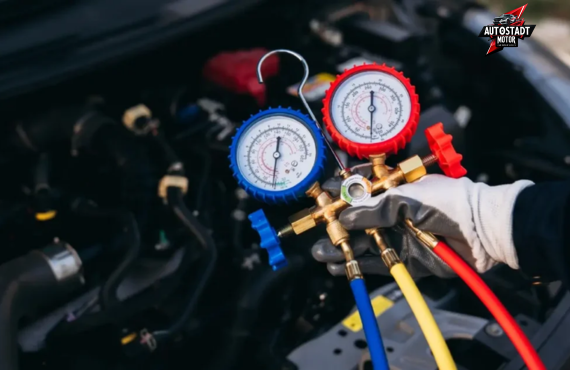
At AutoStadt Motor Services, McLaren owners can seek professional automotive AC inspection and repair based on their vehicle’s symptoms and condition. The objective is to identify the cause of the cooling problem, recommend suitable repairs, and check the system’s performance after the work is completed.
Whether you drive a McLaren 570S, 720S, Artura, GT, or another model, timely attention to air conditioning problems can help maintain cabin comfort and prevent developing faults from going unnoticed.
Signs Your Car Needs McLaren AC Repair
An air conditioning system may show several warning signs before it stops working completely. Recognizing these changes early allows the problem to be investigated before it affects your driving comfort.
1. McLaren AC Is Blowing Warm Air
Warm air from the dashboard vents is one of the most obvious reasons to arrange McLaren AC repair.
When the system is working correctly, it should remove heat from the cabin and deliver appropriately cooled air. If the vents begin producing warm or only slightly cool air, several faults may be responsible.
Possible causes include low refrigerant levels, refrigerant leakage, poor condenser performance, compressor problems, or faults in the system’s electronic controls. However, the symptom alone does not identify the failed component.
A proper inspection helps establish whether the issue is related to refrigerant circulation, heat exchange, or another part of the climate control system.
2. Cooling Performance Drops in Dubai Traffic
Your McLaren may produce reasonably cool air while moving but struggle when the vehicle is stationary.
This behaviour can indicate an issue affecting condenser airflow or cooling efficiency. The condenser releases heat from the refrigerant, and its performance depends partly on adequate airflow and the correct operation of associated components.
In Dubai, the difference can become particularly noticeable during congested journeys and prolonged periods of idling. A technician should inspect the relevant cooling components and determine why performance changes between driving conditions.
3. Unusual Noise When the AC Starts
A new clicking, rattling, squealing, or humming noise when the air conditioning is activated should not be ignored.
Depending on the system design, the sound could originate from a blower motor, compressor-related component, fan, or another part of the vehicle. Some operating sounds are normal, but a new or increasingly loud noise deserves attention.
Continuing to operate a system with a potentially damaged component may increase the risk of further problems. Therefore, arrange an inspection if the sound persists or occurs alongside reduced cooling.
4. Weak Airflow From the Dashboard Vents
Sometimes the air feels cool, but very little of it reaches the cabin.
This problem differs from insufficient refrigerant because the main issue may involve airflow rather than the refrigeration cycle itself. A restricted cabin air filter, blower motor fault, ventilation obstruction, or related electrical issue may be responsible.
A technician can assess the blower’s operation and inspect the relevant ventilation components before recommending a repair.
5. Unpleasant Smells From the Air Conditioning
A musty or unpleasant smell can make driving uncomfortable even when the AC is still cooling.
Moisture and contaminants can accumulate around the evaporator and ventilation system. A dirty cabin filter may also contribute to poor cabin air quality.
The appropriate solution depends on the source of the smell. Replacing a filter, cleaning relevant components, or addressing another underlying issue may be necessary. Simply masking the odour does not resolve the cause.
6. AC Cooling Becomes Inconsistent
An AC system that alternates between cold and warm air may have an intermittent fault.
Possible explanations include refrigerant pressure problems, temperature sensor issues, electrical faults, compressor control problems, or other system-related conditions.
Because intermittent faults may not appear during every inspection, it is helpful to explain when the issue occurs. For example, mention whether cooling disappears after a long drive, during traffic, or shortly after starting the vehicle.
Why Choose AutoStadt Motor Services for McLaren AC Repair
High-performance vehicles deserve a careful approach to maintenance. When choosing a workshop, McLaren owners should consider the quality of diagnosis, the suitability of the repair process, and whether the vehicle’s particular requirements are taken into account.
Accurate Diagnosis Before Replacing Parts
A major advantage of diagnostic-led servicing is that it helps avoid unnecessary component replacement.
For example, warm air does not automatically mean the compressor has failed. Similarly, a refrigerant-related problem may originate from a leaking connection rather than a defective compressor.
At AutoStadt Motor Services, the focus is on assessing the reported symptoms and identifying the likely cause before recommending the appropriate repair. This gives owners a clearer understanding of the work their vehicle may need.
Inspection of the Complete AC System
An automotive air conditioning system relies on several components working together. Replacing one part without considering the rest of the system may leave the original problem unresolved.
Depending on the symptoms, inspection may cover the compressor, condenser, refrigerant lines, connections, evaporator-related components, blower motor, cabin filter, sensors, and climate control electronics.
This comprehensive approach is particularly useful when the vehicle experiences more than one symptom.
Attention to McLaren-Specific Requirements
McLaren models differ in their engineering, component arrangements, and service requirements. The correct diagnostic procedure and replacement parts depend on the exact model, model year, and system configuration.
For this reason, the vehicle should be identified correctly before repair work begins. Where specialist diagnostic equipment, model-specific procedures, or additional technical support is required, these needs should be established before proceeding.
Clear Repair Recommendations
Not every air conditioning fault requires an expensive repair. Some problems may involve a restricted filter or another maintenance item, while others may require attention to the refrigerant circuit or a major component.
AutoStadt Motor Services can assess the reported issue and help determine the appropriate next step. Clear communication allows the owner to understand the fault, the proposed repair, and any additional checks that may be necessary.
Support for Dubai Driving Conditions
Dubai’s hot weather can expose weaknesses in an AC system that might be less noticeable in cooler conditions. A system that provides limited cooling may become uncomfortable during long commutes, outdoor parking, or slow-moving traffic.
Addressing unusual noises, declining airflow, or inconsistent cooling early can help reduce disruption and support more dependable operation.
How Our McLaren AC Repair Process Works
A structured repair process helps ensure that the initial complaint is investigated and that the system is checked after the work is completed.
Step 1: Understand the Symptoms
The process begins with information about the AC problem.
The technician needs to know whether the system produces warm air, cools intermittently, makes unusual noises, or provides weak airflow. The circumstances in which the problem appears can help narrow down the possible causes.
Information about previous AC repairs or refrigerant servicing may also be useful.
Step 2: Inspect AC Performance
The system’s cooling behaviour and airflow are assessed to establish the nature of the problem.
Where appropriate, vent temperatures and system operating conditions can be checked. These observations help distinguish a cooling-efficiency problem from an airflow or control-related fault.
Step 3: Examine the Relevant Components
The inspection is guided by the symptoms rather than relying on a single assumption.
Depending on the findings, the technician may examine the compressor, condenser, refrigerant lines, connections, blower motor, cabin filter, sensors, and associated electrical components.
Visible damage, signs of leakage, abnormal operation, and other relevant evidence help guide the diagnosis.
Step 4: Investigate Refrigerant Leaks
If refrigerant loss is suspected, the system should be checked for possible leakage.
Refrigerant can escape through damaged lines, seals, connections, or other components. The appropriate leak-detection procedure depends on the system and the suspected source.
Finding the leak is important because recharging the system without addressing a confirmed leak may result in the same cooling problem returning.
Step 5: Recommend and Complete the Repair
After the fault has been assessed, the appropriate repair can be recommended.
Depending on the diagnosis, the work may involve correcting a leak, replacing a faulty component, addressing an electrical issue, servicing airflow-related parts, or carrying out the required refrigerant service.
The correct refrigerant type, specified quantity, approved parts, and vehicle-specific procedures must be followed. This is particularly important for a high-performance vehicle with specialised service requirements.
Step 6: Test Cooling Performance After Repair
Once the repair is complete, the system should be checked again.
The technician can reassess cooling performance, airflow, and the operation of the affected components. Where relevant, the system should also be checked for evidence of continued leakage or other unresolved symptoms.
The purpose of this final check is to confirm that the original complaint has been addressed as far as the completed repair allows.
Maintaining Your McLaren AC System in Dubai
Preventive maintenance can help identify developing problems before they cause a complete loss of cooling.
First, pay attention to changes in performance. If your McLaren gradually takes longer to cool the cabin, produces a new noise, or develops an unusual smell, arrange an inspection rather than waiting for the AC to stop working.
Second, follow the maintenance recommendations applicable to your model. Cabin filters and other serviceable components should be inspected or replaced according to the manufacturer’s guidance and their actual condition.
Third, avoid unnecessary refrigerant top-ups. If the system repeatedly loses refrigerant, the cause should be investigated instead of treating each loss as an isolated issue.
Finally, choose a repair process appropriate for your vehicle’s engineering. The service requirements of a McLaren 720S are not necessarily identical to those of a Toyota Camry, Nissan Patrol, BMW M4, or Mercedes-Benz S-Class. Even when two vehicles show similar symptoms, their components and diagnostic procedures may differ.
Regular inspections, timely repairs, and the correct service procedures can help maintain dependable air conditioning throughout Dubai’s demanding driving conditions.
Frequently Asked Questions About McLaren AC Repair in Dubai
1. Why is my McLaren AC not cooling properly in Dubai?
Several problems can cause reduced cooling, including low refrigerant, refrigerant leaks, condenser issues, compressor faults, restricted airflow, or electronic control problems. Dubai’s high temperatures can make reduced AC efficiency particularly noticeable. The best approach is to have the system inspected so the cause can be identified before parts are replaced or refrigerant is added.
2. How much does McLaren AC repair cost in Dubai?
The cost depends on the model, the fault, the availability of suitable parts, and the labour involved. A maintenance-related issue may cost less to resolve than a compressor, condenser, or evaporator problem. Diagnostic work may also be necessary before an accurate estimate can be provided. AutoStadt Motor Services can assess the reported symptoms and help establish which repairs are appropriate for the vehicle.
3. Does my McLaren only need an AC gas refill?
Not necessarily. Low refrigerant may indicate a leak or another problem affecting the system. If refrigerant is added without investigating the cause of the loss, cooling may improve temporarily before the symptoms return. A proper inspection should establish whether the refrigerant level is incorrect, whether leakage is present, and whether the other AC components are operating as expected.
4. Can I drive my McLaren if the AC compressor is making noise?
A new or unusual noise should be inspected promptly. It may originate from the compressor or another component, and the sound alone is not enough to confirm the cause. If the noise is severe, there is a burning smell, or other warning signs appear, stop using the AC and arrange professional assessment. If the vehicle also shows mechanical or temperature warnings, follow the vehicle’s safety instructions and avoid continued driving when it may be unsafe.
5. How often should I have my McLaren AC serviced?
There is no single service interval that suits every McLaren model and driving pattern. Follow the manufacturer’s maintenance schedule and arrange an inspection whenever cooling performance changes, airflow weakens, unusual noises develop, or the system repeatedly requires refrigerant service. Because Dubai places substantial demands on vehicle air conditioning, responding to early symptoms is a practical way to identify problems before they become more disruptive.
Conclusion
McLaren AC repair is important for maintaining cabin comfort and dependable climate control in Dubai’s demanding weather. Weak cooling, inconsistent temperatures, unusual noises, unpleasant smells, and reduced airflow can all indicate that the air conditioning system needs attention.
However, these symptoms do not always point to the same fault. Refrigerant leaks, compressor problems, condenser restrictions, blower faults, and electronic control issues require different diagnostic and repair approaches. Identifying the cause before replacing components is therefore essential.
AutoStadt Motor Services offers automotive AC inspection and repair support for drivers seeking help with McLaren air conditioning problems in Dubai. A diagnostic-led approach helps establish the likely cause, determine the appropriate repair, and assess system performance after the work.
If your McLaren is struggling to cool the cabin, arrange an inspection rather than relying on repeated refrigerant top-ups or temporary solutions. Timely attention can help restore comfort, address developing faults, and keep your vehicle better prepared for Dubai’s hot driving conditions.


Leave a Comment