
Mazda paint repair helps restore your vehicle’s appearance when scratches, paint chips, fading, dents, or clear coat damage begin to affect its exterior finish. Whether you drive a Mazda 3, Mazda 6, CX-5, CX-9, or another model, keeping the paintwork in good condition can improve its appearance and help protect the underlying body panels.
In Dubai, vehicle paintwork faces several environmental challenges. Strong sunlight, high temperatures, airborne dust, sand, road debris, and frequent washing can gradually affect the exterior finish. Even a relatively small scratch can become more noticeable when dust collects inside it or the surrounding paint begins to fade.
However, not every paint problem requires a complete panel repaint. Some surface scratches can be improved through professional polishing, while deeper damage may require touch-up paint, refinishing, or additional bodywork. Choosing the right repair method depends on the depth of the damage, the condition of the existing finish, and the location of the affected area.
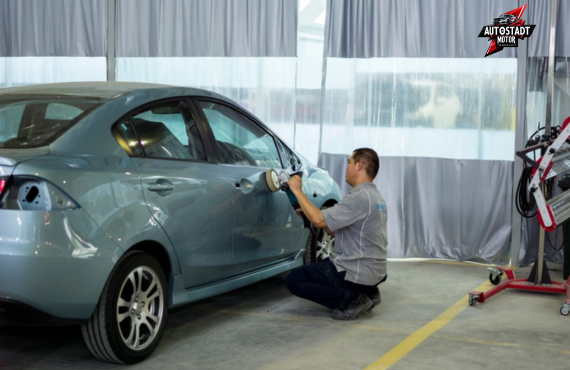
At AutoStadt Motor Services, Mazda owners can seek professional assistance for paint damage and exterior restoration. The aim is to assess the affected area, identify the appropriate treatment, and achieve a clean, consistent finish wherever possible.
If your Mazda has lost its original shine or developed visible paint imperfections, arranging an inspection can help you understand which repair option suits your vehicle.
Signs Your Car Needs Mazda Paint Repair
Paint damage can develop gradually or occur after a single incident. Recognizing the warning signs early helps you choose an appropriate repair before the affected area deteriorates further.
1. Scratches on the Body Panels
Scratches are among the most common reasons Mazda owners seek paint restoration. They can occur when another vehicle brushes against your car, shopping bags contact a door, or branches and other objects scrape the bodywork.
Light scratches may affect only the clear coat, which protects the coloured paint underneath. These marks can sometimes be reduced through machine polishing. Deeper scratches, however, may expose the base coat or primer and require more extensive refinishing.
Before attempting to remove a scratch yourself, have its depth assessed. Aggressive polishing can remove too much clear coat and make the damage worse.
2. Faded or Dull Paintwork
A Mazda that once had a glossy finish may gradually look dull, particularly after prolonged exposure to direct sunlight.
Ultraviolet radiation can contribute to paint degradation, while accumulated dirt and unsuitable cleaning techniques may reduce surface gloss. In some cases, oxidation or clear coat deterioration becomes visible.
Professional paint correction may improve dullness when the underlying finish remains suitable for polishing. If the clear coat has started peeling or failing, repainting the affected area may be necessary instead.
3. Paint Chips on the Bonnet and Front Bumper
Small stones and road debris can strike the front bumper, bonnet, and side panels while driving. These impacts may leave tiny chips that reveal the primer or bare metal underneath.
Although a chip may appear insignificant, exposed metal can eventually corrode if moisture reaches it. Prompt touch-up or localized refinishing can help protect the affected area.
For Mazda drivers who regularly use highways around Dubai, checking the front of the vehicle for stone chips is a useful part of exterior maintenance.
4. Peeling or Damaged Clear Coat
The clear coat provides gloss and an additional protective layer over the coloured paint. When it begins peeling, flaking, or separating, the affected area may develop cloudy patches or an uneven appearance.
This problem should not be confused with ordinary surface dirt. Washing and polishing cannot permanently correct a clear coat that is already failing.
Depending on the extent of the damage, the repair may require removing the compromised finish and refinishing the panel.
5. Paint Damage After a Minor Accident
Even a low-speed collision can leave scratches, scuffs, dents, and damaged paint around a bumper, door, or fender.
In these situations, paint repair may need to be combined with panel preparation or dent repair. Simply applying paint over a dented or uneven surface will not produce a satisfactory result.
A proper assessment helps determine whether the panel can be repaired or whether replacement is more appropriate.
6. Uneven Colour or Previous Paint Repairs
If a repaired panel appears lighter, darker, or glossier than the surrounding bodywork, the colour may not have been matched correctly or the finish may have been applied unevenly.
Mazda paint colours can vary by model, production year, and paint specification. Metallic and other special finishes can also be challenging to match because their appearance changes with lighting and viewing angle.
Professional colour matching and controlled application help create a more consistent appearance between the repaired panel and the original paintwork.
Why Choose AutoStadt Motor Services for Mazda Paint Repair
Selecting a suitable repair workshop is about more than covering visible damage. The preparation, colour matching, repair method, and final inspection all influence the result.
Accurate Assessment Before Painting
At AutoStadt Motor Services, the first step is to assess the type and extent of paint damage before recommending a repair.
For example, a superficial scratch may need paint correction rather than repainting. A deeper mark that exposes the primer may require touch-up work or panel refinishing. Peeling clear coat generally needs a different solution.
Understanding these differences helps avoid unnecessary work and sets realistic expectations about the final appearance.
Attention to Mazda Paint Colours
Mazda vehicles are available in a variety of solid, metallic, and special-effect colours. The correct shade and application technique are important when repairing visible areas.
Colour matching involves more than choosing a similar-looking paint from a basic colour chart. The vehicle’s paint code, existing paint condition, finish type, and surrounding panels can all influence the result.
AutoStadt Motor Services can assess the affected area and determine the appropriate refinishing approach for the vehicle.
Repair Options for Different Levels of Damage
Not all exterior damage requires the same treatment. Depending on the condition of the paint, suitable options may include polishing, localized touch-up, scratch repair, or repainting a panel.
For instance, a light mark on a Mazda CX-5 may respond well to paint correction, while a deep scratch on a Mazda 3 door may require colour application and clear coat refinishing.
The correct method depends on the actual damage rather than the model name alone.
Focus on Surface Preparation
Good paintwork begins before the new paint is applied. Cleaning, removing contamination, preparing the damaged area, and creating a suitable surface are important steps in the refinishing process.
Poor preparation can contribute to uneven texture, weak adhesion, or visible imperfections. Proper preparation helps create a more consistent and durable finish.
Support for Other Vehicle Makes
Paint restoration techniques are relevant across many vehicle brands, although the required materials and colour specifications differ.
Whether a household owns a Mazda, Toyota Corolla, Nissan Patrol, BMW, or Mercedes-Benz, each vehicle benefits from a repair process suited to its paint system and damage.
For Mazda owners in Dubai, AutoStadt Motor Services offers a place to discuss exterior paint concerns and determine the most suitable next step.
How Our Mazda Paint Repair Process Works
A professional paint repair follows several stages. Each stage contributes to the appearance of the finished panel and helps ensure that the repair addresses the original damage.
Step 1: Inspect the Damaged Area
The process begins with a visual assessment of the scratches, chips, faded sections, or damaged panels.
The technician considers the size of the affected area, the depth of the damage, the condition of the surrounding paint, and whether dents or bodywork issues are also present.
This assessment helps establish whether polishing, localized repair, or panel repainting is the most appropriate option.
Step 2: Determine the Required Repair Method
Once the damage has been assessed, the repair approach can be selected.
Light clear coat scratches may be suitable for polishing. Small chips may need carefully applied touch-up paint. Deeper scratches and larger damaged areas may require sanding, primer, colour application, and clear coat refinishing.
If a panel is dented, the underlying bodywork may need attention before painting begins.
Step 3: Clean and Prepare the Surface
Before applying paint, the affected area must be prepared properly.
This may involve washing, removing surface contaminants, masking adjacent sections, sanding damaged paint, and preparing the substrate. Where necessary, the damaged coating is removed to create a suitable base for the next stage.
Preparation is particularly important when the repair involves exposed primer or metal.
Step 4: Match the Paint Colour
The paint colour is selected according to the Mazda’s specifications and the condition of the existing finish.
The paint code is an important starting point, but a professional assessment may also be needed to account for fading, previous repairs, or differences in the appearance of metallic finishes.
The objective is to minimize visible contrast between the repaired section and the surrounding bodywork.
Step 5: Apply the Required Coatings
Depending on the repair, the process may involve primer, base coat, and clear coat.
Each coating has a specific purpose. Primer supports adhesion and provides a suitable foundation, the base coat supplies the colour, and clear coat helps provide gloss and surface protection where the paint system requires it.
Application must follow the product specifications and appropriate workshop procedures.
Step 6: Allow the Finish to Cure
Paint and refinishing materials require suitable curing conditions. The required time depends on the products used, application method, and workshop environment.
The vehicle should not be rushed through this stage because premature handling or exposure can affect the final finish.
The workshop can advise when the vehicle is ready for collection and explain any care precautions that apply after the repair.
Step 7: Inspect the Final Result
After the repair, the treated area should be inspected for colour consistency, surface texture, gloss, and visible imperfections.
The repaired panel is also checked in appropriate lighting because some colour differences are more noticeable outdoors than under workshop lights.
This final review helps confirm that the repair meets the intended standard and that any remaining limitations are clearly understood.
Mazda Paint Maintenance Tips for Dubai Conditions
Professional repairs can restore damaged paint, but ongoing care helps maintain the vehicle’s exterior appearance.
First, wash your Mazda regularly using automotive shampoo and clean washing materials. Dust and sand can act as abrasives when rubbed against the paint, so removing loose contamination before wiping the surface is important.
Second, avoid washing the vehicle with rough cloths or using unsuitable household cleaning products. These can leave fine scratches or affect the finish over time.
Third, consider using suitable paint protection after the finish has fully cured. Wax, paint sealants, or professionally applied ceramic coatings may help make routine cleaning easier, although none makes the paint immune to scratches or stone chips.
Parking in shaded or covered areas when practical can also reduce prolonged exposure to intense sunlight. If covered parking is unavailable, regular inspection can help you notice fading, peeling, and small chips before they become more extensive.
Finally, address new paint damage promptly. A small chip can often be treated more easily than a larger area where the coating has deteriorated or corrosion has started.
Frequently Asked Questions About Mazda Paint Repair in Dubai
1. How much does Mazda paint repair cost in Dubai?
The cost depends on the type, size, and depth of the damage. A light scratch that can be corrected through polishing will generally require a different amount of work from a deep scratch that needs repainting. Colour type, panel location, dent repair, and preparation requirements can also affect the final price. An inspection by AutoStadt Motor Services can help establish the appropriate repair method and provide a more accurate estimate.
2. Can scratches be removed without repainting my Mazda?
Some scratches can be improved without repainting. If the damage is limited to the clear coat, professional paint correction may reduce or remove its visible appearance. However, deeper scratches that reach the colour coat, primer, or metal usually require additional treatment. The result depends on the depth of the scratch and the remaining condition of the paint, so it is best to have the area assessed before attempting polishing.
3. How long does Mazda paint repair take?
The timeframe varies according to the repair required. Minor scratch correction may be completed relatively quickly, while repainting a panel can take longer because surface preparation, coating application, curing, and final inspection all require time. If the panel also has dents or other body damage, the process may take longer still. Your workshop should provide a realistic timeframe after inspecting the vehicle and confirming the repair scope.
4. Will the repaired paint match the original Mazda colour?
A professional colour-matching process aims to make the repaired area blend as closely as possible with the surrounding paint. The vehicle’s paint code, colour type, age, fading, and previous repairs can influence the final result. Metallic and special-effect colours may be especially sensitive to application technique and viewing angle. Although an excellent match is achievable in many cases, an exact visual match cannot be guaranteed for every vehicle or paint condition.
5. How can I protect my Mazda’s paint from Dubai’s heat and dust?
Regular gentle washing, prompt removal of contaminants, covered parking where possible, and suitable paint protection can help preserve the finish. Avoid rubbing dry dust across the bodywork because trapped sand can cause fine scratches. Inspect the bonnet, bumper, and side panels for stone chips and treat exposed areas promptly. If the clear coat starts peeling or the paint becomes noticeably dull, seek professional advice rather than relying on repeated polishing.
Conclusion
Mazda paint repair is an effective way to address scratches, paint chips, fading, clear coat deterioration, and exterior damage that affects your vehicle’s appearance. For Dubai drivers, regular attention to paint condition is especially valuable because sunlight, dust, sand, and everyday road use can gradually wear down the exterior finish.
The best repair depends on the condition of the affected panel. Some marks can be improved through polishing, while deeper scratches, peeling clear coat, and accident-related damage may require professional refinishing. Correct preparation and colour matching are essential for a consistent result.
AutoStadt Motor Services can help Mazda owners assess paint damage and identify an appropriate repair solution. Whether your vehicle needs minor scratch correction or more extensive panel refinishing, a proper inspection is the first step toward restoring its appearance.
If your Mazda’s paintwork has become dull, scratched, chipped, or uneven, arrange an assessment to understand the available options and keep your vehicle looking well maintained on Dubai’s roads.


Leave a Comment