
Mazda AC repair is essential when your vehicle’s air conditioning struggles to cool the cabin, produces unusual noises, or stops delivering consistent airflow. In Dubai, where high temperatures and heavy traffic can make driving uncomfortable, a reliable car AC system is important throughout much of the year. Whether you drive a Mazda 3, Mazda 6, CX-5, CX-9, or another model, timely inspection can help restore cooling performance and prevent minor faults from developing into more complicated repairs.
Mazda vehicles are designed to deliver a comfortable driving experience, but their air conditioning systems still depend on several components working together correctly. The compressor circulates refrigerant through the cooling circuit, the condenser releases heat, and the evaporator helps cool the air entering the cabin. Meanwhile, the blower motor, cabin filter, sensors, and climate-control components help maintain suitable airflow and temperature.
When one of these parts develops a fault, the symptoms may appear similar even though the underlying causes are different. For instance, warm air from the vents may indicate low refrigerant caused by a leak, a compressor problem, restricted condenser airflow, or an electrical fault. Weak airflow, on the other hand, may point towards a blocked cabin filter or blower-related issue.
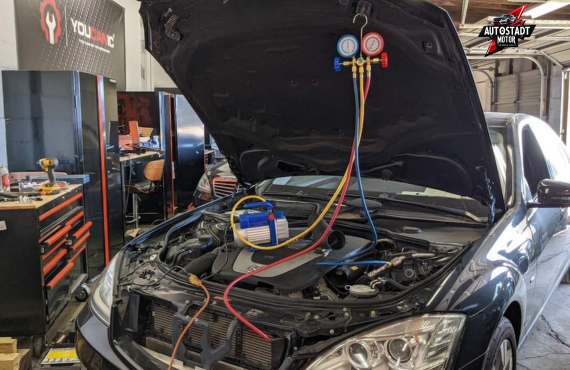
At AutoStadt Motor Services, Mazda AC repair focuses on identifying the cause of the problem before recommending a suitable solution. Instead of relying on guesswork or repeatedly topping up refrigerant, a proper inspection helps determine which components require attention.
For Dubai motorists, this approach can make AC maintenance more practical and help maintain comfortable cabin temperatures during daily commutes, family journeys, and long drives across the UAE.
Signs Your Car Needs Mazda AC Repair
Air conditioning problems do not always begin with a complete loss of cooling. In many cases, the system gives smaller warning signs first. Recognizing these changes can help you arrange an inspection before the problem becomes more disruptive.
1. Mazda AC Is Blowing Warm or Slightly Cool Air
If your Mazda AC no longer produces sufficiently cold air, the system may not be operating at its expected efficiency.
A refrigerant leak is one possible explanation, but it is not the only one. A faulty compressor, restricted condenser, malfunctioning pressure sensor, or electrical problem may also affect cooling performance.
Dubai’s high outdoor temperatures can make these issues especially noticeable. If the AC previously cooled the cabin quickly but now struggles to maintain a comfortable temperature, arrange a professional inspection.
2. Cooling Takes Too Long During Hot Weather
A Mazda AC system should provide suitable cooling when operating correctly. However, if the cabin remains hot for an unusually long time, several factors may be responsible.
A dirty cabin filter can restrict airflow, while a condenser affected by dirt or debris may have difficulty releasing heat. Low refrigerant or a compressor that is not operating correctly can also reduce cooling efficiency.
The important step is to determine whether the problem concerns airflow, refrigerant circulation, heat exchange, or electronic controls.
3. Weak Airflow From the Dashboard Vents
Sometimes the air coming from the vents feels reasonably cold, but very little air reaches the cabin.
This symptom can indicate a clogged cabin air filter, a weak blower motor, an obstruction in the ventilation system, or a problem with the blower control circuit.
A cabin filter inspection is a sensible starting point because restricted airflow can make the entire air conditioning system feel ineffective. Nevertheless, if replacing the filter does not resolve the problem, further diagnosis may be necessary.
4. Strange Noises When the AC Starts
Unusual clicking, rattling, squealing, or grinding sounds can indicate a mechanical or electrical problem.
Depending on the vehicle and the type of noise, the cause may involve the compressor, its drive components, a fan, or another part of the system. A sound that begins specifically when the AC is activated provides a useful clue for diagnosis.
Do not ignore a persistent or worsening noise. If the compressor or another mechanical component is failing, continued operation may increase the risk of additional damage.
5. Unpleasant Smell From the Air Conditioning Vents
An unpleasant smell when switching on the AC can make every journey uncomfortable.
Dust, moisture, and accumulated contaminants around the cabin filter or evaporator area may contribute to unwanted odours. Dubai’s dusty environment can also increase the amount of material entering the ventilation system.
Depending on the cause, the solution may involve replacing the cabin filter, cleaning appropriate HVAC components, or investigating moisture-related contamination.
6. AC Cooling Becomes Inconsistent
If your Mazda AC alternates between cold and warm air, the system may have an intermittent fault.
Possible causes include refrigerant pressure problems, faulty sensors, compressor-control issues, electrical connections, or other components that do not operate consistently.
Recording when the problem occurs can help the technician identify the pattern. For example, note whether the cooling changes while idling, during highway driving, or after the AC has been running for some time.
7. Water Appears Inside the Cabin
Water dripping outside a parked vehicle after AC use can be normal condensation. However, moisture collecting on the passenger-side carpet or inside the cabin should be investigated.
A blocked or restricted evaporator drain may prevent condensation from leaving the HVAC housing correctly. If ignored, the problem can lead to damp carpets and persistent odours.
Professional inspection can help distinguish normal condensation from a drainage fault.
Why Choose AutoStadt Motor Services for Mazda AC Repair
Choosing a suitable workshop involves more than finding a place that offers refrigerant refills. Reliable Mazda AC repair requires an understanding of the cooling system and a clear process for identifying faults.
Accurate Diagnosis Before Replacing Parts
At AutoStadt Motor Services, the aim is to identify the reason behind the symptoms before recommending a repair.
For example, a Mazda with weak cooling may not need a new compressor. The problem could be a refrigerant leak, a blocked condenser, or an electrical fault affecting compressor operation.
Checking the relevant components first helps reduce the likelihood of unnecessary replacements and gives the vehicle owner a clearer understanding of the repair.
Inspection of Essential AC Components
Depending on the symptoms, an AC inspection may include the compressor, condenser, evaporator-related components, refrigerant lines, connections, expansion device, blower motor, cabin filter, sensors, and electrical controls.
Not every vehicle needs every component replaced or serviced. The inspection should focus on the parts most relevant to the problem.
This targeted approach is particularly useful when the AC has several symptoms, such as weak airflow combined with inconsistent cooling.
Suitable Repairs for Different Mazda Models
Mazda vehicles vary by model, production year, engine configuration, and equipment. Consequently, the correct repair procedure and component requirements can differ.
A Mazda 3 may have different packaging and service requirements from a Mazda CX-5 or CX-9. Identifying the exact vehicle helps ensure that the repair recommendation suits its specifications.
Clear Repair Recommendations
Vehicle owners should understand what has gone wrong and why a particular repair is recommended.
Whether the issue involves a cabin filter, refrigerant leak, compressor, condenser, or electrical control, the proposed work should correspond to the diagnosed fault.
AutoStadt Motor Services aims to provide a practical service approach that helps customers make informed decisions about their vehicles.
Support for Dubai Driving Conditions
Dubai’s hot weather and frequent traffic can place substantial demands on vehicle air conditioning. A system that performs adequately in mild weather may struggle when the outside temperature rises.
Timely diagnosis, suitable maintenance, and proper repair can help maintain reliable cooling during everyday use.
The same principle applies to other vehicles, including the Toyota Corolla, Nissan Altima, BMW 3 Series, and Mercedes-Benz C-Class. However, each vehicle requires diagnosis according to its own specifications rather than a generic repair procedure.
How Our Mazda AC Repair Process Works
A structured repair process helps identify the actual cause of an AC problem and confirm whether the repair has resolved it.
Step 1: Understand the Symptoms
The process begins with a discussion about the AC’s behaviour.
The technician may ask whether the air is warm, airflow is weak, cooling becomes inconsistent, or an unusual noise appears when the system starts. Information about when the symptoms occur can help narrow down possible causes.
For example, an AC that cools poorly only while the vehicle is stationary may require different checks from one that produces warm air at all speeds.
Step 2: Evaluate Cooling and Airflow
The system’s cooling performance and airflow are assessed.
This helps determine whether the issue is more likely to involve refrigerant circulation, heat exchange, ventilation, or control components. The vehicle’s operating conditions and specifications should be considered during testing.
Step 3: Inspect the Relevant Components
The technician examines components related to the reported symptoms.
These may include the compressor, condenser, refrigerant hoses, visible connections, blower motor, cabin filter, and relevant electrical controls. Signs of damage, contamination, abnormal operation, or leakage can provide useful diagnostic evidence.
Step 4: Check Refrigerant Condition and Possible Leaks
If low refrigerant is suspected, the system should be checked using appropriate equipment and procedures.
A leak may occur at a hose, connection, condenser, evaporator, or another part of the refrigerant circuit. The source should be investigated before refrigerant is added.
Repeated refilling without addressing a leak can lead to recurring cooling problems and unnecessary expense.
Step 5: Confirm the Fault and Recommend a Repair
After the inspection, the findings are used to identify the likely cause.
Depending on the results, the required work may involve leak repair, compressor-related service, condenser replacement, electrical diagnosis, cabin filter replacement, blower repairs, or attention to another AC component.
The repair should be based on the diagnosed condition rather than replacing multiple parts simply because the system is not cooling properly.
Step 6: Complete the Repair and Test the System
Once the necessary work has been completed, the AC system should be tested again.
Checks may include cooling performance, airflow, compressor operation, relevant pressure readings, and confirmation that the original fault has been addressed.
If a leak was repaired, the system should also be checked for signs of continued refrigerant loss using an appropriate procedure.
This final stage helps establish whether the repair has restored the expected operation of the air conditioning system.
Mazda AC Maintenance Tips for Dubai Drivers
Preventive maintenance can help you notice developing problems before the AC stops working altogether.
First, pay attention to changes in cooling performance. If the system takes longer to cool the cabin or struggles during traffic, arrange an inspection rather than waiting for complete failure.
Second, check the cabin filter according to the maintenance schedule and the conditions in which you drive. Dusty environments can cause filters to become restricted, reducing airflow and affecting cabin comfort.
Third, do not ignore unusual noises or persistent odours. These symptoms may indicate developing mechanical problems or contamination around the ventilation system.
It is also worth keeping the condenser area free from excessive dirt and debris where practical. Restricted airflow can reduce heat transfer and affect cooling efficiency.
Finally, avoid treating refrigerant as a routine top-up product. If the system repeatedly loses refrigerant, the underlying cause should be investigated. Correct refrigerant type and charge amount are important, and the manufacturer’s specifications should be followed.
Frequently Asked Questions About Mazda AC Repair in Dubai
1. Why is my Mazda AC not cooling properly in Dubai?
Several problems can cause weak cooling, including low refrigerant due to a leak, compressor faults, restricted condenser airflow, faulty sensors, or electrical issues. A dirty cabin filter can also reduce airflow and make the cabin feel warmer. Since these problems can produce similar symptoms, a proper inspection is the best way to identify the cause and select the correct repair.
2. How much does Mazda AC repair cost in Dubai?
The cost depends on the specific fault, the Mazda model, the affected component, and the amount of labour required. A cabin filter replacement or minor electrical repair is generally different in scope from a compressor or evaporator replacement. An inspection can help establish what needs attention before a repair estimate is prepared. AutoStadt Motor Services can assess the problem and recommend work based on the vehicle’s condition.
3. Does my Mazda need an AC gas refill or a complete repair?
Not every cooling problem requires a refrigerant refill, and not every low refrigerant reading tells the whole story. If refrigerant is low, the system may have a leak that needs to be located and repaired. If the refrigerant charge is correct, the cause may instead involve the compressor, condenser, airflow, or electrical controls. Proper diagnosis helps avoid temporary solutions that leave the original problem unresolved.
4. How often should I service my Mazda car AC?
The appropriate maintenance interval depends on the model, manufacturer’s recommendations, vehicle age, and driving conditions. Routine maintenance should include attention to cabin-filter condition and any changes in cooling or airflow. A refrigerant service is not automatically required at every maintenance visit. If you notice warm air, unusual noises, bad smells, or inconsistent performance, arrange an inspection rather than waiting for the next scheduled service.
5. Can I drive my Mazda if the AC compressor is making noise?
A new or persistent compressor-related noise should be inspected promptly. The sound may originate from the compressor itself or from another component that operates when the AC is switched on. Depending on the fault, continued operation may worsen the damage. If the noise is severe, accompanied by a burning smell, or associated with other mechanical symptoms, switch off the AC and seek professional advice before continuing to use the system.
Conclusion
Mazda AC repair is important for maintaining cabin comfort and dependable air conditioning performance in Dubai. Weak cooling, restricted airflow, unusual noises, inconsistent temperatures, and unpleasant smells can all indicate that the system needs attention.
However, effective repair begins with identifying the cause rather than assuming that every problem requires refrigerant or a replacement compressor. A careful inspection can help determine whether the fault involves the refrigerant circuit, compressor, condenser, evaporator, cabin filter, blower motor, or electrical controls.
AutoStadt Motor Services provides automotive AC inspection and repair support for Mazda owners in Dubai, with an emphasis on identifying the underlying issue and recommending an appropriate solution.
If your Mazda is no longer cooling as expected, arranging an inspection early can help you understand the problem, avoid unnecessary part replacement, and restore a more comfortable driving experience. Regular maintenance and prompt attention to warning signs can also help keep your car’s air conditioning ready for Dubai’s demanding weather conditions.


Leave a Comment