
Lotus evaporator change is an important repair service when your vehicle’s air conditioning system develops internal leaks, produces unpleasant smells or fails to deliver consistent cooling. The evaporator plays a central role in the AC system by absorbing heat from the cabin air and helping maintain a comfortable interior temperature. When this component becomes damaged, clogged or corroded, the entire air conditioning system can lose its efficiency.
For Lotus owners in Dubai, a properly functioning evaporator is particularly important. Extreme summer temperatures, dusty roads and frequent AC usage place additional demands on automotive cooling systems. Whether you drive a Lotus Elise, Exige, Evora or Emira, an evaporator problem can make everyday driving uncomfortable.
At AutoStadt Motor Services, we provide professional automotive maintenance and repair solutions for customers who want to keep their vehicles operating efficiently. Our approach to Lotus evaporator replacement focuses on accurate diagnosis, careful component inspection and suitable repair procedures. We understand that evaporator-related problems can sometimes be difficult to identify because the component is located inside the vehicle’s dashboard assembly.
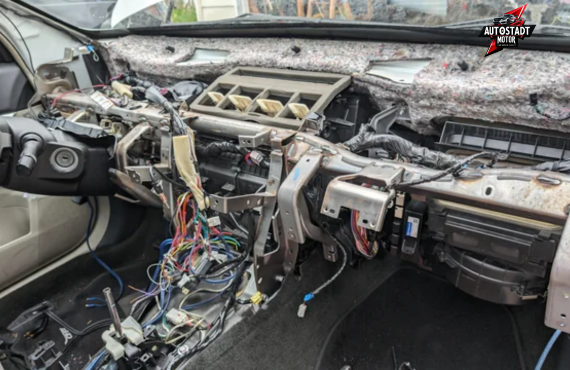
A faulty evaporator should not be ignored. Refrigerant leakage, reduced cooling performance and moisture-related problems can affect other parts of the AC system. Therefore, identifying the issue early can help prevent additional complications.
If your Lotus air conditioning system is no longer performing as expected, professional inspection at AutoStadt Motor Services can help determine whether evaporator repair or replacement is necessary.
Signs Your Car Needs Lotus Evaporator Change
The AC evaporator does not usually show visible damage because it is installed inside the dashboard’s HVAC housing. However, several symptoms can indicate that it is developing a problem.
Recognising these warning signs can help Lotus owners arrange timely repairs.
1. Weak or Insufficient AC Cooling
One of the most common signs of evaporator failure is reduced cooling performance.
When the evaporator develops a refrigerant leak or becomes internally damaged, it may no longer absorb heat effectively. As a result, the air coming through the dashboard vents may feel warmer than usual.
You might notice that:
The AC takes longer to cool the cabin.
The air remains slightly warm even at maximum cooling.
Cooling performance becomes inconsistent.
The system struggles during extremely hot weather.
Although these symptoms can indicate an evaporator problem, they may also result from a faulty compressor, expansion valve or low refrigerant level. A proper diagnosis is therefore necessary before replacing any component.
2. Refrigerant Leakage Inside the AC System
The evaporator contains refrigerant passages that allow heat exchange during the cooling process. Over time, corrosion, physical damage or material deterioration can cause small leaks.
Unlike an external hose leak, an evaporator leak can be difficult to locate because the component is hidden behind dashboard panels.
If your Lotus repeatedly loses refrigerant after AC servicing, the evaporator should be included in the inspection.
At AutoStadt Motor Services, technicians can investigate suspected leakage using suitable automotive AC diagnostic methods to determine whether evaporator replacement is required.
3. Unpleasant Smell From Air Conditioning Vents
A persistent musty smell from the AC vents may indicate contamination, moisture accumulation or microbial growth around the evaporator and surrounding HVAC components.
The evaporator naturally collects condensation during normal operation. If moisture and dirt accumulate, unpleasant odours can develop.
However, a bad smell does not automatically mean the evaporator needs replacement. Professional inspection can determine whether cleaning, drainage repair or component replacement is the appropriate solution.
4. Water Leakage Inside the Vehicle
Water collecting around the passenger footwell or underneath the dashboard can indicate an AC drainage problem.
During cooling, moisture forms on the evaporator surface and should normally drain outside the vehicle through a dedicated drain pipe.
If the drainage passage becomes blocked, water may accumulate inside the HVAC housing and eventually enter the cabin.
Although a blocked drain is a common possibility, damaged seals or other water-entry issues should also be considered before recommending evaporator replacement.
5. Frequent AC Gas Refilling
If your Lotus requires refrigerant refilling repeatedly, there may be an underlying leak somewhere in the AC system.
The refrigerant is not normally consumed during regular operation. Therefore, continuously adding AC gas without identifying the leakage source is not a permanent repair.
Possible leakage points include the evaporator, condenser, compressor seals, refrigerant pipes and service connections.
An accurate leak inspection helps identify the affected component and prevents unnecessary refrigerant refilling.
6. Inconsistent Cooling After AC Servicing
Sometimes an air conditioning system works temporarily after servicing but gradually loses cooling performance again.
This may happen when the original leakage has not been identified or when another damaged component remains in the system.
If your Lotus continues experiencing cooling problems despite previous AC maintenance, a more detailed inspection may be necessary.
Why Choose AutoStadt Motor Services for Lotus Evaporator Change?
Evaporator replacement requires more attention than routine AC gas refilling or cabin filter replacement. Since the component is generally installed inside the dashboard, the repair may involve significant interior disassembly.
Choosing an experienced automotive garage is important for protecting your vehicle and ensuring that the replacement work is completed correctly.
Professional AC System Diagnosis
At AutoStadt Motor Services, we focus on identifying the actual cause of air conditioning problems before recommending major repairs.
Our inspection approach may include:
Checking AC cooling performance.
Testing refrigerant pressure.
Inspecting the system for refrigerant leaks.
Examining compressor operation.
Checking expansion valve performance.
Inspecting evaporator drainage.
Evaluating AC sensors and electrical connections.
This helps distinguish evaporator-related faults from other problems that may produce similar symptoms.
Careful Dashboard and Interior Component Handling
One of the most challenging aspects of evaporator replacement is accessing the component.
Depending on the Lotus model, technicians may need to remove dashboard panels, trim pieces, HVAC housing components and other connected parts.
Careful handling is important because these areas contain electrical connectors, wiring, ventilation ducts and sensitive interior fittings.
Our repair approach prioritises suitable dismantling and reassembly procedures to minimise the risk of unnecessary interior damage.
Quality Replacement Components
Selecting a suitable replacement evaporator is essential for maintaining reliable cooling performance.
The replacement part should match the vehicle’s specific model, year and AC system configuration.
An incorrectly fitted or unsuitable evaporator can create installation problems, refrigerant leakage or reduced cooling efficiency.
AutoStadt Motor Services focuses on identifying compatible replacement components according to the vehicle’s requirements.
Experience With Different Vehicle Brands
Automotive AC systems share several operating principles, although their designs and component arrangements differ between manufacturers.
Our garage also handles maintenance and repair requirements for brands such as BMW, Mercedes-Benz, Porsche and Nissan.
This wider automotive experience supports a practical understanding of different cooling systems, diagnostic requirements and repair procedures.
Complete AC Repair Support
Replacing the evaporator alone may not resolve every cooling problem if other components are also damaged.
For this reason, additional inspection may be recommended for the compressor, condenser, expansion valve, refrigerant hoses and cooling fans.
At AutoStadt Motor Services, customers can discuss related AC repair requirements and receive recommendations based on the condition of their vehicle.
How Our Lotus Evaporator Change Process Works
Evaporator replacement requires a systematic repair procedure because the component is connected to several parts of the vehicle’s heating, ventilation and air conditioning system.
At AutoStadt Motor Services, the process focuses on diagnosis, careful replacement and final performance testing.
Step 1: Initial AC Inspection
The repair begins with an assessment of the symptoms reported by the vehicle owner.
Our technicians check whether the Lotus has weak cooling, refrigerant loss, unpleasant vent odours or other AC-related issues.
The system is operated to assess its general performance and identify symptoms requiring further investigation.
Step 2: Refrigerant Leak Detection
Before removing the dashboard, technicians should establish whether the evaporator is actually leaking.
Suitable diagnostic procedures may include refrigerant pressure testing and electronic leak detection.
Depending on the suspected problem, other AC components and connections are also inspected to avoid incorrectly identifying the evaporator as the source of leakage.
This step is particularly important because evaporator replacement can involve substantial labour.
Step 3: Dashboard and HVAC System Disassembly
Once evaporator failure is confirmed, the vehicle is prepared for replacement.
The battery and electrical systems are handled according to the vehicle’s service procedures. Refrigerant must also be recovered using suitable equipment before opening the AC circuit.
Technicians then carefully remove the necessary dashboard panels and HVAC housing components to access the evaporator.
The exact procedure depends on the Lotus model and its interior configuration.
Step 4: Removal of the Damaged Evaporator
After gaining access to the evaporator, technicians disconnect the relevant refrigerant connections and remove the faulty component.
The old evaporator is inspected for corrosion, physical damage, contamination or signs of refrigerant leakage.
The surrounding HVAC housing, seals and drainage passages may also be checked for additional problems.
Step 5: Installation of the Replacement Evaporator
A compatible replacement evaporator is installed according to the vehicle’s requirements.
During this stage, technicians pay attention to:
Correct evaporator positioning.
Proper refrigerant pipe connections.
Suitable replacement seals and O-rings.
Secure HVAC housing installation.
Correct drainage arrangements.
Proper installation is essential because even a small sealing problem can result in refrigerant leakage after the repair.
Step 6: Vacuum Testing and AC Gas Recharging
After the evaporator is installed and the AC circuit is reconnected, the system undergoes suitable leak and vacuum testing.
A vacuum procedure helps remove air and moisture from the refrigerant circuit before recharging.
The correct refrigerant type and specified quantity are then used according to the vehicle manufacturer’s requirements.
Technicians also check operating pressures and system behaviour to confirm that the AC circuit is functioning properly.
Step 7: Dashboard Reassembly and Final Testing
Once the AC system passes the necessary checks, the dashboard and removed interior components are carefully reassembled.
The air conditioning system is then operated to assess:
Cabin cooling performance.
Airflow from dashboard vents.
Compressor operation.
Refrigerant pressure.
Unusual noises.
Condensation drainage.
HVAC controls and electrical functions.
This final assessment helps ensure that the evaporator replacement has addressed the original problem.
Lotus AC Maintenance Tips to Prevent Evaporator Problems in Dubai
Although evaporator damage cannot always be prevented, proper AC maintenance can help reduce the risk of related problems.
Dubai’s dusty environment and high temperatures make regular cooling-system inspections particularly valuable.
Replace cabin air filters when required: A dirty filter can restrict airflow and allow additional contaminants to accumulate inside the ventilation system.
Keep AC drainage passages clear: Proper drainage helps prevent excess moisture from collecting around the evaporator housing.
Arrange leak inspections: If refrigerant levels repeatedly decrease, identify the leakage source instead of relying on repeated gas refilling.
Clean the AC ventilation system: Periodic professional cleaning can help reduce dirt accumulation and unpleasant smells.
Avoid ignoring cooling changes: Weak or inconsistent cooling should be investigated before it develops into a more serious AC problem.
Choose compatible replacement components: If an evaporator requires replacement, ensure that the selected component matches the vehicle’s exact specifications.
These maintenance practices can help Lotus owners maintain a comfortable cabin environment and reduce unnecessary AC repair expenses.
Frequently Asked Questions About Lotus Evaporator Change in Dubai
1. What Are the Main Signs of a Faulty Lotus AC Evaporator?
The most common signs include weak cooling, repeated refrigerant loss, unpleasant smells from AC vents and moisture-related problems around the HVAC system.
However, these symptoms can also be associated with other components, including the compressor, expansion valve and drainage system.
A professional inspection is necessary to confirm whether the evaporator is damaged. AutoStadt Motor Services can assess the AC system and recommend suitable repair options based on the actual fault.
2. How Much Does Lotus Evaporator Change Cost in Dubai?
The cost of Lotus evaporator replacement depends on the vehicle model, replacement part availability, labour requirements and the complexity of dashboard disassembly.
Some Lotus models may require more extensive interior dismantling than others. Additional expenses may also apply if technicians discover damaged seals, refrigerant pipes or related AC components.
For an accurate estimate, it is best to have your vehicle inspected before approving the repair. AutoStadt Motor Services can evaluate the problem and explain the recommended work.
3. How Long Does It Take to Replace a Lotus AC Evaporator?
Evaporator replacement can take considerably longer than routine air conditioning maintenance because the component is located inside the dashboard assembly.
The time required depends on the specific Lotus model, accessibility, availability of replacement parts and whether additional repairs are necessary.
After installation, the AC system also needs appropriate leak testing, vacuum procedures, refrigerant recharging and performance checks.
A technician can provide a more realistic completion estimate after inspecting the vehicle.
4. Can I Repair a Leaking Lotus Evaporator Instead of Replacing It?
In most cases, replacing a leaking evaporator with a suitable compatible component is the more reliable long-term solution.
The evaporator contains delicate passages designed to circulate refrigerant and transfer heat. Attempting an unsuitable repair may not provide dependable results and can introduce additional problems.
However, not every AC cooling issue requires evaporator replacement. If the actual problem is a blocked drain, damaged connection or another external component, a different repair may be sufficient.
Proper diagnosis is therefore essential before making a replacement decision.
5. Where Can I Get Professional Lotus Evaporator Replacement in Dubai?
If your Lotus has refrigerant leakage, poor cooling or suspected evaporator damage, AutoStadt Motor Services can help with automotive AC inspection and repair requirements.
Our approach includes checking the AC system, identifying the source of leakage, assessing related components and recommending suitable replacement solutions.
Whether you own a Lotus Elise, Exige, Evora or Emira, professional inspection can help determine the correct repair procedure for your vehicle.
Contact AutoStadt Motor Services to discuss your Lotus AC problem and arrange an inspection in Dubai.
Conclusion
A damaged AC evaporator can significantly affect the cooling performance of your Lotus, especially during Dubai’s extremely hot months. From refrigerant leakage and weak airflow to unpleasant smells and inconsistent cabin temperatures, recognising the warning signs early can help prevent further complications.
Because the evaporator is located inside the dashboard, its replacement requires careful diagnosis, proper component selection and accurate installation. Simply refilling AC gas will not solve the problem if the evaporator has developed a leak.
AutoStadt Motor Services provides automotive AC inspection, diagnostic and repair solutions to help Dubai drivers maintain comfortable and reliable vehicles. Our approach focuses on identifying the actual fault, recommending suitable replacement components and checking the complete cooling system after repairs.
If your Lotus is experiencing repeated refrigerant loss or failing to deliver proper cooling, arrange a professional inspection with AutoStadt Motor Services. Get the right diagnosis and restore your vehicle’s air conditioning performance with appropriate evaporator replacement and AC maintenance.


Leave a Comment