
Lincoln ac condenser change is an important repair service when your vehicle’s air conditioning system struggles to maintain comfortable cabin temperatures. In Dubai, where summer temperatures can become extremely high, a properly functioning AC system is essential for every driver. Whether you own a Lincoln Navigator, Aviator, Nautilus or Continental, the AC condenser plays a major role in delivering consistent cooling and maintaining the overall efficiency of the air conditioning system.
The condenser is responsible for releasing heat from the refrigerant after it leaves the compressor. It allows the refrigerant to cool down and change from a high-pressure gas into a high-pressure liquid before continuing through the AC system. When the condenser becomes damaged, blocked or develops a refrigerant leak, the entire cooling process can be affected.
Dubai’s driving environment can place additional pressure on this component. Road dust, sand, high ambient temperatures and frequent stop-and-go traffic can reduce condenser efficiency. Furthermore, minor accidents or flying road debris can damage the condenser’s delicate fins and refrigerant passages.
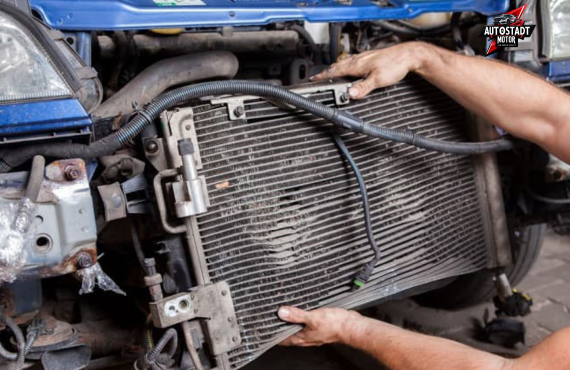
At AutoStadt Motor Services, we provide automotive air conditioning inspection, diagnostics and repair solutions for vehicle owners in Dubai. Our approach focuses on identifying condenser-related problems, checking connected AC components and recommending appropriate replacement solutions.
If your Lincoln AC is blowing warm air, cooling inconsistently or losing refrigerant, a professional inspection can determine whether a condenser replacement is necessary.
Signs Your Car Needs Lincoln AC Condenser Change
The AC condenser can experience different types of damage over time. Some problems develop gradually, while others appear suddenly following physical damage or refrigerant leakage.
Recognising the warning signs early can help prevent additional stress on the compressor and other air conditioning components.
1. AC Blowing Warm Air Instead of Cold
One of the most noticeable signs of a damaged condenser is reduced cooling performance. If your Lincoln’s air conditioning system produces warm or slightly cool air even at the lowest temperature setting, the condenser may not be releasing heat efficiently.
A damaged condenser can prevent the refrigerant from reaching the correct temperature and pressure conditions required for effective cooling.
However, warm airflow does not automatically mean the condenser needs replacement. Low refrigerant, compressor problems, electrical faults and expansion valve issues can produce similar symptoms.
At AutoStadt Motor Services, we inspect the complete AC system to determine the actual source of the cooling problem.
2. Visible Refrigerant Leakage Around the Condenser
Refrigerant leakage is another common reason for Lincoln AC condenser replacement.
The condenser is positioned near the front of the vehicle, where it can be exposed to road debris, stones and other external impacts. Over time, corrosion or physical damage may create small holes in its structure.
Common indications of a refrigerant leak include:
Gradually decreasing AC cooling performance.
Refrigerant escaping from the condenser area.
Oily residue around damaged connections.
Repeatedly low refrigerant pressure.
AC performance deteriorating after gas refilling.
Because refrigerant systems operate under pressure, leakage should be investigated using appropriate detection equipment rather than relying only on visual inspection.
3. AC Cooling Becomes Weak During Traffic
If your Lincoln AC performs reasonably well while driving but becomes less effective in traffic, the problem may involve condenser airflow or cooling fan operation.
The condenser requires sufficient airflow to release heat. When airflow becomes restricted because of damaged fins, dirt accumulation or malfunctioning cooling fans, refrigerant temperatures and system pressures can increase.
This problem can become particularly noticeable in Dubai’s hot weather.
A professional inspection can help determine whether condenser replacement, cleaning or cooling fan repair is necessary.
4. Damaged or Bent Condenser Fins
The condenser contains thin metal fins that help transfer heat from the refrigerant to the surrounding air.
These fins can become bent or damaged because of road debris, accidental impacts or improper cleaning methods.
Although minor fin damage may not always require complete replacement, extensive damage can restrict airflow and reduce heat-transfer efficiency.
If the condenser has significant structural damage or refrigerant passages are affected, replacing the component may be the most appropriate solution.
5. Unusual AC System Pressure
Abnormally high or low refrigerant pressure can indicate problems within the air conditioning system.
A blocked condenser, internal restriction or damaged component may interfere with normal refrigerant circulation.
However, pressure readings must be interpreted alongside operating conditions, ambient temperature, refrigerant specifications and compressor performance.
Our technicians can assess these factors to determine whether the condenser is responsible for the abnormal readings.
6. Frequent AC Gas Refilling
If your Lincoln repeatedly requires AC gas refilling, there may be an underlying refrigerant leak.
Refrigerant is not normally consumed during ordinary AC operation. Therefore, repeatedly adding refrigerant without finding the leakage point is not a permanent repair.
A damaged condenser may be responsible, particularly if leakage is detected around its body or connecting joints.
Replacing the faulty component and checking the system for additional leaks can help restore reliable cooling.
Why Choose AutoStadt Motor Services for Lincoln AC Condenser Change?
Selecting an experienced automotive garage is important when replacing an AC condenser, especially in premium vehicles. The condenser is connected to several components, and improper installation can result in refrigerant leakage, poor cooling or additional system problems.
AutoStadt Motor Services focuses on providing suitable automotive repair and maintenance solutions for Dubai drivers.
Professional AC System Inspection
Before recommending Lincoln AC condenser change, it is important to confirm that the condenser is actually responsible for the problem.
Our technicians assess the overall cooling system, including refrigerant pressure, condenser condition, compressor operation and cooling fan performance.
This diagnostic approach helps prevent unnecessary replacements and ensures that the repair addresses the original issue.
Experience With Different Premium Vehicles
Modern vehicles have different air conditioning configurations, refrigerant requirements and component arrangements.
Our garage works with different vehicle brands, including Lincoln, BMW, Mercedes-Benz, Toyota and Nissan.
This experience helps our technicians understand different automotive cooling systems and approach each repair according to the vehicle’s requirements.
Whether you drive a Lincoln Navigator, Aviator, Corsair or Nautilus, proper inspection is an important part of maintaining its AC performance.
Suitable Condenser Replacement Solutions
Not every condenser problem requires the same repair.
Depending on the damage, a vehicle may require condenser replacement, connection repairs or additional AC system servicing.
At AutoStadt Motor Services, our recommendations are based on the condition of the component and the requirements of the vehicle.
We aim to ensure that the replacement part is compatible with the specific Lincoln model and its AC configuration.
Attention to Connected AC Components
Replacing a damaged condenser without checking the rest of the system may allow other problems to remain unnoticed.
For example, a damaged condenser may release refrigerant, while contamination or debris can affect other parts of the cooling circuit.
During the repair process, our technicians can inspect related components, including:
AC compressor and connecting lines.
Refrigerant pipes and hoses.
Receiver drier or integrated desiccant assembly.
Expansion valve.
Cooling fans.
Condenser mounting brackets.
Pressure sensors and electrical connections.
This helps identify additional issues that could affect the performance of the newly installed condenser.
Reliable Repair Recommendations
We believe customers should understand why a repair is necessary.
Our approach involves identifying the problem, explaining the recommended work and discussing suitable replacement options.
This allows Lincoln owners to make informed maintenance decisions while avoiding unnecessary component changes.
How Our Lincoln AC Condenser Change Process Works
A proper condenser replacement involves more than removing the old component and installing a new one. The refrigerant circuit must be handled correctly, connected components should be inspected and the complete system must be tested after installation.
At AutoStadt Motor Services, we follow a structured repair process.
Step 1: Initial AC System Assessment
The process begins with checking the symptoms reported by the vehicle owner.
Our technicians assess whether the AC produces warm air, cools inconsistently or loses cooling performance after a short period.
We also inspect the vehicle’s AC controls, ventilation performance and visible condenser condition.
This initial assessment provides useful information about the possible source of the problem.
Step 2: Refrigerant Pressure Testing and Diagnosis
The next step involves examining the air conditioning system’s operating pressure and identifying possible refrigerant leakage.
Specialised AC equipment can help assess pressure conditions and determine whether the system requires further investigation.
If a leak is suspected, suitable leak-detection methods may be used to locate the affected area.
This step is important because low refrigerant pressure can result from several different faults, not just condenser damage.
Step 3: Safe Refrigerant Recovery
Before removing the damaged condenser, the refrigerant must be recovered using appropriate AC service equipment.
Releasing refrigerant directly into the atmosphere is not an acceptable servicing method.
The recovery process helps remove the refrigerant safely so technicians can proceed with the repair.
The system is then prepared for component removal according to the vehicle’s service requirements.
Step 4: Removing the Damaged Condenser
After preparing the AC system, technicians access the condenser and disconnect its refrigerant connections.
Depending on the Lincoln model, access may require removing certain front-end components or surrounding covers.
The damaged condenser is carefully removed while protecting nearby components, electrical connections and refrigerant lines.
The removed component can then be examined to understand the nature of the damage.
Step 5: Installing the Replacement Condenser
The replacement condenser must match the vehicle’s specifications.
Our technicians check its compatibility, mounting points, connections and overall condition before installation.
Where required, associated seals and O-rings are replaced to help prevent refrigerant leakage.
The condenser is then installed and connected carefully, ensuring that the refrigerant lines are properly secured.
If the vehicle’s condenser incorporates an integrated receiver drier or desiccant assembly, the correct replacement procedure must also be followed.
Step 6: Vacuuming and Refrigerant Recharging
After installation, the AC system is evacuated using suitable vacuum equipment.
This process helps remove air and moisture from the refrigerant circuit.
Moisture inside an AC system can contribute to corrosion, internal restrictions and reduced cooling efficiency. Therefore, proper evacuation is an important part of the replacement process.
Once the system is prepared, the correct refrigerant type and specified quantity are added according to Lincoln’s requirements.
Step 7: Final Cooling Performance Testing
The final stage involves operating the AC system and checking its performance.
Our technicians may assess:
Refrigerant operating pressures.
Cabin vent temperature.
Compressor operation.
Cooling fan performance.
Condenser heat dissipation.
Refrigerant connection leakage.
Overall cooling consistency.
This final inspection helps confirm that the replacement condenser is operating correctly and that the original problem has been addressed.
Additional Lincoln AC Maintenance Tips for Dubai Conditions
After completing a condenser replacement, proper maintenance can help protect the new component and support long-term cooling performance.
Keep the condenser clean: Dust, sand and insects can accumulate around the condenser fins. Professional cleaning helps maintain airflow and heat transfer.
Avoid ignoring minor AC problems: Weak cooling, unusual compressor noises or inconsistent performance should be investigated early.
Inspect cooling fans: Cooling fans play an important role when the vehicle is stationary or moving slowly. Faulty fans can increase condenser operating temperatures.
Maintain the refrigerant system: Always use the refrigerant type and quantity specified for your particular Lincoln model.
Check for leaks after servicing: If cooling performance decreases following a repair, arrange an inspection rather than repeatedly adding refrigerant.
Follow scheduled maintenance: Regular vehicle servicing helps identify problems affecting the AC system and other important components.
These precautions are particularly useful for Lincoln owners who regularly drive through Dubai’s busy roads and experience extended exposure to high temperatures.
Frequently Asked Questions About Lincoln AC Condenser Change in Dubai
1. How Do I Know If My Lincoln AC Condenser Needs Replacement?
Common signs include weak cooling, warm air from the vents, visible refrigerant leakage around the condenser, damaged cooling fins and repeated refrigerant loss.
However, these symptoms can also be caused by other AC components, including the compressor, expansion valve or cooling fans.
A professional diagnosis is necessary to confirm whether the condenser is faulty. AutoStadt Motor Services can inspect the air conditioning system and recommend the appropriate repair.
2. How Much Does Lincoln AC Condenser Change Cost in Dubai?
The cost depends on the Lincoln model, condenser specifications, replacement part availability and the amount of additional labour required.
For example, condenser replacement on a Lincoln Navigator may involve different labour and component requirements compared with a Lincoln Corsair or Nautilus.
Additional expenses may apply if the system requires new seals, refrigerant, receiver drier components or repairs to damaged connections.
AutoStadt Motor Services can provide a more accurate estimate after inspecting the vehicle and confirming the required replacement work.
3. Can I Drive My Lincoln With a Damaged AC Condenser?
You may be able to drive the vehicle if the problem is limited to the air conditioning system and does not affect other components. However, driving with a refrigerant leak or damaged condenser is not recommended as a long-term solution.
A refrigerant leak can reduce cooling performance and may cause the compressor to operate under unsuitable conditions.
If the condenser has suffered physical damage or the vehicle displays additional warning signs, arrange an inspection before continuing normal use.
4. How Long Does Lincoln AC Condenser Replacement Take?
The replacement time depends on the vehicle model, accessibility of the condenser and complexity of the repair.
Some vehicles allow relatively straightforward access, while others require additional front-end disassembly.
The process also includes refrigerant recovery, condenser installation, vacuum evacuation, refrigerant recharging and final performance testing.
AutoStadt Motor Services can provide a more realistic time estimate after assessing your Lincoln and identifying the required work.
5. Where Can I Get Professional Lincoln AC Condenser Change in Dubai?
If you are looking for professional Lincoln AC condenser change in Dubai, AutoStadt Motor Services offers automotive AC inspection, diagnostics and repair solutions.
Our technicians can investigate condenser leakage, cooling problems, refrigerant pressure issues and related AC component faults.
Whether you own a Lincoln Navigator, Aviator, Nautilus or Continental, our team can assess your vehicle and recommend a suitable replacement solution.
Contact AutoStadt Motor Services to discuss your AC problem and arrange a professional inspection.
Conclusion
A properly functioning AC condenser is essential for maintaining effective air conditioning in your Lincoln. In Dubai’s challenging climate, even minor condenser damage can affect cabin cooling, refrigerant circulation and the overall performance of the AC system.
Ignoring refrigerant leaks, damaged condenser fins or inconsistent cooling may result in additional pressure on connected components. Therefore, identifying the actual problem and arranging timely repairs is important for maintaining your vehicle.
AutoStadt Motor Services provides automotive AC diagnostics, condenser replacement and related repair solutions to help Dubai car owners maintain comfortable and reliable driving conditions.
Whether your Lincoln requires condenser replacement, refrigerant leak detection, AC gas refilling or a complete cooling system inspection, our team can help identify the right solution.
If your Lincoln AC is no longer delivering the cooling performance you expect, contact AutoStadt Motor Services and arrange an inspection to restore dependable cabin comfort.


Leave a Comment