
Mazda AC compressor change is an important service when your vehicle’s air conditioning stops producing cold air, makes unusual noises, or struggles to maintain a comfortable cabin temperature. For drivers in Dubai, where high outdoor temperatures and heavy traffic can put considerable demands on the AC system, a faulty compressor can quickly turn an ordinary journey into an uncomfortable experience.
The AC compressor is one of the main components responsible for circulating refrigerant through the vehicle’s air conditioning system. It works with the condenser, evaporator, expansion valve, and other components to transfer heat away from the cabin. When the compressor stops working correctly, the entire cooling process can be affected.
However, weak cooling does not always mean the compressor needs replacement. Low refrigerant, electrical faults, a damaged condenser, a faulty pressure sensor, or problems with the compressor control system can produce similar symptoms. Therefore, accurate diagnosis is essential before installing a new component.
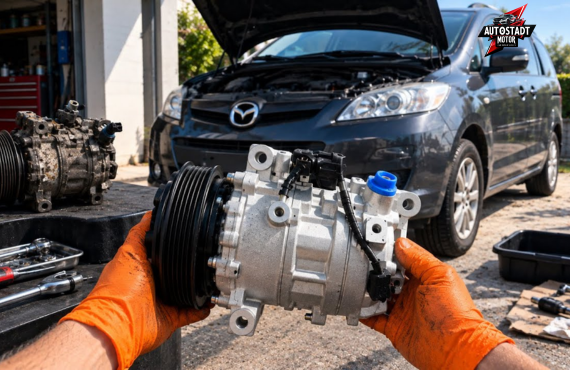
At AutoStadt Motor Services, Mazda owners in Dubai can have their car AC system inspected to identify the cause of poor cooling and determine whether compressor replacement is necessary. Our approach focuses on the condition of the complete system, helping customers avoid unnecessary repairs and make informed decisions about their vehicles.
Whether you drive a Mazda 3, Mazda 6, CX-5, or another model, addressing AC problems early can help restore cooling performance and reduce the risk of additional component damage.
Signs Your Car Needs Mazda AC Compressor Change
A failing compressor may show several warning signs before it stops operating completely. Recognizing these symptoms can help you arrange an inspection before the problem becomes more disruptive.
1. The AC Blows Warm Air
One of the most noticeable signs is warm air coming from the vents even when the temperature is set to its lowest setting.
If the compressor cannot circulate refrigerant effectively, the system may lose its ability to remove heat from the cabin. In some cases, the compressor may not engage at all. In others, it may operate intermittently or fail to provide the required performance.
Nevertheless, warm air alone is not enough to confirm compressor failure. A technician should also check refrigerant pressure, electrical connections, cooling fans, and related components before recommending replacement.
2. Unusual Noise When the AC Is Switched On
A grinding, rattling, squealing, or knocking sound from the engine bay can indicate a problem involving the compressor or its drive components.
For example, a worn compressor bearing may create noise when the system operates. A damaged clutch, where fitted, or a belt-related issue can also produce unusual sounds.
If the noise becomes louder when you activate the AC, arrange an inspection promptly. Continuing to operate a mechanically damaged compressor may cause further problems, particularly if internal components begin to break apart.
3. AC Cooling Becomes Intermittent
Sometimes the AC produces cold air initially but becomes warm after a short period. It may start cooling again after the vehicle has been switched off and restarted.
This behaviour can be associated with compressor control problems, overheating, abnormal refrigerant pressure, sensor faults, or electrical issues. Although a failing compressor is one possibility, it should not be assumed without testing.
Proper diagnosis helps establish whether the compressor itself is defective or whether another component is interrupting its operation.
4. The Compressor Does Not Operate
When the AC is switched on, the compressor should operate according to the vehicle’s system design and operating conditions. If it does not, the cooling system may be unable to produce cold air.
However, some modern Mazda models use variable-displacement compressors or electronically controlled systems, so operation cannot always be judged by listening for a traditional compressor clutch engaging.
A technician may need to inspect electrical signals, pressure readings, control commands, and compressor operation to determine the actual fault.
5. Burning Smell or Belt-Related Problems
A burning rubber smell, belt squeal, or visible damage around the accessory drive system should not be ignored.
A seized compressor or a failing pulley can sometimes place excessive strain on the drive belt. If the belt slips or becomes damaged, other engine-driven accessories may also be affected, depending on the vehicle’s design.
If you notice smoke, a strong burning smell, or a sudden loud mechanical noise, stop safely and arrange professional assistance rather than continuing to drive.
6. Refrigerant Leakage or Repeated Cooling Loss
A refrigerant leak can cause poor cooling and may sometimes be mistaken for compressor failure.
Leaks can develop at hoses, seals, service ports, condenser connections, or the compressor itself. If refrigerant repeatedly becomes low, the source should be located and repaired.
Simply refilling the AC system may temporarily improve performance, but it will not solve an unresolved leak. A complete inspection can establish whether the compressor needs replacement or whether a different repair is appropriate.
Why Choose AutoStadt Motor Services for Mazda AC Compressor Change
Replacing an AC compressor involves more than removing an old part and fitting a new one. The reason for the failure must be understood, and the surrounding system must be assessed to help prevent the replacement compressor from developing the same problem.
Accurate Diagnosis Before Replacement
At AutoStadt Motor Services, the first priority is to identify the source of the AC fault.
The inspection may include refrigerant pressure, compressor operation, electrical controls, system temperature, belt condition where applicable, and signs of leakage. Depending on the symptoms, additional testing may be required to assess the condenser, expansion device, cooling fans, and related components.
This process helps distinguish a genuinely defective compressor from other faults that produce similar symptoms.
Suitable Compressor Selection
Mazda vehicles vary by model, model year, engine, and AC system configuration. Consequently, compressor compatibility should be confirmed before replacement.
Selecting the correct part involves checking the vehicle’s specifications and matching the compressor to the required application. The replacement may be an appropriate new unit or another suitable option, depending on availability, compatibility, and the customer’s requirements.
A correct fit is important for reliable operation and proper integration with the vehicle’s AC system.
Attention to the Complete Cooling System
A compressor can fail because of internal wear, lubrication problems, contamination, or other operating conditions. If the original failure has contaminated the refrigerant circuit, installing a replacement without addressing that contamination may put the new compressor at risk.
For this reason, the condition of the remaining AC components should be evaluated. Depending on the findings, the repair may require appropriate system cleaning, replacement of affected components, or other procedures specified for the vehicle.
Clear and Practical Repair Recommendations
Not every AC problem requires a new compressor. A faulty relay, electrical connection, pressure sensor, or other component may be responsible for the symptoms.
AutoStadt Motor Services aims to base repair recommendations on the identified fault. This helps customers understand the work required and reduces the likelihood of paying for parts that do not address the actual problem.
Service for Dubai Driving Conditions
High temperatures and frequent stop-and-go traffic can make poor AC performance particularly difficult to tolerate. Drivers may notice problems most clearly during afternoon commutes, long journeys, or periods spent waiting in traffic.
Restoring reliable air conditioning can make daily driving more comfortable. Whether you own a Mazda CX-5, Toyota Corolla, Nissan Altima, BMW 3 Series, or Mercedes-Benz C-Class, the correct repair approach depends on the vehicle’s specific AC design and condition.
How Our Mazda AC Compressor Change Process Works
A structured repair process helps ensure that the original problem is properly investigated and that the replacement system is checked before the vehicle is returned to the customer.
Step 1: Initial AC Assessment
The process begins with a discussion of the symptoms.
The technician may ask when the cooling problem started, whether the AC works intermittently, whether unusual noises occur, and whether any previous AC repairs have been carried out.
This information helps narrow down possible causes and guides the initial inspection.
Step 2: Inspect the AC System
The relevant AC components are examined to look for visible damage, refrigerant leakage, worn drive components, loose connections, or other signs of malfunction.
Depending on the Mazda model, the technician may also check compressor control signals and related electrical components.
This stage helps determine whether the compressor is a likely source of the problem or whether further testing is needed.
Step 3: Confirm Compressor Failure
Before recommending a Mazda AC compressor change, the system should be tested to establish whether the compressor is defective.
Pressure readings, operating behaviour, electrical checks, and other diagnostic results can help confirm the cause. The technician should also consider whether a blocked component, abnormal system pressure, or another fault is preventing normal operation.
Accurate confirmation is especially important because compressor replacement can be more involved than replacing a simple electrical component.
Step 4: Recover Refrigerant and Remove the Faulty Compressor
If replacement is necessary, the refrigerant must be recovered using suitable equipment rather than released into the atmosphere.
The technician then follows the appropriate procedure to remove the old compressor. Depending on the vehicle, this may involve accessing the drive belt, electrical connectors, refrigerant lines, mounting points, and related components.
The removed unit can also provide useful information about the type and extent of failure.
Step 5: Inspect for Contamination and Related Damage
Before installing the replacement, the system should be assessed for contamination, debris, and damage associated with the original compressor failure.
If internal compressor damage has introduced debris into the circuit, the appropriate cleaning or component replacement procedures may be necessary. The receiver-drier or accumulator and other related parts should be evaluated according to the vehicle’s design and repair requirements.
The precise procedure depends on the Mazda model and the nature of the failure.
Step 6: Install the Replacement Compressor
The compatible replacement compressor is installed using the correct mounting procedure and specified components.
The technician also checks the relevant connections and follows the manufacturer’s requirements for compressor lubrication and refrigerant handling. Oil quantity and type must be appropriate for the particular compressor and AC system.
Using incorrect oil or an unsuitable refrigerant can affect performance and may damage the system.
Step 7: Recharge and Test the AC System
Once the repair is complete, the system is evacuated where required and recharged with the correct refrigerant type and specified quantity.
The technician then checks operating pressures, vent temperatures, compressor performance, and relevant system functions. The repaired connections should also be checked for leakage.
Finally, the AC is tested under suitable operating conditions to verify that the original cooling complaint has been addressed.
Mazda AC Compressor Maintenance Tips for Dubai Drivers
Although compressors experience wear over time, sensible maintenance can help identify developing problems and reduce avoidable strain on the AC system.
First, pay attention to changes in cooling performance. If your Mazda gradually becomes less effective at cooling the cabin, arrange an inspection instead of waiting until the system stops working completely.
Second, do not ignore unusual noises. A new squeal, grinding sound, or repeated clicking may indicate a problem involving the compressor, pulley, belt, or control system. Early inspection can help identify the source before additional damage occurs.
Third, keep up with the recommended maintenance schedule for your vehicle. Cabin filter replacement, inspection of accessible components, and attention to airflow can help maintain the overall performance of the climate-control system.
It is also important to avoid repeated refrigerant top-ups without identifying why the level has dropped. If a leak exists, the underlying issue should be corrected rather than treated as a routine refill requirement.
Finally, if your AC suddenly stops cooling or begins making a loud mechanical noise, switch it off when safe to do so and arrange an inspection. Continuing to operate a damaged compressor may increase the scope of the repair.
Frequently Asked Questions About Mazda AC Compressor Change in Dubai
1. How do I know if my Mazda AC compressor needs replacement?
Common symptoms include warm air from the vents, unusual noises when the AC operates, intermittent cooling, or a compressor that fails diagnostic testing. However, these symptoms can also result from low refrigerant, electrical faults, pressure sensors, or other components. A professional inspection is necessary to confirm whether compressor replacement is actually required.
2. How much does a Mazda AC compressor change cost in Dubai?
The cost depends on the Mazda model, compressor type, replacement part, labour requirements, and the condition of the remaining AC system. If compressor failure has contaminated the refrigerant circuit, additional work may be required. The most reliable way to establish the cost is to inspect the vehicle, confirm the fault, and identify the compatible replacement before preparing a repair estimate.
3. Can I drive my Mazda if the AC compressor is faulty?
If the AC has simply stopped cooling and there are no other warning signs, the vehicle may still be mechanically drivable, depending on the nature of the fault. However, a seized compressor or damaged pulley can affect the accessory drive belt and potentially create a more serious mechanical issue. If you notice loud grinding, smoke, a burning smell, or belt-related problems, stop safely and arrange professional assistance.
4. Should I replace other AC parts when changing the Mazda compressor?
Not every compressor replacement requires every other AC component to be replaced. The decision depends on the cause of failure, system design, contamination, and the condition of related parts. For example, if compressor damage has spread debris through the system, additional cleaning or component replacement may be necessary. A technician should assess the condenser, receiver-drier or accumulator, expansion device, and related components according to the repair requirements.
5. How long does Mazda AC compressor replacement take?
The time required depends on the specific Mazda model, compressor accessibility, parts availability, and whether additional repairs are needed. A straightforward replacement may take less time than a job involving refrigerant leaks, contaminated components, or difficult access. The repair should also include the necessary refrigerant handling and post-repair testing. AutoStadt Motor Services can provide a more accurate timeframe after inspecting the vehicle and confirming the scope of work.
Conclusion
Mazda AC compressor change can restore effective cabin cooling when the compressor is confirmed to be faulty. However, the most reliable repair begins with proper diagnosis, because weak cooling and unusual AC noises can also be caused by refrigerant leaks, electrical faults, restricted airflow, or other components.
For Mazda owners in Dubai, addressing AC problems early can help maintain cabin comfort and reduce the risk of further damage. Selecting the correct compressor, checking the condition of the complete cooling circuit, following the appropriate installation procedure, and testing the system after repair are all important steps.
AutoStadt Motor Services provides AC inspection and repair support for Mazda vehicles, helping drivers identify the cause of cooling problems and determine the appropriate solution.
If your Mazda AC is blowing warm air, making unusual noises, or struggling to cool the cabin, arrange an inspection to find out whether a compressor replacement is necessary and get your vehicle’s air conditioning working as it should.


Leave a Comment