
Mazda brake repair is essential when your vehicle develops unusual braking noises, reduced stopping performance, steering vibration, or a brake pedal that feels different from normal. Your braking system is one of the most important safety systems in your car, and even a small change in its performance deserves attention. For Mazda owners in Dubai, maintaining reliable brakes is particularly important because daily traffic, frequent stops, highway driving, and high temperatures can place considerable demands on braking components.
Whether you drive a Mazda 3, Mazda 6, Mazda CX-5, or Mazda CX-9, the condition of your brake pads, discs, calipers, brake fluid, and related components affects how confidently your vehicle responds when you press the pedal. Although these parts gradually wear through normal use, ignoring early warning signs can lead to additional damage and more expensive repairs.
At AutoStadt Motor Services, Mazda brake repair begins with identifying the source of the problem rather than automatically replacing parts. A squealing noise, for example, may indicate worn brake pads, but it can also result from dust, glazing, or other conditions. Similarly, vibration during braking may point to disc thickness variation, uneven wear, or a separate suspension issue.
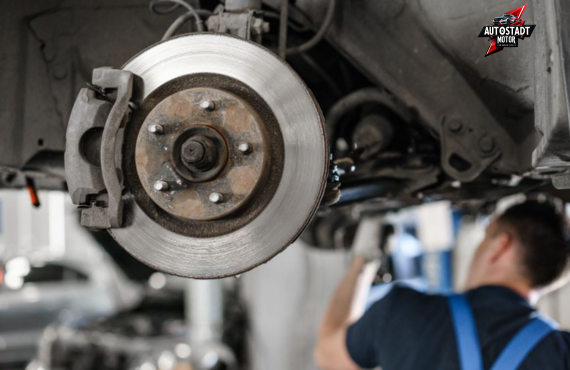
Our goal is to help Dubai motorists understand their vehicle’s braking condition and choose the appropriate repair. With timely inspections and suitable maintenance, you can help preserve braking performance, reduce unnecessary component wear, and keep your Mazda ready for everyday driving.
Signs Your Car Needs Mazda Brake Repair
Brake problems do not always begin with a complete loss of braking performance. In many cases, your Mazda provides noticeable clues before a component requires urgent attention. Recognizing these symptoms early can help you arrange an inspection before the problem becomes more serious.
1. Squealing or Grinding Noises
A high-pitched squeal when applying the brakes can indicate that the brake pads are approaching the end of their service life. Some pads have wear indicators designed to produce an audible warning when replacement is needed.
However, noise does not always mean the pads are worn out. Dust, moisture, surface glazing, or other contact between braking components may also create sounds.
Grinding is more concerning because it can indicate that the friction material has worn away and metal components are contacting one another. Continued driving in this condition can damage the brake discs and reduce braking effectiveness. Arrange an inspection promptly rather than waiting for the noise to disappear.
2. Vibration Through the Brake Pedal or Steering Wheel
If your Mazda shakes when you apply the brakes, the problem may involve the brake discs, uneven friction deposits, wheel-related issues, or suspension components.
For example, vibration that becomes more noticeable during higher-speed braking may require a closer examination of disc condition and thickness variation. The steering wheel may also shake if the front braking components or associated wheel and suspension parts are affected.
A technician should identify the cause before recommending disc resurfacing or replacement.
3. A Soft or Spongy Brake Pedal
A brake pedal that feels unusually soft, travels farther than normal, or sinks while you maintain pressure should never be ignored.
Possible causes include air in the hydraulic system, a brake fluid leak, or a fault involving the master cylinder or another hydraulic component. These issues can compromise the vehicle’s ability to stop reliably.
If the pedal suddenly becomes soft or braking performance deteriorates, stop driving when it is safe to do so and arrange professional assistance.
4. Your Mazda Pulls to One Side
If the car moves left or right while braking, the braking force may not be balanced between the wheels. A sticking caliper, uneven pad wear, contaminated friction material, or a problem elsewhere in the wheel or suspension system may be responsible.
Pulling to one side can make emergency manoeuvres more difficult, particularly in busy Dubai traffic. A prompt inspection can help determine whether the problem comes from the brakes or another vehicle system.
5. Brake Warning Light Appears
A brake warning light can indicate several conditions, including low brake fluid, an engaged parking brake, or a fault within the braking system. On vehicles equipped with advanced electronic braking features, additional warning messages may also appear.
Do not assume the warning is harmless simply because the vehicle still seems to stop normally. Check the owner’s manual and arrange an inspection. If the warning is accompanied by reduced braking performance, stop safely and seek assistance.
6. Increased Stopping Distance
If your Mazda takes longer than usual to slow down, the braking system needs attention. Worn pads, contaminated friction surfaces, overheated brakes, tyre problems, or hydraulic faults can affect stopping performance.
Driving conditions also matter. Wet roads, loose surfaces, tyre condition, and vehicle load can influence how quickly a car stops. Nevertheless, a noticeable change under comparable conditions should not be dismissed as normal wear.
Why Choose AutoStadt Motor Services for Mazda Brake Repair
Selecting a workshop for Mazda brake repair involves more than finding someone who can install new brake pads. A proper service should assess the complete braking system and identify the cause of the customer’s complaint.
Mazda-Focused Brake Inspection
Different Mazda models and model years can use different brake configurations. The correct inspection procedure and replacement components depend on the vehicle’s specifications.
At AutoStadt Motor Services, the repair approach considers the reported symptoms and the condition of the relevant components. Depending on the vehicle, the inspection may cover the brake pads, discs, calipers, hydraulic lines, fluid condition, parking brake, and electronic braking systems.
This helps ensure that the recommended work is appropriate for the vehicle rather than based on assumptions.
Repair the Cause, Not Just the Symptom
Replacing brake pads will not resolve every braking problem. If a caliper is sticking, for example, new pads may wear unevenly unless the underlying issue is corrected.
Likewise, installing new discs without checking the condition of the calipers, pads, and associated components may leave the original problem unresolved.
A diagnostic approach helps identify related faults and reduces the risk of unnecessary repeat visits.
Suitable Replacement Parts
Brake components must match the vehicle’s requirements. Incorrect dimensions, unsuitable specifications, or poor-quality parts can affect fitment, noise, wear, and braking performance.
The appropriate parts should be selected according to the Mazda’s model, year, configuration, and manufacturer requirements. The technician should also check whether associated hardware needs replacement during the repair.
Attention to Dubai Driving Conditions
Stop-and-go traffic, repeated braking, and highway journeys can affect brake wear differently depending on driving style and vehicle load.
For example, a Mazda CX-5 used for family journeys may experience different braking demands from a Mazda 3 driven mainly for city commuting. A Toyota Corolla, Nissan X-Trail, or BMW 3 Series will also have its own maintenance requirements, depending on its design and use.
Regular inspections help owners understand their individual vehicle’s condition instead of relying on a fixed assumption about how long every brake component should last.
Clear Repair Recommendations
AutoStadt Motor Services aims to help customers understand which components require attention and why.
If the brake pads are worn but the discs remain within the manufacturer’s specifications, replacing the pads may be sufficient. If the discs are cracked, excessively worn, or outside the permitted limits, additional work may be necessary.
The final recommendation should be based on inspection findings and the vehicle’s service requirements.
How Our Mazda Brake Repair Process Works
A structured repair process helps ensure that the original concern is addressed and that related problems are not overlooked.
Step 1: Discuss the Braking Symptoms
The process begins with information about what you have noticed.
You may report squealing during gentle braking, vibration at higher speeds, a soft pedal, a warning light, or reduced stopping performance. When the symptoms occur and how they have changed can help narrow down the possible causes.
Step 2: Inspect the Braking System
The relevant components are examined according to the symptoms and vehicle configuration. This may include measuring brake pad thickness, checking disc condition, inspecting calipers, and looking for signs of fluid leakage or uneven wear.
Where necessary, electronic diagnostic checks may be used to investigate warning lights or faults involving supported braking systems.
Step 3: Identify the Underlying Fault
Once the inspection is complete, the findings are used to determine what needs attention.
The issue may involve worn pads, damaged discs, a sticking caliper, deteriorated brake fluid, a hydraulic fault, or an electronic system problem. In some cases, a vibration or pulling complaint may originate from tyres or suspension components rather than the brakes alone.
Identifying the cause helps prevent unnecessary parts replacement.
Step 4: Recommend the Appropriate Repair
The repair plan depends on the condition of the affected components.
Common services include brake pad replacement, brake disc replacement, caliper servicing or replacement, brake fluid service, and investigation of hydraulic or electronic faults.
Brake discs should only be resurfaced where the design, condition, and manufacturer limits permit it. Components that are cracked, damaged, or beyond their specified limits require the appropriate replacement.
Step 5: Complete the Repair Correctly
The required work is carried out using parts and procedures appropriate for the Mazda. Depending on the repair, this may involve installing new pads, replacing discs, addressing caliper problems, or servicing the hydraulic system.
Where brake fluid replacement or bleeding is required, the correct fluid specification and procedure must be followed. Certain models may also require specific procedures for electronic parking brakes or other integrated systems.
Step 6: Carry Out Final Checks
After the repair, the system should be checked to confirm correct installation and operation.
Relevant checks may include pedal feel, fluid level, warning lights, component security, and confirmation that there are no visible leaks. A suitable road test may be carried out when safe and appropriate.
New brake pads may require a bedding-in process according to the manufacturer’s or parts supplier’s instructions. Following these recommendations helps the friction surfaces establish suitable contact.
Mazda Brake Maintenance Tips for Dubai Drivers
Preventive maintenance can help you identify brake wear before it begins affecting normal driving.
First, pay attention to changes in sound, pedal feel, stopping performance, and vehicle behaviour. A new noise or vibration should be investigated rather than treated as something that will automatically disappear.
Second, arrange brake inspections according to your Mazda’s maintenance schedule and have the system checked when tyres are replaced or other wheel-related work is performed. The technician can assess pad thickness, disc condition, and signs of uneven wear.
Brake fluid also requires attention. Over time, it can absorb moisture, which may reduce its performance under high temperatures. Follow the service interval specified for your vehicle rather than waiting for a warning light.
In addition, avoid riding the brake pedal unnecessarily on long descents. Repeated heavy braking can generate substantial heat, increasing the risk of brake fade. Leave adequate distance from the vehicle ahead and use appropriate driving techniques for the road conditions.
Finally, remember that brake maintenance includes more than pads and discs. Tyres, wheel condition, suspension, and electronic safety systems all contribute to predictable braking behaviour.
Frequently Asked Questions About Mazda Brake Repair in Dubai
1. How do I know when my Mazda needs brake pad replacement?
Common signs include squealing noises, grinding, reduced braking performance, and a brake pad warning where fitted. However, symptoms alone cannot confirm how much friction material remains. A physical inspection and measurement are the most reliable ways to determine whether the pads have reached their service limit. The replacement interval varies according to driving habits, traffic conditions, vehicle model, and component quality.
2. How much does Mazda brake repair cost in Dubai?
The cost depends on the model, the components affected, the parts required, and the amount of labour involved. Replacing brake pads is generally a different job from replacing discs and pads together or repairing a sticking caliper. Hydraulic and electronic braking faults may require additional diagnosis. AutoStadt Motor Services can inspect the vehicle and recommend the necessary work based on its condition before the repair proceeds.
3. Should I replace Mazda brake pads and discs at the same time?
Not always. If the discs remain in good condition and meet the manufacturer’s thickness and condition requirements, replacing the pads alone may be appropriate. However, discs that are excessively worn, cracked, badly scored, or outside permitted specifications may need replacement as well. A technician should inspect and measure the components before deciding. Replacing parts unnecessarily increases costs, while reusing unsuitable discs can compromise braking performance.
4. Why do my Mazda brakes squeal even after replacement?
Brake noise can occur for several reasons, including pad material, glazing, vibration between components, missing or unsuitable hardware, surface condition, or incorrect installation. Some noise can also occur during the bedding-in period, depending on the parts used. Persistent or severe noise should be checked rather than assumed to be normal. An inspection can determine whether the pads, discs, calipers, or installation require further attention.
5. Can I drive my Mazda if the brake warning light is on?
That depends on the warning and the vehicle’s behaviour, but you should treat it seriously. Some warnings may relate to the parking brake, while others can indicate low brake fluid or a more significant braking-system fault. If the pedal feels soft, fluid is leaking, stopping performance has changed, or a serious brake warning remains illuminated, stop in a safe place and arrange professional assistance rather than continuing to drive.
Conclusion
Mazda brake repair is essential for maintaining dependable stopping performance, particularly for drivers navigating Dubai’s busy roads and frequent traffic conditions. Squealing, grinding, vibration, a soft brake pedal, warning lights, or longer stopping distances can all indicate that the braking system needs attention.
The correct solution depends on the cause. Worn pads, damaged discs, sticking calipers, fluid problems, and electronic faults require different diagnostic and repair approaches. Replacing parts without investigating the underlying issue can leave the original problem unresolved.
At AutoStadt Motor Services, Mazda owners can seek professional brake inspection and repair based on the condition of their vehicle. Addressing warning signs early, following the recommended maintenance schedule, and using suitable replacement components can help support consistent braking performance.
If your Mazda is making unusual braking noises or no longer feels as responsive as it should, arrange an inspection before the problem develops further. A properly maintained braking system is an important part of safer, more confident everyday driving in Dubai.


Leave a Comment