
Mazda suspension repair is essential when your vehicle starts producing knocking sounds, feels unstable on uneven roads, or no longer delivers the smooth, controlled handling you expect. A properly maintained suspension system helps keep the tyres in contact with the road, supports vehicle stability, and improves comfort for both the driver and passengers.
Mazda vehicles, including the Mazda 3, Mazda 6, CX-5, and CX-9, are designed to provide a balanced driving experience. However, suspension components gradually wear out through regular use. Damaged shock absorbers, worn control arm bushes, weak springs, faulty ball joints, and deteriorated stabilizer links can affect the way your car handles corners, speed bumps, and sudden braking.
For drivers in Dubai, suspension maintenance deserves particular attention. Frequent speed bumps, parking ramps, road joints, occasional rough surfaces, and daily stop-and-go traffic can place repeated stress on suspension components. Furthermore, high temperatures can contribute to the deterioration of certain rubber components over time.
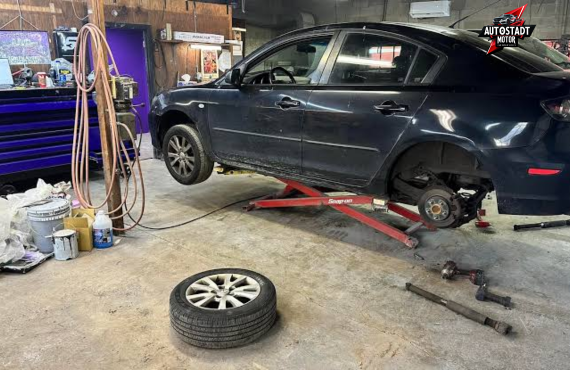
At AutoStadt Motor Services, Mazda suspension repair begins with identifying the source of the problem rather than replacing parts based on symptoms alone. Whether your Mazda needs a suspension inspection, shock absorber replacement, steering-related checks, or repairs to worn suspension joints, a systematic assessment helps determine the appropriate solution.
Signs Your Car Needs Mazda Suspension Repair
Suspension problems do not always begin with a dramatic failure. Often, the earliest warning signs appear as subtle changes in ride comfort, handling, or tyre wear. Recognizing these symptoms can help you arrange repairs before the condition becomes more serious.
1. Knocking or Clunking Sounds Over Bumps
A knocking sound from the front or rear of your Mazda when driving over speed bumps or uneven surfaces may indicate worn suspension components.
Potential causes include loose or deteriorated stabilizer links, worn control arm bushes, damaged ball joints, or problems with shock absorber mounting points. However, similar sounds can also originate from other vehicle components, so the noise should be investigated rather than attributed to one part immediately.
If the sound becomes more frequent or louder, arrange a suspension inspection to identify the cause.
2. Excessive Bouncing After Uneven Roads
Shock absorbers and struts help control the movement of the vehicle’s springs. When these components deteriorate, the car may continue bouncing after passing over a bump instead of settling quickly.
You might notice this problem more clearly when driving over road joints, entering a parking ramp, or travelling along an uneven section of road.
Worn shock absorbers can also affect tyre contact with the road and contribute to reduced stability. Replacing them when necessary helps restore better suspension control.
3. Uneven or Premature Tyre Wear
Your tyres can reveal important information about the condition of your suspension.
If one tyre wears faster than another, or the tread develops irregular patterns, possible causes include incorrect wheel alignment, worn suspension joints, damaged bushes, or unsuitable tyre pressure.
Suspension problems can affect wheel geometry, allowing the tyres to contact the road unevenly. Therefore, replacing the tyres without investigating the underlying issue may lead to the same wear pattern returning.
At AutoStadt Motor Services, suspension-related tyre wear should be assessed alongside alignment and other relevant factors.
4. Vehicle Pulling or Unstable Cornering
If your Mazda pulls to one side or feels less stable when turning, the problem may involve wheel alignment, tyre condition, suspension wear, or steering components.
For example, a worn control arm bush can allow unwanted movement in the suspension, while a damaged ball joint can affect wheel positioning.
Drivers may also notice increased body roll or a less predictable response during lane changes. These symptoms deserve attention because suspension condition plays an important role in maintaining vehicle control.
5. Uneven Ride Height
A Mazda that appears lower on one corner than the others may have a damaged spring, an incorrectly seated component, or another suspension-related fault.
A broken coil spring can affect vehicle height and may produce unusual noises. In addition, a weakened spring can change how the suspension responds to bumps and the vehicle’s load.
If you notice a visible difference in ride height, have the vehicle inspected instead of assuming the issue is cosmetic.
6. Steering Vibrations or Poor Road Feel
Although steering vibrations can result from wheel balancing, tyre damage, or brake problems, suspension wear can also contribute to an uncomfortable driving experience.
Worn joints and bushes may allow excessive movement, especially when driving over uneven surfaces or changing direction.
The correct diagnosis should consider the suspension, tyres, wheels, steering system, and brakes where relevant.
7. Nose-Diving During Braking
If the front of your Mazda dips excessively when braking, worn shock absorbers or other suspension issues may be contributing.
Some forward weight transfer during braking is normal. However, a noticeable change in the vehicle’s behaviour may indicate that the suspension is no longer controlling movement as effectively as it should.
Because braking performance and stability are important for safe driving, unusual nose-diving should be checked promptly.
Why Choose AutoStadt Motor Services for Mazda Suspension Repair
Selecting a suitable workshop means finding a team that can identify the cause of the fault, explain the repair options, and avoid unnecessary component replacement.
Mazda-Focused Suspension Diagnosis
Different Mazda models have different suspension layouts and component specifications. The repair requirements of a Mazda 3 may differ from those of a Mazda CX-5 or CX-9.
AutoStadt Motor Services can assess the affected components according to the vehicle’s model and the symptoms reported by the owner. This helps ensure that the repair recommendation reflects the actual condition of the vehicle.
Inspection of Related Components
Suspension components work together, so a problem in one area can affect other parts.
For example, worn control arm bushes may affect wheel alignment, while damaged shock absorbers can contribute to uneven tyre wear. A worn stabilizer link may cause knocking without necessarily requiring a complete suspension replacement.
A thorough inspection helps distinguish between these faults and identify the components that genuinely need attention.
Appropriate Shock Absorber and Strut Repairs
Shock absorbers and struts play an important role in controlling suspension movement. When they become worn, vehicle comfort and stability can deteriorate.
Depending on the condition and vehicle specification, the appropriate repair may involve replacing shock absorbers, inspecting their mounts, or addressing related suspension components.
The objective is to restore proper control while following the requirements of the specific Mazda model.
Clear Repair Recommendations
Not every suspension noise means that the entire suspension system needs replacement.
A worn bush, damaged link, loose mounting point, or faulty shock absorber can produce different symptoms. Replacing unrelated components without confirming the fault can increase repair costs unnecessarily.
AutoStadt Motor Services aims to identify the problem and recommend the repair appropriate to the vehicle’s condition.
Service for Dubai Driving Conditions
Dubai drivers regularly encounter speed bumps, multi-level parking ramps, traffic congestion, and different road surfaces. These everyday conditions make it useful to monitor suspension performance.
Whether you drive a Mazda 6 for commuting or a Mazda CX-5 for family journeys, maintaining the suspension helps preserve predictable handling and ride comfort.
The same principle applies to other vehicles, including the Toyota RAV4, Nissan X-Trail, BMW 3 Series, and Mercedes-Benz GLC, although the inspection and repair requirements differ by model.
How Our Mazda Suspension Repair Process Works
An effective suspension repair process involves more than identifying a noisy component. The vehicle should be assessed systematically so the final repair addresses the underlying fault.
Step 1: Discuss the Symptoms
The first step is to understand when the problem occurs.
The technician may ask whether the noise appears over speed bumps, during braking, while turning, or when driving on rough surfaces. Information about recent tyre changes, previous repairs, or changes in handling can also be useful.
These details help narrow down the areas that need closer inspection.
Step 2: Carry Out a Visual Suspension Inspection
The relevant suspension components are inspected for visible damage, excessive movement, leakage, or deterioration.
Depending on the vehicle and reported symptoms, this may include shock absorbers, struts, coil springs, control arms, bushes, ball joints, stabilizer links, and mounting points.
The inspection may also identify damaged dust boots, loose hardware, or other issues that could affect component life.
Step 3: Check for Wear and Unwanted Movement
Some suspension faults cannot be confirmed through visual inspection alone.
A technician may need to assess component movement and joint condition using suitable workshop procedures and equipment. This can help determine whether a ball joint, bush, or other connection has developed excessive play.
Any assessment should follow appropriate safety procedures, especially when checking components that support the vehicle’s weight.
Step 4: Evaluate Tyres and Wheel Alignment
If the Mazda pulls to one side or shows irregular tyre wear, the tyres and wheel alignment should also be considered.
Replacing a worn suspension component may change wheel geometry. Therefore, alignment checks may be necessary after certain suspension repairs.
This step helps ensure that the vehicle’s handling and tyre contact are assessed as part of the overall repair rather than treating the suspension in isolation.
Step 5: Recommend the Necessary Repair
Once the problem has been identified, the technician can explain which components require attention.
Depending on the findings, the repair may involve shock absorber replacement, control arm or bush replacement, stabilizer link repairs, ball joint replacement, or another suspension-related service.
The exact solution depends on the Mazda model, component condition, and manufacturer’s requirements.
Step 6: Replace or Repair the Affected Components
The confirmed repair is then carried out using components and procedures appropriate for the vehicle.
Suspension work must be completed carefully because the system handles vehicle weight and affects wheel positioning. Certain repairs may require specific tightening procedures, alignment checks, or replacement of related hardware.
Where applicable, components should be inspected together to determine whether related wear could affect the repaired part.
Step 7: Perform Final Checks
After the repair, the affected components are checked to ensure they have been installed correctly.
Depending on the work completed, further checks may include wheel alignment, tyre condition, ride height, and suspension operation. A road test may also be appropriate when it can be performed safely.
The aim is to confirm that the original symptoms have been addressed and that the vehicle behaves as expected.
Mazda Suspension Maintenance Tips for Dubai Owners
Preventive maintenance can help you notice suspension problems before they develop into more disruptive repairs.
First, pay attention to changes in the way your Mazda responds to bumps, corners, and braking. If the vehicle begins bouncing excessively or produces new knocking sounds, arrange an inspection rather than waiting for the symptoms to become severe.
Second, monitor tyre pressure and inspect the tread regularly. Incorrect tyre pressure can affect ride comfort and wear patterns, while uneven tread wear may indicate an alignment or suspension issue.
Third, approach speed bumps and parking ramps at a controlled speed. Hitting them too quickly can place unnecessary stress on tyres, wheels, and suspension components.
It is also worth checking the suspension during routine maintenance, particularly if your Mazda has high mileage or regularly travels on rough surfaces.
Finally, do not assume that every vibration or knocking noise comes from the suspension. Wheel balancing, tyre damage, brake components, and steering parts can create similar symptoms. An accurate diagnosis helps prevent spending money on repairs that do not address the actual problem.
Frequently Asked Questions About Mazda Suspension Repair in Dubai
1. How do I know if my Mazda needs suspension repair?
Common signs include knocking sounds over speed bumps, excessive bouncing, uneven tyre wear, unusual body roll, changes in ride height, and reduced stability. However, these symptoms can have several causes. A professional inspection can determine whether the problem involves shock absorbers, struts, control arm bushes, ball joints, stabilizer links, wheel alignment, or another component.
2. How much does Mazda suspension repair cost in Dubai?
The cost depends on the affected component, the Mazda model, the availability of suitable parts, and the amount of labour required. Replacing a stabilizer link may be less involved than replacing multiple shock absorbers or a damaged control arm assembly. Wheel alignment may also be needed after certain repairs. The best way to establish the likely cost is to have the vehicle inspected and obtain a repair estimate based on the confirmed fault.
3. Can I drive my Mazda with worn shock absorbers?
Worn shock absorbers can reduce the suspension’s ability to control vehicle movement and may affect stability, braking behaviour, and tyre contact with the road. The seriousness depends on the condition of the components. If the vehicle feels unstable, bounces excessively, or shows signs of a broken spring or loose suspension joint, avoid unnecessary driving and arrange an inspection promptly.
4. Does Mazda suspension repair include wheel alignment?
Not every suspension repair automatically requires wheel alignment. However, alignment is often worth checking after work that affects wheel geometry, such as replacing certain control arms or suspension components. If your Mazda has been pulling to one side or showing uneven tyre wear, an alignment assessment may also help identify related issues. The technician can recommend the appropriate checks according to the repair performed and the vehicle’s specifications.
5. How often should I have my Mazda suspension inspected in Dubai?
There is no single mileage interval that applies to every Mazda model and driving situation. Follow the maintenance guidance for your vehicle and arrange an additional inspection if you notice unusual noises, changes in handling, tyre wear, or ride comfort. Vehicles that regularly encounter speed bumps, rough surfaces, or heavy daily use may benefit from closer monitoring. Early diagnosis can help identify worn components before they affect other parts of the suspension system.
Conclusion
Mazda suspension repair is important for maintaining ride comfort, predictable handling, and proper tyre contact with the road. Knocking noises, excessive bouncing, uneven tyre wear, and changes in steering or cornering behaviour can all indicate that one or more suspension components need attention.
For Dubai car owners, monitoring these symptoms is especially useful because everyday driving conditions can repeatedly challenge the suspension system. However, the correct repair depends on the actual cause, whether it involves shock absorbers, struts, bushes, ball joints, stabilizer links, or wheel alignment.
AutoStadt Motor Services can help Mazda owners assess suspension problems and identify the appropriate repair. Rather than replacing parts based on assumptions, a systematic inspection helps direct attention to the components that need it.
If your Mazda no longer feels as stable or comfortable as it should, arrange a suspension inspection before the problem worsens. Timely maintenance can help protect related components, improve driving confidence, and keep your vehicle better prepared for everyday journeys across Dubai.


Leave a Comment